
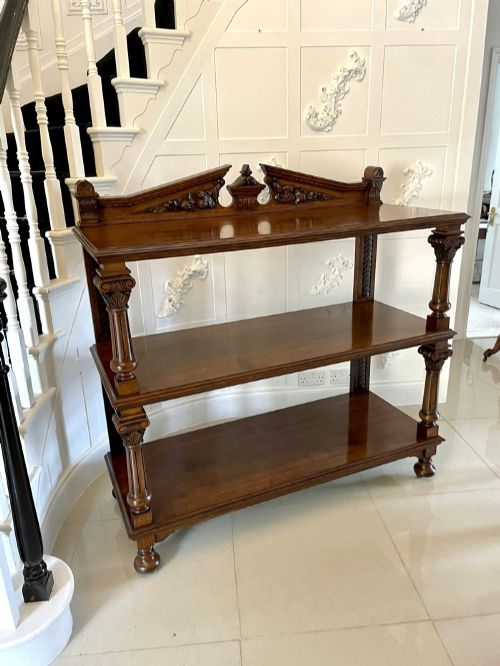
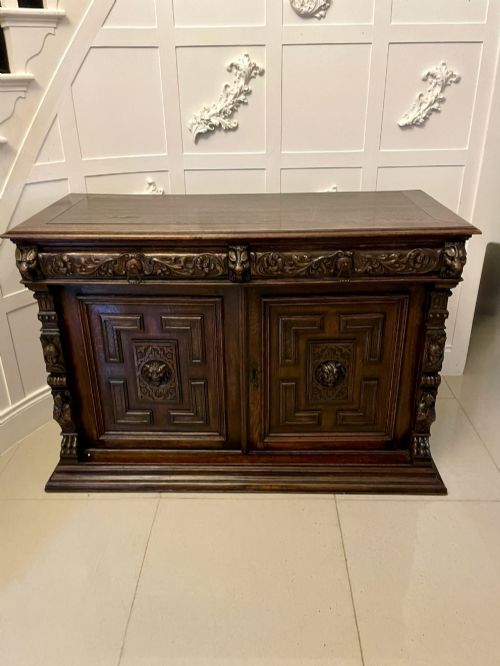
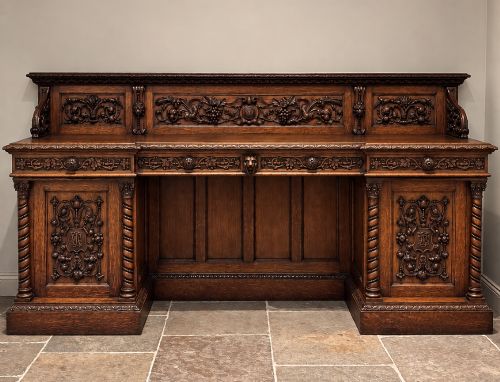
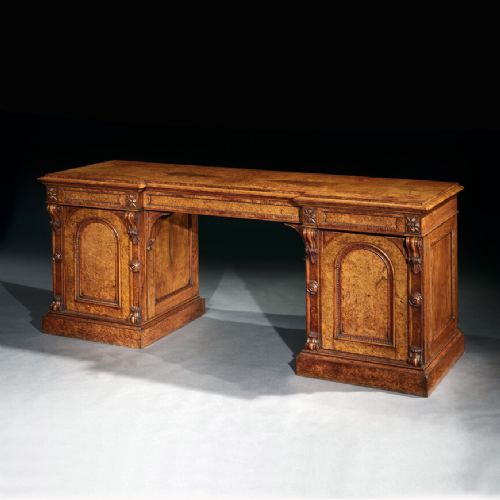
Victorian Oak Buffet Server
These heavy timbers anchor a room with undeniable presence, bringing the substantial form of a victorian oak buffet server into domestic service.
Victorian Oak Buffet Server
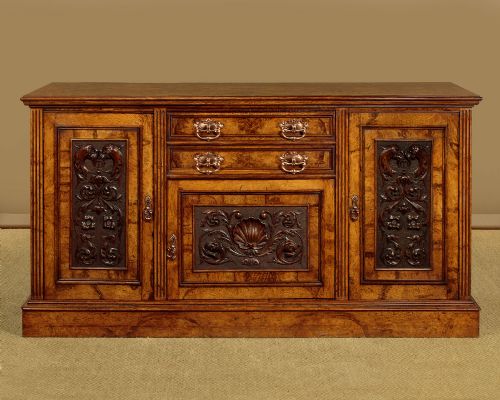
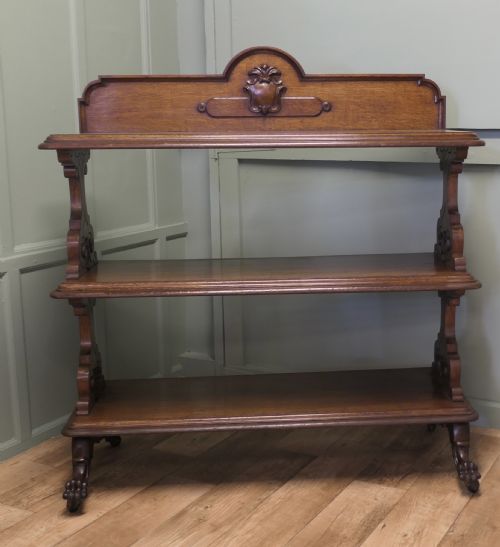
A victorian oak buffet server is a substantial dining room furnishing designed for displaying silver or serving food, appearing across the nineteenth century in various configurations.
The pieces on this page span several decades of the Victorian era, alongside related nineteenth-century examples and specific regional forms from Scotland.
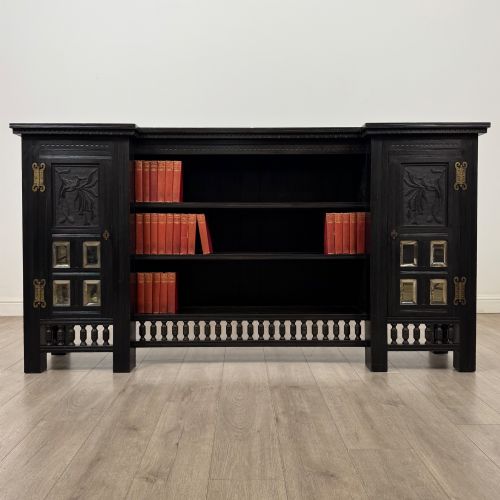
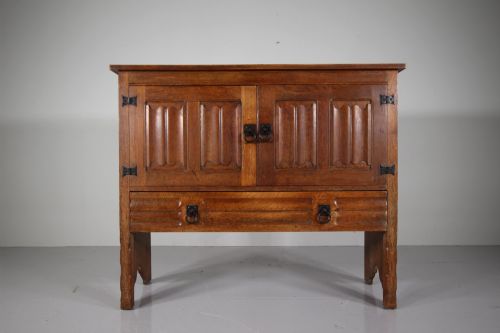
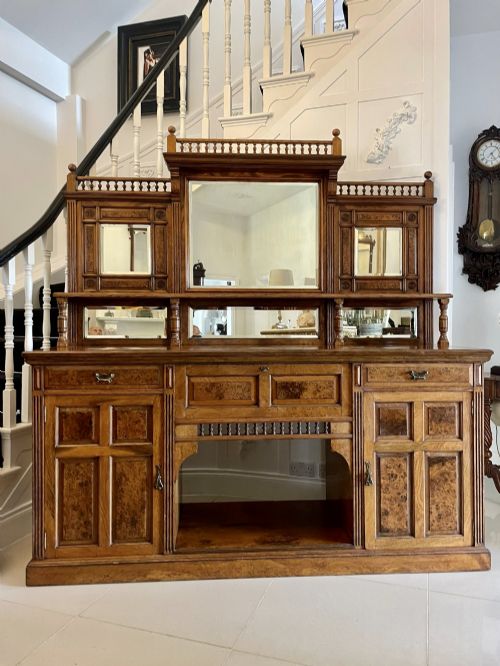
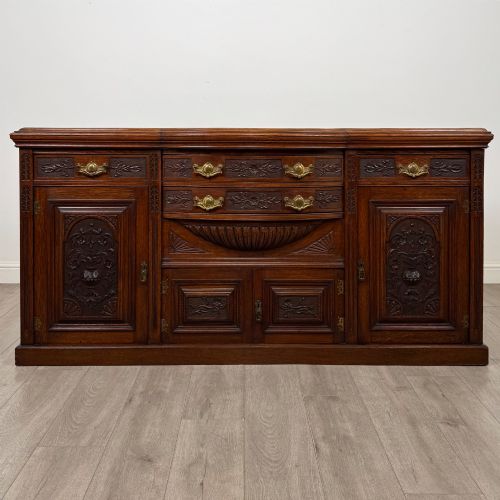
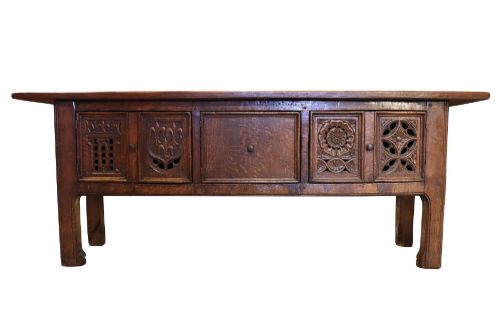
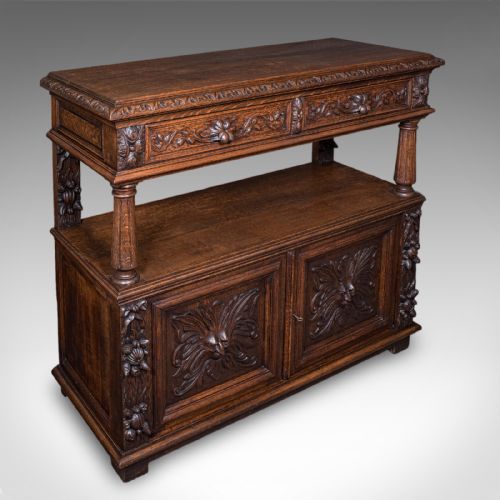
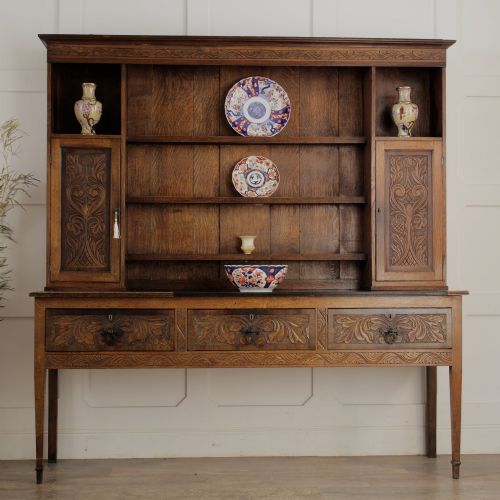
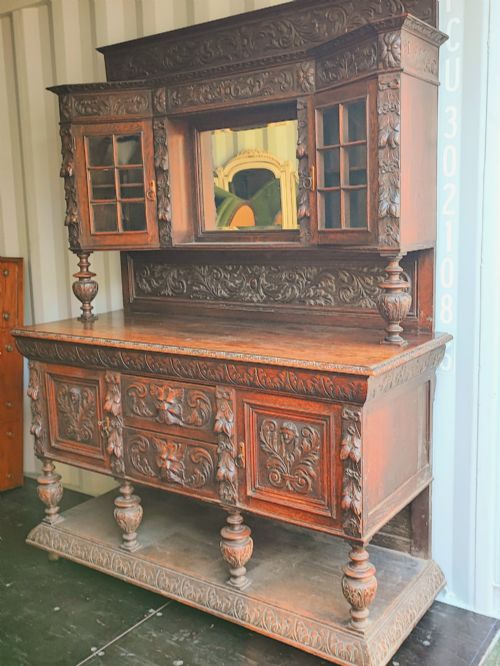
Makers utilised different formats including pedestal sideboards, mirror-backed pieces, tiered servers, and narrow dresser bases with pot boards or drawers.
Materials and Construction
Solid timber forms the primary structure, utilising standard oak alongside figured pollard oak for decorative grain patterns on doors and drawer fronts.
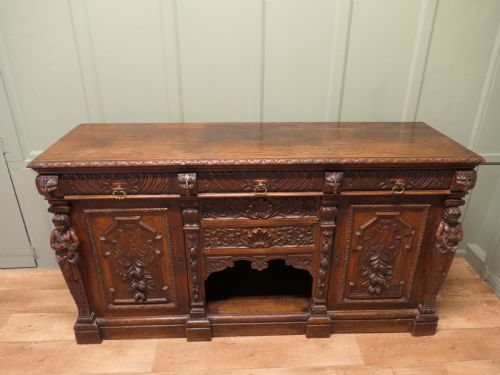
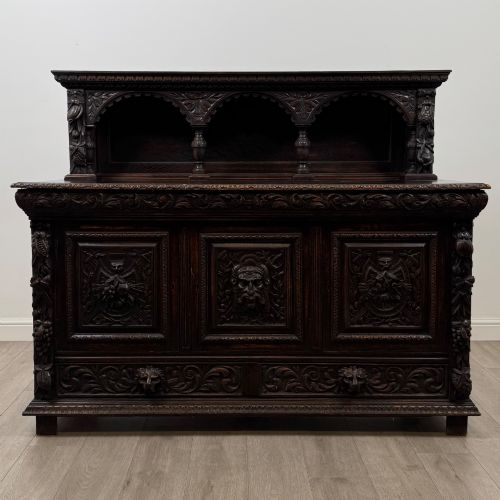
Carvers decorated surfaces with motifs characteristic of Gothic Revival, Renaissance Revival, and Arts and Crafts movements, incorporating lion masks and Green Man carvings.
Hardware and secondary elements integrate brass, iron, and mirror glass into backing panels and cabinet doors.
Listings span the nineteenth century, with specific dates clustering around the 1850s to 1890s in the Victorian period.
Judging Quality
Depth of carving and clarity of detail separate standard production from exceptional examples, particularly in figures such as the Green Man or complex Gothic tracery.
The choice of timber grain, such as strongly figured pollard oak, dictates the visual impact of the front elevation compared to plain timber boards.
Maple and Co·T Simpson and Son
The Victorian Oak Buffet Server Glossary
- Pollard oak
- Timber taken from trees that have been pollarded, producing highly figured, knobbly grain patterns prized for cabinet fronts.
- Dresser base
- A lower sideboard component featuring drawers and sometimes an open pot board beneath for storing serving dishes.
- Gothic Revival
- A nineteenth-century style drawing inspiration from medieval architecture, seen here in pointed arches and heavy tracery.
- Mirror back
- An upright wooden superstructure incorporating a mirror plate, designed to reflect light and display ceramics placed on the top shelf.
Victorian Oak Buffet Server: Frequently Asked Questions
What is a victorian oak buffet server used for?
These pieces function as dining room servers designed to hold platters, cutlery, and glassware during meals.
They also provide a display surface for decorative ceramics or silver on top shelves and mirror-backed frames.
How do I identify a Gothic Revival sideboard?
Gothic Revival examples display architectural motifs such as pointed arches, quatrefoils, and heavy, carved mouldings.
They often feature dark oak timbers and severe, imposing proportions reminiscent of medieval buildings.
What is pollard oak?
Pollard oak comes from trees pruned close to the trunk, creating a dense, highly textured grain pattern.
Cabinet makers used this decorative wood selectively on prominent surfaces like door panels to catch the eye.
Where should I place a mirror back sideboard?
These tall pieces require a solid wall capable of supporting their substantial weight and height.
Positioning them opposite a window allows the mirror glass to bounce natural light around the dining space.