

Victorian Nursing Armchairs
These victorian nursing armchairs offer low seating and upright support, bringing period character and comfort to bedrooms and drawing rooms.
Victorian Nursing Armchairs
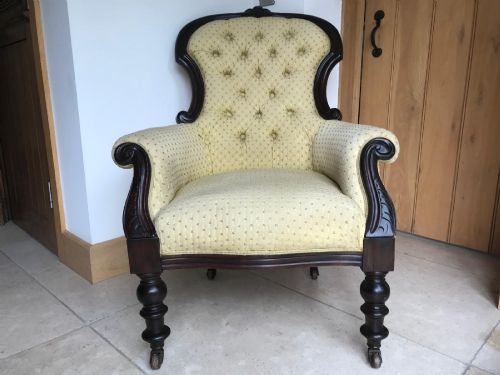
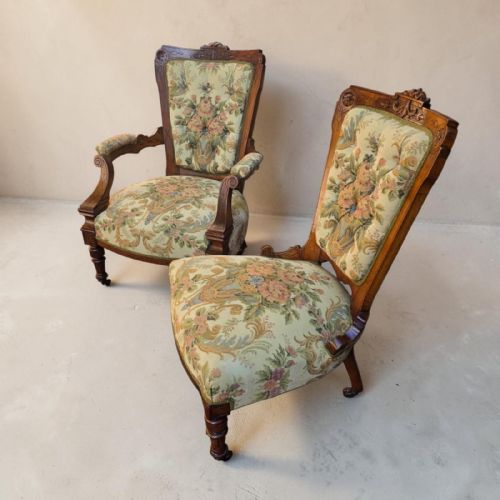
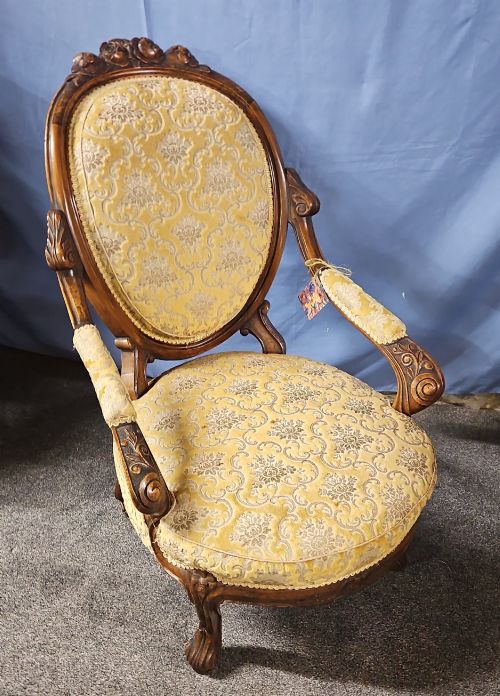
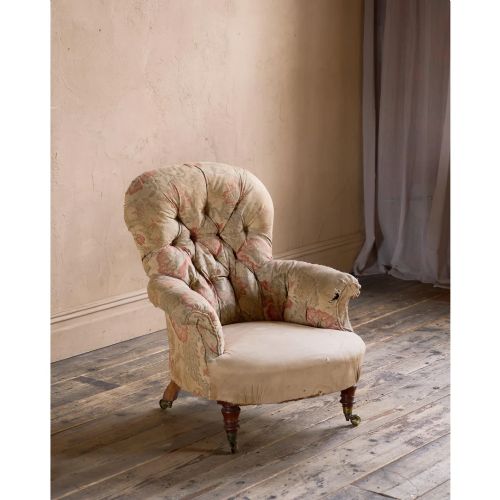
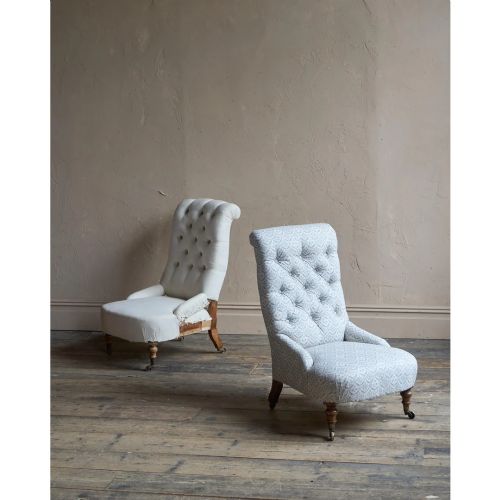
Victorian nursing armchairs appear in forms such as low salon chairs, slipper chairs, and bedroom chairs designed for nineteenth-century domestic spaces. These pieces share a low-set frame that allowed women to sit comfortably while tending to infants or dressing.
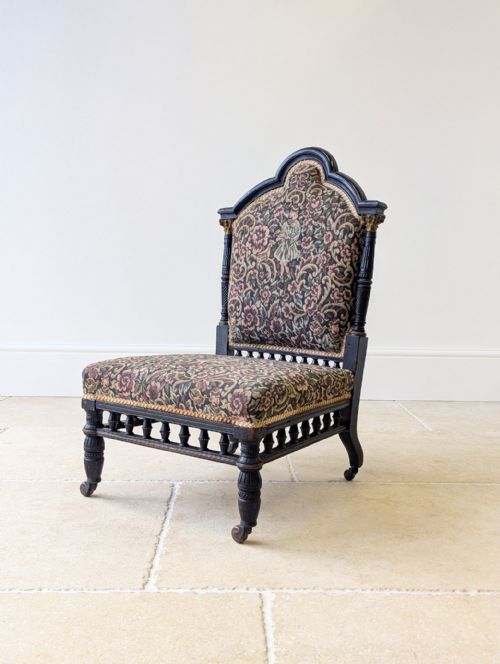
The selection on this page spans the nineteenth century into the Edwardian period, encompassing walnut, mahogany, and ebonised woods. Makers utilised styles ranging from Aesthetic Movement and Victorian Rococo Revival to William IV.
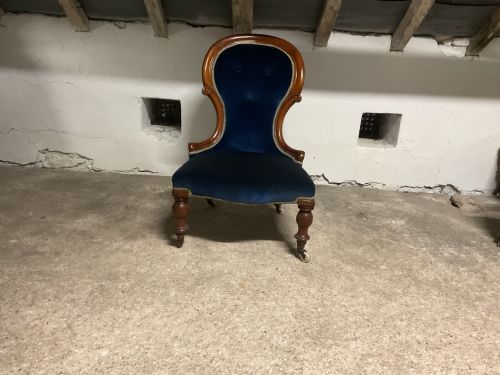
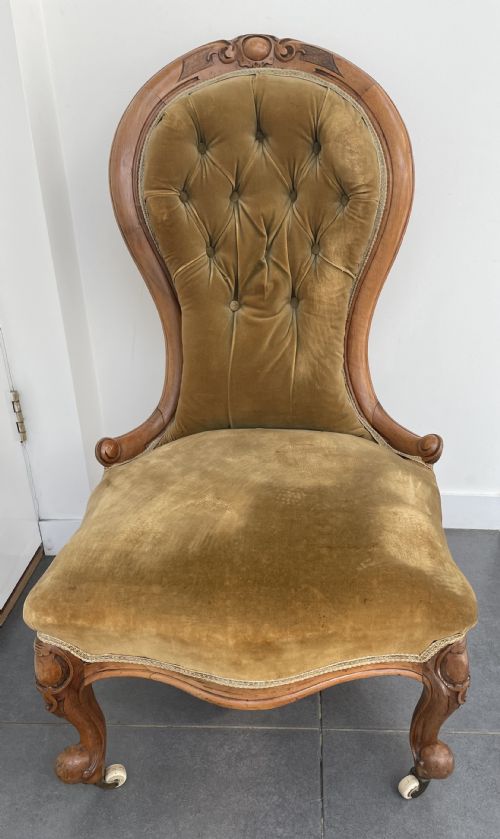
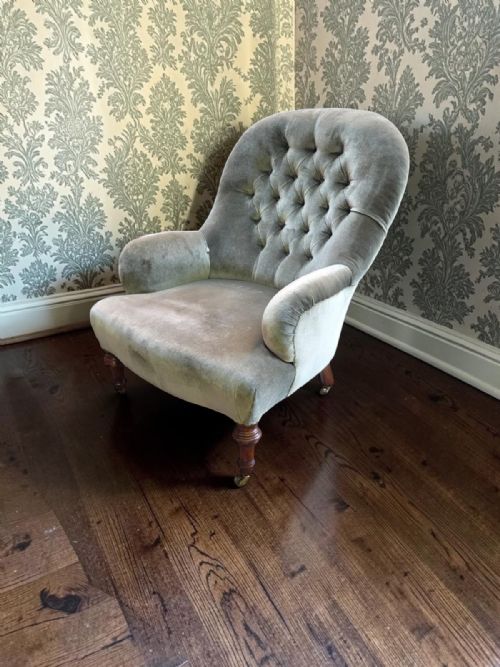
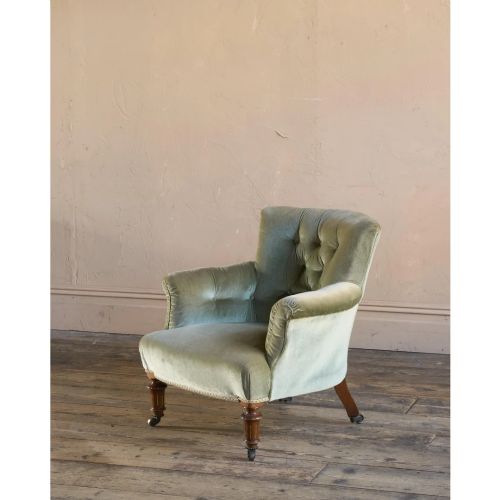
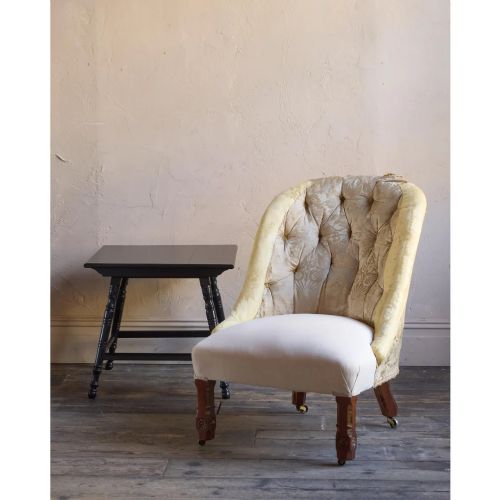
Low seats and spoon backs define the standard format of these chairs. Many examples feature upholstered button backs, velvet coverings, and turned wooden legs.
Materials and construction
Frames rely primarily on dense hardwoods like walnut and mahogany, carved or turned to form cabriole legs, bobbin framing, and barley twists. Brass castors frequently support the feet for ease of movement across carpets.
Upholstery forms a major component of these seats, utilising textile, velvet, fabric, and red leather over buttoned padding. Ceramic castors and iron backing occasionally reinforce the internal structure of the chair.
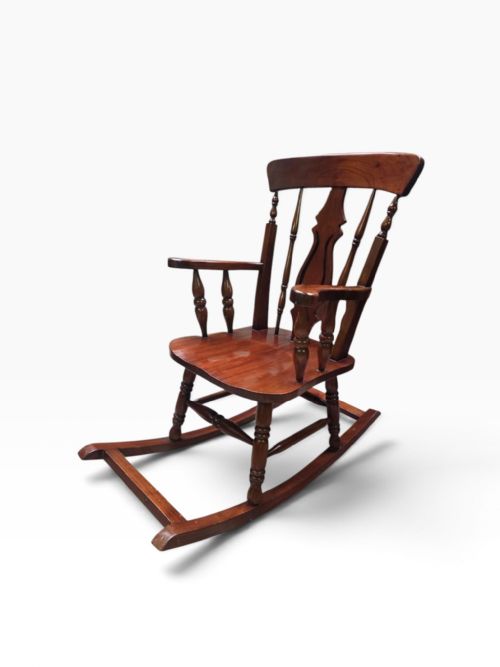
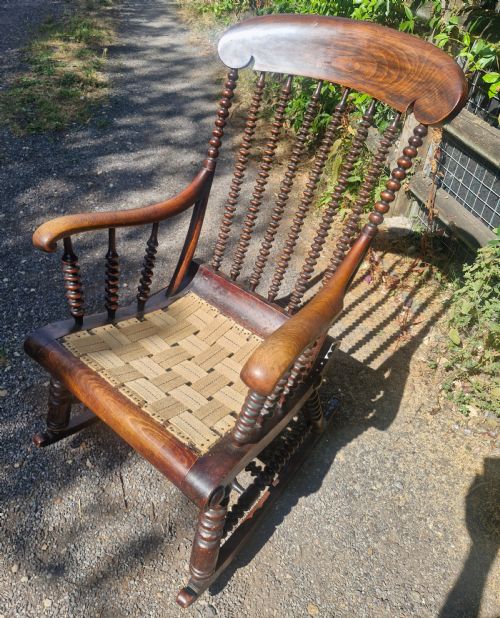
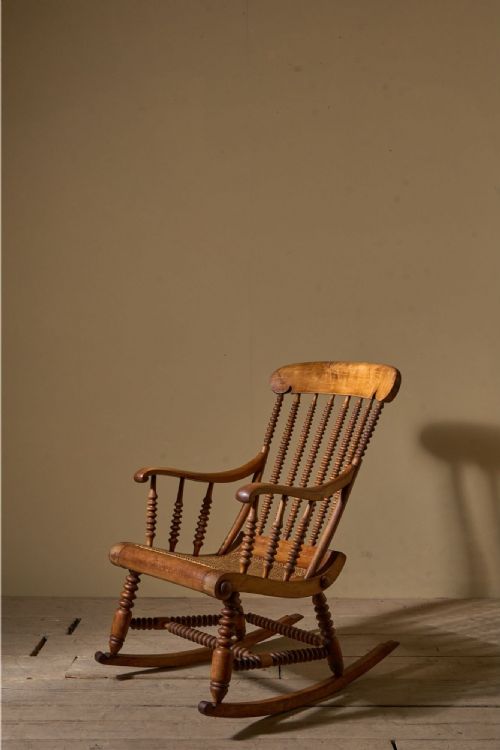
Some nineteenth-century rocking chairs feature bobbin turnings designed to soothe restless sitters long before modern ergonomics existed.
Assessing quality and craftsmanship
The refinement of the timber carving distinguishes ordinary pieces from exceptional examples. Walnut frames with deep, hand-carved details and balanced proportions sit at the upper end of the scale.
Upholstery finish and internal webbing dictate the integrity of the chair. Pieces retaining traditional button backing and sturdy frame construction demonstrate superior original manufacture.
Gillows·Holland & Sons·Howard & Sons
The Victorian Nursing Armchairs Glossary
- Spoon back
- An oval wooden chair back shaped to resemble the bowl of a spoon, providing ergonomic support for the spine. This form is common in mid-nineteenth-century seating.
- Button back
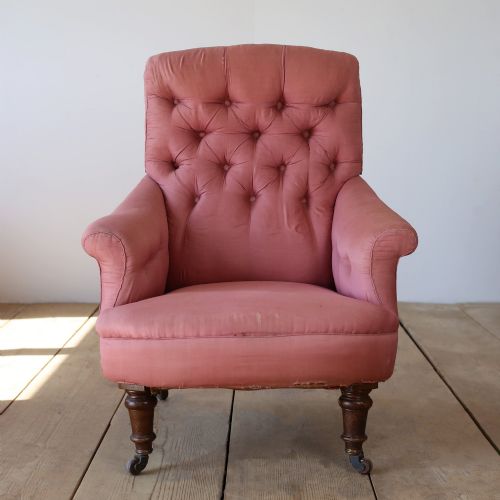
- An upholstery technique where deep buttons are pulled tight into the padding in a diamond pattern. This method secures the internal filling and creates a textured surface.
- Bobbin framing
- A style of turned woodwork shaped like a string of bobbins or spools. It appears frequently on nineteenth-century rocking chairs and salon seating.
- Cabriole leg
- A furniture leg that curves out and then in, resembling an animal's leg in motion. This shape terminates in a simple foot or castor.
- Aesthetic Movement
- A late nineteenth-century design style focusing on art for art's sake, often featuring ebonised finishes and geometric simplicity. Pieces from this movement reject heavy Victorian ornamentation.
Victorian Nursing Armchairs: Frequently Asked Questions
What is a nursing armchair?
A nursing armchair is a low-slung nineteenth-century seat designed without arms to allow women in voluminous Victorian dresses to tend to infants or dress comfortably.
These chairs typically feature padded button backs and short wooden legs fitted with castors for mobility around the bedroom or nursery.
How do I date a Victorian chair?
Dating relies on observing stylistic shifts, such as the heavy proportions of William IV pieces transitioning to the lighter ebonised frames of the Aesthetic Movement.
Timber choice also aids dating, as solid mahogany dominates earlier decades while walnut gains popularity by the mid-nineteenth century.
Can I use these in a modern living room?
These compact seats suit contemporary spaces as accent or occasional chairs, adding period contrast to modern interiors.
Their low profile makes them ideal for bedrooms, dressing rooms, or smaller sitting areas where standard armchairs overwhelm the floor space.
What is the difference between a slipper chair and a nursing chair?
Slipper chairs and nursing chairs both offer low seating designed for domestic tasks, with overlapping forms across the nineteenth century.
While terms blur in antique listings, slipper chairs traditionally served for putting on footwear, whereas nursing chairs accommodated child-rearing activities.