



Victorian Novelty Table Silver
Victorian novelty table silver brings wit and invention to the dining room, transforming practical vessels into animals, shells and hunting horns.
Victorian Novelty Table Silver
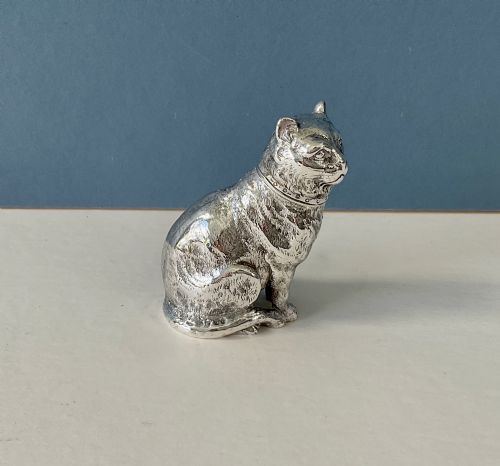
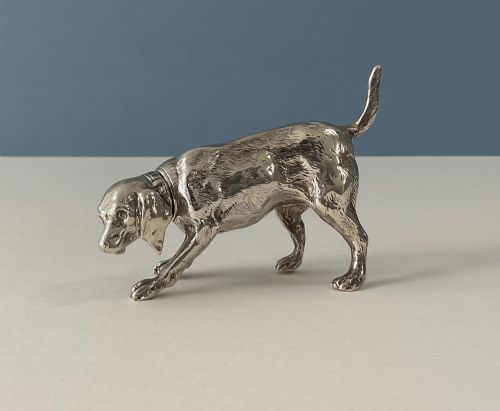
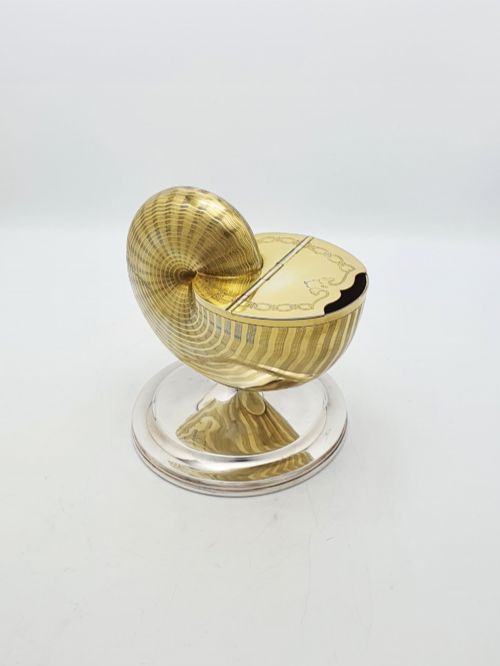
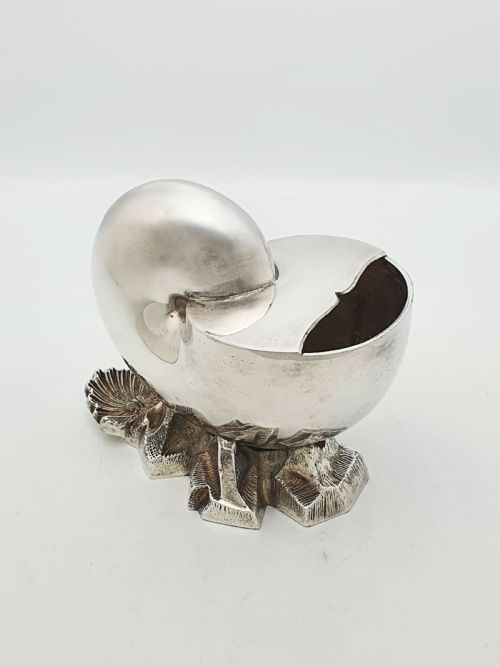
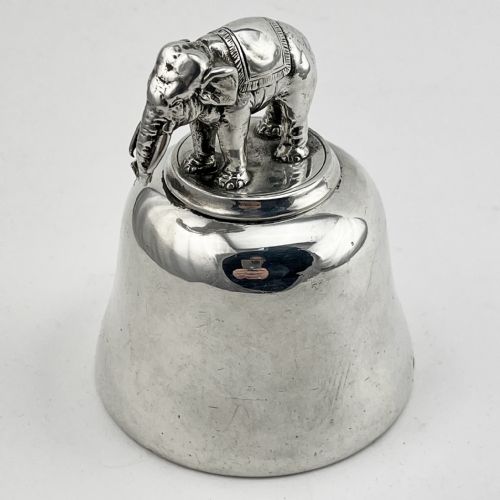
Victorian novelty table silver comprises decorative tableware cast or fashioned into playful, zoomorphic and architectural shapes designed to amuse guests at formal meals. These objects range from pepper pots shaped as cats, dogs, owls and birds to spoon warmers modelled on nautilus shells and castle turrets.
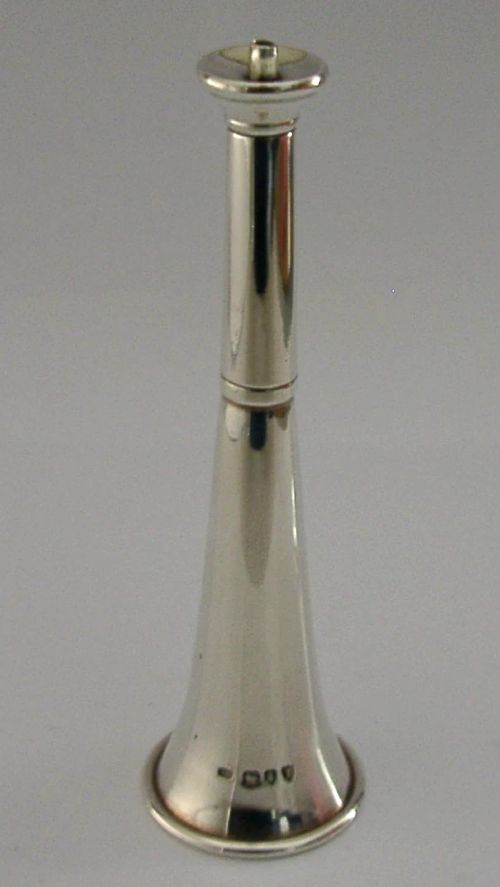
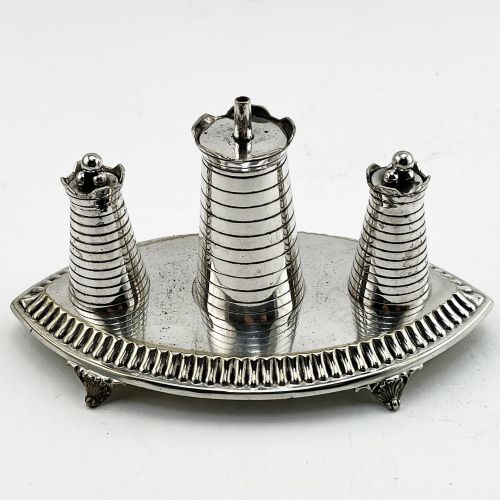
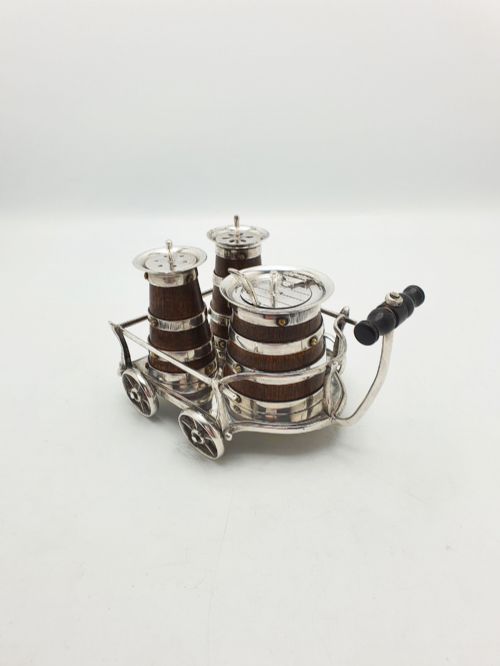
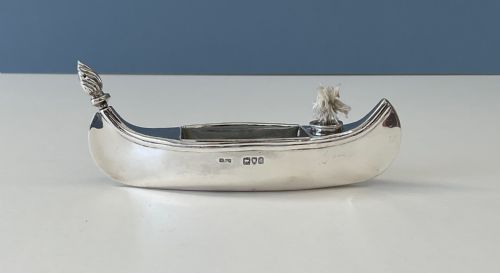
Cruet sets, condiment vessels and table lighters dominate the selection, often taking the form of canoes, farmyard scenes, carriages and hunting horns. Collectors frequently encounter sterling silver and silver plated pieces spanning the nineteenth century and the Edwardian era.
Materials and Technique
Silversmiths utilised sterling silver and silver plate over base metals, combining casting, hammering and detailed chasing to achieve realistic textures in feathers, fur and architectural stone. Glass, cut glass and oak frequently complement the metalwork in cruet sets, biscuit barrels and condiment containers.
Gilding, internal gilt washes and bespoke wirework stands appear across the selection, while structural elements rely on secure soldering and precise hinge placement for lidded vessels.
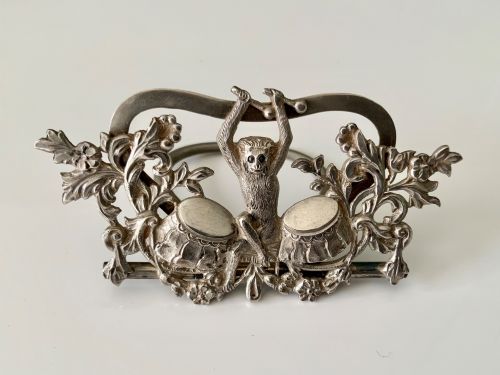
Squirrels, monkeys and cockatoos stand guard over dinner tables as unlikely guardians of pepper and salt.
Evaluating Quality
Quality rests upon the crispness of the casting and the naturalism of the modelling, where finer pieces capture anatomical detail and expression without relying solely on surface engraving. The weight of the metal and the integrity of any associated glass inserts or wooden elements further distinguish superior examples from standard production.
Makers' marks, clear hallmarks and legible registration numbers provide documentary evidence of origin that elevates a piece's standing among collectors.
BRAHAM·Sampson Mordan·Thomas Johnson·John Wilmin Figg
The Victorian Novelty Table Silver Glossary
- Cruet set
- A matched collection of bottles, castors or pots for holding condiments at the dining table. These sets often sit within elaborate silver plated or wooden stands.
- Spoon warmer
- A Victorian vessel designed to hold hot water for warming silver dessert spoons prior to serving course dishes. They frequently take imaginative shapes such as shells or animal figures.
- Pepperette
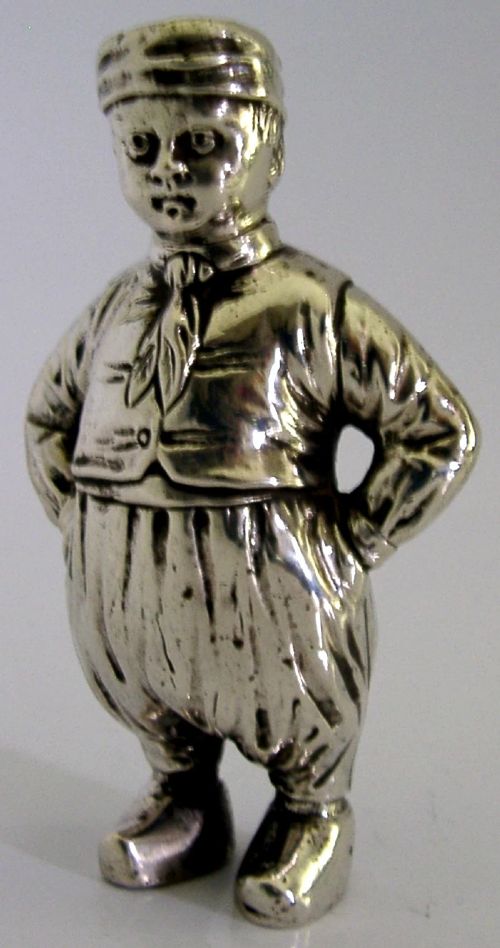
- A small shaker or pot specifically intended for dispensing ground pepper. In novelty silver, these are frequently cast as birds, animals or human figures.
- Table lighter
- A functional device for igniting cigars or pipes, placed centrally on a table or desk. Novelty versions employ themes like hunting horns, canoes or lamps.
- Hallmark
- An official stamp applied to precious metals indicating purity, the maker and the assay office. These marks assist in dating items accurately.
Victorian Novelty Table Silver: Frequently Asked Questions
How were novelty cruet sets used at dinner?
Hosts placed these figural condiment sets on the dining table to serve salt, pepper and mustard during formal multi-course meals. Guests interacted with the pieces directly or relied on servants to pass them.
Their unusual shapes served as conversation pieces intended to lighten the formal atmosphere of Victorian dining rooms.
What is a silver spoon warmer?
A spoon warmer is a hollow vessel filled with hot water before the meal to warm silver spoons. This prevented cold spoons from chilling melted fats on rich dishes.
Victorian silversmiths transformed these practical items into nautilus shells, animal figures and architectural elements.
How do I identify a table lighter?
Table lighters feature a small fuel reservoir and a burner wick housed within an artistic design. They are heavier than pocket vestas and sit firmly on a flat surface.
Common novelty themes include hunting horns, canoes and lamps that conceal the functional mechanism.
Are these pieces made of solid silver?
The selection includes both solid sterling silver and silver plated items over base metals. Hallmarks stamped directly onto the metal indicate solid silver content.
Silver plated versions offer the same intricate sculptural detail achieved through heavy electroplating.