





Victorian Needlework Box Table
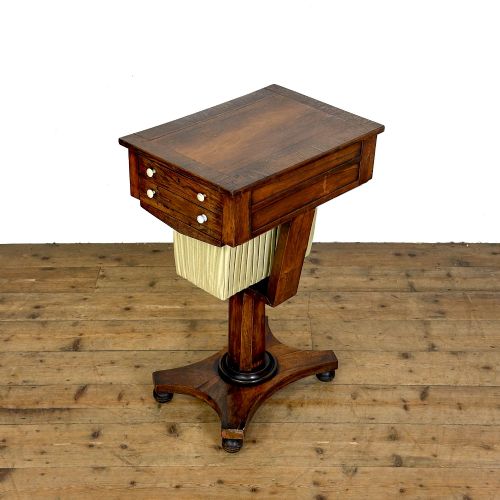
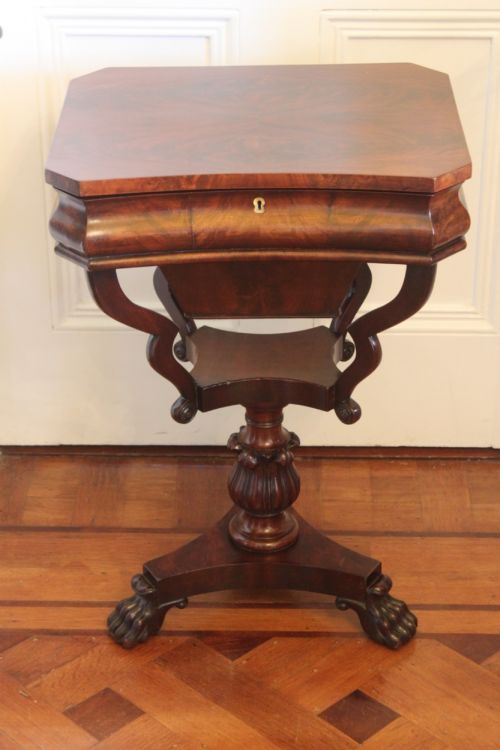
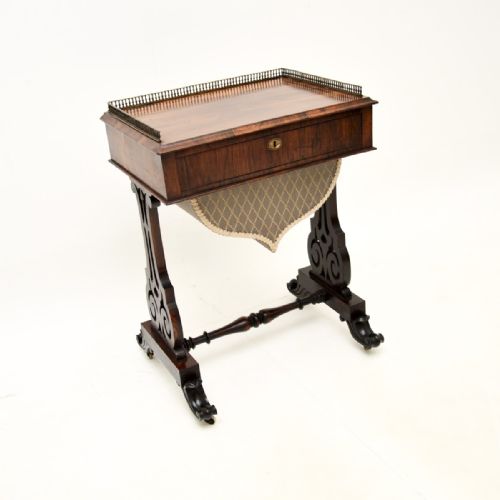
A victorian needlework box table combines a fitted compartment for sewing implements with a stable table surface, offering a practical yet refined piece of period furniture.
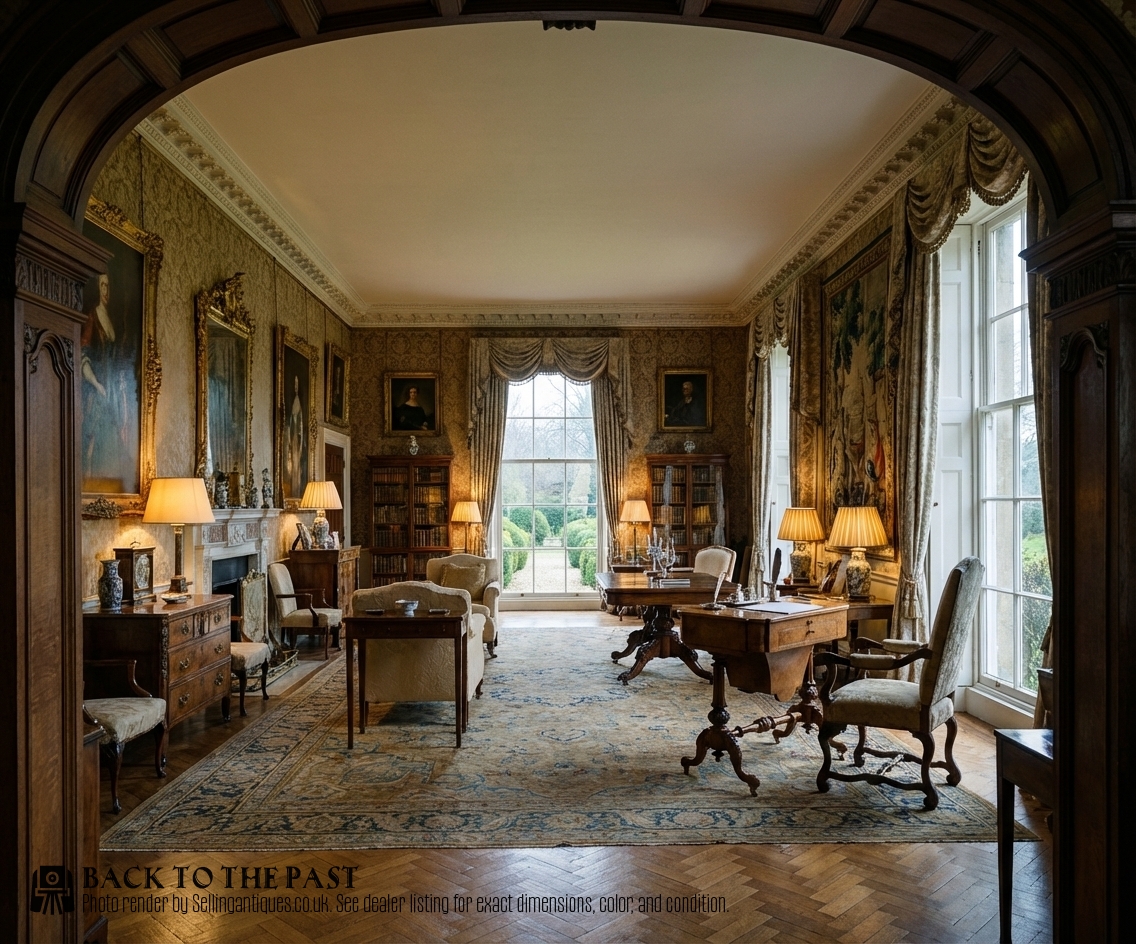
Victorian Needlework Box Table
A victorian needlework box table serves as a functional sewing station and a decorative side table for the home. These pieces combine a compartment or fitted interior for threads, needles, and textiles with a sturdy support structure.
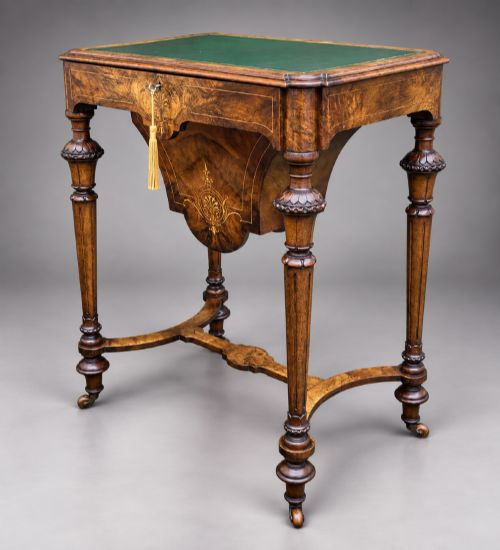
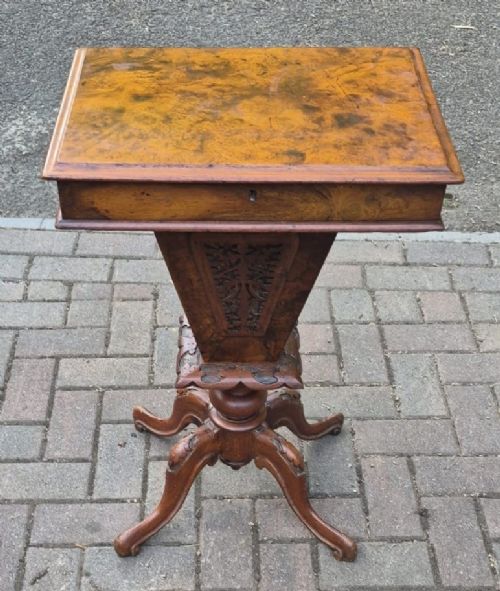
Most examples found here date from the nineteenth century, featuring the characteristic forms and rich timbers favoured by makers of that era. Sewing tables, work tables, and occasional side tables appear frequently across the selection.
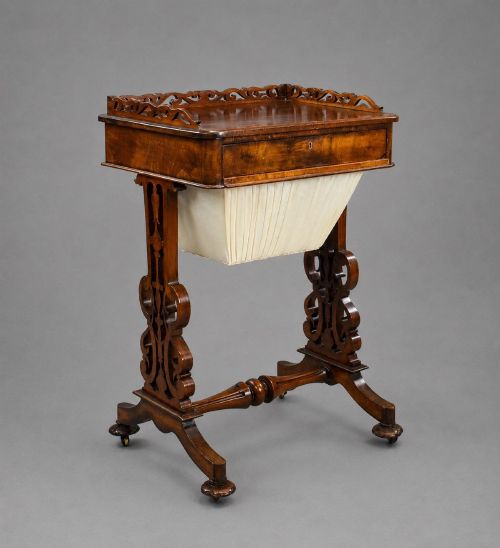
Makers designed these items for ladies' drawing rooms and parlours, providing a dedicated place for handwork that could be closed away neatly when visitors called. The integration of a box or bag beneath the tabletop distinguishes them from standard occasional furniture.
Materials and construction
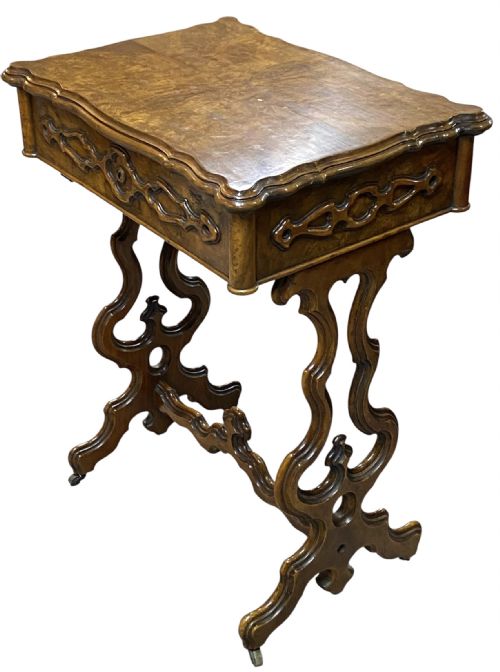
Cabinet makers utilised dense, richly figured hardwoods such as burr walnut, mahogany, and rosewood for the primary frames and tabletops. Wood inlay and marquetry ornamentation decorate the finer surfaces, complemented by brass fittings and delicate fabric components.
Construction techniques involve solid timber framing paired with carefully applied veneers to highlight the natural grain patterns. Fitted interiors incorporate small compartments, lids, and sometimes miniature drawers to organise sewing equipment.
Judging quality and craftsmanship
The choice of timber grain and the precision of the marquetry or wood inlay set the finer examples apart from simpler pieces. Burr walnut and figured rosewood showcase the cabinet maker's skill in selecting and matching decorative veneers.
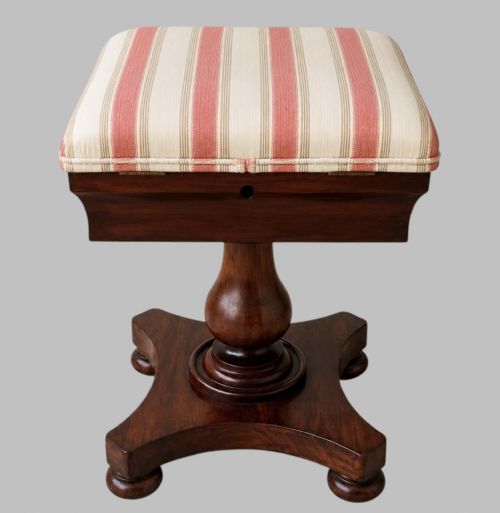
Interior organisation and the condition of the fitted compartments indicate the original grade of the work table. Elaborate detailing on the turnings, pedestal bases, and brass hardware reveals the standard of workshop production.
The Victorian Needlework Box Table Glossary
- Marquetry
- Decorative veneer patterns applied to woodwork to create pictorial or geometric designs. Craftsmen assemble thin slices of various timbers to form elaborate surface decoration.
- Burr walnut
- A highly prized wood featuring swirling, knotty grain patterns harvested from tree growths. Cabinet makers use its distinctive figuring for tabletops and cabinet fronts.
- Work table
- A nineteenth-century furniture form designed specifically for needlework and domestic crafts. These pieces typically incorporate storage compartments beneath the main surface.
- Fitted interior
- An organised compartment system built inside a box or drawer to hold small items securely. These sections often feature small lids, pin cushions, and dedicated slots for sewing tools.
- Drop-leaf
- A tabletop design with hinged flaps that fold down to reduce the overall footprint. This mechanism allows the furniture to save space when full extension is not required.
Victorian Needlework Box Table: Frequently Asked Questions
What is a victorian needlework box table used for?
These tables were designed to hold sewing gear, threads, and unfinished textile projects inside a dedicated compartment beneath the top surface.
Today, they function as practical side tables or lamp tables while retaining their original storage utility for modern hobbyists.
How do I identify a period sewing table?
Look for traditional nineteenth-century timbers like burr walnut and rosewood, alongside period construction methods such as hand-cut dovetails and turned pedestals.
The presence of an internal compartment fitted for needles and cotton distinguishes them from standard occasional tables.
What woods were used for these tables?
Cabinet makers predominantly worked with mahogany, rosewood, and walnut, often selecting figured varieties or burr veneers for the main surfaces.
Less common examples might incorporate birch, bamboo, or marquetry inlay to enhance the visual appeal of the piece.
Where should I place a work table at home?
These compact pieces fit well beside a sofa or armchair in a living room, functioning similarly to a standard side or lamp table.
Their decorative tops and fitted interiors also make them suitable for display in a hallway or bedroom.