





Carved Walnut Sewing Table
A carved walnut sewing table brings together domestic needlework and refined timber, offering a neat surface with hidden storage.
Carved Walnut Sewing Table
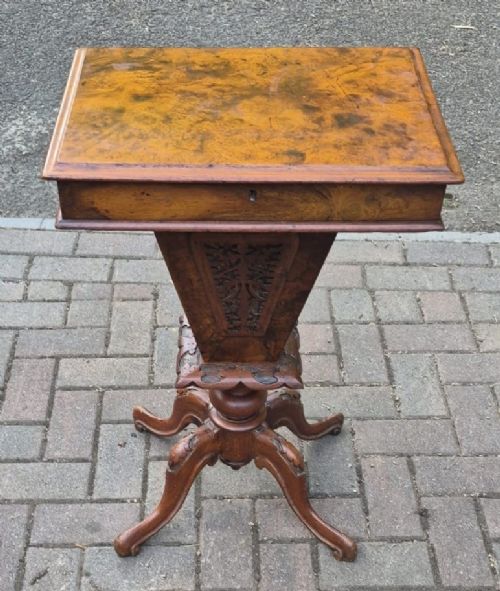
A carved walnut sewing table serves as both a decorative occasional piece and a practical repository for needlework and small crafts. Buyers browsing this selection meet predominantly Victorian examples, often taking the distinctive trumpet shape with an octagonal or circular top above an enclosed bag or box.
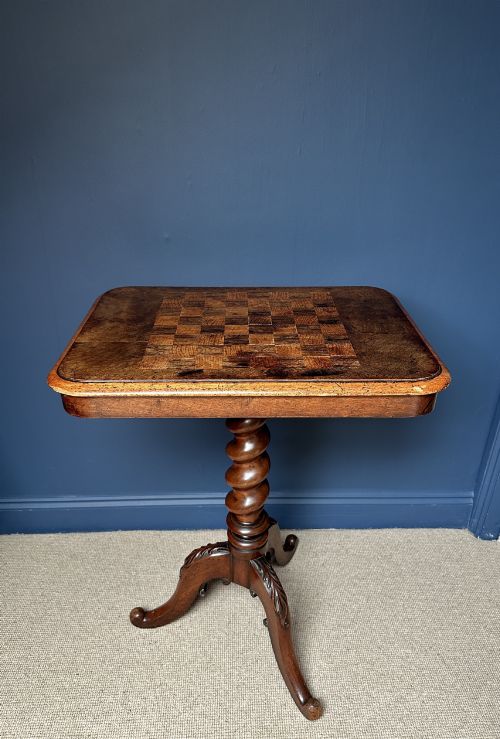
Many of these tables double as multi-purpose items, incorporating fitted interiors for threads alongside chess or backgammon boards on the surface. The design spans from mid-nineteenth-century domestic pieces through to early twentieth-century variations in figured timber.
Materials and Technique
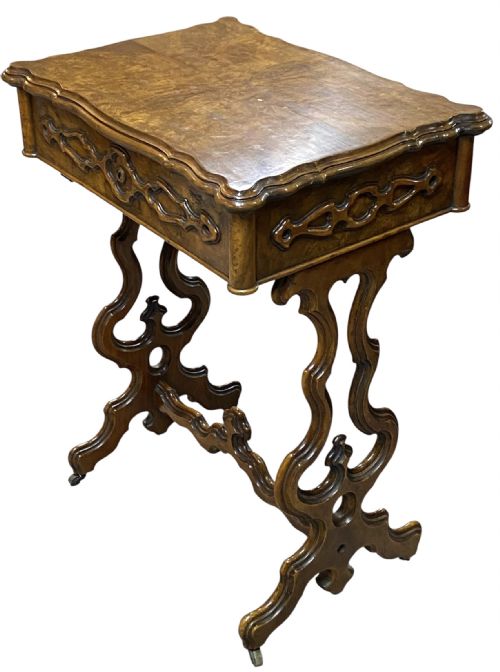
Cabinetmakers utilised solid walnut and decorative burr walnut veneers to construct these tables, often enhancing the surfaces with intricate boxwood, fruitwood, and general wood inlay. Marquetry and delicate stringing frequently define the lids and games boards, showcasing the high standard of nineteenth-century wood preparation.
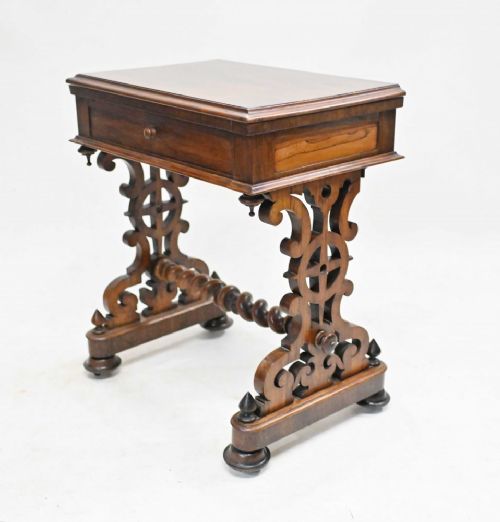
Structural support relies on carved and turned pedestals, tripod bases, and cradle mounts that hold the weighted bodies securely. Brass fittings appear on hinges and pulls, while fabric bags suspend beneath the main compartment to house sewing materials.
Listings feature Victorian walnut sewing tables alongside games and occasional tables incorporating brass and fabric.
Evaluating Craftsmanship
The distinction between standard examples and superior pieces rests on the choice of timber and the precision of the marquetry. Figured and burr walnut with rich natural grain patterns elevates a table, especially when matched with crisp carving on the pedestal supports.
Internal complexity also marks the upper tier of these items, with fitted compartments, original textiles, and multi-functional game boards remaining intact. The integration of solid construction methods with refined decorative detailing determines the standing of each piece.
Waring & Gillow
The Carved Walnut Sewing Table Glossary
- Burr walnut
- A prized timber veneer taken from the gnarled growths of the walnut tree, showing swirling grain patterns. It provides a highly decorative surface for nineteenth-century furniture lids and panels.
- Trumpet table
- A pedestal table featuring a flared, bell-shaped body that widens toward the base. This form houses the fabric workbag or internal storage compartment.
- Marquetry
- The art of applying small pieces of veneer to form decorative patterns and pictures on a wooden surface. Fruitwood and boxwood are commonly utilised for contrast against the darker walnut ground.
Carved Walnut Sewing Table: Frequently Asked Questions
What is a sewing table used for?
These tables were designed for domestic needlework, holding threads, needles, and fabric inside a compartment or suspended bag while providing a surface for handcrafts.
They also frequently functioned as small occasional tables or games tables for chess and backgammon within Victorian parlours.
How do I identify a Victorian sewing table?
Victorian examples typically feature walnut or burr walnut veneers, turned pedestal supports, and characteristic trumpet bodies or hinged lids opening to fitted interiors.
Many incorporate inlaid marquetry work or chess boards, dating their manufacture from the mid-nineteenth century onwards.
Where does the trumpet shape come from?
The trumpet form emerged during the nineteenth century as a stable and elegant way to support an internal workbag or box without heavy legs.
This design balances a narrow stem with a wide, flared body mounted on a tripod or cradle base.
Are these tables suitable for modern rooms?
Their compact proportions make them ideal as bedside tables, lamp tables, or small side pieces in contemporary living spaces.
The enclosed storage also offers a practical place to keep modern small items out of sight.