

Victorian Narrative Artwork
Victorian narrative artwork brings nineteenth-century domestic scenes, history and literature to life on canvas through detailed brushwork and storytelling.
Victorian Narrative Artwork
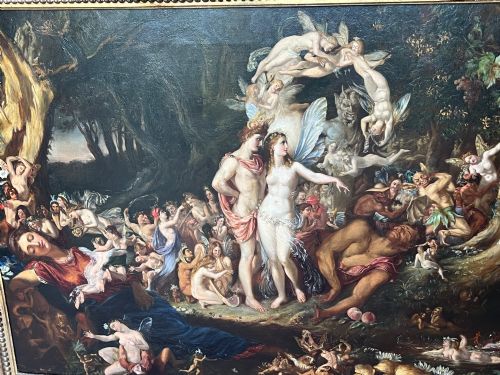
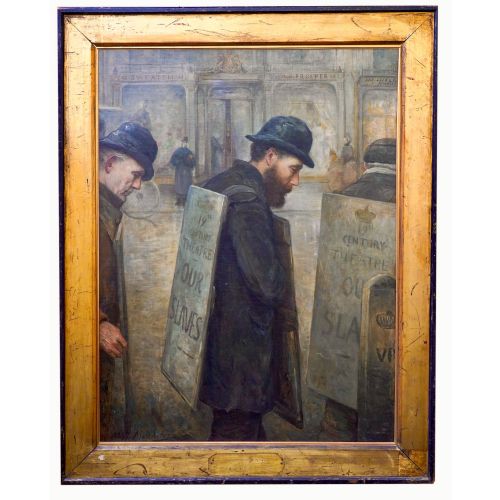
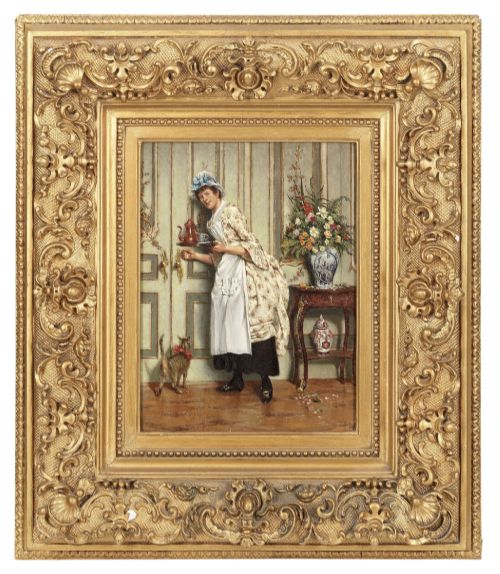
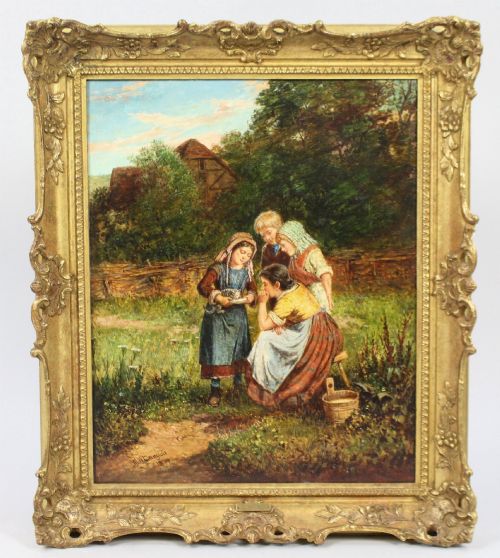
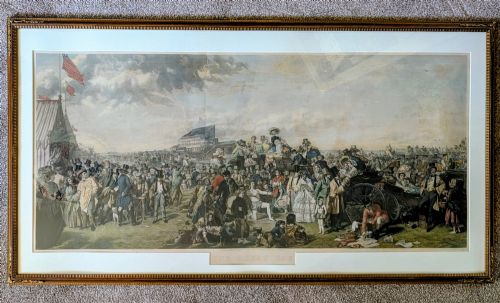
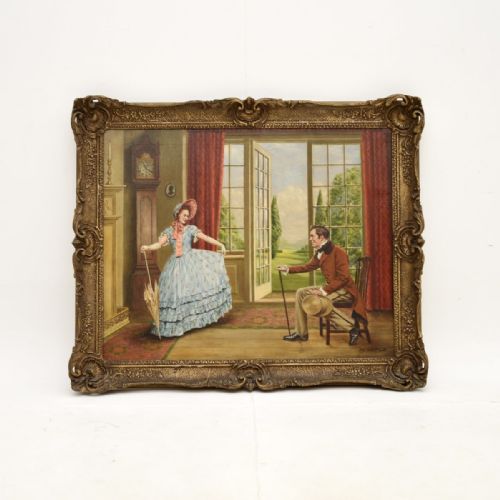
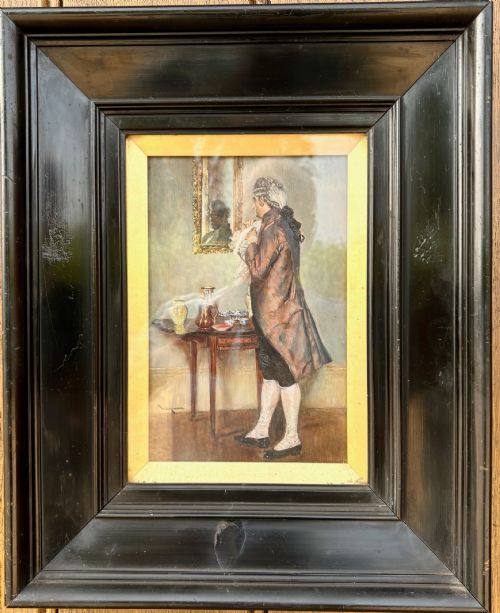
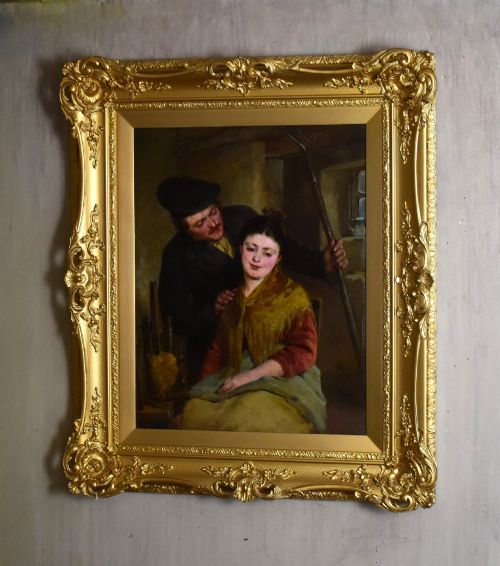
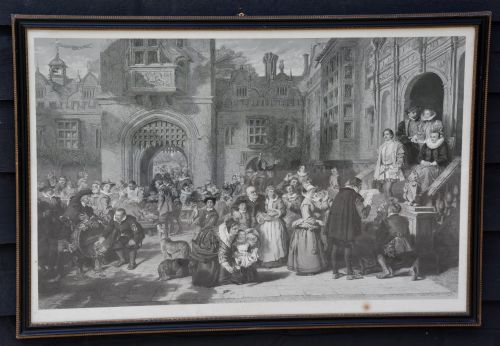
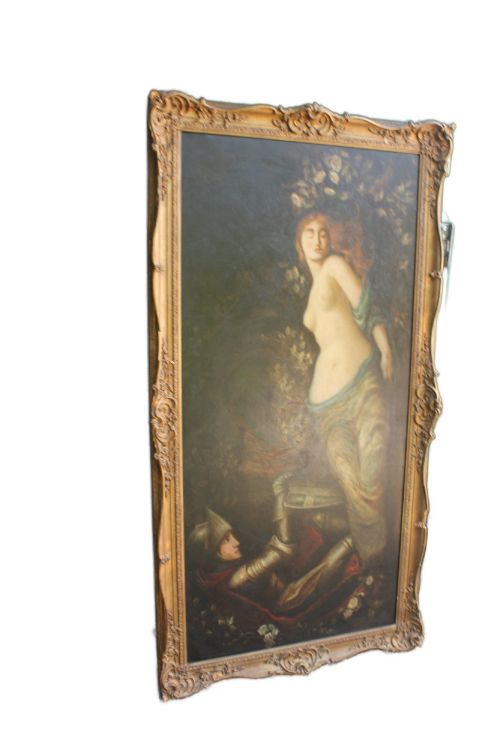
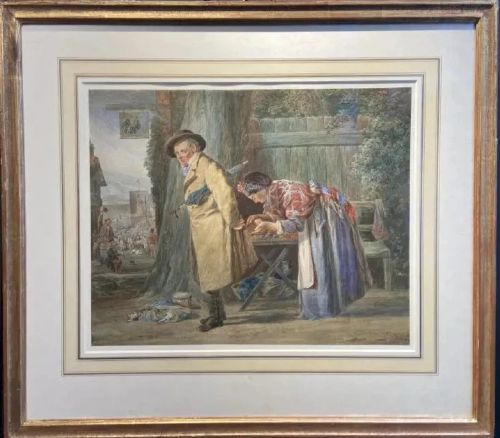
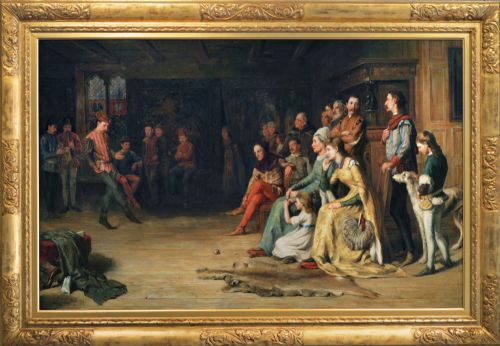
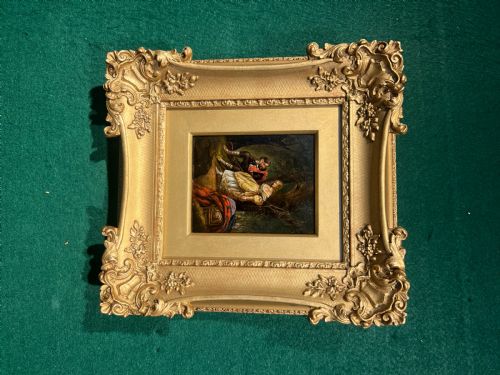
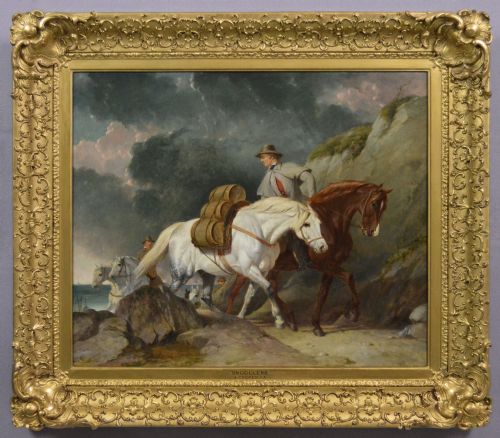
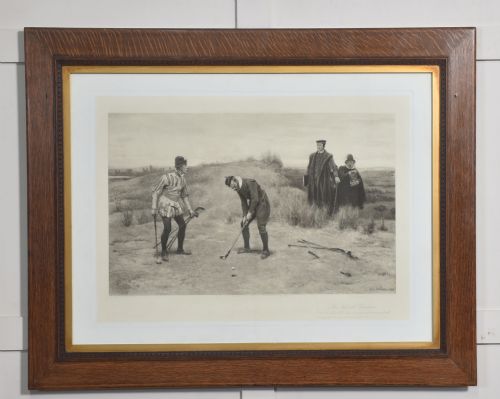
Victorian narrative artwork comprises framed oil paintings, watercolours and engravings that tell a clear story, from domestic cottage scenes and social history to Shakespearean and biblical subjects. When you search for victorian narrative artwork, you meet pieces dated from the mid-nineteenth century up to the early twentieth century, spanning genres like social realism and interior scenes. The most common survivals on this page are oil paintings on canvas or panel, alongside large framed engravings that brought popular storytelling imagery into nineteenth-century homes.
The subjects range from intimate domestic moments like tea time and children playing to historical romances, literary adaptations and dramatic coastal scenes with smugglers or horses. These works record the everyday lives, anxieties and moral values of the period, often focusing on interactions between characters within carefully rendered interiors or landscapes. Painters and printmakers of the era used expressive gestures and detailed settings to draw the viewer directly into the unfolding drama of the scene.
Materials and methods
The physical foundation of these pieces relies primarily on oil paint applied to canvas or wood panels, alongside watercolours on paper and printed engravings. Canvases are frequently housed in period frames constructed from wood and giltwood, sometimes retaining their original Hogarth mouldings or decorative surrounds.
Artists built their compositions using refined brushwork to render fabrics, interior light and facial expressions with precision. Printmakers translated popular compositions into large engravings, allowing detailed narrative scenes to reach wider audiences beyond the original oil paintings.
Listings feature nineteenth-century oil paintings on canvas and panel, alongside engravings framed in wood and giltwood.
Judging the work
Quality in these pieces rests upon the artist's ability to render human anatomy, facial expressions and intricate interior details with conviction. Stronger examples demonstrate a confident handling of light and shadow, creating depth within the domestic or historical setting.
The vitality of the narrative execution distinguishes finer works from routine studio output. Pieces where every figure contributes purposefully to the unfolding drama hold the viewer's attention far more effectively than static compositions.
Sir Joseph Noel Paton·Felix Stone Moscheles·Stephen Samuel Lewin·Mark William Langlois·William Powell Frith·Alfred Lyndon Grace·Howard Helmick·Joseph H Barnes·James Hamilton·Abraham Cooper·J C Dollman·Delapoer Downing·John A Monteith·James Hayllar·Harry Brooker·Byam Shaw·Alexander Rosell·William Arthur Breakspeare·Charles Bellay·John Arthur Lomax·George Bernard O'Neill·Charles Haigh Wood·Haynes King·Charles Burton Barber·James Kyd
The Victorian Narrative Artwork Glossary
- Genre painting
- The pictorial representation of scenes from everyday life, typically involving ordinary people in domestic or public settings.
- Social realism
- An artistic movement highlighting the real-life conditions of the working classes and contemporary social issues.
- Giltwood
- Wood, typically carved timber, that has been coated with a thin layer of gold leaf or gilt.
- Engraving
- A printmaking technique where an image is incised into a metal plate, allowing multiple detailed impressions on paper.
Victorian Narrative Artwork: Frequently Asked Questions
What subjects appear in Victorian narrative artwork?
These pieces depict literary scenes, historical events, biblical stories and domestic interior moments involving figures such as children, servants and courting couples.
Artists drew inspiration from Shakespeare, social history and everyday Victorian life to construct engaging visual stories.
Are these pieces painted in oil or watercolour?
The majority of the works recorded here are executed in oil paint upon canvas or wood panels, though some examples utilise watercolour on paper.
Engravings also appear frequently, reproducing popular compositions as framed wall art.
How do I date a Victorian narrative painting?
Dating relies upon recorded artist exhibition spans, stylistic markers of Victorian realism and occasional signatures or inscriptions on the canvas reverse.
Period framing styles and framing materials can also offer helpful clues to the decade of creation.
How should I display these artworks at home?
These framed paintings and prints suit traditional wall spaces, library rooms or studies where their detailed storytelling can be appreciated up close.
Pairing them with period wood furniture or neutral walls allows the gilt frames and rich oil colours to stand out.