
19th Century Genre Scene
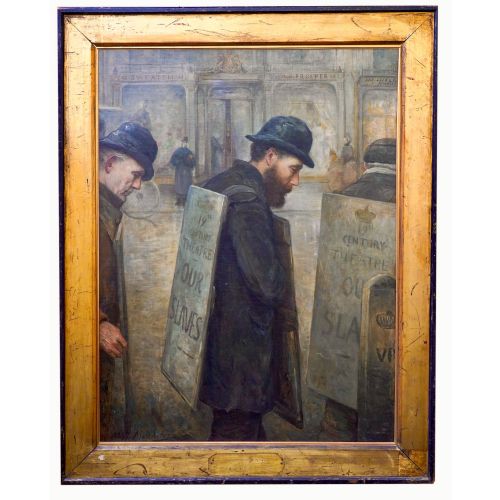
When you search for a 19th century genre scene, you enter a world of domestic interiors, street life and quiet historical moments painted to tell a story.
19th Century Genre Scene
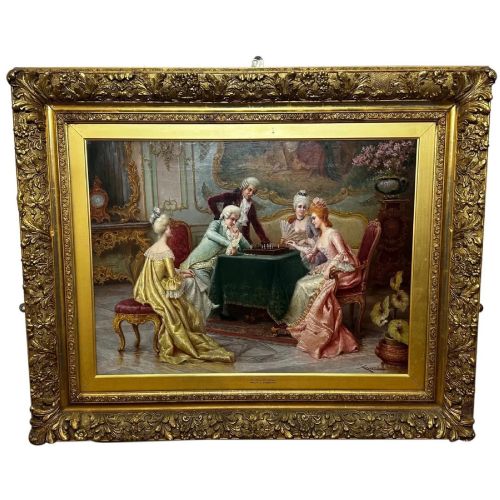
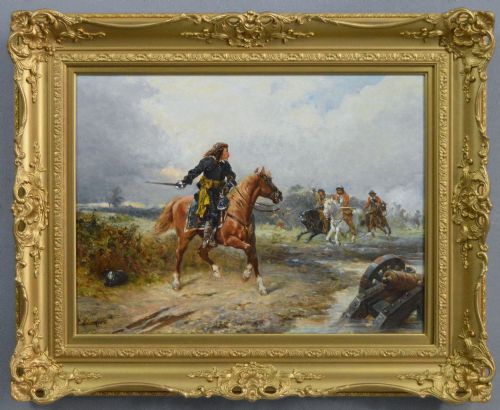
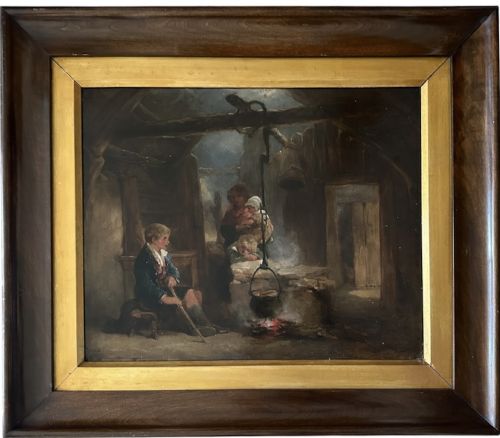
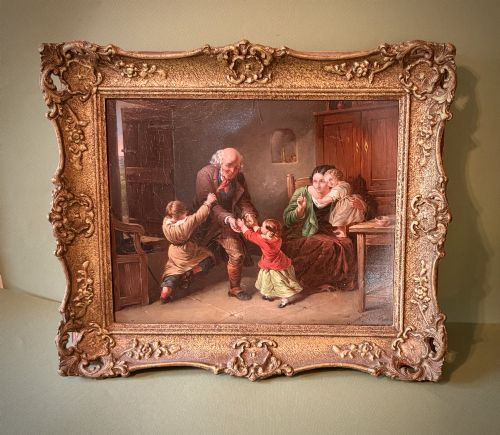
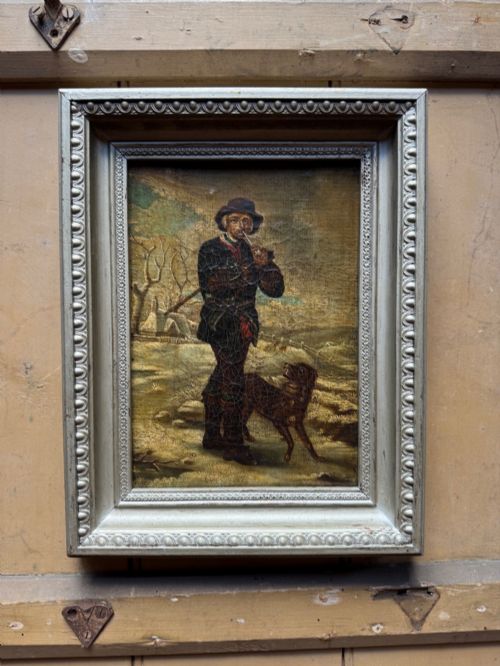
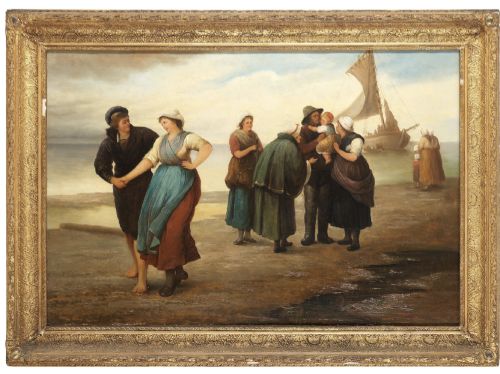
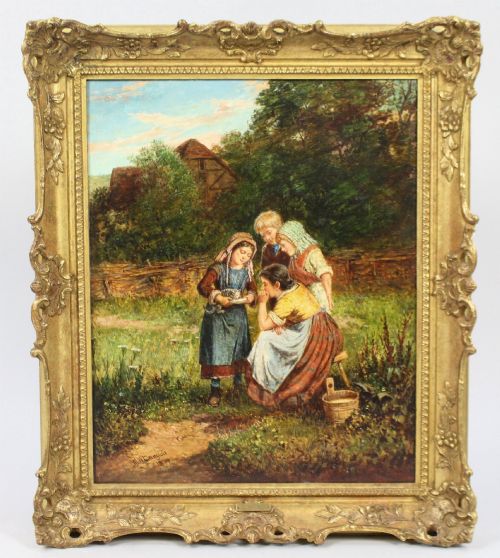
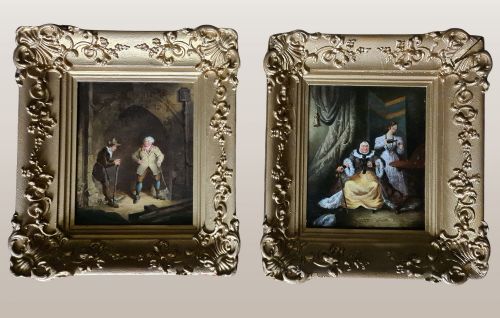
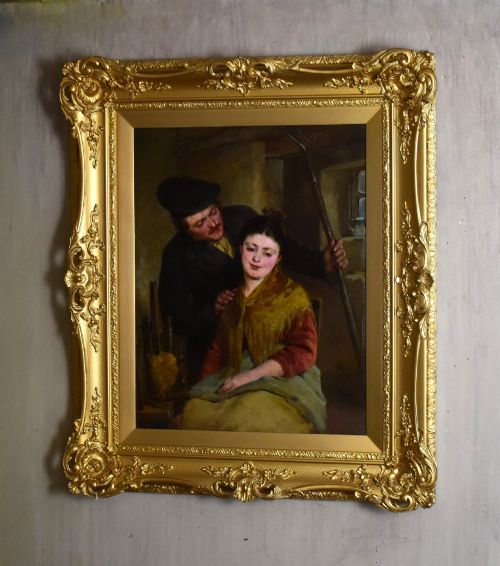
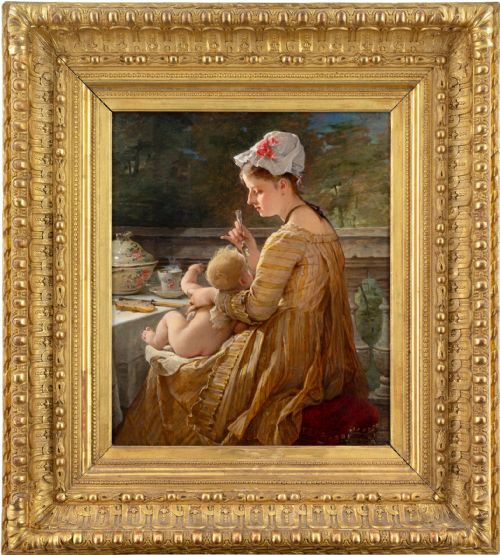
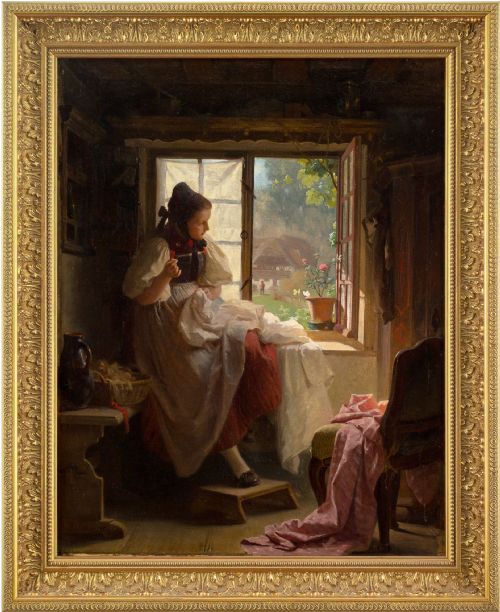
A 19th century genre scene captures everyday life, portraying ordinary people at work, at leisure, or within domestic and tavern interiors rather than grand historical or mythological events. These works reflect the social interests, moral narratives, and domestic ideals of the Victorian and broader nineteenth-century periods across Britain and continental Europe.
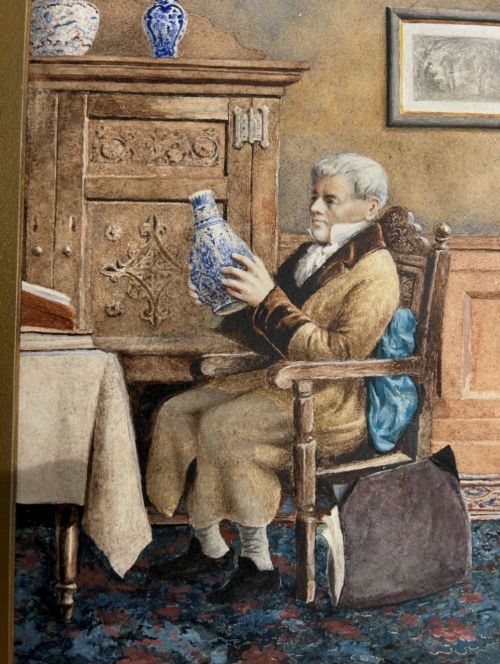
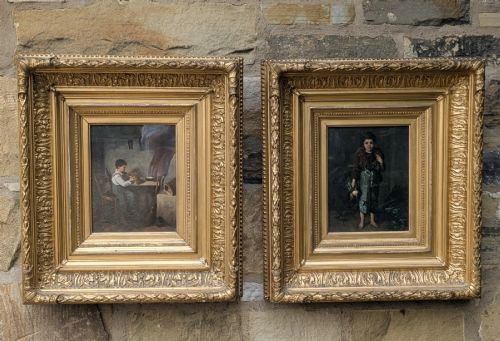
You are most likely to meet oil paintings on canvas or board, alongside watercolours on paper, framed and often set within period giltwood and gesso frames. The subjects range from children and animals to soldiers, card players, and artisans caught in quiet domestic or social interactions.
Materials and methods
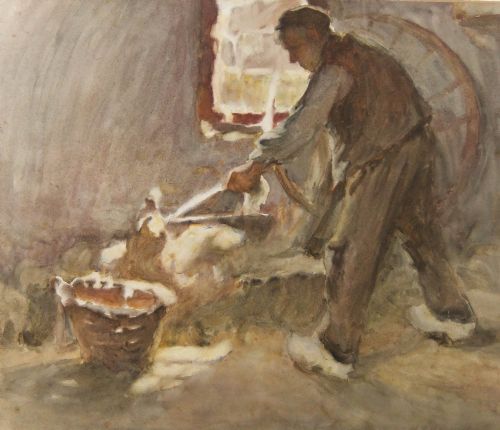
Artists of this period relied primarily on oil paint applied to stretched canvas or prepared wooden boards, building up layers to achieve depth in figures and interiors. Watercolours on paper served both as finished exhibition pieces and preparatory studies, capturing swift light and detail.
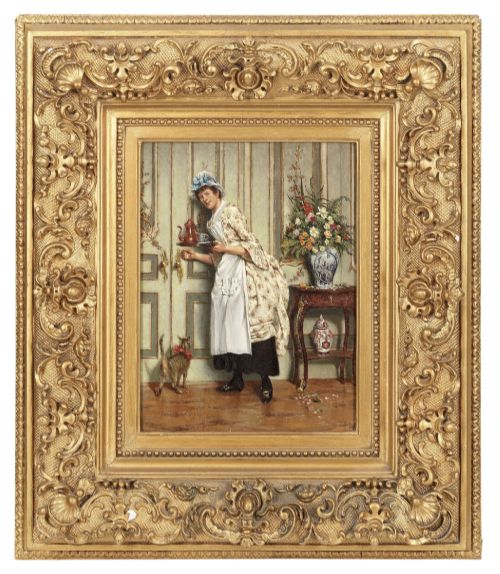
The finished artworks were housed in ornate frames constructed from wood and gesso, frequently finished with gold leaf. These frames formed an integral part of the presentation, often bearing the stylistic hallmarks of Victorian craftsmanship.
19th Century Genre Scene Retail Price Guide 2026
Typical asking prices for 19th century genre scene among the pieces listed under this phrase on Sellingantiques today, from the lower quarter to the upper quarter. They describe what is for sale here now, not the wider market.
Several canvases record domestic cats supervising kitchen tasks and sharing meals with the household.
Distinctions in quality
Quality rests in the handling of narrative detail, facial expression, and the natural interaction between figures within the painted space. The skill of the artist shows in how light falls across an interior room or outdoor gathering, bringing texture to fabrics, wood, and skin.
The preservation of the original paint surface and the integrity of the period frame also influence the standing of a piece. Works by artists who exhibited at formal salons or held academic positions display a surer grasp of composition and character.
Carlo Ferranti·Robert Alexander Hillingford·George Whitton Johnstone·Felix Stone Moscheles·Henry Stacy Marks·Mark William Langlois·Henry Silkstone Hopwood·Howard Helmick·Adelaïde Salles-Wagner·Max Kaltenmoser·George Augustus Holmes·Joseph H Barnes·Louis Charles Verwee·Charles Hunt·Hendrik Valkenberg·Joseph Farquharson·Bernard De Hoog·J. C. Dollman·Renato Moretti·Jacob Akkersdijk·Albert Ludovici Jnr·Harry Brooker·GEORGE KILBURNE·Benjamin Eugene Fichel·Alexander Rosell
The 19th Century Genre Scene Glossary
- Genre painting
- The pictorial representation of scenes from everyday life, involving ordinary people in domestic, street, or social settings. This forms the core subject matter of the works gathered here.
- Oil on canvas
- Pigments bound in a drying oil applied to a woven fabric stretched across a wooden frame. This medium allowed artists to work slowly and blend tones smoothly.
- Gesso
- A plaster-like mixture applied to wood as a base for moulding ornamental details on frames before gilding. It provides the crisp relief seen on Victorian picture frames.
- Watercolour
- A paint consisting of colour suspended in a water-soluble binder, typically applied to paper. It offers a translucent quality suited to lighter interior and landscape scenes.
- Giltwood
- Wood carved and coated with gold leaf or gold paint to create a reflective metallic finish. It was the standard treatment for framing fine art throughout the nineteenth century.
19th Century Genre Scene: Frequently Asked Questions
What is a nineteenth-century genre painting?
A nineteenth-century genre painting depicts ordinary people engaged in daily activities, domestic chores, or social gatherings. These works focus on human narrative rather than portraiture or grand historical events.
Artists aimed to capture authentic moments of life, ranging from quiet cottage interiors to bustling street scenes and tavern encounters.
How should I care for an antique oil painting?
Keep antique oil paintings away from direct sunlight and fluctuating humidity to prevent the canvas from warping and the paint from cracking. Dust the surface gently with a soft, dry brush without applying pressure.
Avoid using water or cleaning solutions on the paint layer. If restoration is needed, consult a professional conservator.
Were these watercolours meant to be framed?
Yes, nineteenth-century watercolours were intended for display and were typically framed behind glass to protect the paper from dust and moisture. Many retain their original giltwood or wooden frames from the period.
Displaying them out of direct sunlight prevents the pigments on paper from fading over time.
How can I tell if a frame is original?
Original frames from the nineteenth century often show age-appropriate wear to the gesso and gold leaf, such as minor cracking or rubbing on high points. The backboards, fixings, and construction methods should align with the period of the artwork.
Examining the rebate where the painting sits can also reveal whether the artwork has remained in its initial housing.