




Victorian Mourning Pendant
These Victorian mourning pendant pieces hold miniature portraits, woven hair and enamel work to remember those who passed.
Victorian Mourning Pendant
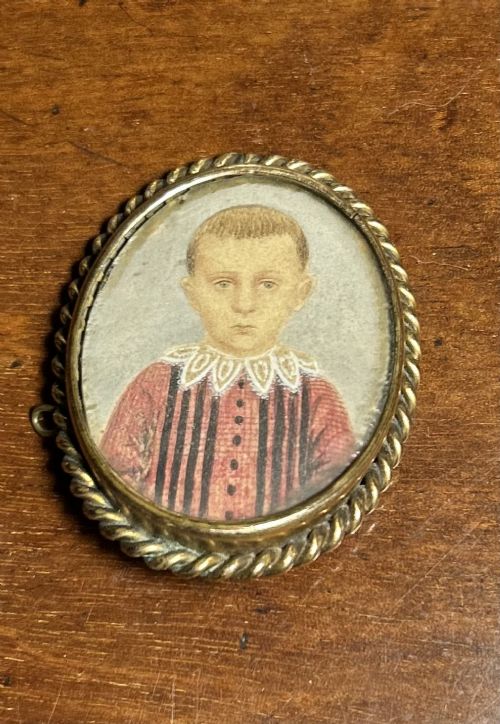
The selection here includes gold and silver items featuring glazed compartments for hair work, enamel details and miniature portraits. Many items combine functions, serving as both brooches and pendants with fitted suspension loops.
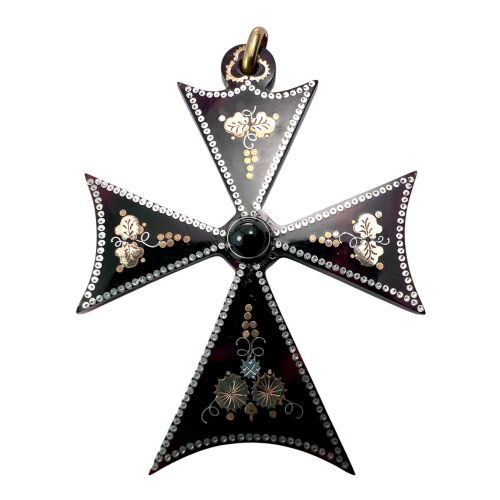
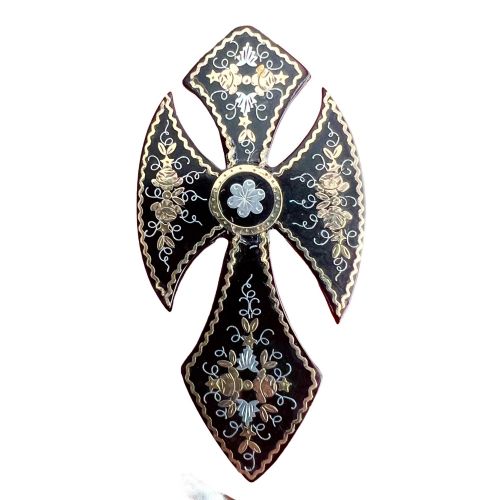
Mourning jewellery from this period often incorporates symbolic motifs such as crosses, hearts and buckles. Buyers encounter various carats of gold alongside silver and tortoiseshell constructions.
Materials and Construction
Maker workshops utilised high carat gold, silver and tortoiseshell as the primary structural bodies for these memorial items. Metalwork often displays intricate silver and gold inlay, wirework or engine-turned engraving.
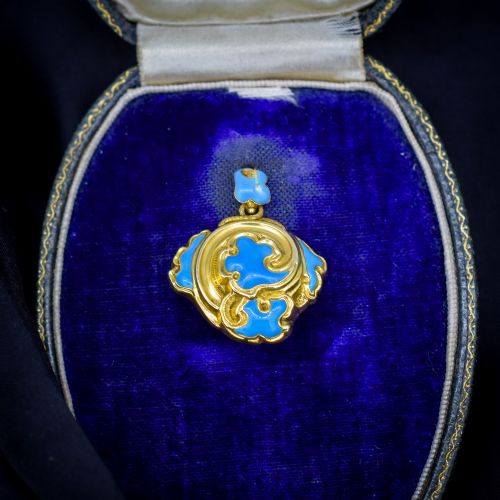
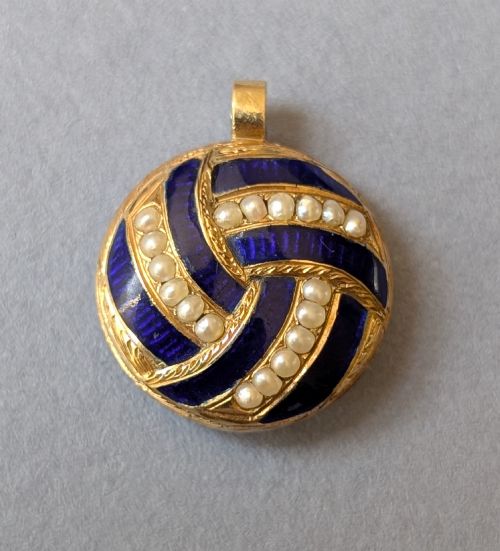
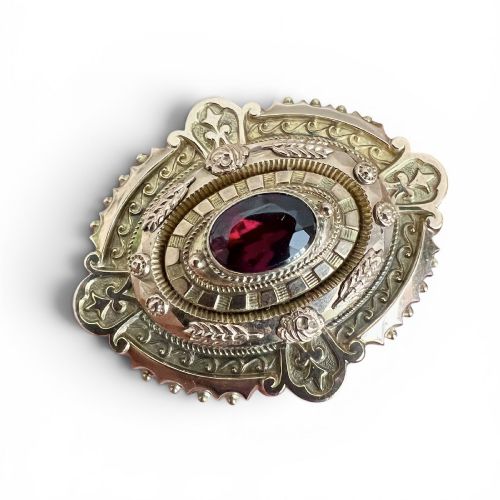
Enamel in blue and black tones decorates many surfaces, frequently paired with seed pearls, garnets and diamonds. Glazed compartments securely house delicate hair work arrangements and portrait miniatures behind glass.
Evaluating the Craftsmanship
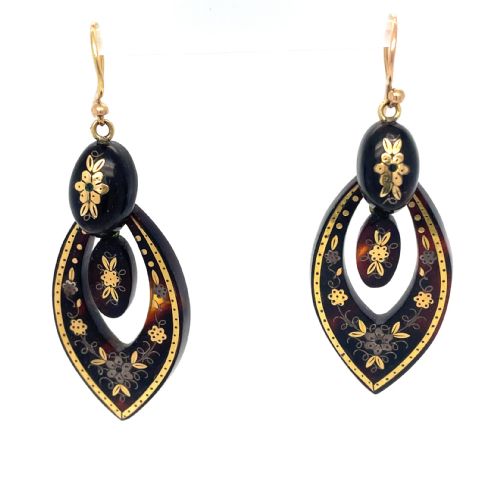
Quality rests in the precision of the metalwork, from fine Etruscan Revival granulation to detailed tortoiseshell piqué inlay. Superior examples retain intact enamel without loss and secure glazed bezels protecting the internal compartments.
The choice of materials distinguishes different tiers, with high carat gold and gemstones such as diamonds and garnets marking out finer works. The complexity of the internal hair work or portrait painting further indicates the maker's skill.
The Victorian Mourning Pendant Glossary
- Piqué
- A technique involving inlaid gold or silver pins pressed into tortoiseshell or horn to form decorative patterns. This method creates geometric designs and floral motifs across the surface.
- Hair work
- The Victorian art of arranging human hair into intricate floral or abstract patterns to place inside a memorial locket. Artisans used specialised tools to braid and shape the strands.
- Locket
- A small hinged case designed to hold a portrait, photograph or lock of hair. These pieces often feature glazed internal frames.
- Etruscan Revival
- A nineteenth century design style inspired by ancient archaeological discoveries in Italy. This aesthetic utilises granulation, wirework and high carat gold.
- Engine-turned
- A mechanical method of engraving precise geometric patterns onto metal surfaces using a lathe. This technique provides texture and light reflection on gold cases.
Victorian Mourning Pendant: Frequently Asked Questions
What is inside a Victorian mourning pendant?
These pieces typically contain a glazed compartment holding braided human hair, a miniature portrait or a small photograph.
Some examples also incorporate woven silk or tiny seed pearls arranged to form sentimental symbols.
How do I wear a convertible brooch pendant?
Convertible pieces feature a fold-down loop and a pin finding on the reverse side.
This dual mechanism allows the wearer to attach the item to clothing as a brooch or suspend it from a chain as a pendant.
What does black enamel signify?
Black enamel on nineteenth century jewellery serves as a direct indicator of mourning and remembrance.
Blue enamel, conversely, often represents eternal love or memory rather than strict bereavement.
How can I tell the gold carat?
Many British items bear hallmarks indicating the specific gold purity, such as fifteen carat or eighteen carat standards.
Pieces without visible marks are assessed through professional testing of the metal density and colour.