


Victorian Gold Enamel Locket
A victorian gold enamel locket holds hair, portraits or memories beneath glass, combining high-carat precious metal with vitreous colour.
Victorian Gold Enamel Locket
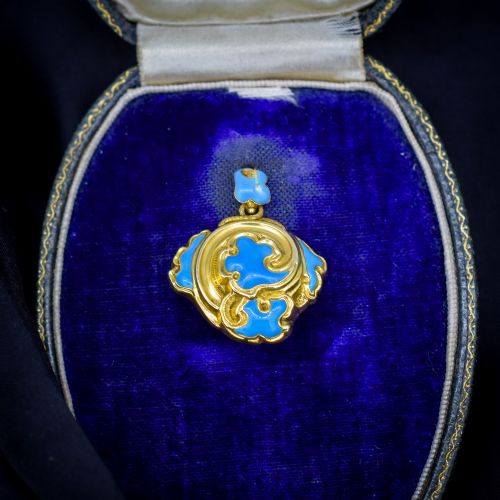
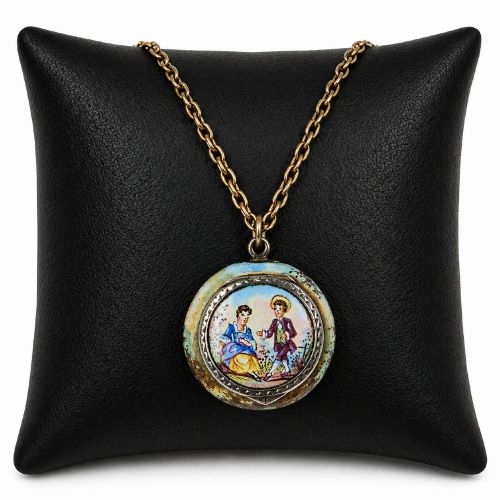
A victorian gold enamel locket serves as a personal keepsake, combining a hinged compartment for photographs or hair with decorative glass-fused pigment. These pieces span the nineteenth century, taking the shape of hearts, crosses, rounds, and double-sided pendants.
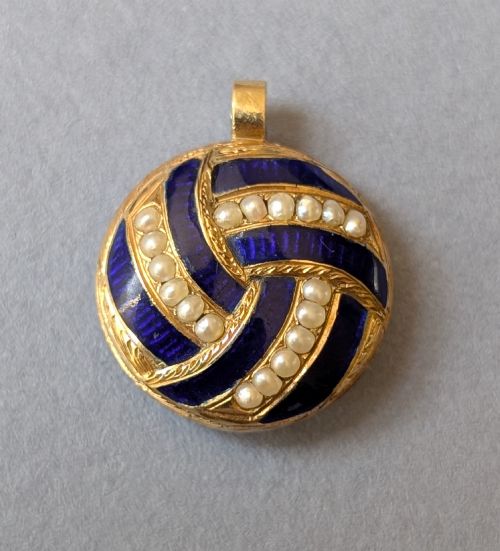
The most common examples on this page date from the Victorian era and the late nineteenth century, often executed in yellow gold alongside blue enamel. Makers also produced convertible pendant brooches and mourning pieces set with seed pearls or diamonds.
Earlier and later crossover periods appear among the selection, including eighteenth-century portrait pieces and Edwardian interpretations. Continental workshops contributed distinct regional styles, such as Viennese and French workmanship.
Materials and construction
Goldsmiths utilised various purities of yellow gold, ranging from nine carat up to eighteen and twenty-two carat, sometimes employing rolled gold for larger forms. These precious metals were shaped into hinged frames, bezels, and decorative mounts.
Vitreous enamel was applied to the gold surface to create coloured backgrounds for star motifs, crosses, flowers, and mourning symbols. Gemstones including rose-cut diamonds, pearls, seed pearls, turquoise, and paste stones were then flush or prong-set into the design.
Current listings feature pieces spanning the eighteenth century through to the Edwardian era, incorporating nine, fifteen, eighteen, and twenty-two carat gold.
Distinctions in execution
Quality rests upon the depth of the gold carat and the precision of the enamel work. Higher-grade pieces utilise fifteen or eighteen carat gold and display smooth, even vitreous glazing without chipping or loss.
The fineness of hand-set gems, such as matched seed pearls and rose-cut diamonds, elevates the piece. Superior examples also feature intricate hand-engraved foliate motifs, miniature painted portraits, and well-fitted internal glass compartments.
The Victorian Gold Enamel Locket Glossary
- Enamel
- Vitreous glass paste fused to metal under high heat to create a smooth, coloured surface. It provides durable decoration across Victorian jewellery.
- Mourning locket
- A commemorative jewel designed to hold hair work, photographs, or woven textiles in memory of a deceased person. These typically feature black or blue enamel.
- Rose-cut diamond
- An antique stone cut with a flat base and a domed crown faceted in triangles. This style creates a soft, glittering reflection characteristic of nineteenth-century pieces.
- Seed pearl
- A very small, naturally occurring pearl often stitched or set in clusters around star motifs or pansy designs. They add delicate texture to gold enamel work.
- Pendant brooch
- A versatile mounting fitted with both a suspension loop and a pin back. This allowed the wearer to pin the locket to clothing or hang it from a chain.
Victorian Gold Enamel Locket: Frequently Asked Questions
What fits inside a victorian gold enamel locket?
These pieces traditionally enclose miniature portraits, painted likenesses on ivory or card, folded hair work, or small paper photographs.
Many retain their original glass backing or internal bezels designed to hold these personal mementoes securely in place.
How do I care for a victorian gold enamel locket?
Enamel is essentially glass and requires protection from hard knocks, drops, and abrasive cleaning substances.
Use a soft, dry cloth to clean the gold and glass surfaces, and store the piece separately from harder gemstones to prevent scratching.
Are these lockets suitable for daily wear?
While solid gold provides durability, the presence of delicate enamel, seed pearls, and historic hinges means careful handling is necessary.
Removing the pendant before swimming, sleeping, or strenuous physical activity preserves the fragile glasswork and internal compartments.
How are different periods identified?
Early Victorian and mid-nineteenth-century examples often lean towards heavier mourning themes with black enamel and hair work. Later nineteenth-century pieces frequently introduce brighter blue enamel, star motifs, and French influences.
Examining the gold carat marks, gemstone cuts, and overall artistic style helps narrow down the manufacturing decade.