
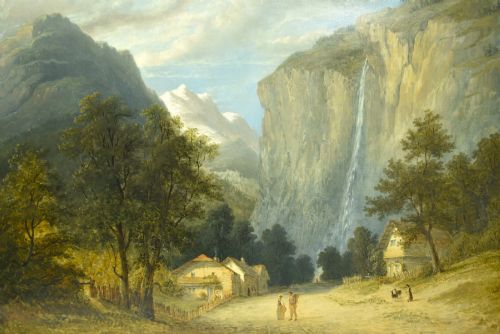


Victorian Mountain Landscape Canvas
A victorian mountain landscape canvas brings the drama of rugged peaks and quiet lochs directly onto the wall.
Victorian Mountain Landscape Canvas
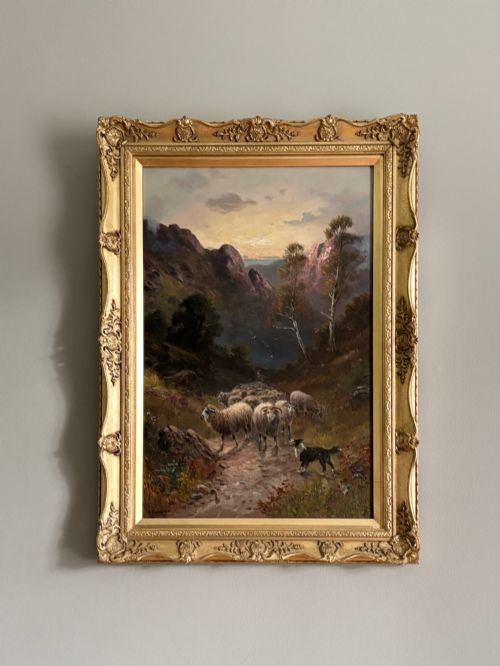
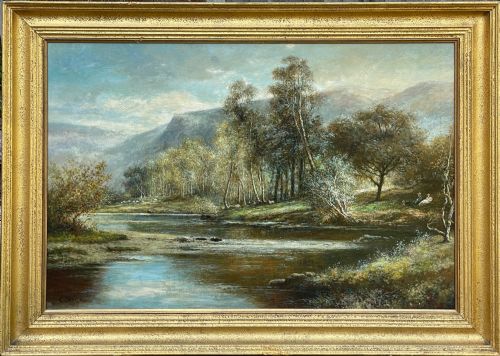
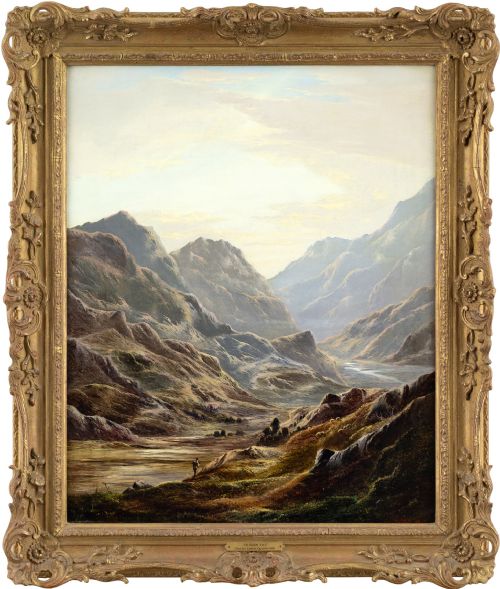
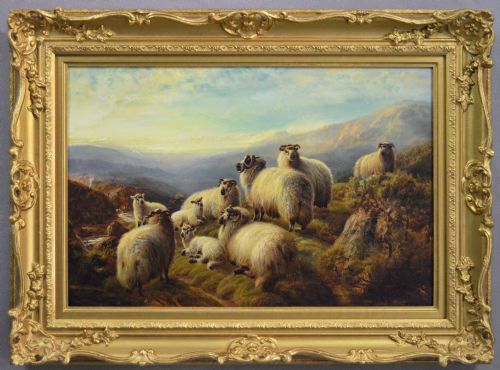
When someone searches for a victorian mountain landscape canvas, they seek framed oil paintings depicting peaks, lakes, and rural valleys created during the nineteenth and early twentieth centuries. These artworks capture the topography of Scotland, Wales, the Lake District, and the Alps through the lens of Romanticism and Realism.
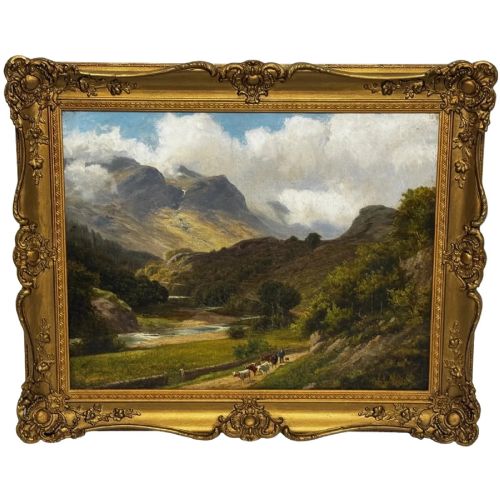
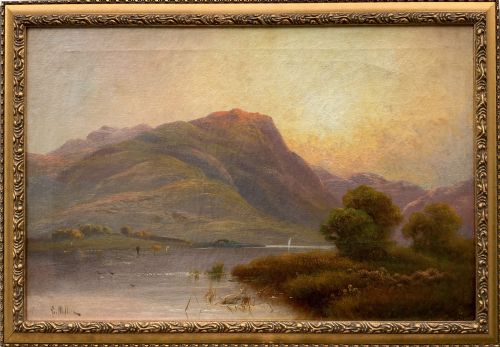
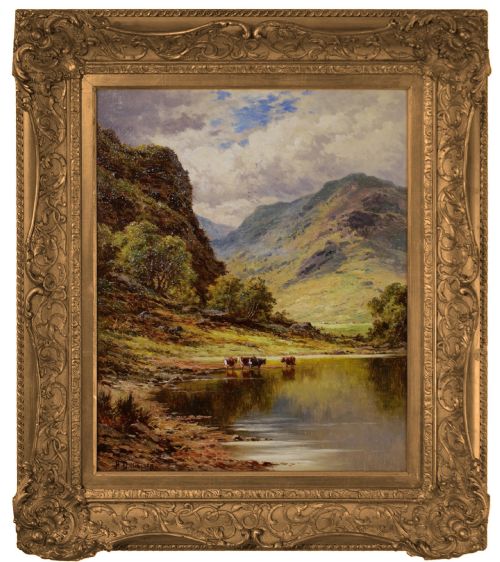
The pieces most frequently met on this page are oil paintings on canvas, often housed within their original moulded frames. Subjects range from misty Highland cattle scenes and rushing waterfalls to serene lakes under changing skies.
Materials and construction
These works rely on oil paint applied to woven canvas stretched over wooden frames, utilising the rich pigmentation and slow drying time of oils to build atmospheric depth. Brushwork shifts from tight, descriptive detail in the foliage and livestock to broader, more expressive handling in the distant clouds and crags.
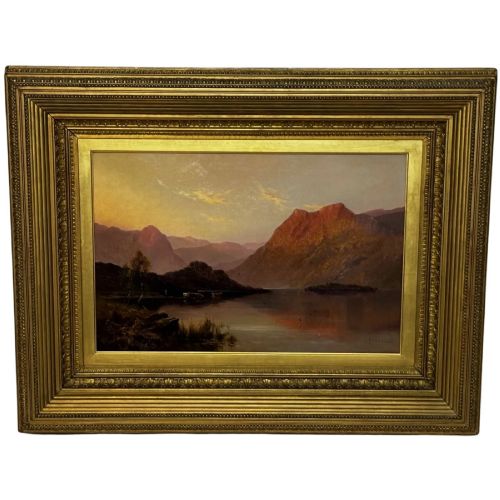
Surviving paintings commonly retain decorative frames made of wood ornamented with gesso and finished in gilt or gold leaf. The interaction between the layered oil medium and the heavy wooden surrounds defines the physical presence of each piece.
Styles represented across these works include Victorian Romanticism, Realism, and pastoral landscape traditions from British and European schools.
Factors of execution and preservation
Quality rests in the handling of light, atmosphere, and scale, where superior canvases convey convincing atmospheric perspective and weather conditions rather than mere topography. Stronger compositions balance the rugged mass of mountains with detailed foreground elements like figures, sheep, or cattle.
Condition plays a central role in the standing of a canvas, encompassing the stability of the original oil paint layer and the integrity of the canvas support. Original gesso and giltwood frames that retain their historic finish contribute significantly to the wholeness of the piece.
William Beattie-Brown·Alfred Fontville de Breanski·Henry H. Parker·Charles Leslie·Robert Watson·John Grenville Fennell·William Henry Mander·Sidney Richard Percy·Thomas Spinks·Walter J Watson·John Douglas Perrett·Karl Herrle·Stephen Enoch Hogley·Gustave De Brianski·Benjamin Williams Leader·Charles Jones·Louis Bosworth Hurt·Robert John Hammond·William Mellor·Edward John Niemann·Samuel Hart Turpin
The Victorian Mountain Landscape Canvas Glossary
- Canvas
- A heavy woven fabric stretched tightly across a wooden frame to serve as the foundation for oil paintings. It provides a durable and textured surface that absorbs ground layers evenly.
- Giltwood
- Wood carved and coated with a thin layer of gold leaf or metallic powder. It was widely used for framing nineteenth-century landscapes to reflect ambient light.
- Gesso
- A paint mixture consisting of a binder mixed with chalk, gypsum, or pigment. Applied to wooden frames, it creates a smooth surface for subsequent gilding.
- Romanticism
- An artistic movement emphasising emotion, individualism, and awe of the natural world. In these landscapes, it manifests through dramatic weather and wild terrain.
- Realism
- An artistic approach focused on the accurate, unvarnished depiction of subjects. In landscape painting, this appears in the precise rendering of local flora, geology, and livestock.
Victorian Mountain Landscape Canvas: Frequently Asked Questions
What subjects appear in these paintings?
These works typically depict dramatic natural scenery including Scottish and Welsh mountain ranges, Highland lakes, rushing rivers, and rural valleys. Scenes frequently incorporate herds of cattle or sheep grazing near the water alongside human figures traversing paths.
Artists focused on capturing specific regional topographies such as Snowdonia, the Lake District, and the Swiss Alps. The changing moods of weather, from morning mist to passing summer showers, form a central theme across the compositions.
How were nineteenth-century canvases framed?
Paintings from this era were housed in substantial wooden frames coated in gesso and finished with gilt leaf. These surrounds often featured ornate moulded ornamentation that complemented the grand scale of the landscape within.
The weight and decorative detail of the frame served to isolate the painted scene from the domestic interior wall. Many surviving pieces retain these original gilt surrounds, which show period-appropriate wear and patination.
How do I care for an oil painting on canvas?
Preserving an oil painting requires maintaining stable environmental conditions away from direct sunlight, extreme temperature fluctuations, and excessive humidity. Regular dusting should be done gently with a soft, dry brush without applying pressure to the canvas surface.
Avoid using liquid cleaners or moisture on either the paint layer or the gilt frame. Professional conservation should be sought if the canvas shows signs of sagging, cracking, or surface darkening.
How can I distinguish regional styles?
Regional variations often emerge through the specific topography and light quality associated with different locations. Scottish and Welsh scenes tend to emphasise brooding peaks and dark lochs, while Lake District views frequently capture softer pastoral valleys and reflective waters.
Artists often inscribed specific locations onto the canvas or frame, allowing viewers to trace the exact geographical inspiration. Brushwork and palette also shift between artists working in distinct geographic pockets during the nineteenth century.