
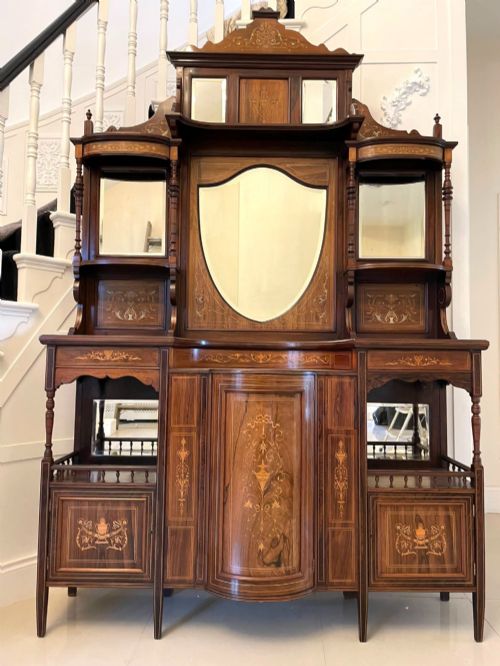
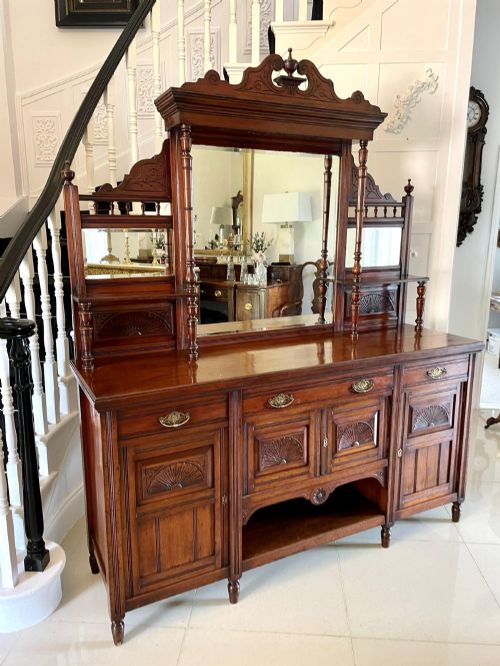
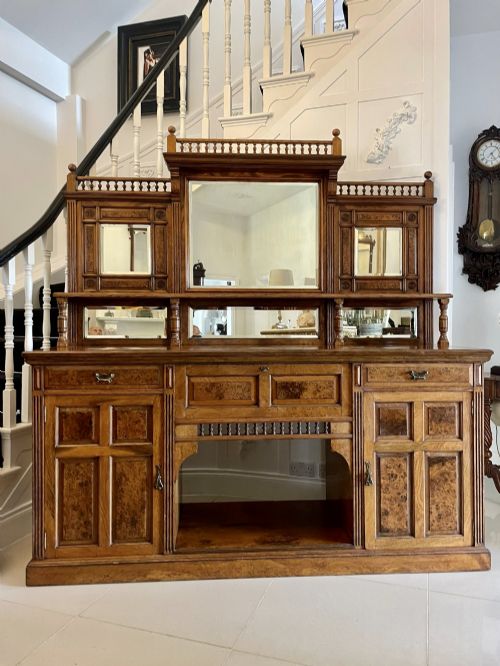
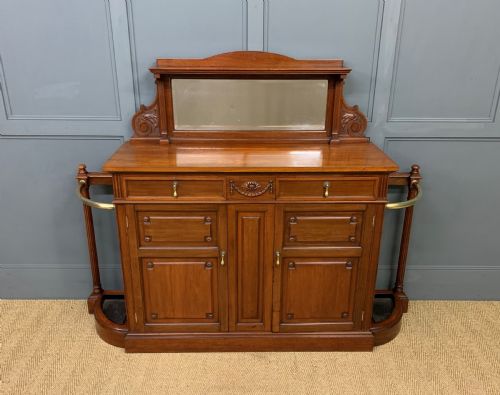
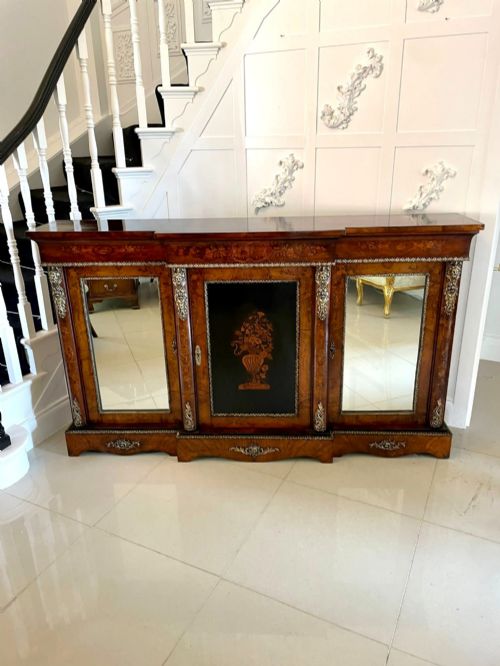
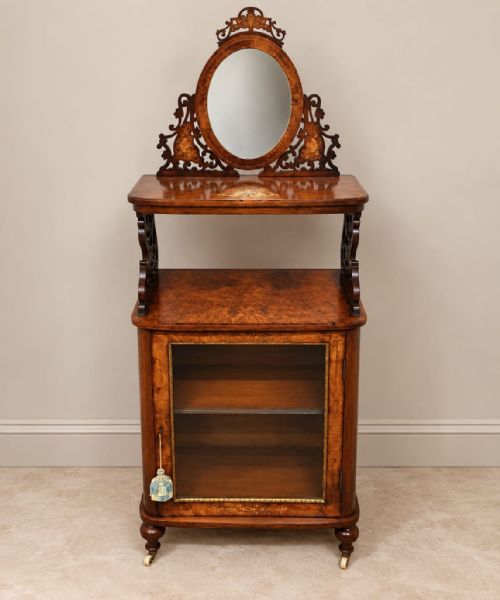
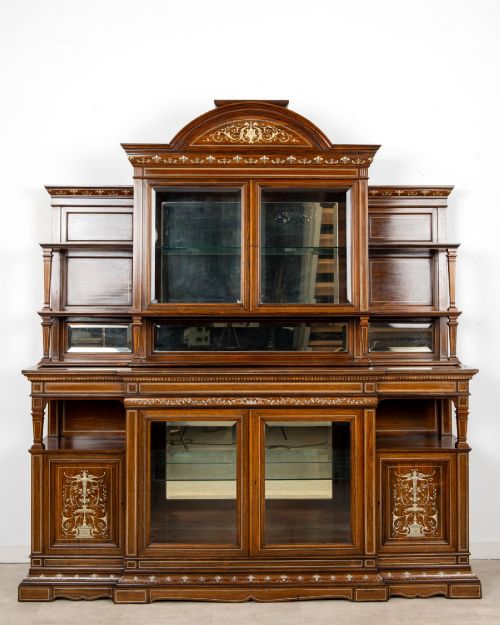
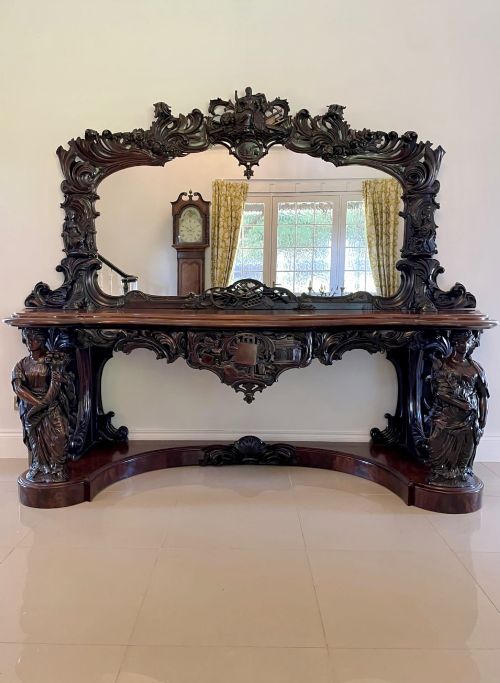
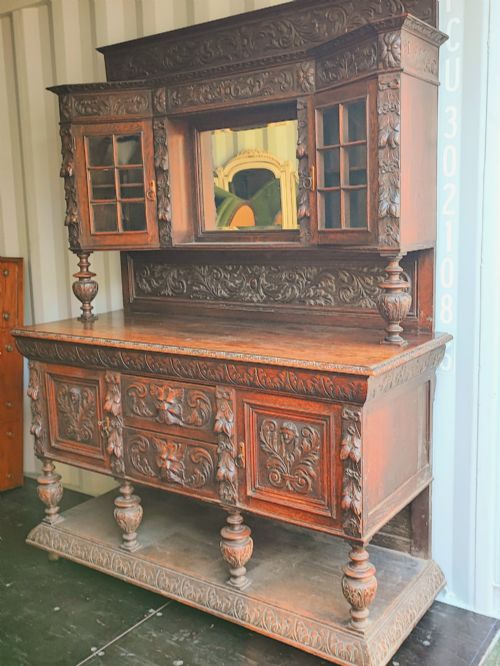
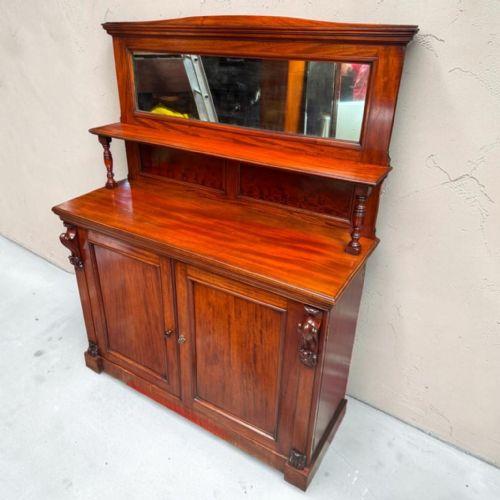
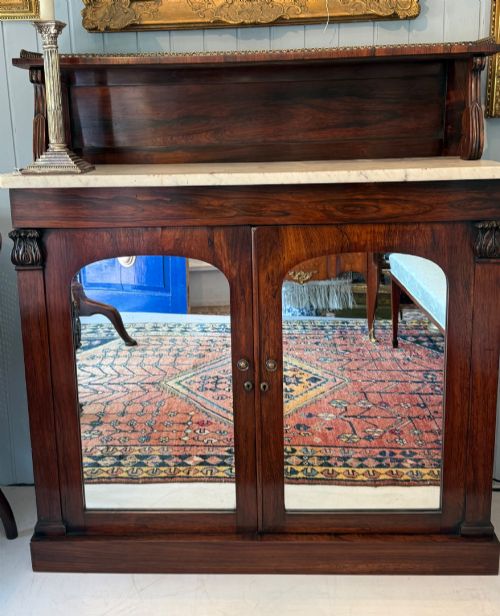
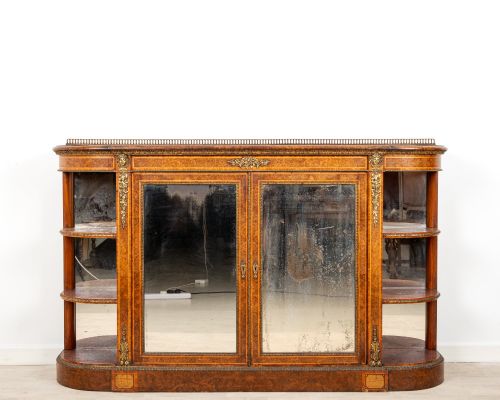
Victorian Mirror Credenza
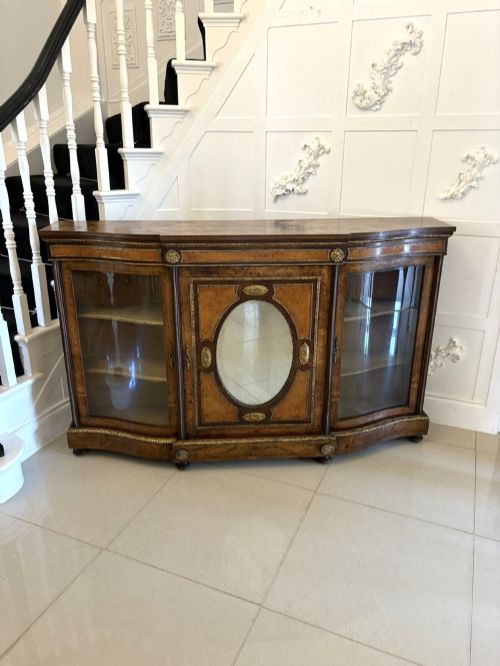
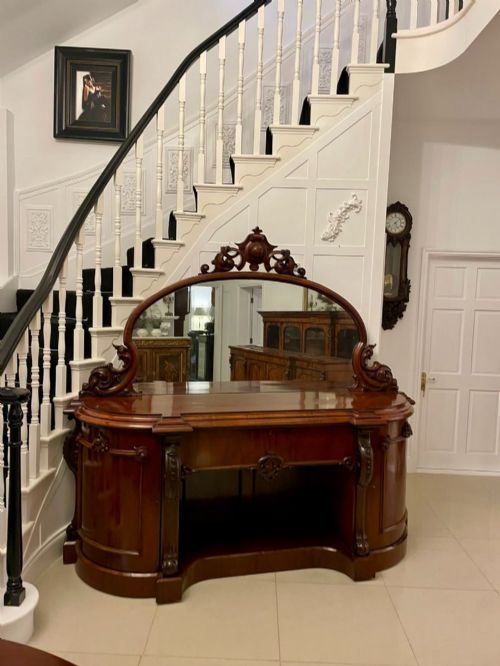
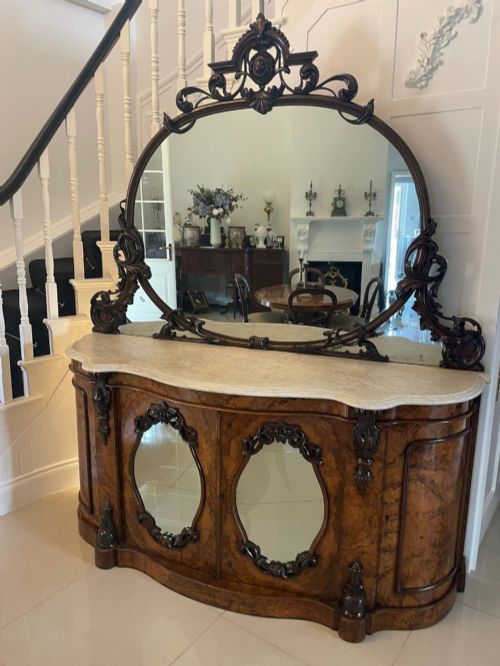
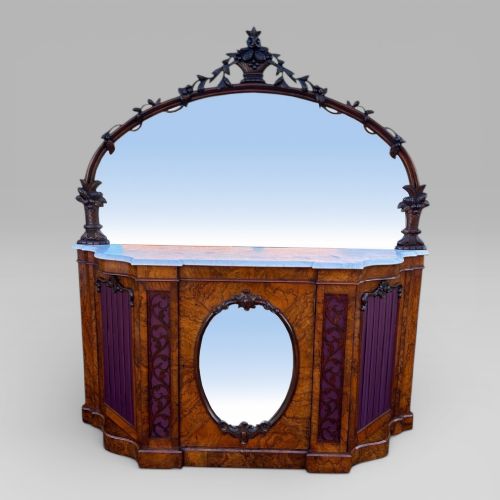
When you seek a victorian mirror credenza, you look for a substantial nineteenth-century display piece that combines timber, glass, and storage.
Victorian Mirror Credenza
A victorian mirror credenza is a low, polished cabinet designed for principal rooms, combining a surface for display, enclosed cupboards, and an integrated mirror back.
The versions most commonly met on this page date from the middle to the late nineteenth century and take the form of burr walnut, mahogany, or rosewood sideboards and cabinets.
Makers often shaped these pieces in the Victorian, Aesthetic Movement, or revival styles, frequently incorporating glass doors and marble tops alongside the characteristic mirror.
How they were made
Cabinet makers utilised dense timber foundations such as walnut, mahogany, and oak, veneering the visible surfaces in highly figured burr walnut, rosewood, or pollard oak.
The construction integrated bevelled or flat glass mirrors within carved wooden frames, and artisans embellished the chassis with ormolu mounts, brass details, and intricate marquetry inlay.
Pieces attributed to Gillows and Holland and Sons appear alongside examples featuring marquetry, marble tops, and ormolu mounts.
What varies in quality
Quality rests upon the selection of the timber veneers, where intensely figured burr walnut or profuse marquetry denote a higher grade of manufacture than plain surfaces.
The sophistication of the carving, the weight of the ormolu mounts, and the integration of the mirror back separate standard production furniture from exhibition pieces made by prominent workshops.
Collinson & Lock·Gillows·Garnett & Sons·Holland & Sons
The Victorian Mirror Credenza Glossary
- Credenza
- A low cabinet or sideboard designed for display and storage, typically featuring central cupboards flanked by curved glass doors.
- Ormolu
- Gilded bronze mounts applied to furniture for decorative enrichment, common on high-status nineteenth-century pieces.
- Marquetry
- Inlaid wood veneers arranged in decorative patterns or pictorial designs on the surface of a cabinet.
- Chiffonier
- A compact sideboard or cabinet equipped with enclosed lower storage and an upper shelf or mirror back.
- Burr walnut
- Timber cut from walnut tree growths, valued for its swirling, highly figured grain pattern on veneered surfaces.
Victorian Mirror Credenza: Frequently Asked Questions
Where were mirror credenzas placed?
These cabinets stood principally in Victorian dining rooms and formal reception spaces, positioned against a main wall where they reflected light and displayed porcelain or silver.
The integrated mirror served to brighten dark nineteenth-century interiors while the surface held serving dishes or decorative objects during gatherings.
How do I identify a Victorian piece?
Examination of the timber, construction methods, and hardware reveals the nineteenth-century origin of the cabinet.
Key indicators include figured burr walnut veneers, specific revival styles like Victorian Renaissance or Rococo, and traditional joinery behind the ormolu mounts.
What is the difference between a credenza and a sideboard?
A credenza is typically lower and more decorative, frequently incorporating glass-fronted side cabinets and delicate ormolu mounts.
Sideboards tend to be larger dining room pieces with heavier timber construction and tiered mirror backs designed for substantial storage.
How should I care for polished wood and glass?
Maintenance requires gentle cleaning with a soft, dry cloth to protect the sensitive french polish on walnut, mahogany, and rosewood surfaces.
Harsh chemical cleaners must be avoided near the ormolu mounts and the original mirror glass to preserve the antique finish.