



Victorian Mini Chest
A victorian mini chest offers the scaled-down charm and precise cabinet-making of full-sized furniture in a compact tabletop format.
Victorian Mini Chest
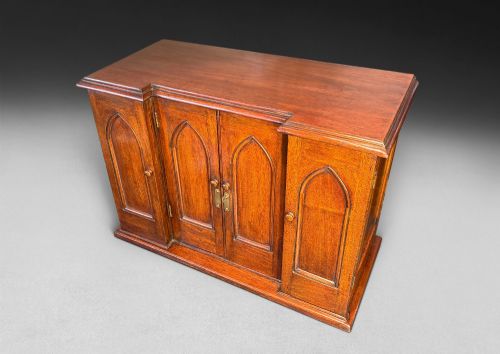
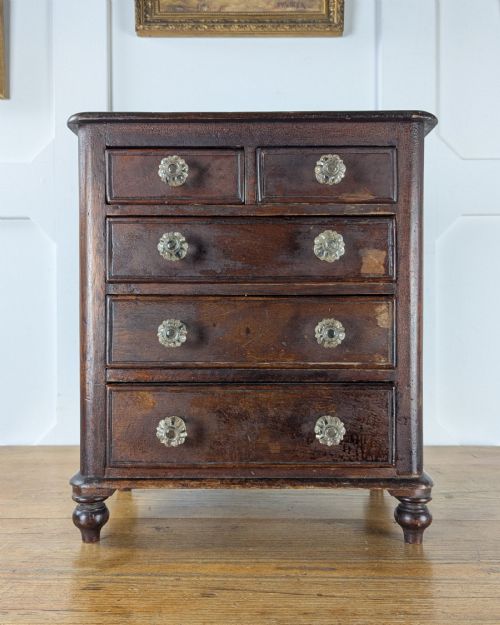
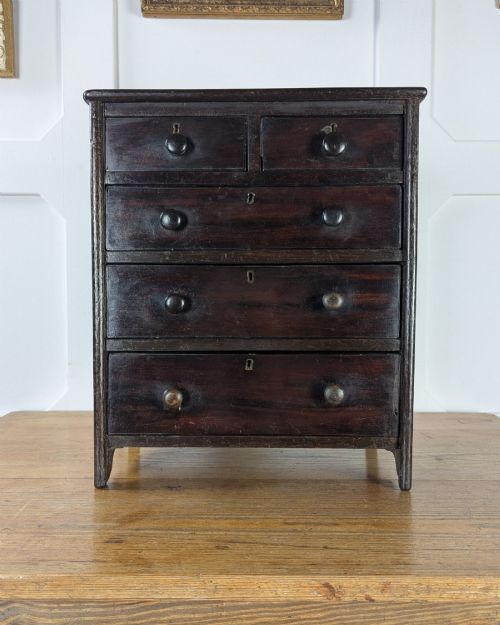
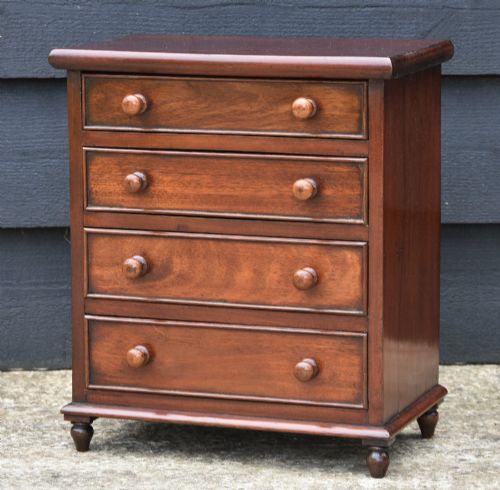
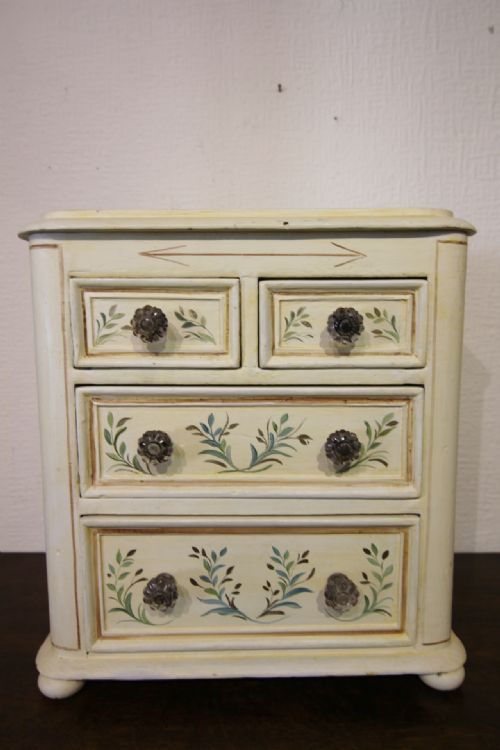
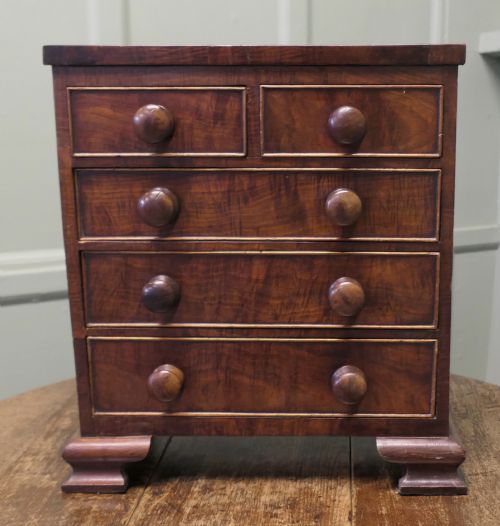
When you search for a victorian mini chest, you enter a world of scaled-down furniture designed as apprentice pieces, salesman samples, or specialised storage. The most common form on this page is the miniature chest of drawers, frequently constructed in mahogany, burr walnut, or oak, often featuring standard drawer configurations scaled down for tabletop use.
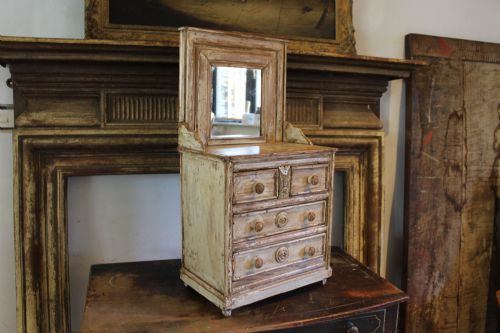
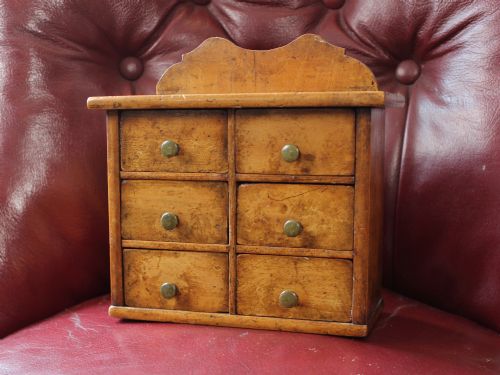
Beyond standard drawer chests, the selection encompasses specialised variations such as miniature Wellington chests, collectors cabinets, spice drawers, and compactum wardrobes. These pieces mirror the stylistic shifts of the nineteenth century, moving from plain timber surfaces to Gothic revival details, Arts and Crafts influences, and bow-fronted designs.
Materials and construction
Cabinet makers utilised dense hardwoods such as mahogany and walnut alongside softer timbers like pine and fruitwood, often applying decorative veneers, burr sections, or inlay to smaller surfaces. Structural integrity depended on traditional dovetail joints for drawer construction and turned wooden feet or bracket bases to support the miniature frame.
Surface finishes rely on French polish, paint, or simulated wood effects, sometimes accented by brass drawer pulls, escutcheons, and ebonised mouldings. The execution required the same joinery skills as standard furniture, scaled to fit compact proportions without losing functional drawers.
Several miniature chests double as hiding spots for secret compartments, proving that big secrets sometimes live in very small drawers.
Assessing quality
Quality rests in the fidelity of proportion and the precision of the miniature joinery, where dovetailing must remain as tight and purposeful as on a full-sized wardrobe. Timber selection marks the division between standard utility items and finer examples, with figured mahogany, burr walnut, and matched veneers indicating higher ambition.
The degree of secondary detail distinguishes superior pieces, visible in the turning of feet, the neatness of inlaid banding, the application of ogee mouldings, and the preservation of original brass hardware. Patina and surface preservation complete the picture, rewarding pieces that retain their original polish or painted finish without excessive intervention.
Saunders & Shepherd·Nathan & Hayes
The Victorian Mini Chest Glossary
- Apprentice piece
- A small furniture item created by a trainee cabinet maker to demonstrate skill and secure trade certification. These demonstrate full-scale joinery techniques scaled down to miniature proportions.
- Wellington chest
- A tall, narrow chest featuring a side-locking stile that secures all drawers with a single padlock or key. This vertical format appears frequently in miniature walnut and mahogany versions.
- Bow front
- A convex curved front facade that projects outward in a smooth arc. This curved design demands advanced woodworking precision, especially at miniature scale.
- Ogee
- An S-shaped curved moulding profile combining a concave arch set above a convex arch. Cabinet makers applied this profile to cornices and drawer surrounds on mid-century chests.
- Specimen case
- A specialised small cabinet fitted with shallow drawers designed for storing natural history samples, coins, or small collectables. Interiors often feature baize or velvet linings.
Victorian Mini Chest: Frequently Asked Questions
What is a miniature chest used for?
These compact pieces served practical storage roles on tabletops and desks for keeping small valuables, jewellery, letters, or specimens secure and organised.
Today, collectors use them to display small curiosities or simply appreciate the concentrated cabinet-making skill required to produce functional furniture on a tiny scale.
How do I date a miniature chest?
Dating relies on identifying timber choices, drawer construction methods, and prevailing decorative styles that match full-sized furniture trends of the nineteenth century.
Mahogany and early proportions point toward the earlier decades, while walnut burr veneers, Arts and Crafts influences, or pitch pine construction indicate later Victorian production.
What woods were used?
Cabinet makers drew upon a wide selection of timbers, favouring rich dark hardwoods like mahogany and walnut for finer examples.
Softer woods such as pine and oak appear frequently, sometimes painted, inlaid, or finished with decorative veneers to mimic more expensive materials.