



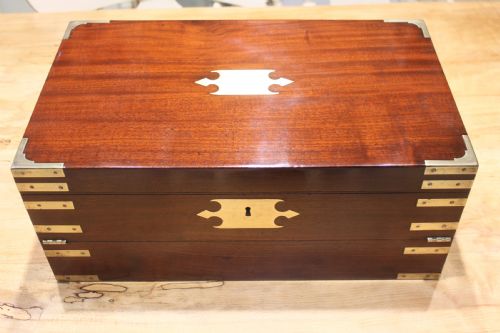


Victorian Military Lap Desk
A Victorian military lap desk is a portable workspace built for officers on the move, combining sturdy timber with protective brass hardware.
Victorian Military Lap Desk
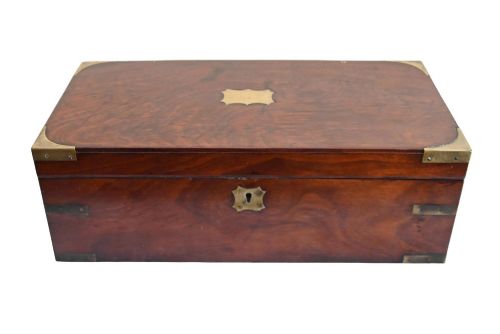
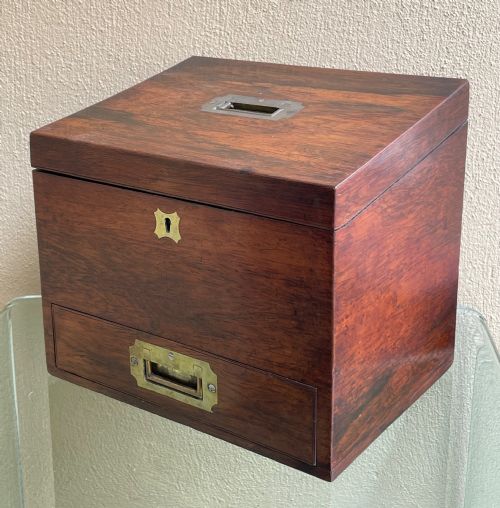
When you search for a Victorian military lap desk, you examine portable writing slopes and boxes designed for travel during the nineteenth century. These pieces bridge the gap between campaign furniture and personal correspondence, serving officers on the move.
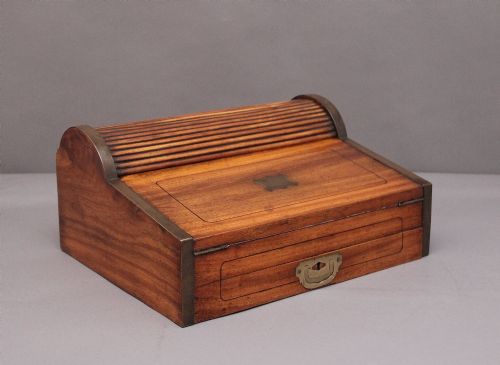
The versions you meet most frequently on this page date from the nineteenth century and the Victorian period, though occasional pieces stretch back to the Georgian era. They appear in forms such as writing slopes, bi-fold slopes, metamorphic lap desks, and campaign correspondence boxes.
Makers constructed these boxes to withstand the rigours of transit while offering a functional writing surface and secure storage for letters, ink, and nibs. Many incorporate clever interior engineering, including secret drawers and dedicated sovereign sections.
How they were made
Craftsmen built these desks primarily from dense timbers like mahogany, camphor wood, burr walnut, and camphorwood to endure harsh climates and heavy travel. Camphor wood offered a natural resilience, while mahogany provided a stable, heavy carcase for daily use.
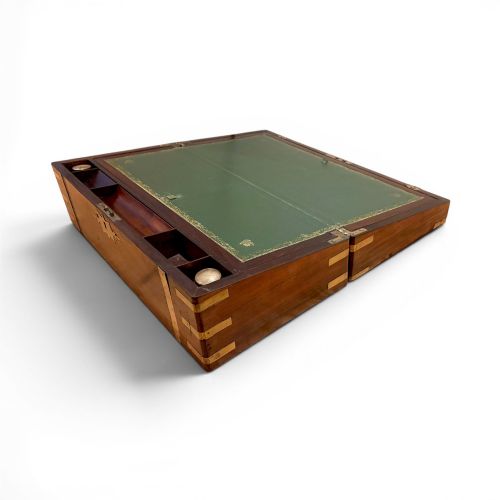
Makers reinforced vulnerable corners and edges with brass straps, flush-fitting corners, and inset carrying handles to prevent splitting during movement. Leather panels often lined the folding writing surfaces, providing a smooth texture for pen work.
Victorian Military Lap Desk Retail Price Guide 2026
Typical asking prices for victorian military lap desk among the pieces listed under this phrase on Sellingantiques today, from the lower quarter to the upper quarter. They describe what is for sale here now, not the wider market.
Camphor wood boxes retain their distinct aromatic scent through the centuries, a lingering reminder of distant colonial postings.
What varies in quality
The calibre of a campaign desk rests upon the selection of timber and the precision of its brass mounts. Superior examples display dense, figured grain in timbers like burr walnut or select mahogany, coupled with heavy brass binding flush-fitted into the wood.
Interior fittings distinguish standard boxes from exceptional ones, particularly the presence of complex metamorphic mechanisms, candle sconces, and well-concealed secret drawers. Working locks and keys add tangible utility to the piece.
The Victorian Military Lap Desk Glossary
- Campaign slope
- A portable writing desk designed to fold in half, creating an inclined writing surface when opened. These boxes often feature recessed brass handles for easy packing.
- Metamorphic desk
- A piece of furniture that transforms or unfolds to reveal secondary compartments, hidden spaces, or altered configurations. They showcase clever nineteenth-century mechanical ingenuity.
- Campaign hardware
- Flush-fitting brass corners, straps, and handles designed to protect wooden boxes from impact during transit without catching on canvas bags or luggage.
- Secret drawers
- Concealed compartments hidden behind false panels or activated by secret spring releases within the interior of the writing slope.
- Sovereign section
- A dedicated, small compartment inside the desk specifically sized to hold gold sovereign coins securely during travel.
Victorian Military Lap Desk: Frequently Asked Questions
What is a Victorian military lap desk?
A Victorian military lap desk is a portable wooden writing box fitted with brass hardware, built for officers to write letters and store documents while travelling.
These pieces fold open to reveal an inclined writing surface, inkwells, and storage compartments for paper and pens.
How were these desks used in the field?
Officers placed the boxes on tables, camp beds, or their laps to write correspondence, orders, and journals during campaigns.
The robust construction and secure locks protected important papers from moisture, dust, and prying eyes.
How do I spot secret drawers?
Secret drawers often hide behind false wooden partitions, removable pen trays, or sliding panels inside the main compartment.
Finding them usually requires lifting inner sections or pressing hidden wooden spring catches.
What woods were commonly used?
Maker workshops relied heavily on durable timbers such as mahogany, camphor wood, and burr walnut.
Camphor wood was particularly favoured for its insect-resistant properties in tropical postings.
What does metamorphic mean in these desks?
Metamorphic describes a desk that shifts, expands, or transforms its shape through folding panels or sliding mechanisms.
These designs allowed a compact box to open into a larger workspace with multiple tiers.