

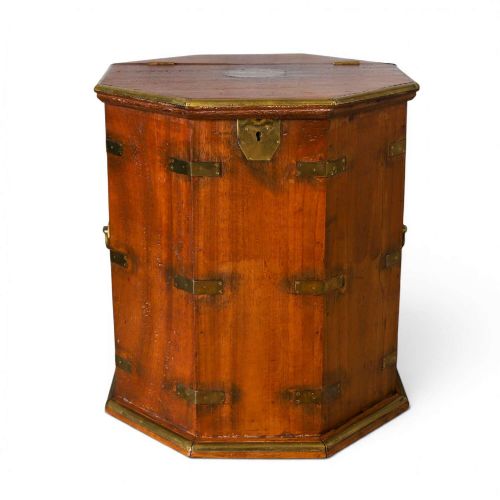
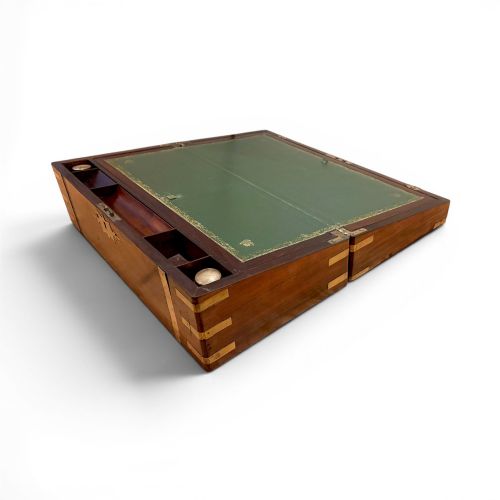

Victorian Military Box
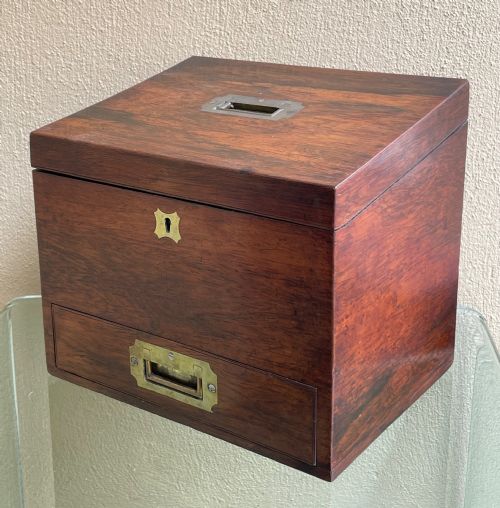
A victorian military box brings the functional engineering of the British Empire directly into a room, offering robust portable storage designed for officers on the move.
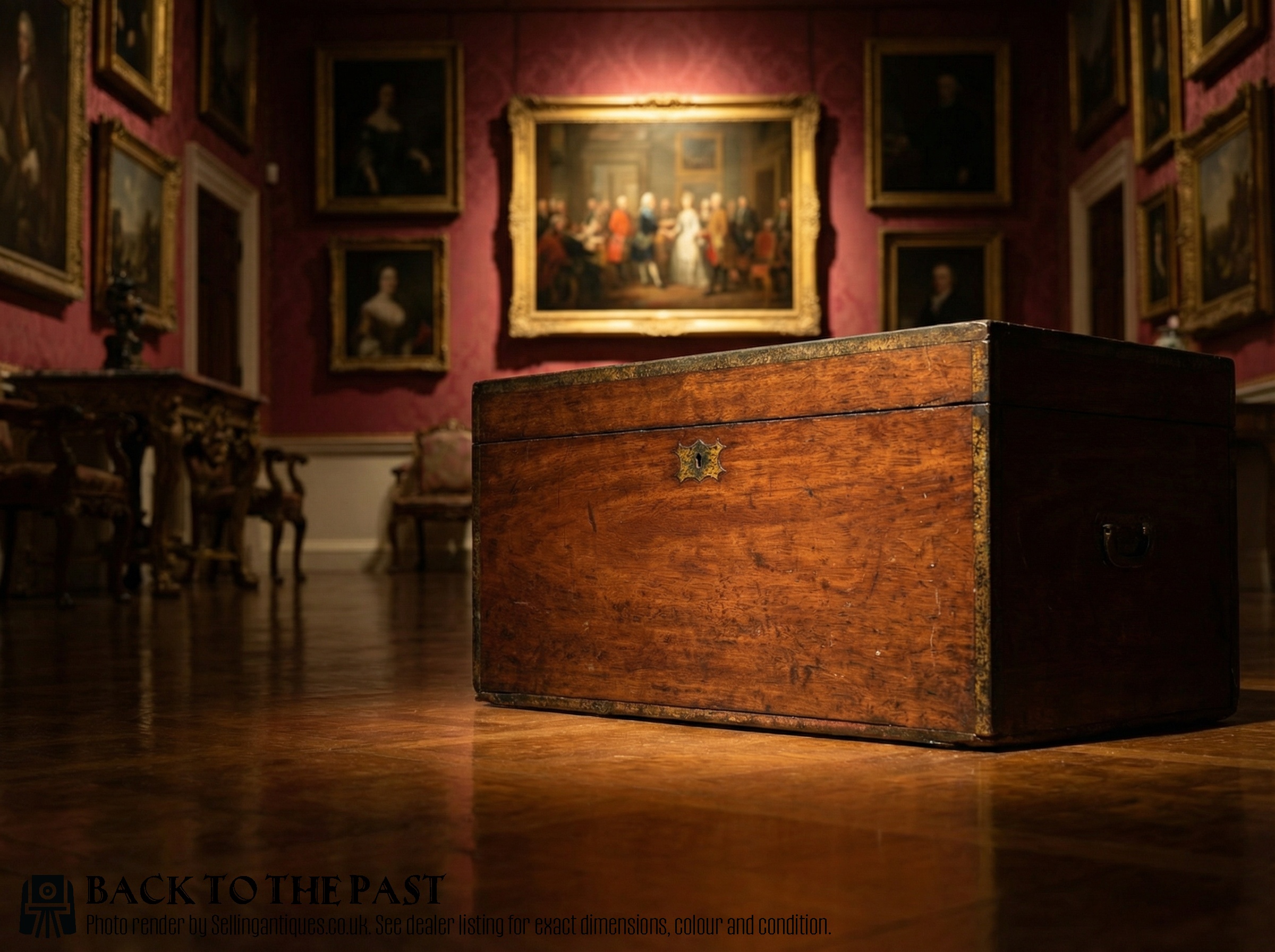
Victorian Military Box
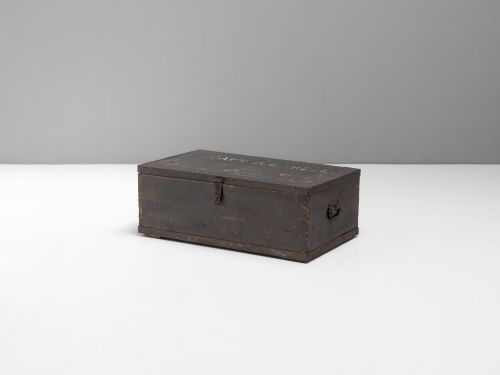
A victorian military box encompasses a range of portable containers built for officers, administrators, and regiments travelling across the globe during the nineteenth century. These objects include large camphor wood and teak trunks, fitted writing slopes, correspondence cases, and iron paymaster strongboxes designed to withstand arduous transport.
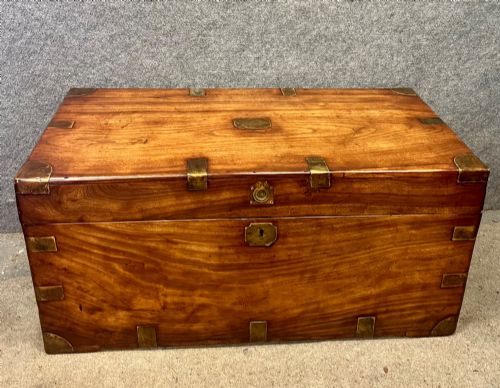
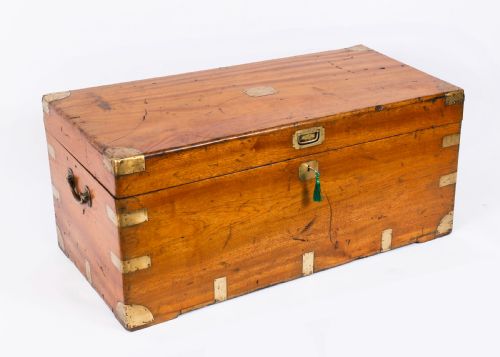
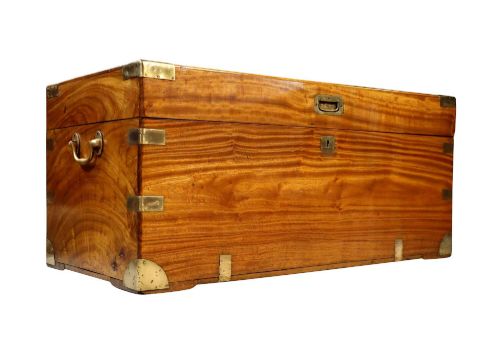
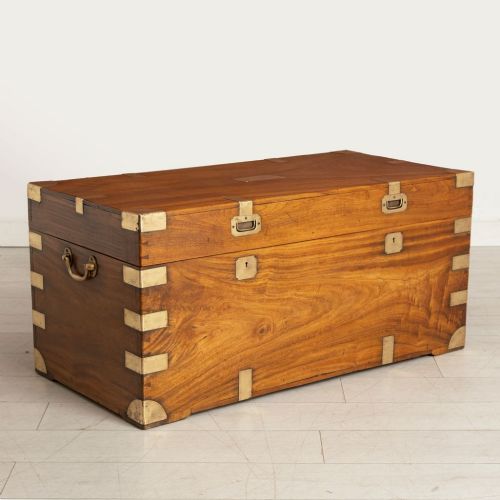
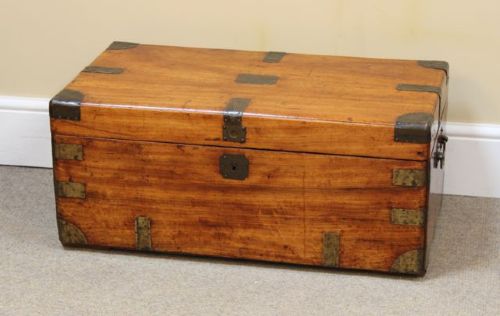
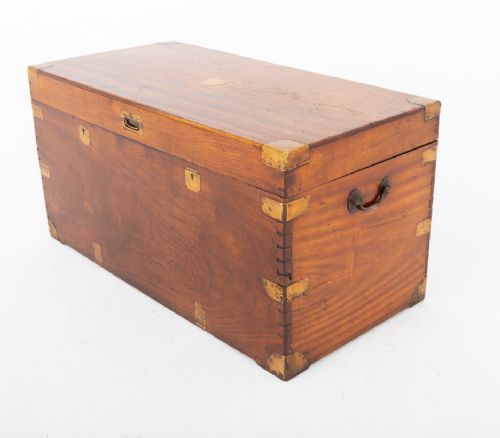
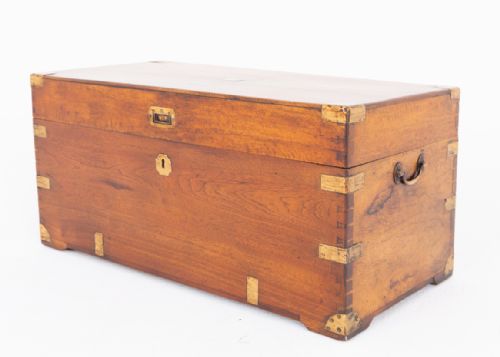
The version most commonly met on this page is the brass-bound campaign trunk constructed from aromatic camphor wood or dense tropical hardwoods. These pieces frequently feature recessed hardware, folding handles, and sectional divisions built to endure long voyages and frequent relocation.
Materials and Construction
Makers utilised durable, weather-resistant timbers such as camphor wood, teak, mahogany, and rosewood to combat humidity, insects, and the rigours of transit. Camphor wood served a dual purpose by naturally repelling pests while providing a lightweight yet sturdy carcase for clothing and documents.
Construction relied heavily on heavy-duty brass corners, straps, and flush-fitting recessed drop handles that protected vulnerable edges from impact while allowing boxes to be packed tightly together. Dovetail joints and secret compartments added structural integrity and security to writing slopes and stationery boxes.
At least one regimental paymaster managed to keep his iron strongbox secure while moving across nineteenth-century battlefields.
Distinctions in Execution
Quality rests in the precision of the brass hardware and the integrity of the timber framing rather than mere decorative flourish. Superior examples feature hand-beaten or cast brass reinforcement plates countersunk flush into the wood, paired with robust working locks and original keys.
Internal complexity also distinguishes finer items, particularly in writing slopes and stationery boxes equipped with secret drawers, fitted inkwell compartments, and secret release mechanisms. The density of the chosen hardwood and the crispness of the joinery mark the difference between standard field equipment and officer-commissioned pieces.
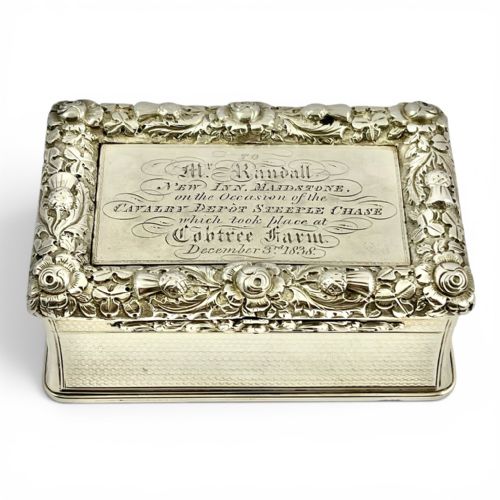
Sampson Mordan·Hawkes and Co
The Victorian Military Box Glossary
- Campaign Chest
- A modular chest of drawers or trunk constructed in sections so that it could be packed into transit cases for military travel. These pieces typically feature brass corners and side carrying handles.
- Camphor Wood
- An aromatic, insect-repellent timber sourced largely from Asia and utilised extensively for nineteenth-century military trunks and blanket boxes. Its distinctive scent protects stored textiles.
- Writing Slope
- A portable desk featuring a hinged, sloping lid that opens to reveal compartments for paper, pens, and inkwells. Many incorporate secret drawers and leather-lined writing surfaces.
- Recessed Handle
- A flush-fitting metal handle let into the surface of a trunk or chest so that it does not project beyond the wood. This prevented snagging during transport.
- Strongbox
- A secure, heavy-duty iron or reinforced wooden box used by paymasters or regiments to store currency, documents, and valuables. They are often fitted with complex lever locks.
Victorian Military Box: Frequently Asked Questions
What were victorian military boxes used for?
These boxes served as portable storage, desks, and strongboxes for military officers, surgeons, and paymasters on active service or colonial posting. They kept uniforms, correspondence, money, and personal valuables organised and protected during rough transport.
Officers required furniture that could be rapidly packed onto carts, ships, or pack animals. The clever internal compartments and tough exterior casing ensured vital documents and possessions survived arduous journeys intact.
Why is camphor wood common in these pieces?
Camphor wood was selected because its natural aromatic oils repelled moths and insects, protecting woollen uniforms and papers from damage in tropical climates. The timber is also relatively lightweight yet durable.
Makers paired this fragrant wood with brass binding to create trunks that could handle humidity and rough handling without splitting. The distinctive scent often lingers faintly inside the boxes today.
How do I distinguish campaign chests from standard chests?
Campaign chests are defined by their modular construction, brass-reinforced corners, and flush-fitting hardware designed to prevent damage during transit. Many split into two or more stacking sections with removable carrying handles on the sides.
Standard domestic chests of the same era are built as single heavy units intended to remain stationary in a bedroom. The presence of recessed handles and sectional separation points clearly marks a piece out for field use.
Can I use a campaign trunk as a coffee table?
These trunks adapt well to modern living spaces and frequently serve as coffee tables or blanket boxes in sitting rooms. Their flat tops, sturdy timber construction, and internal storage space make them practical for contemporary homes.
When using a trunk this way, ensure the antique wax or polish finish is protected from hot cups and moisture rings. The historical character and brass detailing add texture and focal weight to a room.