



Victorian Metal Charger
A victorian metal charger brings rich texture and intricate relief work into a room, serving as a striking wall plaque or centrepiece.
Victorian Metal Charger
When searching for a victorian metal charger, a buyer encounters a diverse range of large decorative plates, wall plaques, and heavy presentation trays originating primarily from the nineteenth century. These items span a broad geographical and stylistic vocabulary, drawing on English, continental, and Eastern design traditions.
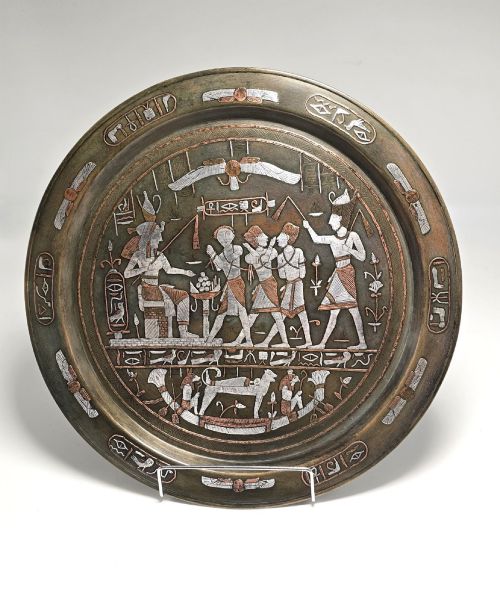
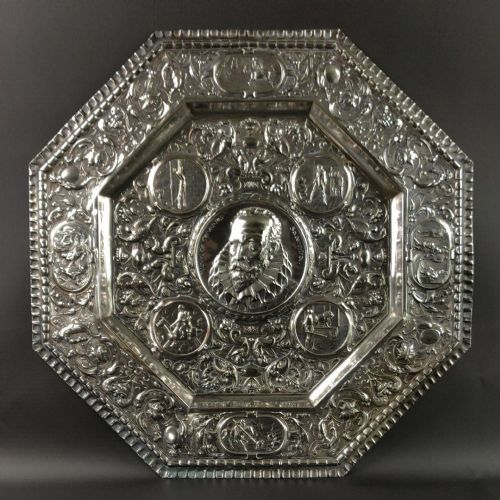
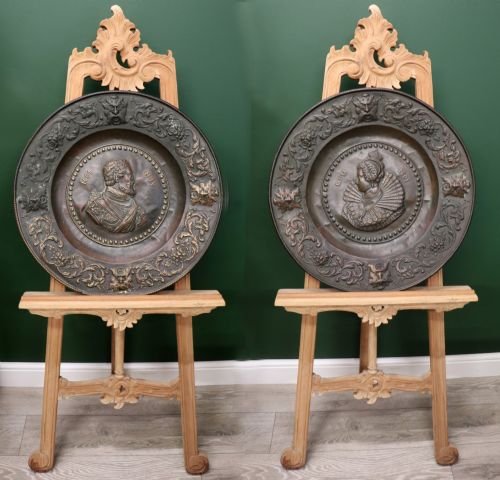
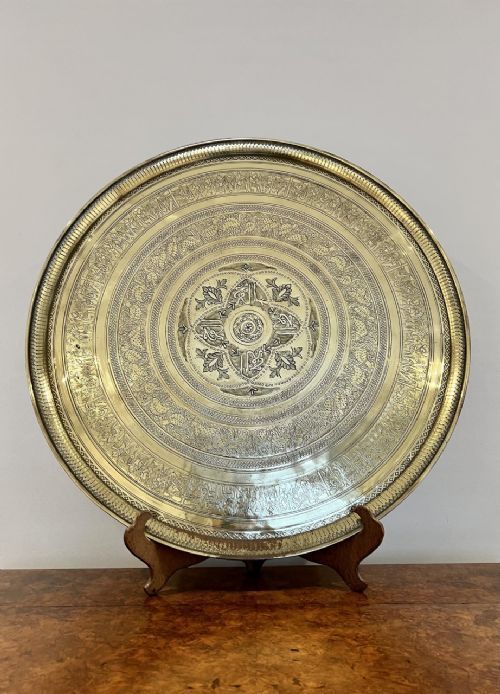
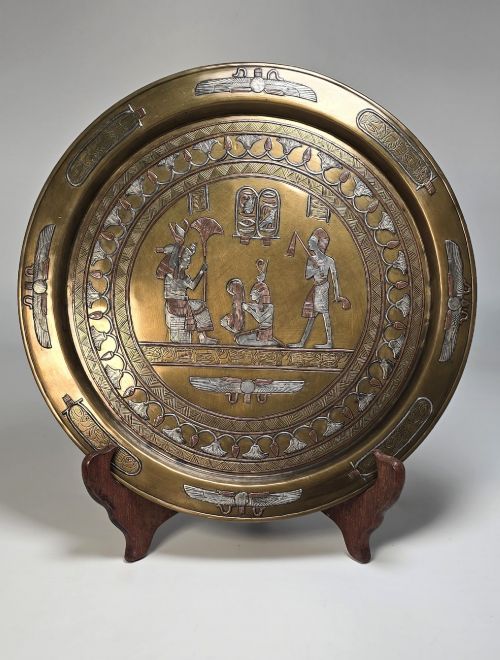
The most common versions met on this page include heavy copper, brass, and bronze pieces decorated with repoussé work, engraving, or mixed metal inlays. Many reflect revival movements or distant travels, ranging from Gothic and Neoclassical themes to intricate Anglo-Indian and Cairo Ware patterns.
Beyond purely utilitarian service, these objects were predominantly created for display. They function effectively as wall chargers, decorative dishes, or table centrepieces, bringing substantial weight and aged metallic character to an interior.
How they were made
Makers utilised solid base metals such as copper, brass, and bronze, frequently applying surface treatments like silver plating, electrotyping, or silver inlay to create striking tonal contrasts. These materials provided the necessary ductility for deep hand-working.
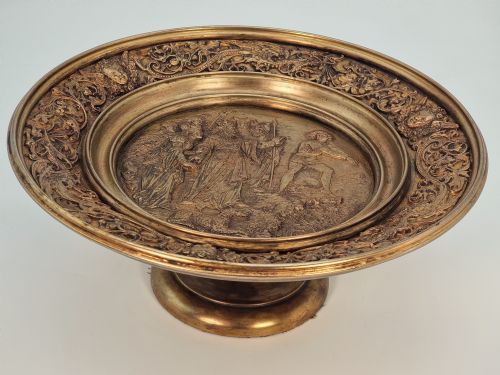
Techniques relied heavily on repoussé and chasing, where artisans hammered the metal from the reverse side to raise detailed portraits, animal motifs, and classical figures in high relief. Piercing, engraving, and mixed metal applications were also combined to enrich the surface texture.
Victorian Metal Charger Retail Price Guide 2026
Typical asking prices for victorian metal charger among the pieces listed under this phrase on Sellingantiques today, from the lower quarter to the upper quarter. They describe what is for sale here now, not the wider market.
Listings feature items spanning the nineteenth century, including pieces dated to 1870, 1880, 1890, and 1900, alongside Regency-era examples.
What varies in quality
The distinction between ordinary and exceptional pieces lies in the depth and crispness of the hand-hammered relief work. Superior examples display precise control in repoussé detailing and fine chased lines that bring figures and motifs into sharp focus.
Material substance and finish integrity also separate tiers of quality. Heavier gauge metals, sophisticated mixed metal integration, and well-preserved surface treatments indicate superior workshop production and artistic ambition.
Elkington and Co·Yates Birch and Spooner
The Victorian Metal Charger Glossary
- Repoussé
- A metalworking technique where the artisan hammers the design from the reverse side to form a raised relief on the front. This method creates tactile depth across trays and wall plaques.
- Electrotype
- A replica or object formed through the electrodeposition of metal onto a mould, enabling precise reproduction of complex historical designs. Elkington utilised this process extensively.
- Cairo Ware
- Metalwork originating from or inspired by Islamic metalworking traditions of Egypt, typically characterised by intricate silver and copper inlay. These pieces gained popularity during the Grand Tour period.
- Cloisonne
- An ancient technique for decorating metal object surfaces, where wires are soldered to the base to form compartments filled with enamel paste. Japanese examples appear among nineteenth-century trade wares.
- Tazza
- An ornately mounted shallow bowl or plate raised on a stem and foot, often utilised as a centrepiece. These items highlight decorative metalwork in domestic table settings.
Victorian Metal Charger: Frequently Asked Questions
How were victorian metal chargers used?
These large metal plates and trays served primarily as decorative wall plaques or striking table centrepieces rather than everyday tableware. Their substantial weight and ornate relief work suited formal interior displays.
During the nineteenth century, households often mounted them on walls or placed them on side tables to showcase craftsmanship, classical motifs, or souvenirs gathered from foreign travel.
What is Cairo Ware?
Cairo Ware refers to nineteenth-century metalwork produced in Egypt or designed for the European market during the height of Grand Tour travel. These pieces typically feature contrasting metals with intricate inlaid patterns.
Artisans combined copper, brass, and silver inlay to create geometric and calligraphic designs that appealed to Victorian collectors of exotic furnishings.
How do I hang a wall charger safely?
Hanging a heavy metal charger requires a secure wall fixing and a bracket that distributes the weight evenly around the rim without damaging the metal. Adjustable spring hangers designed for plates are suitable for lighter pieces.
For heavier bronze or copper chargers exceeding several kilograms, a custom-made metal support or professional mounting bracket ensures the piece remains secure against the wall.
How do I clean antique brass and copper?
Antique metalware benefits from minimal intervention to preserve the natural oxidation and dark patination accumulated over the centuries. Gentle dusting with a soft dry cloth is usually sufficient for routine maintenance.
Harsh commercial polishes should be avoided because they strip away the historic patina that gives nineteenth-century pieces their characteristic depth and visual warmth.