





Victorian Marquise Ring
A victorian marquise ring provides an elongated boat-shaped profile on the finger, bringing together intricate cluster settings from the nineteenth century.
Victorian Marquise Ring
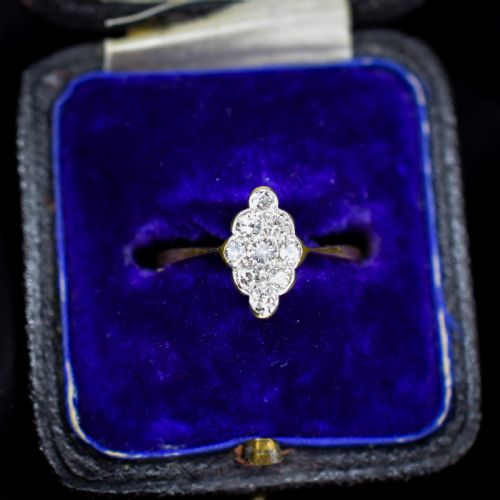
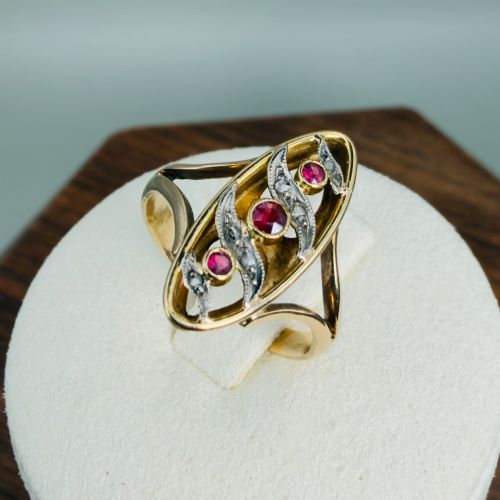
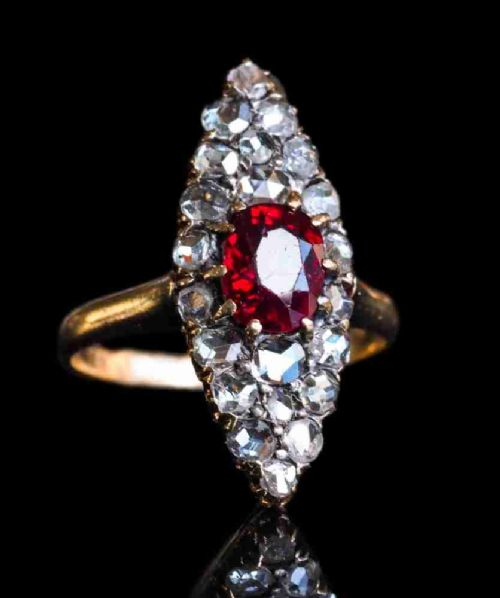
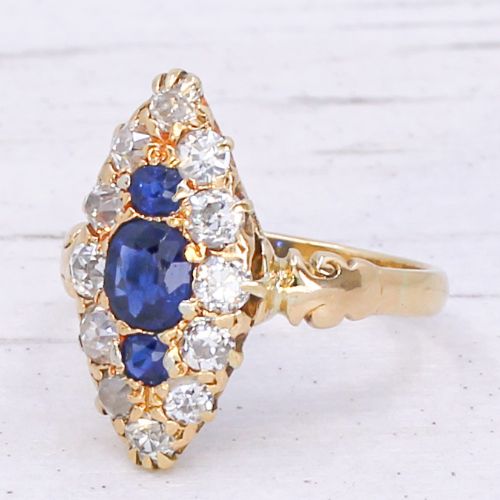
A victorian marquise ring, also called a navette ring, presents a distinctive pointed silhouette stretching along the finger. The form accommodates clusters of diamonds, rubies, sapphires, emeralds, pearls, turquoises, and opals.
Most examples found here date from the Victorian period through to Edwardian times and the nineteen-twenties. These rings combine gold bands with platinum or silver settings to display old cut, rose cut, or cushion cut stones.
Makers utilised various geometric cluster arrangements to create wide finger coverage. The designs range from simple multi-stone arrangements to elaborate gem-encrusted navette motifs.
Materials and Construction
Goldsmiths worked primarily in eighteen carat yellow gold, occasionally employing fifteen carat or twenty-two carat gold, alongside platinum and silver. Silver and platinum were frequently utilised for setting diamond clusters to enhance the whiteness of the stones.
Gemstones such as diamonds, rubies, sapphires, emeralds, opals, pearls, and turquoise were hand-set into detailed metalwork. Many surviving pieces incorporate old cut and rose cut diamonds secured in closely arranged bezels or claw settings.
Assessing Quality and Execution
The standard of a victorian marquise ring rests on the harmony of its proportions and the skill of the stone setting. Finer examples maintain crisp symmetry across the elongated boat shape without distortion in the mounting.
The selection and matching of central stones against surrounding gems dictate the distinction of the piece. Superior craftsmanship shows in the delicate integration of gold work and the secure placement of every individual gem.
The Victorian Marquise Ring Glossary
- Marquise
- A boat-shaped or navette silhouette featuring pointed ends and an elongated centre. This distinctive outline creates substantial visual finger coverage.
- Navette
- A French term meaning little ship, describing the pointed, boat-shaped design common in cluster rings. It is used interchangeably with marquise.
- Old Cut
- A hand-faceted diamond cut predating modern brilliant standards. These stones display smaller tables and higher crowns.
- Rose Cut
- A vintage diamond cut featuring a flat base and a domed crown of triangular facets. The style produces a soft, shimmering reflection.
- Cluster
- An arrangement of multiple gemstones grouped closely together around a central stone. This technique maximises the visual impact of smaller gems.
Victorian Marquise Ring: Frequently Asked Questions
What is a marquise ring?
A marquise ring is a piece defined by its elongated, boat-shaped silhouette that tapers to points at both ends. This design stretches along the finger for notable presence.
Such rings typically feature cluster arrangements of diamonds combined with coloured gemstones like rubies, sapphires, or pearls.
How do I date a victorian ring?
Dating relies on examining the mounting style, gold carat marks, and gemstone cutting techniques. Pieces from the nineteenth century often show hand-cut stones and specific gold alloys.
Documented hallmarks and stylistic cues pointing towards Victorian, Edwardian, or early twentieth-century periods help confirm the era of origin.
Are these rings suitable for daily wear?
Many people wear these antique rings daily with appropriate care for delicate old settings. Because the stones are securely held in historic mounts, gentle handling prevents undue wear.
Removing the ring during heavy manual tasks protects the intricate gold work and vulnerable pointed tips.
What gems appear in these rings?
Diamonds form the primary stone in numerous examples, often paired with rubies, sapphires, emeralds, pearls, turquoise, and opals. Natural unheated rubies and Burmese stones occasionally feature.
Pearls and opals provide softer textural contrasts within multi-cluster navette designs.