



Victorian Pearl Dress Ring
A victorian pearl dress ring carries the quiet lustre of past decades, offering buyers a delicate focal point for the hand.
Victorian Pearl Dress Ring
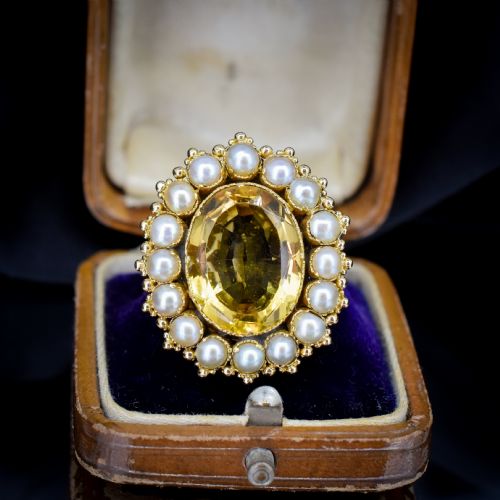
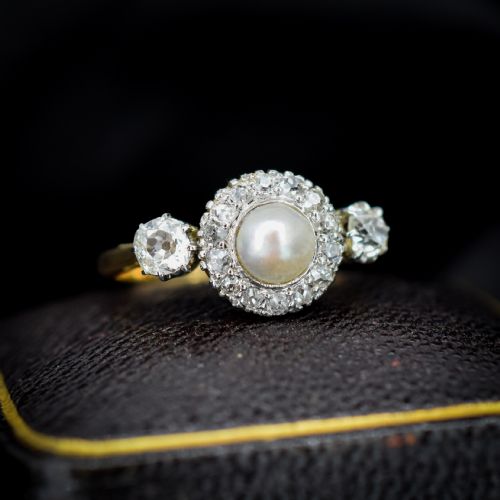
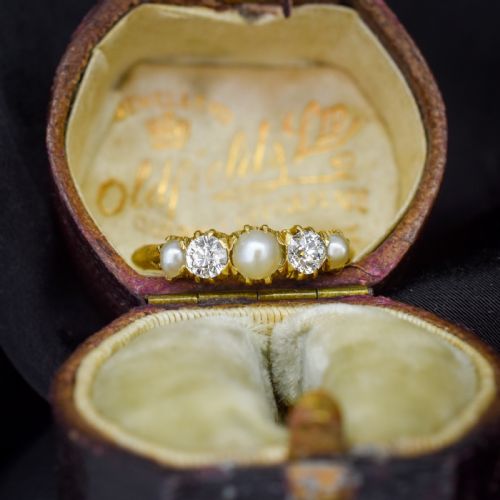
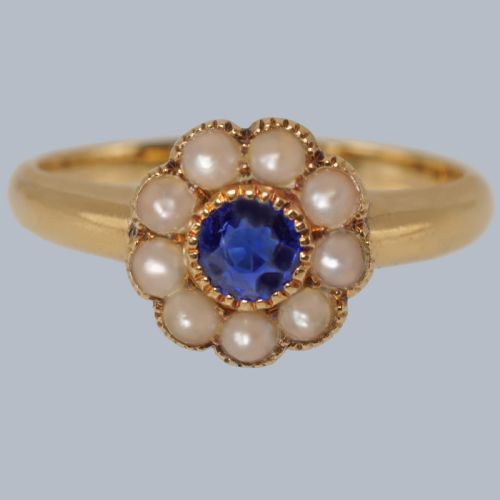
A victorian pearl dress ring brings together organic gemstones and precious metals, taking the form of cluster rings, band rings, and multi-stone configurations. These pieces frequently pair pearls alongside diamonds, turquoise, amethyst, and rubies.
The versions most commonly found here date from the nineteenth century through the Edwardian era, spanning periods listed as Victorian, Edwardian, and late Victorian. Buyers encounter both robust gold bands and intricate cluster designs.
Object types vary primarily between finger rings and occasional related items such as walnut jewellery boxes featuring pearl inlay. The prevailing forms rely on symmetrical arrangements that showcase the central lustre of the pearl.
Materials and Technique
Gold forms the structural foundation of these rings, appearing in 9ct, 12ct, 15ct, and 18ct yellow and rose gold varieties. Metals are shaped into slender bands or robust settings to securely house the stones.
Pearls and seed pearls are integrated with gemstones like diamonds, sapphires, turquoises, and amethysts using claw, bezel, or cluster settings. Craftsmanship relies on hand-assembly to balance softer organic pearls alongside harder faceted stones.
Listings feature periods spanning the Victorian era, Edwardian period, and the nineteen-sixties, alongside materials including 15ct gold and turquoise.
Assessing Quality
Quality rests in the harmony of the stones and the integrity of the metalwork, distinguishing refined atelier pieces from simpler production. The lustre and matching of the pearls dictate the visual balance of the face.
The choice of accompanying stones, whether old cut diamonds, Ceylon sapphires, or vibrant turquoise, influences the distinction of the piece. Substantial gold weights in 15ct and 18ct alloys separate finer examples from lighter 9ct alternatives.
The Victorian Pearl Dress Ring Glossary
- Seed pearl
- Very small natural or cultured pearls, often drilled and threaded or set closely together in decorative clusters.
- Cluster ring
- A ring featuring a central stone encircled by a border of smaller gems, commonly pearls or diamonds.
- Split pearl
- A whole pearl that has been halved to allow a flat back for flush mounting into a metal setting.
- Navette
- A boat-shaped or marquise design that tapers to points at either end, popular in Victorian cluster rings.
- Trilogy ring
- A three-stone ring representing the past, present, and future, frequently combining pearls and sapphires.
Victorian Pearl Dress Ring: Frequently Asked Questions
How do I care for a pearl ring?
Pearls are soft organic gems that require gentle cleaning with a soft cloth and mild soapy water, avoiding harsh chemicals and ultrasonic cleaners.
Store them separately from harder diamond or gemstone jewellery to prevent surface scratching on the delicate pearl nacre.
Are these rings suitable for daily wear?
Victorian rings were built with enduring craftsmanship, but pearls demand care due to their lower position on the hardness scale.
Many buyers choose to reserve them for special occasions or wear them with mindfulness during everyday activities.
How can I tell a Victorian ring from an Edwardian one?
Victorian pieces often showcase heavier yellow or rose gold settings, frequently incorporating rich coloured gems like turquoise, garnet, and amethyst.
Edwardian designs tend toward lighter lace-like motifs, platinum accents, and delicate arrangements of seed pearls paired with diamonds.
What is a split pearl?
A split pearl is a genuine pearl cut cleanly in half so the flat reverse can be secured directly against a gold backing plate.
This technique allows stones to sit lower to the finger while creating the dense appearance of a full pearl surface.