


Victorian Turquoise Cluster Ring
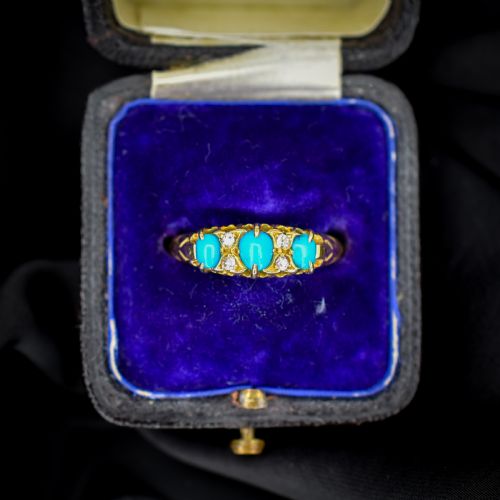
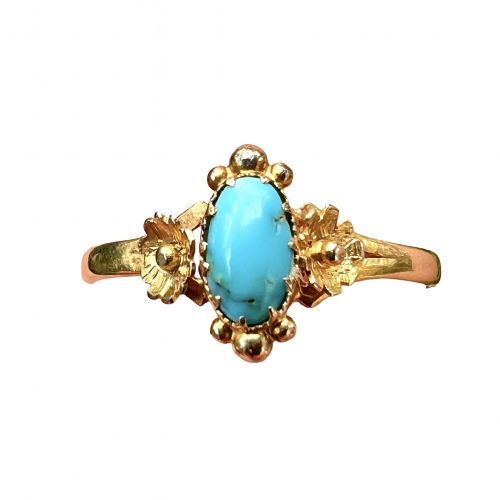
A victorian turquoise cluster ring brings together vibrant robin-egg blue stones and warm gold, offering a distinctively colourful piece of antique jewellery.
Victorian Turquoise Cluster Ring
A victorian turquoise cluster ring centres on a collection of bright blue turquoise cabochons arranged in floral, star, or geometric formations. Most examples encountered here date from the Victorian period, though related pieces span from the Georgian era through to Edwardian times and the year 1900.
The designs range from compact flower heads and domed clusters to navette shapes and scroll boat motifs. Buyers typically find these rings fashioned in various gold purities, including 9ct, 15ct, and 18ct yellow gold, alongside silver gilt variations.
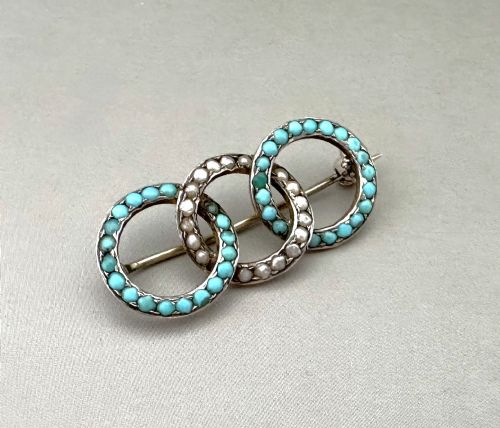
While rings dominate the selection, the broader group occasionally includes related forms such as brooches and earrings sharing the same distinctive stone groupings. The central turquoise stones are frequently accented with seed pearls, split pearls, or rose-cut diamonds to highlight the cluster design.
Materials and construction methods
Goldsmiths of the period commonly utilised 18ct, 15ct, and 9ct gold to form the shanks and settings, mounting the bright blue stones securely by hand. Many settings incorporate silver or silver gilt elements, particularly where old rose-cut diamonds are set close to the turquoise.
Some rings combine turquoise with an evil eye motif, blending protective symbolism with floral cluster arrangements.
Distinguishing quality across the range
The overall standard of a victorian turquoise cluster ring depends significantly on the uniform colour and stability of the turquoise stones, as natural variations in blue hues affect the visual harmony of the cluster. Pieces utilising higher gold purities, such as 15ct and 18ct gold, generally demonstrate superior metalwork compared to lighter 9ct equivalents.
The inclusion of accompanying gemstones like rose-cut diamonds and well-matched seed pearls elevates the refinement of the piece. Additionally, crisp detailing in the underlying scroll, navette, or flower designs marks out the work of skilled period jewellers.
The Victorian Turquoise Cluster Ring Glossary
- Cabochon
- A gemstone shaped and polished with a smooth, rounded surface rather than faceted. This style showcases the uniform blue colour characteristic of period turquoise.
- Navette
- A boat-shaped or marquise gemstone setting that tapers to points at both ends. It creates an elongated cluster design on the finger.
- Seed pearl
- A very small, naturally formed or early cultured pearl used widely in Victorian jewellery. They create delicate borders around central turquoise stones.
- Silver gilt
- Silver that has been coated with a thin layer of gold. This technique provides the bright appearance of gold whilst utilising a silver base for stone settings.
- Rose-cut diamond
- An antique diamond cut featuring a flat base and a domed crown with triangular facets. These stones frequently accent the turquoise clusters.
Victorian Turquoise Cluster Ring: Frequently Asked Questions
How do I care for turquoise rings?
Turquoise is a relatively soft stone that absorbs oils and moisture easily. Avoid exposing the ring to water, cosmetics, and harsh cleaning agents.
Store the piece away from direct sunlight and harder gems to prevent discolouration and scratching of the stones.
Are these rings durable for daily wear?
While Victorian jewellery was made to last, turquoise and pearls are softer than diamonds and require gentle treatment. Regular daily wear can risk damaging the delicate stone settings.
Reserve the ring for occasional use to protect the intricate goldwork and soft cabochons from knocks.
What gold purities should I expect?
Period pieces commonly feature 9ct, 15ct, or 18ct yellow gold. The higher purities of 15ct and 18ct are typical of earlier Victorian craftsmanship.
Assay marks and hallmarks where present help confirm the specific gold standard and the town of origin.
How do I date a turquoise cluster ring?
Dating relies on stylistic clues such as navette proportions, flower motifs, and the integration of seed pearls or rose-cut diamonds. Georgian examples often show darker foils or closed backs.
Victorian and Edwardian pieces exhibit distinct claw settings and gold purities that align with the broader history of nineteenth-century jewellery production.