



Victorian Floral Cluster Ring
These victorian floral cluster ring examples bring together period stones and precious metals in charming circular arrangements.
Victorian Floral Cluster Ring
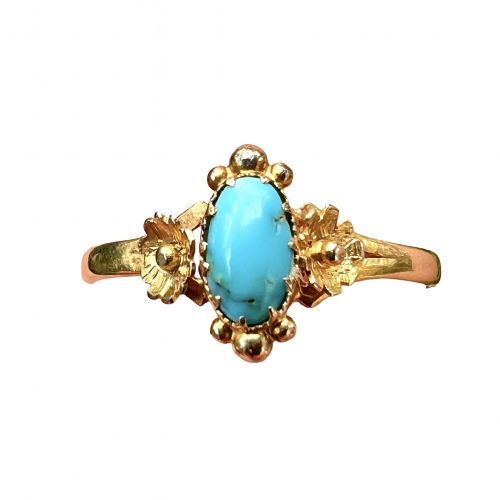
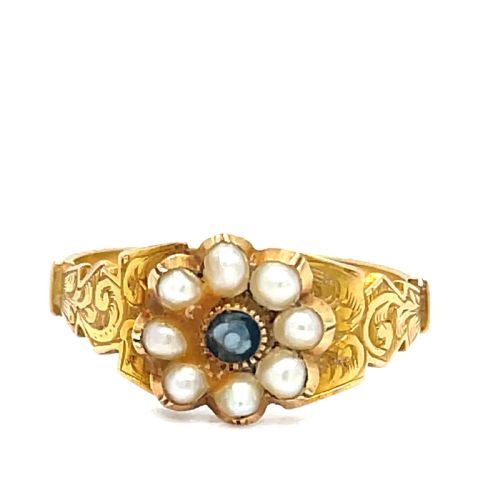
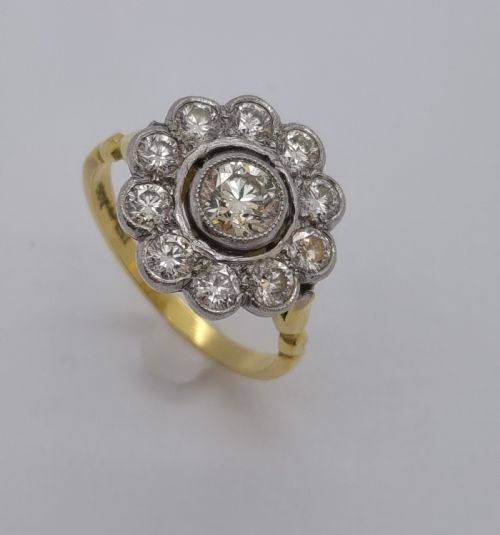
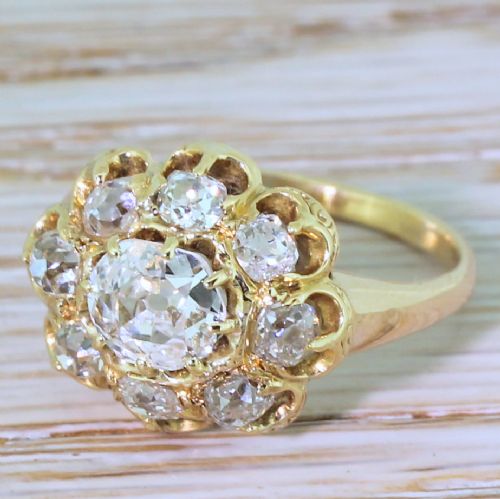
A victorian floral cluster ring presents a central gem surrounded by smaller stones to form a distinct blossom motif. The pieces meeting this search phrase draw primarily on Victorian and Edwardian periods, alongside later 1930 examples.
Most items feature gold mounts, spanning both 9ct and 18ct yellow gold, while some incorporate platinum settings. Common material pairings include turquoise, pearl, agate, enamel, ruby, and old cut diamonds.
Makers and designers from these eras utilised distinct stylistic idioms, including Etruscan Revival and Arts and Crafts aesthetics. These variations give each ring a unique character while maintaining the core floral silhouette.
How they were made
Goldsmiths constructed these rings using solid 9ct and 18ct yellow gold, frequently shaping the metal to support pavé or bezel-set stones. Platinum also appears in settings to securely hold diamonds in bright relief.
Gemstones such as old mine cut diamonds, turquoise cabochons, and pearls were hand-selected and arranged into tight circular clusters. Details like enamel and agate inlay add contrasting colour and texture to the floral face.
Listings feature items spanning the Victorian, Edwardian, and 1930 periods, executed in 9ct and 18ct gold, platinum, turquoise, and diamond.
What varies in quality
Quality rests in the selection and matching of the stones, where uniform size and high lustre distinguish finer examples. The precision of the goldwork, particularly in Arts and Crafts or Etruscan Revival pieces, dictates the refinement of the finished jewel.
The integrity of the central cluster setting and the weight of the gold shank govern the durability and overall presence of the ring on the hand.
The Victorian Floral Cluster Ring Glossary
- Cluster ring
- A ring design featuring a central gemstone encircled by a group of smaller secondary stones. This layout maximises visual impact and light reflection.
- Old mine cut
- An early diamond cut characterised by a cushion shape, high crown, and small table. It is typical of antique jewellery from the Victorian era.
- Cabochon
- A gemstone shaped and polished with a smooth, rounded surface rather than faceted. This cut is frequently used for turquoise and other opaque stones.
- Etruscan Revival
- A Victorian design movement inspired by ancient archaeological discoveries. It often incorporates granulation and applied wirework on gold.
Victorian Floral Cluster Ring: Frequently Asked Questions
How do I wear a cluster ring safely?
These rings suit daily wear provided you remove them during heavy manual tasks. The settings deserve gentle care to protect the smaller surrounding stones.
Store each piece individually in a lined box to prevent scratching against other jewellery.
Are these rings genuinely antique?
The pieces span Victorian, Edwardian, and early twentieth-century periods. Hallmark evidence and traditional setting techniques confirm their historical origins.
Examining the metalwork and stone cuts helps distinguish period examples from later reproductions.
Can a cluster ring be resized?
Most gold and platinum bands allow for professional resizing by a skilled jeweller. The process depends on the shank thickness and the proximity of the cluster.
Consult a specialist who understands antique settings to preserve the structural integrity of the shoulders.
What stones are common in these rings?
Diamonds, turquoise, pearls, and rubies appear frequently in these floral arrangements. Enamel and agate also add colour and historical context to the designs.
Each combination reflects the specific aesthetic preferences of the maker and the period.