



Victorian Marquetry Nightstands
Victorian marquetry nightstands bring floral detail and rich woods beside the bed, offering surface space and enclosed storage.
Victorian Marquetry Nightstands
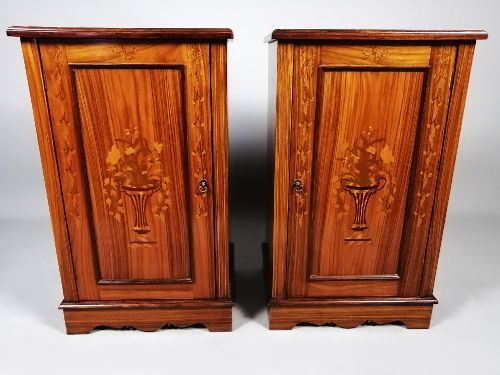
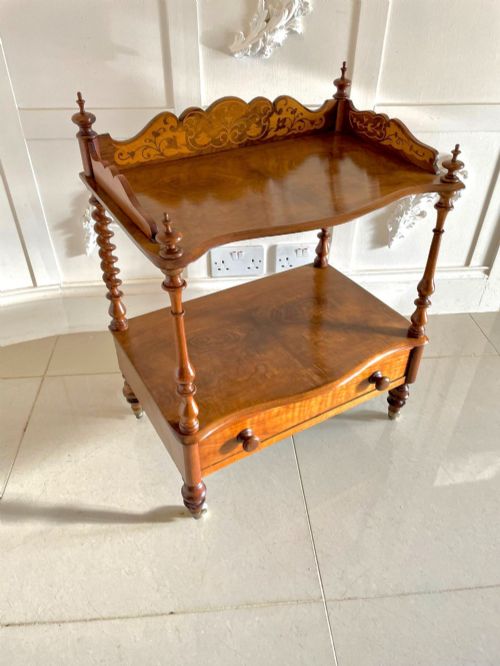
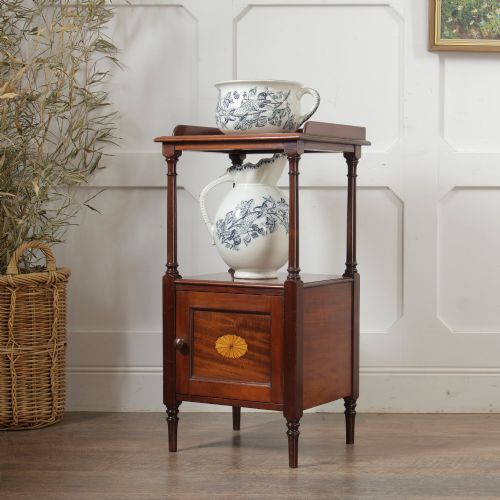
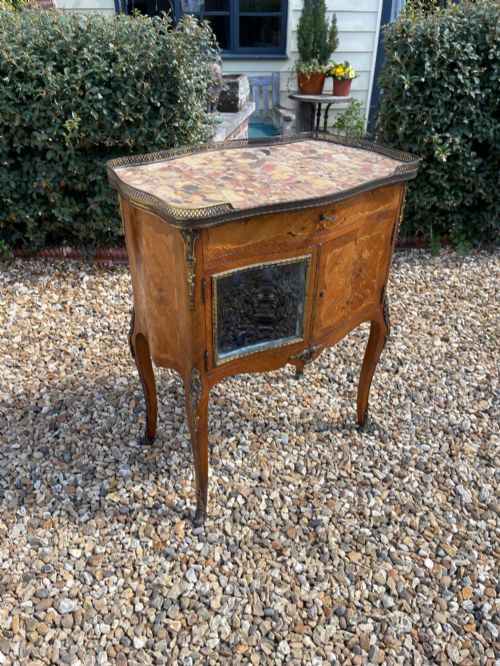
Victorian marquetry nightstands appear primarily as bedside cupboards, bedside cabinets, and occasional tables dating through the nineteenth century. The standard form provides a cupboard door or drawers beneath a flat top, sometimes topped with marble.
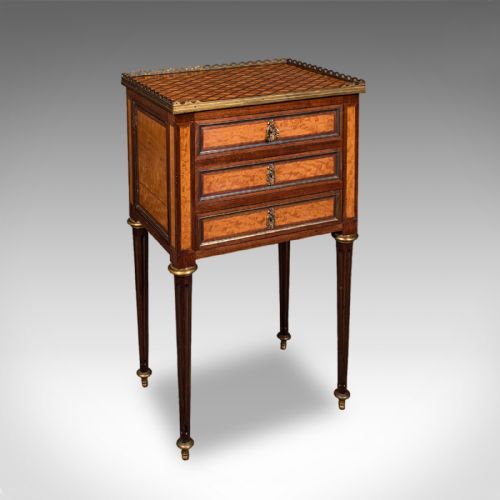
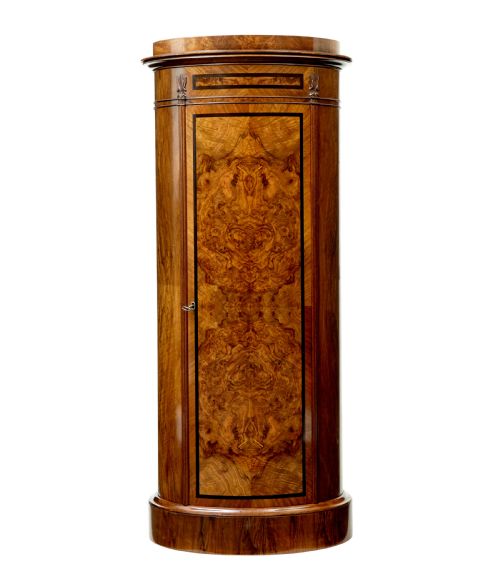
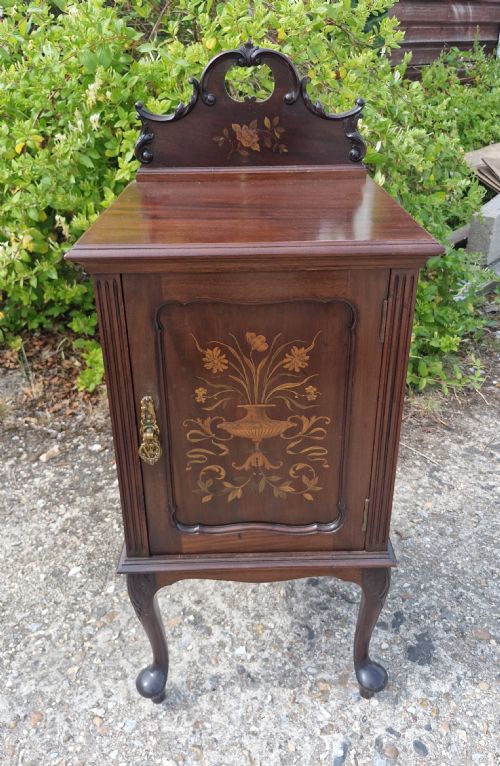
Rosewood, walnut, burr walnut, and satinwood dominate the selection, frequently decorated with floral marquetry and contrasting inlay. These pieces range from simple mahogany pot cupboards to elaborate French Revival designs.
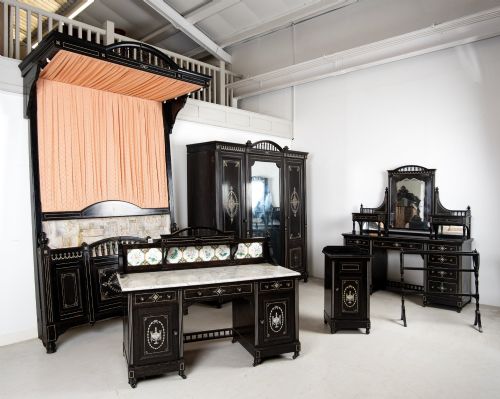
Pairs appear frequently among the listings, alongside single bedside cabinets and occasional tables suited to bedroom use. The styles span from late Victorian and Edwardian examples to French Louis XVI Revival and Aesthetic Movement interpretations.
Materials and construction
Cabinet makers built these pieces using dense hardwoods like rosewood, walnut, and mahogany as a base, applying finer timbers such as satinwood, kingwood, and burr walnut for decorative surfaces. Marquetry involves cutting thin veneers of various coloured woods to form floral and geometric patterns.
Brass handles and mounts accent the timber structures, while certain French-influenced examples incorporate fitted marble tops. Internal construction relies on solid secondary woods for drawer linings and carcase frames.
Listings feature rosewood, walnut, satinwood, and mahogany, alongside marble and brass elements.
Evaluating craftsmanship
Quality rests in the precision of the marquetry and the choice of timber figure, such as highly grained burr walnut or rich rosewood. Crispness in the floral inlay separates standard production from finer cabinet work.
The integration of brass hardware, well-fitted marble tops, and balanced proportions mark the superior examples in this group.
Collinson & Lock
The Victorian Marquetry Nightstands Glossary
- Marquetry
- The art of forming decorative patterns by fitting together thin veneers of wood and other materials. This technique defines the visual surface of these nightstands.
- Burr walnut
- Wood taken from a growth on a walnut tree, showing swirling knot patterns. Cabinet makers prized this timber for high-status furniture fronts.
- Pot cupboard
- A small bedside cabinet originally designed to house a chamber pot. Many Victorian nightstands share this functional form.
- Satinwood
- A pale, hard timber with a natural sheen, used extensively for inlay and veneering during the nineteenth century. It provides strong contrast against darker woods like rosewood.
Victorian Marquetry Nightstands: Frequently Asked Questions
What is a nightstand?
A nightstand is a small bedside table or cupboard used to hold lamps, books, and small personal items.
In the Victorian period, these pieces often took the form of enclosed cupboards to keep bedroom necessities out of sight.
How do I date a nightstand?
Dating relies on timber choices, construction methods, and stylistic cues such as revival influences or aesthetic movement details.
Nineteenth-century pieces often combine solid primary woods with specific veneer pairings recorded in the listings.
Are pairs common?
Matched pairs of bedside cabinets appear frequently in nineteenth-century bedroom furnishings.
Cabinet makers produced these to flank larger beds, particularly within matching bedroom suites.
What is marquetry?
Marquetry is a decorative technique using wood veneers to create pictures and patterns on furniture surfaces.
Floral motifs in contrasting timber types feature prominently on these Victorian pieces.