
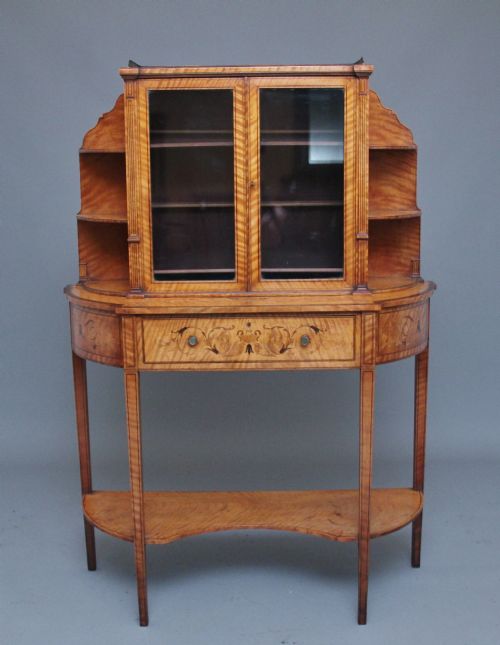
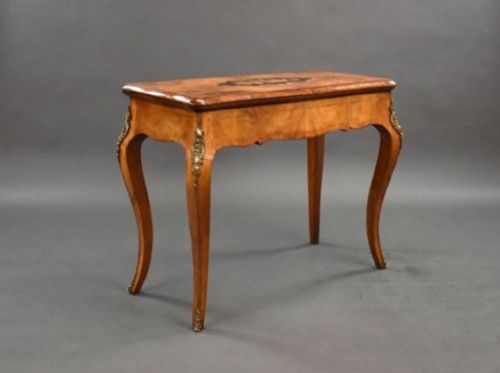


Victorian Marquetry Console
A victorian marquetry console brings floral patterns and rich woods together, offering practical display surfaces designed for formal nineteenth-century drawing rooms.
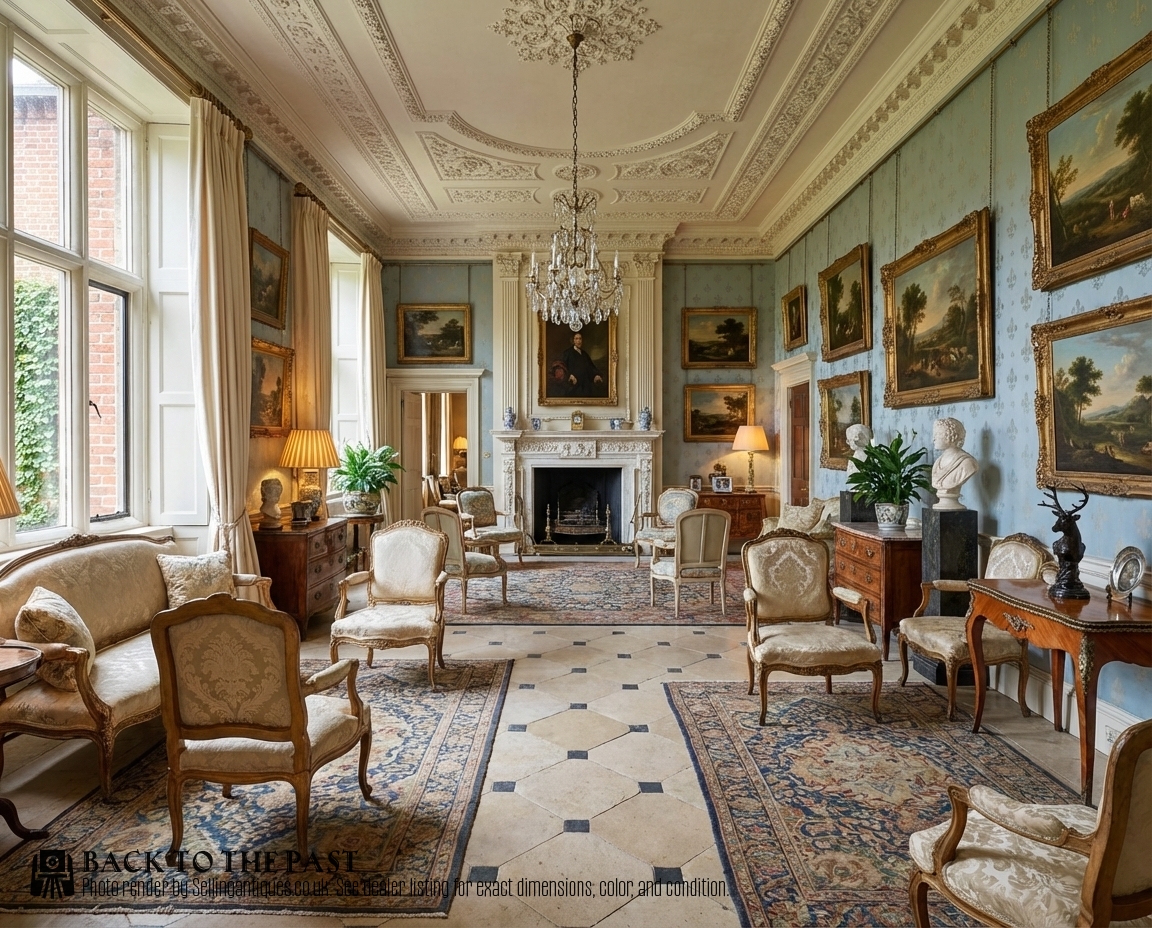
Victorian Marquetry Console
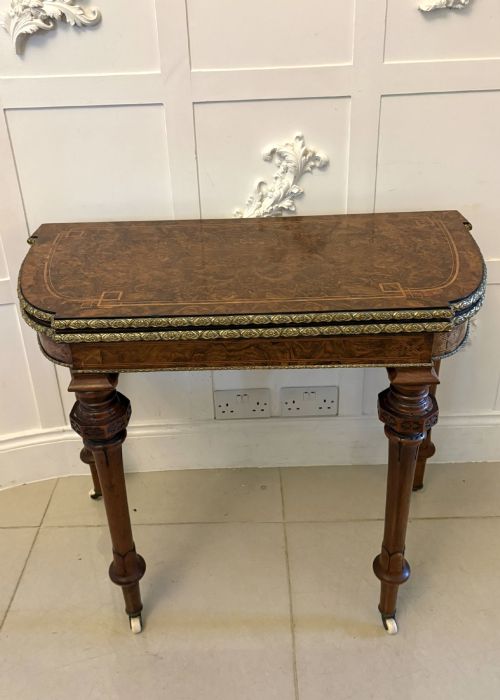
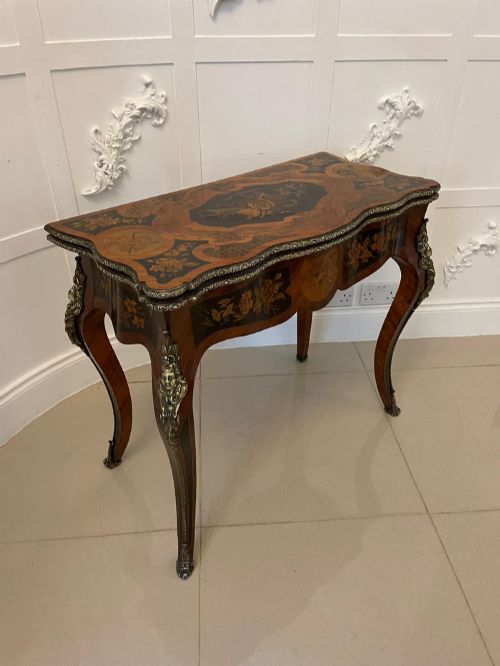
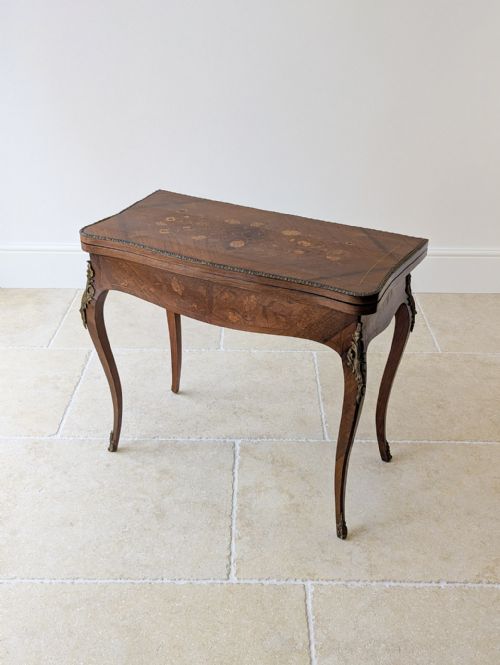
A victorian marquetry console typically combines structural table forms with intricate wood-inlaid surfaces, most frequently appearing in card, games, and side table variants. These pieces emerge from the nineteenth century, spanning decades from eighteen fifty to nineteen hundred, often reflecting French revival styles alongside domestic British cabinet-making.
Buyers encounter numerous variations configured for versatile domestic use, including fold-over card tables and pier tables designed to stand against walls. Walnut and burr walnut dominate the forms, frequently enriched with floral marquetry and contrasting exotic wood veneers.
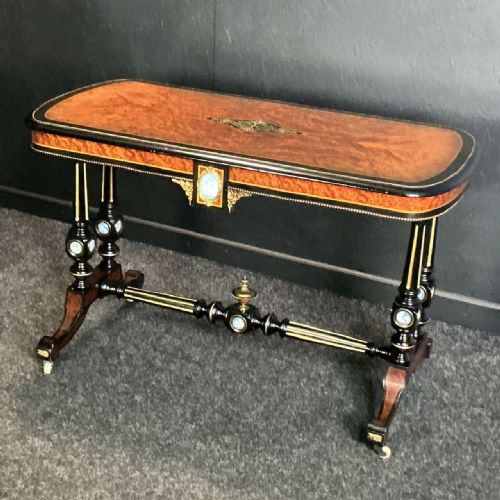
The selection ranges from simple inlaid occasional tables to grander console tables embellished with gilt bronze and ormolu mounts. These items served both decorative and social functions in period interiors, functioning as gaming surfaces or display ledges.
Materials and Construction
Craftsmen built these tables using foundational carcase woods like mahogany and walnut, applying decorative veneers of burr walnut, kingwood, rosewood, and satinwood to the visible surfaces. Marquetry designs were hand-cut from contrasting timbers and exotic woods, then meticulously fitted into the primary veneer.
Metal components played a significant structural and decorative role, with brass, ormolu, and gilt bronze mounts securing edges and accentuating cabriole legs. Mother-of-pearl and Tunbridge ware details occasionally enhanced the inlaid scenes, demonstrating complex multi-media assembly techniques.
Some nineteenth-century tables hide clever folding mechanisms designed specifically to accommodate evening card games by candlelight.
Evaluating Quality
Quality rests primarily in the crispness of the marquetry cutting and the choice of timber figure, where burr walnut and exhibition-grade kingwood denote higher workshops. The integration of metal mounts and the precision of the joinery distinguish standard production from pieces marked out by named makers.
Finer examples maintain structural stability across fold-over mechanisms while preserving the alignment of complex floral veneer patterns across moving joints. The depth and clarity of the polished finish further separate workshop tiers.
Edwards & Roberts·Henry Dasson·Donald Ross
The Victorian Marquetry Console Glossary
- Marquetry
- Decorative veneer work forming pictures or patterns by assembling small pieces of wood, shell, or ivory. This technique defines the ornate surfaces of nineteenth-century decorative tables.
- Ormolu
- Gilt-bronze ornamentation applied to furniture mounts and feet. It provides metallic contrast against dark walnut and rosewood surfaces.
- Burr Walnut
- Wood harvested from walnut tree growths, valued for its swirling, highly figured grain patterns. It forms the primary visual field on many nineteenth-century table tops.
- Pier Table
- A side table designed to stand against a wall, often between windows beneath a mirror. These pieces frequently feature elaborate marquetry tops.
- Boulle
- Marquetry technique utilising tortoiseshell and brass inlay, popularised in French furniture styles. It appears on select nineteenth-century revival tables.
Victorian Marquetry Console: Frequently Asked Questions
What is a victorian marquetry console?
A victorian marquetry console is a nineteenth-century table featuring detailed wood-inlaid patterns across the top surface, designed for ornamental display or formal entertaining.
These pieces typically utilise walnut or exotic timbers combined with brass or ormolu mounts to suit period drawing rooms.
How were these tables used originally?
Many examples served multiple functions, operating as side tables for decorative objects or converting into card and games tables through fold-over tops.
They stood against walls or within room interiors to showcase the wealth and refined taste of the household.
How do I care for inlaid wood surfaces?
Inlaid surfaces require consistent indoor humidity levels and protection from direct sunlight to prevent veneer lifting or wood fading.
Routine maintenance involves gentle dusting with a dry cloth and occasional application of appropriate furniture wax.
How can I tell different periods apart?
Stylistic shifts between eighteen fifty and nineteen hundred reveal changing preferences, moving from substantial walnut forms toward lighter satinwood or French revival designs.
Construction methods and the complexity of metal mounts also help indicate the approximate decade of manufacture.