

Victorian Fold Top
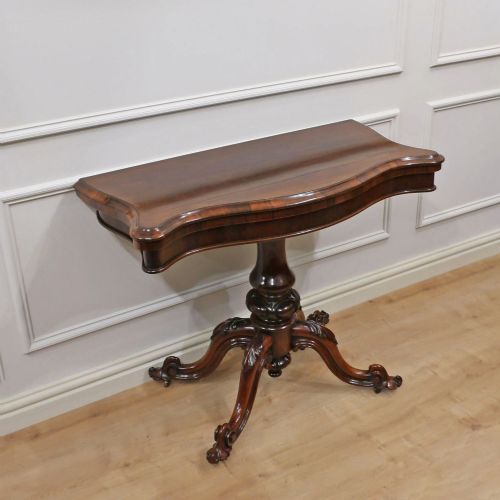
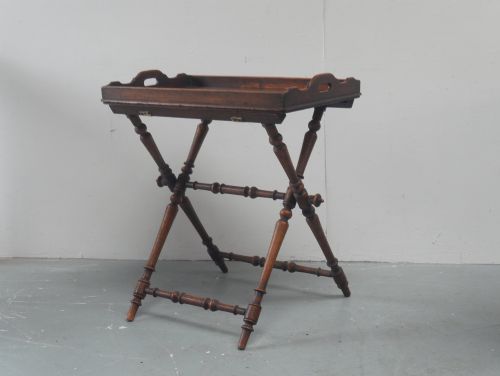
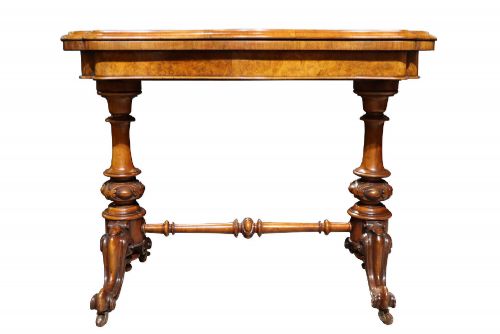
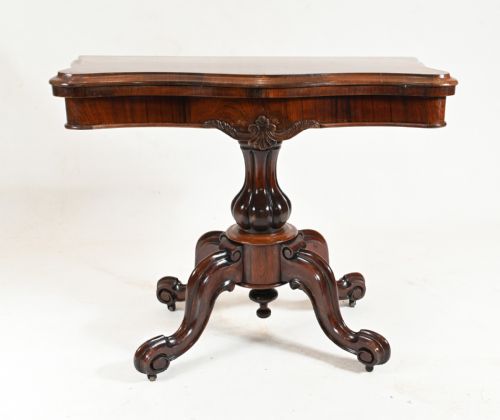
These pieces known as a victorian fold top are ingenious tables designed to double their surface area for card playing or tea.
Victorian Fold Top
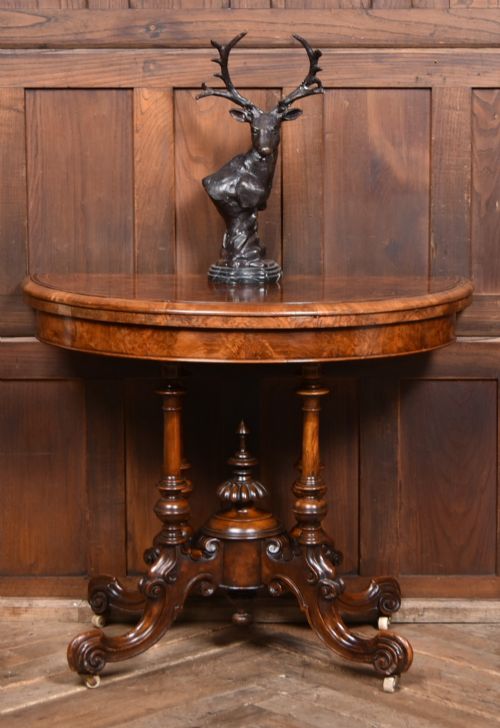
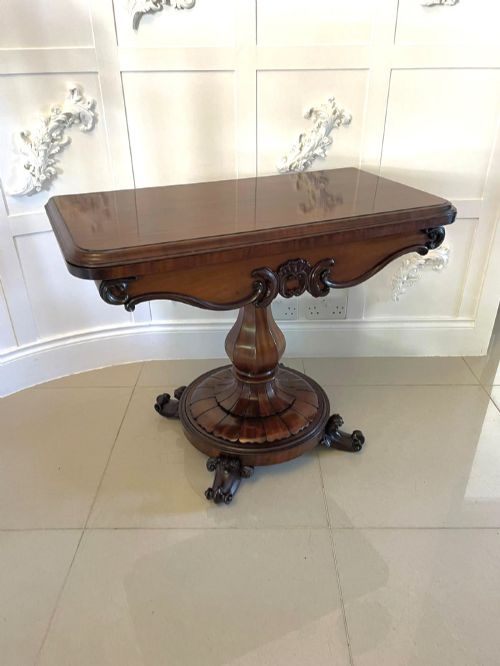
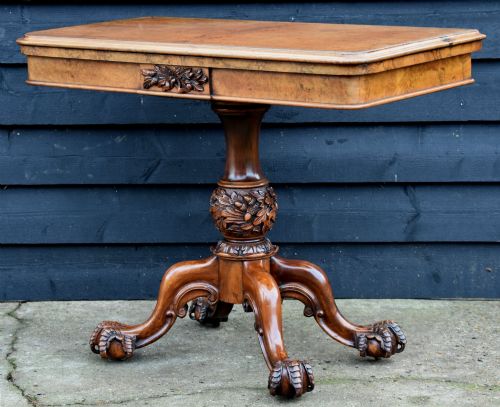
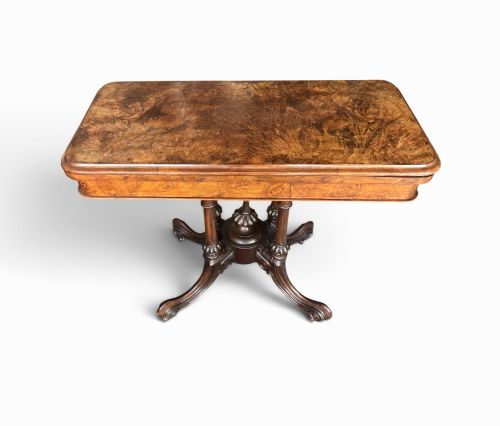
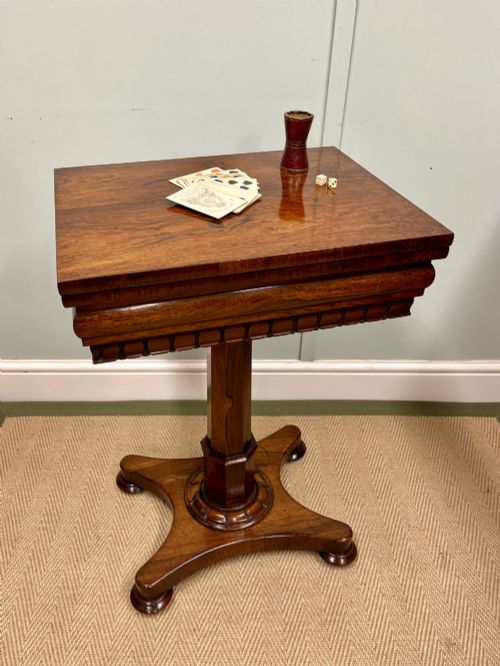
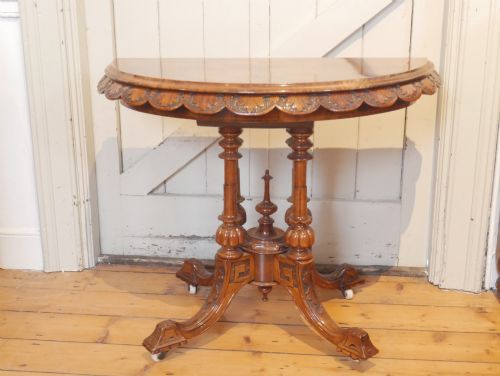
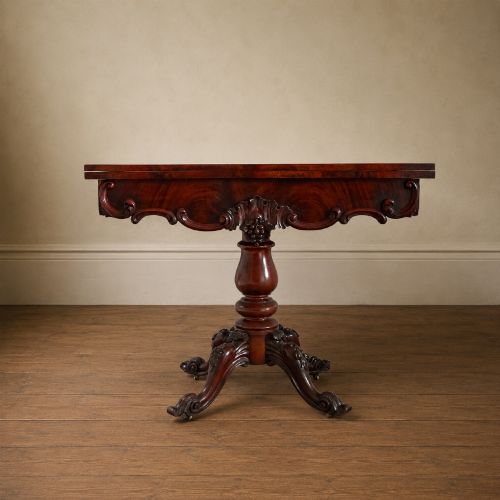
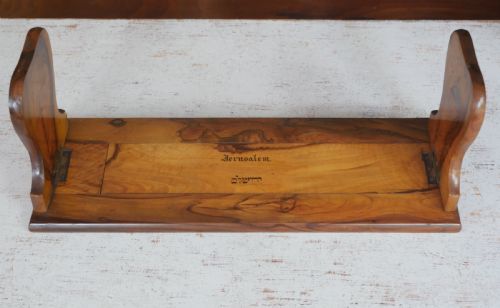
When you search for a victorian fold top, you encounter a selection of card tables, games tables, and tea tables spanning the nineteenth century. These items typically feature a hinged leaf that swings or folds open to reveal a baize-lined playing surface or a polished timber top.
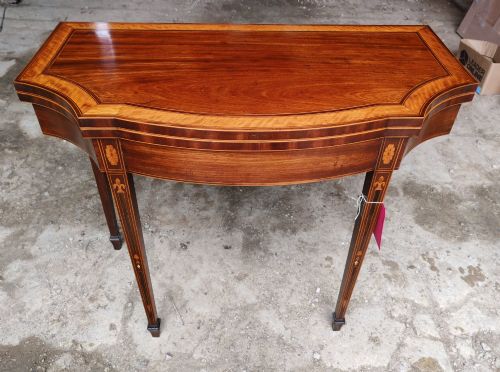
The walnut and mahogany variants dominate the selections here, often shaped in demi-lune, rectangular, or envelope configurations. They serve as versatile pieces that function equally well as console tables against a wall when closed.
How they were made
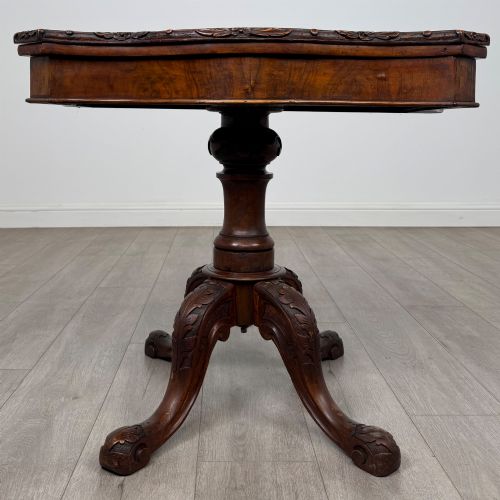
Cabinet makers utilised dense hardwoods such as mahogany, rosewood, and burr walnut, frequently applying figured veneers to the primary surfaces to create striking grain patterns. Complex hinge mechanisms and swivel pivots allowed the heavy tops to rotate and support themselves securely when opened.
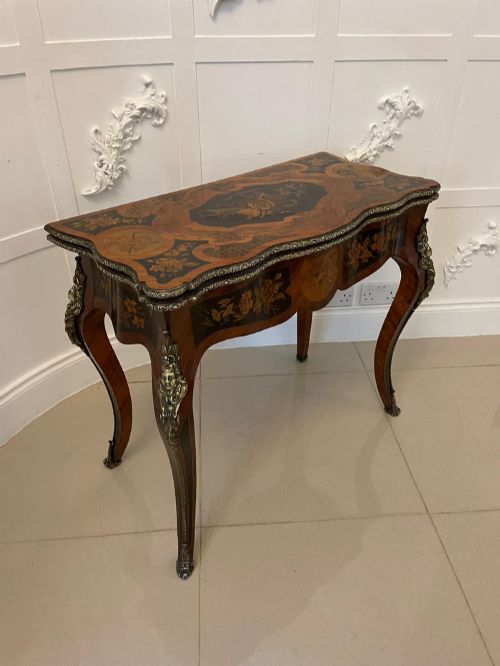
Detailing often included wood inlay, marquetry, and carved supports, alongside brass mounts and ceramic castors on select examples. The internal wells of games tables were occasionally fitted for counters or lined with textile.
Some envelope tables incorporate ingenious pivoting leaves that fold open like an envelope to reveal hidden gaming wells.
What varies in quality
The division between standard workshop production and superior cabinet making rests in the selection of timbers and the precision of the joinery. Exceptional examples exhibit meticulously matched burr veneers, elaborate floral marquetry, and substantial carved timber supports that remain stable over time.
The smoothness of the swivelling mechanism and the tightness of the joints when closed also separate higher tier pieces from simpler utilitarian tables.
Edwards & Roberts
The Victorian Fold Top Glossary
- Fold-over top
- A hinged wooden leaf that doubles the surface area of a table when opened. It often conceals a storage well or a baize playing surface beneath.
- Demilune
- A half-moon shape commonly seen in the tops and frames of card tables from this era. This profile allowed tables to sit flush against a wall when closed.
- Marquetry
- Decorative patterns formed by fitting together small pieces of tinted wood veneer into a design. It frequently appears on the tops of walnut gaming pieces.
- Baize
- A coarse woollen fabric used to line the playing surfaces of card and games tables. It provides a soft texture for dealing cards.
- Swivel top
- A mechanism allowing the upper leaf to rotate ninety degrees before opening. This movement distributes the weight evenly over the pedestal or frame below.
Victorian Fold Top: Frequently Asked Questions
What is a victorian fold top used for?
These tables served primarily for social gatherings, functioning as compact console or side tables during the day and opening up for card games or tea service in the evening.
The clever hinged or rotating mechanisms allowed households to maximise their living space without sacrificing formal furniture.
How do I tell a card table from a tea table?
Card tables generally feature an interior lined with baize or felt for playing games, sometimes accompanied by small corner wells for counters or coins.
Tea tables usually present a plain polished timber surface inside the folded leaf, intended for porcelain settings rather than gaming.
Can I use these tables for dining?
Most examples of this type are built for light parlour use rather than heavy daily dining. The folding leaves and pivoting support brackets are engineered to hold card decks, tea sets, or decorative items.
Placing heavy loads on the extended leaf can strain the hinge mechanism over time.
How do I care for the polished wood surface?
Keep the timber away from direct sunlight and strong heat sources to prevent the wood veneers from drying out or splitting. Regular dusting with a soft, dry cloth is sufficient to maintain the polished finish.
Avoid using modern silicone sprays or abrasive cleaners on antique polish.