



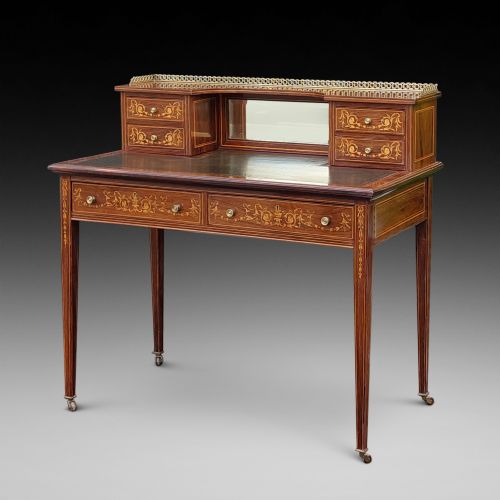


Victorian Marquetry Bureau
These Victorian marquetry bureau examples combine intricate wood inlay with practical writing surfaces, offering refined utility for domestic study spaces.
Victorian Marquetry Bureau
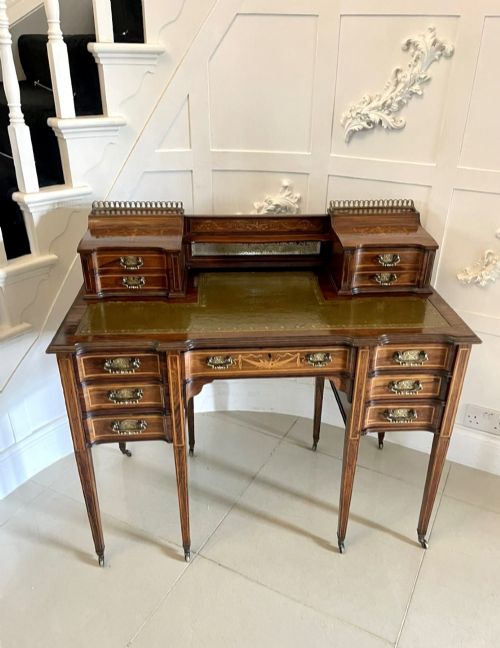
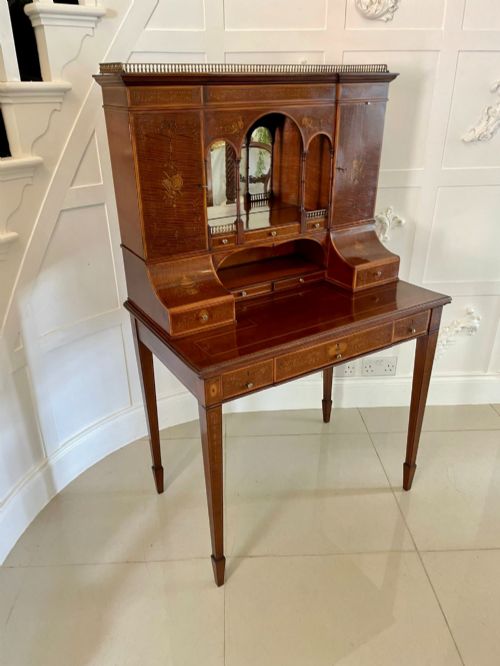
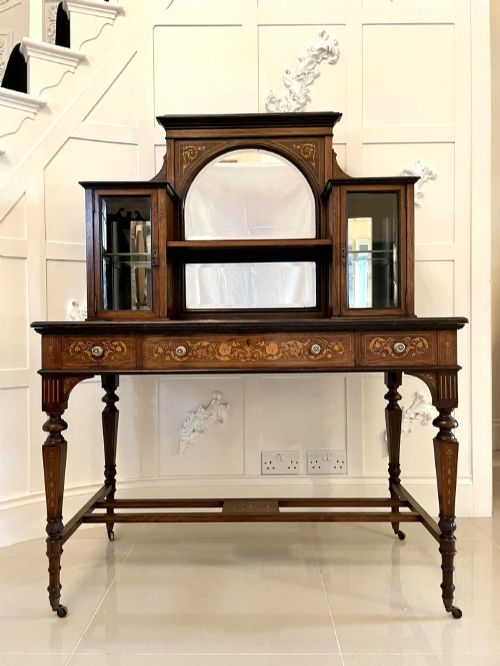
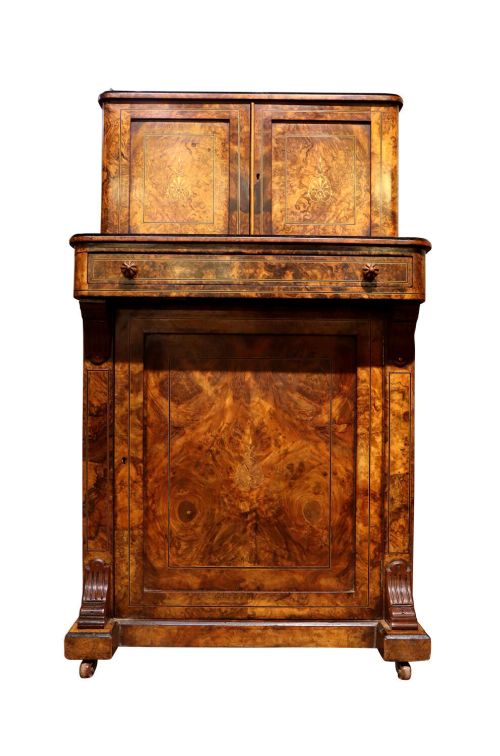
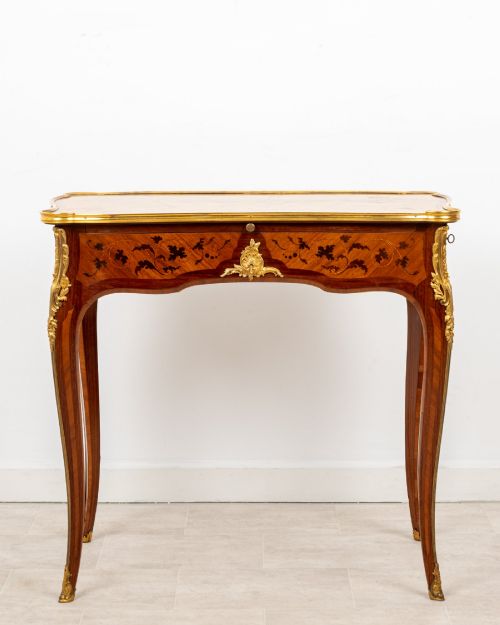
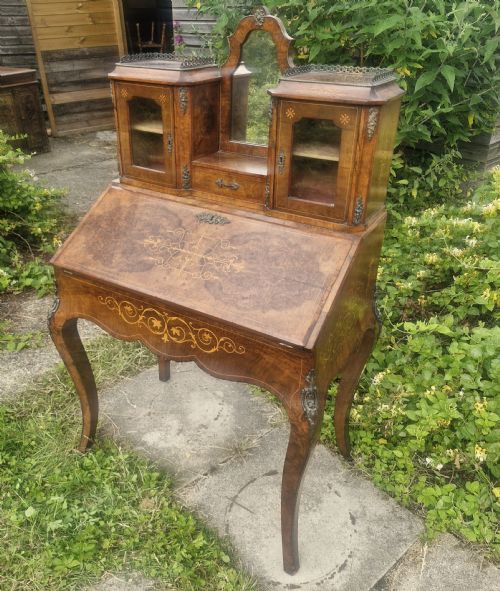
A victorian marquetry bureau generally takes the form of a compact ladies writing desk, a Davenport, or a sophisticated bonheur du jour produced during the nineteenth century. These pieces serve domestic correspondence and display floral or geometric wood patterns across sloped or flat writing surfaces.
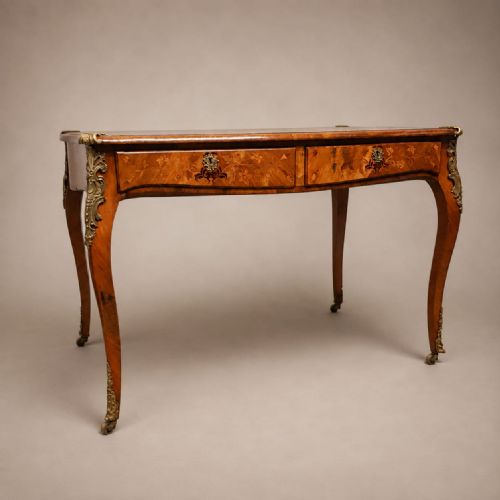
The versions most commonly met on this page date from the middle to the late Victorian period, frequently showing French revival styling or Sheraton revival influences. Burr walnut, rosewood, and mahogany provide the primary carcases for these inlaid writing articles.
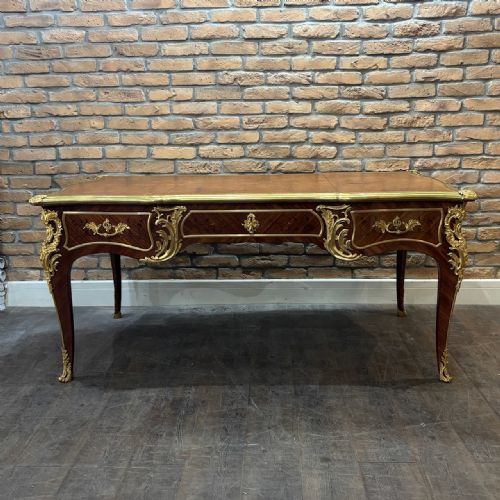
Makers adapted traditional bureau forms into elaborate cabinet desks featuring internal stationery compartments and brass galleries. Buyers encounter both English workshop productions and French influenced freestanding pieces designed to occupy the centre of a room.
Materials and Inlay Techniques
Cabinet makers utilised dense native and exotic timbers such as walnut, rosewood, satinwood, and kingwood as the foundational base for intricate veneer work. Burr walnut and figured mahogany supply natural grain movement, which contrasts against lighter inlaid borders.
Marquetry technique involves assembling fine contrasting wood veneers into pictorial or floral motifs before gluing them to the carcase structure. Brass stringing, ormolu mounts, and leather writing inserts frequently complete the decorative scheme of these desks.
Listings feature walnut, rosewood, and satinwood across Victorian desk forms.
Assessing Craftsmanship and Detail
The precision of the veneer cutting and the complexity of the botanical or scrollwork marquetry separate standard production from superior examples. Workshops employing skilled hands achieved seamless integration between the contrasting timber pieces and the surrounding carcase.
Internal secondary timbers, drawer construction quality, and the retention of original brass hardware or leather inserts indicate the standard of the original commission. Pieces bearing documented maker signatures reflect the highest tiers of nineteenth century cabinet making.
Maple and Co·Edwards and Roberts·Durand
The Victorian Marquetry Bureau Glossary
- Marquetry
- A decorative technique of applying fine pieces of wood veneer to a structure to form pictorial designs. Artisans cut various coloured timbers to fit together precisely.
- Bonheur du jour
- A small light ladies writing desk featuring a set of drawers or a cabinet on the upper surface. This form gained popularity during the nineteenth century revival periods.
- Ormolu
- Gilded bronze ornamentation applied to furniture carcases. This metalwork provides metallic contrast against dark rosewood and walnut surfaces.
- Satinwood
- A durable hardwood yielding a yellowish, lustrous grain often utilised in Sheraton revival marquetry panels. Cabinet makers selected this timber for its bright reflective quality.
Victorian Marquetry Bureau: Frequently Asked Questions
What is a bureau de dame?
A bureau de dame is a compact ladies writing desk featuring a fitted interior for correspondence. These pieces typically stand on slender cabriole or tapered legs.
Examples often incorporate fine marquetry inlay and Ormolu mounts reflecting French taste during the Victorian era.
How do I identify Sheraton revival style?
Sheraton revival pieces display classical proportions, satinwood veneers, and delicate floral marquetry patterns. These designs emulate eighteenth century aesthetics reinterpreted by Victorian workshops.
Inlaid ribbon motifs and symmetrical urn designs frequently ornament the writing surfaces.
Were these desks used for daily writing?
Victorian writing desks provided dedicated furniture for managing personal correspondence, household accounts, and journal keeping. The fitted interiors held stationery, inkwells, and postage materials.
Sloped lids offered a comfortable angle for handwriting before the widespread adoption of fountain pens and typewriters.
What distinguishes burr walnut veneer?
Burr walnut exhibits swirling, knotty grain patterns created from growths on the walnut tree. Cabinet makers prized this timber for its rich visual texture.
Marquetry panels stand out sharply when framed by figured burr walnut borders.