
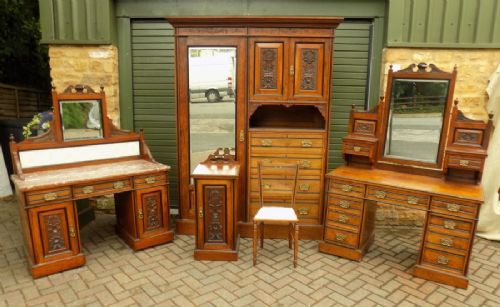
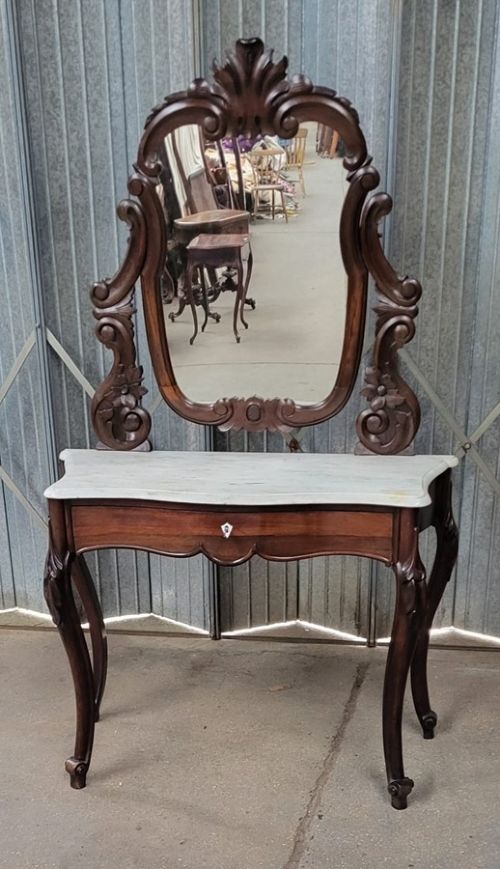


Victorian Marble Top Vanity
These pieces for victorian marble top vanity are sturdy bedroom furnishings that combine a stone slab with timber cabinetry for daily washing and grooming.
Victorian Marble Top Vanity
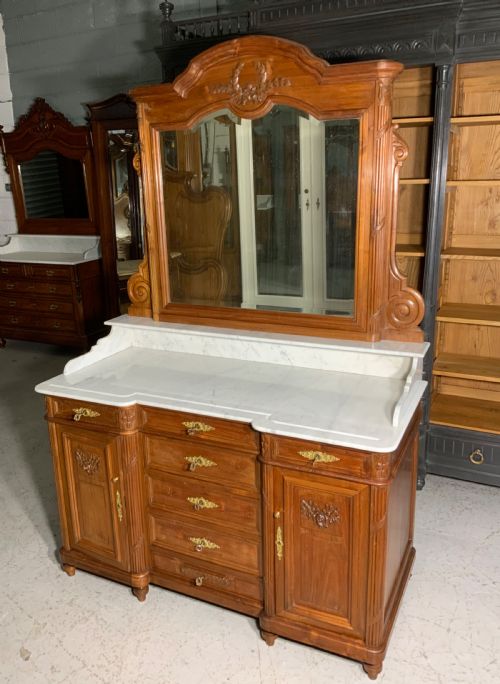
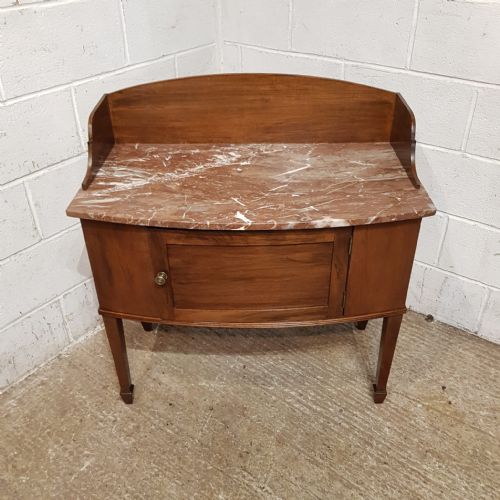
A victorian marble top vanity typically takes the form of a washstand, dressing table, or wash stand, originating primarily from the Victorian and Edwardian eras alongside 19th-century workshops. The pieces span simple painted pine frames to elaborate mahogany, walnut, and satinwood constructions designed for the bedroom.
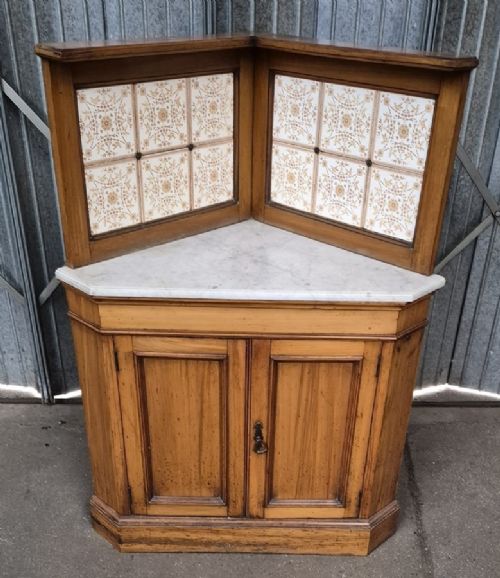
Buyers encounter corner models, bow-fronted examples, and pieces featuring over-shelves, tiled backs, and twin drawers. Many incorporate associated elements such as mirror attachments or towel rails.
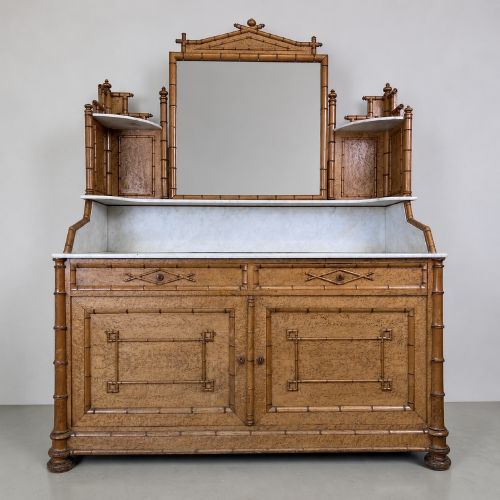
Stylistic influences range from the Aesthetic Movement and Arts and Crafts to French Rococo Revival and Faux Bamboo. These variations reflect the diverse domestic requirements of late 19th-century and early 20th-century households.
Materials and Construction
Makers built the structural frameworks using hardwoods and softwoods including mahogany, walnut, oak, satinwood, bird's-eye maple, ash, and painted pine. These timbers provided a robust foundation capable of supporting heavy stone surfaces.
The defining feature is the inset marble top, frequently paired with ceramic tiles, brass hardware, and glass elements. Carved details, inlay work, and faux bamboo turning further distinguish the cabinetwork.
Several pieces feature faux bamboo turning, proving that 19th-century makers loved a tropical plant illusion even in chilly northern bedrooms.
Standard and Execution
Quality rests in the selection of timbers like burr walnut or satinwood and the complexity of the cabinet construction, such as bow-fronted carcases or detailed carving. The integration of specialised stone slabs and ceramic tile backs also sets finer examples apart from utility painted pine pieces.
Walker & Sons·Gillows
The Victorian Marble Top Vanity Glossary
- Washstand
- A bedroom cabinet designed for personal ablutions, typically fitted with a stone top to resist water.
- Aesthetic Movement
- A late 19th-century design style prioritizing visual beauty over narrative content, often utilising ebonised wood and stylized motifs.
- Satinwood
- A lustrous, fine-grained yellow timber prized for high-end cabinetmaking and decorative inlay.
- Faux Bamboo
- Wood turned and carved to imitate the segmented stalks of natural bamboo, popular in late 19th-century furniture.
Victorian Marble Top Vanity: Frequently Asked Questions
What is a victorian marble top vanity used for?
These pieces served as functional washing and dressing stations in Victorian bedrooms before plumbed bathrooms became standard. They provided a durable stone surface for basins and water jugs.
Today, they function well as hallway consoles or bathroom sink bases in modern homes.
How do I identify an Aesthetic Movement washstand?
Aesthetic pieces often feature geometric lines, contrasting dark timbers, and decorative ceramic tile splashbacks. The design emphasises simple forms influenced by Japanese art.
Makers working in this style focused on surface pattern and harmonious proportion rather than heavy Victorian carving.
Are marble tops removable on these vanities?
Most marble slabs rest loose upon the wooden framework to allow for easier transport and cleaning. Some heavier or secured tops may be fixed with mortar or battens.
Take care when lifting the stone, as the weight is concentrated and edges can chip easily.
What woods were used for these pieces?
Workshop makers utilised a range of domestic and exotic timbers depending on the grade of the furniture. Mahogany, walnut, and satinwood appeared on finer items.
Painted pine and ash served for simpler country models and Arts and Crafts commissions.