


Victorian Marble Top Desk
A victorian marble top desk brings a cool, solid stone surface to a working space, offering enduring utility alongside refined nineteenth-century craftsmanship.
Victorian Marble Top Desk
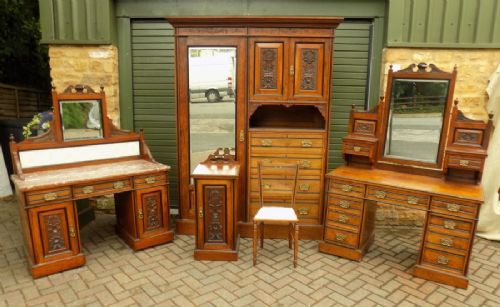
A victorian marble top desk combines heavy stone surfaces with timber cabinetry, uniting practical writing furniture with classical ornamentation. Buyers searching for this phrase encounter pieces that cross over with washstands, side tables, and specialised writing cabinets fitted with stone.
The selection ranges from robust mahogany and burr walnut frameworks to lighter satinwood and satinbirch versions. While traditional desks and secretaire abattants appear, many related forms utilise marble tops for writing or washing tasks.
Materials and construction
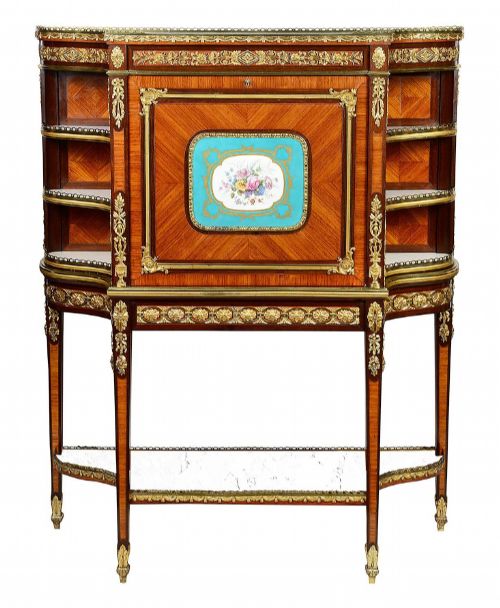
Cabinetmakers constructed the foundational frames using dense timbers like mahogany, walnut, and rosewood, often applying burr walnut veneers or marquetry inlay for decorative impact. Heavy stone slabs, including Italian marble and specimen pietra dura panels, were then fitted precisely to the wooden upper surfaces.
Secondary detailing involved brass hardware, glass elements, and occasionally mirror glass, supporting complex forms such as roll-top bureaux and fitted drawer arrangements. Joinery relied on traditional framing techniques to support the considerable weight of the inset stone.
Listings feature nineteenth-century items utilising marble, brass, walnut, and mahogany across styles including Rococo Revival and the Aesthetic Movement.
Distinctions in craftsmanship
Quality rests upon the selection of timber veneers, such as figured burr walnut or satinwood, and the depth of carved or inlaid ornamentation. Finer examples display meticulous attention to the fit and polish of the marble slab relative to the wooden base.
Makers' signatures and established retail stamps elevate certain pieces, distinguishing standard workshop production from branded commissions. The integration of specialised components, such as revolving mechanisms or fitted interior compartments, further separates superior items.
Blake London·Maples·T Wallace
The Victorian Marble Top Desk Glossary
- Burr walnut
- A timber harvested from walnut tree growths that produces intricate, swirling grain patterns. It was frequently utilised on high-end Victorian cabinet furniture for decorative veneer surfaces.
- Secretaire abattant
- A tall vertical cabinet featuring a drop-front writing flap that conceals inner pigeonholes and small drawers. This form provided a private writing surface while saving floor space.
- Pietra dura
- An artistic technique utilising cut and fitted polished coloured stones to create pictorial designs. It appears on luxury specimen tops and decorative desk items.
- Satinbirch
- A pale, lustrous timber derived from birch trees, prized for its golden hue and reflective grain. It was often employed during the Victorian period for bedroom and dressing furniture.
- Faux bamboo
- A decorative finish where wood is carved or painted to replicate the segmented appearance of real bamboo canes. This style reflected nineteenth-century tastes for exotic, botanical motifs.
Victorian Marble Top Desk: Frequently Asked Questions
What defines a victorian marble top desk?
These pieces combine wooden writing furniture with inset stone slabs, bridging the gap between functional desks and decorative side tables. They frequently incorporate mahogany, walnut, or satinwood structures beneath fitted marble surfaces.
Cabinetmakers utilised stone to provide a durable, heat-resistant, and cool writing or display area. The category often intersects with washstands and writing cabinets adapted for domestic work.
How should I care for the marble top?
Marble requires gentle cleaning with soft cloths and neutral, non-abrasive soap solutions to preserve its polished surface. Avoid acidic liquids like lemon juice or vinegar, which can etch the stone.
Applying a specialised stone sealer helps protect against stains from ink or moisture in daily use. Lifting rather than sliding heavy items across the surface prevents scratching.
Were these desks used for writing?
Many examples served multiple domestic functions, including general correspondence, reading, and grooming tasks in bedrooms or studies. Sloped writing flaps and fitted interior drawers accommodated inkwells, paper, and small instruments.
Some pieces originally served as washstands or dressing tables before finding renewed life as writing surfaces. The heavy stone top proved practical for varied daily activities.
How do I identify Victorian periods?
Nineteenth-century pieces display characteristic joinery methods, timber selections, and stylistic revivals such as Louis XVI or Aesthetic Movement details. Maker stamps, paper labels, and regional construction traits help narrow down the exact decade of manufacture.
Hardware styles, from brass handles to lock mechanisms, offer further chronological clues. The evolution from heavy mahogany to lighter satinwood reflects shifting Victorian interior tastes.