




Antique Tile Back Vanity
An antique tile back vanity brings genuine period character to a bedroom, combining practical surfaces with decorative ceramic panels.
Antique Tile Back Vanity
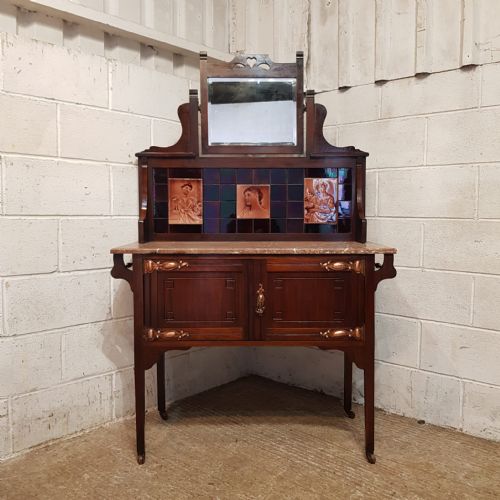
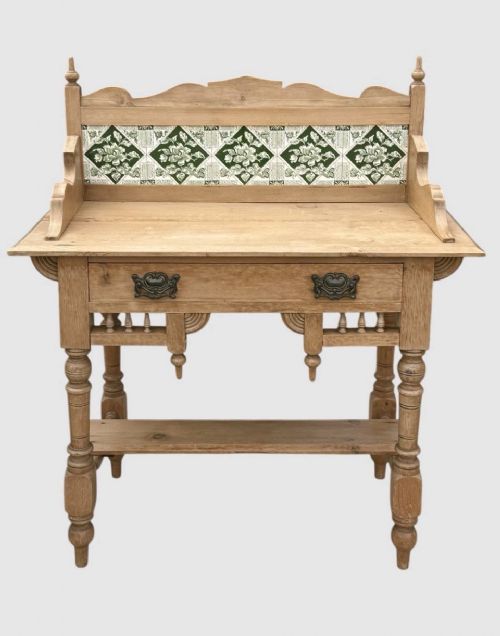
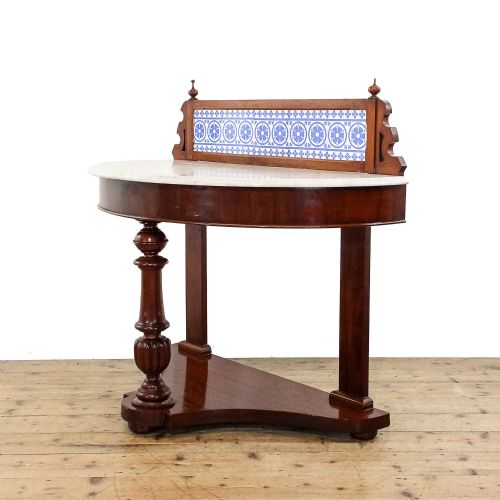
An antique tile back vanity primarily appears as a washstand or dressing table, offering a functional surface topped by a protective ceramic back. These washstands survive from the Victorian and Edwardian eras, as well as the 1890 period and around 1900.
Buyers meet forms shaped by the Aesthetic movement, Arts and Crafts style, and Art Nouveau design. Materials span mahogany, walnut, pine, marble, and ceramic tiles.
The standard configuration includes a marble top alongside a tiled splashback, often paired with twin drawers or an over-shelf. Such pieces served domestic washing and grooming routines before plumbed bathrooms became standard.
How they were made
Cabinet makers utilised solid timbers like mahogany, walnut, and pine to construct the main bodies and drawers of each washstand. Painted pine finishes also occur frequently across the surviving selection.
Heavy marble slabs form the primary wash surface on numerous examples, chosen for water resistance and durability. Decorative ceramic tiles line the splashbacks, secured behind raised timber galleries.
Brass fittings and glass elements appear as secondary materials on specific iterations. Joinery methods reflect traditional period carpentry appropriate to late nineteenth and early twentieth century workshops.
Current listings feature pieces spanning the Victorian and Edwardian eras, alongside items from 1890 and 1900.
What varies in quality
The selection of primary timber and the quality of the marble top establish the baseline standard for each piece. Richly figured mahogany and walnut distinguish grander examples from utilitarian painted pine versions.
The artistic merit and execution of the ceramic tiles define the decorative ceiling of the work. Aesthetic movement and Art Nouveau panels display superior design ambition compared to plain commercial equivalents.
Proportion and structural complexity, such as the inclusion of an over-shelf or twin drawers, separate standard washstands from more elaborate vanity tables.
The Antique Tile Back Vanity Glossary
- Tile gallery
- A raised wooden frame at the back of a washstand designed to hold decorative ceramic tiles. This structure serves as a splashback.
- Marble top
- A polished stone slab fitted to the surface of a vanity or washstand to provide a waterproof working area. It resists moisture from washing water.
- Aesthetic movement
- A late nineteenth century design style emphasising visual beauty over narrative subject matter. Pieces from this movement often feature stylized natural motifs.
- Arts and Crafts
- A design movement valuing traditional craftsmanship and simple forms. Furniture in this style highlights honest construction and natural materials.
Antique Tile Back Vanity: Frequently Asked Questions
What is an antique tile back vanity?
It is a period washstand or dressing table featuring a decorative ceramic tiled splashback and a waterproof top surface.
These items date from the Victorian and Edwardian eras, serving bedrooms before modern plumbing.
How were washstands used originally?
People used them for morning washing routines before bathrooms were common inside houses.
The marble top held a basin and ewer, while the tile back protected the wall.
How do I style one today?
They make practical hallway consoles or bathroom sink surrounds in modern homes.
The surface accommodates plants, lamps, or everyday items while displaying period craftsmanship.
How do I identify Victorian examples?
Victorian pieces often employ dense timbers like mahogany and incorporate rich aesthetic movement details.
They frequently feature heavy marble tops and patterned ceramic splashbacks.
What is the difference in Edwardian styles?
Edwardian versions tend to utilise walnut or lighter woods alongside simpler decorative schemes.
They maintain the practical tile back while reflecting early twentieth century aesthetic preferences.