
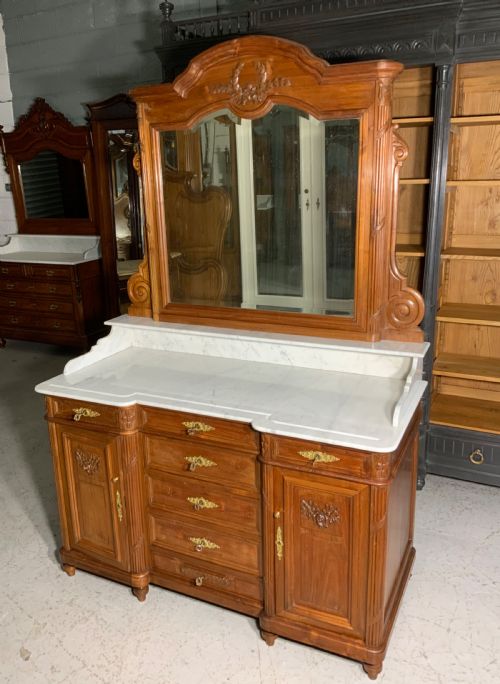
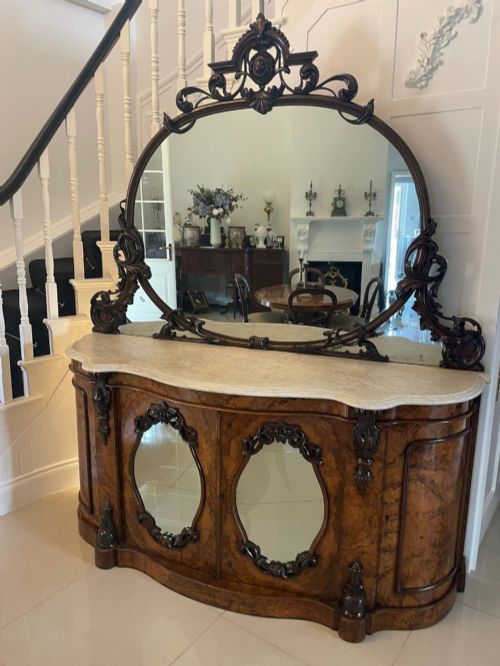
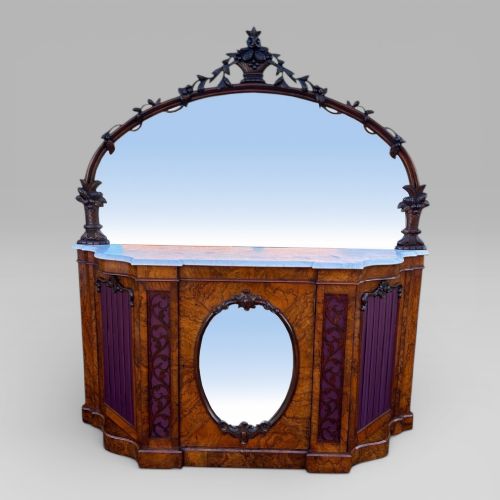

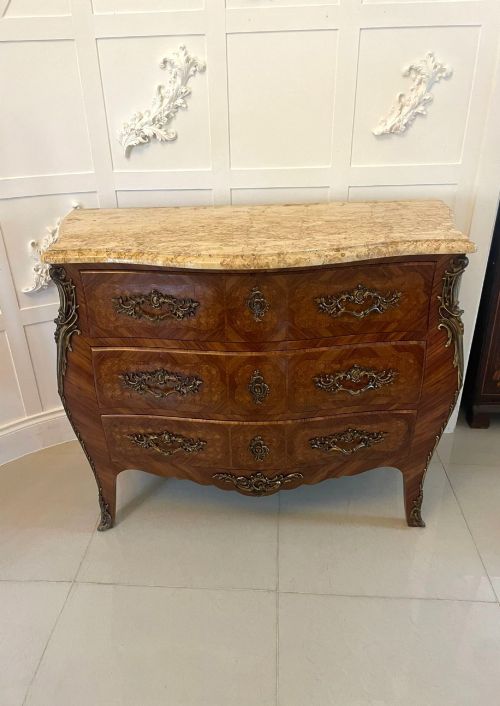

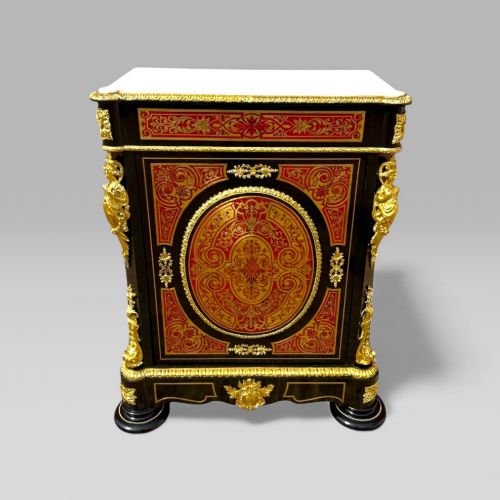


Victorian Marble Top Credenza
A victorian marble top credenza brings nineteenth-century drawing-room elegance into a modern interior through figured timbers and cool stone.
Victorian Marble Top Credenza
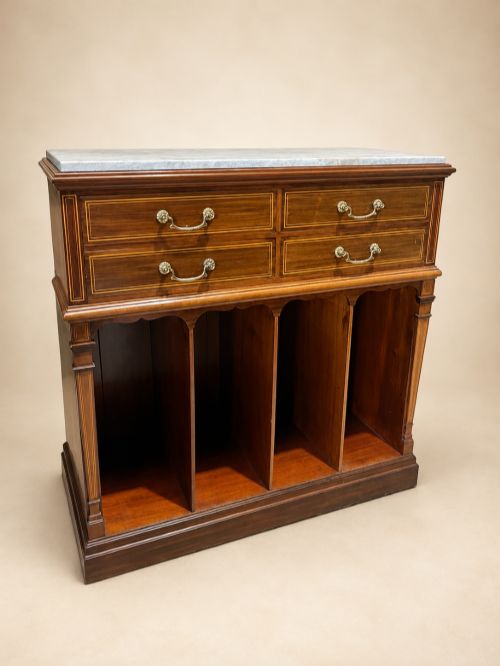
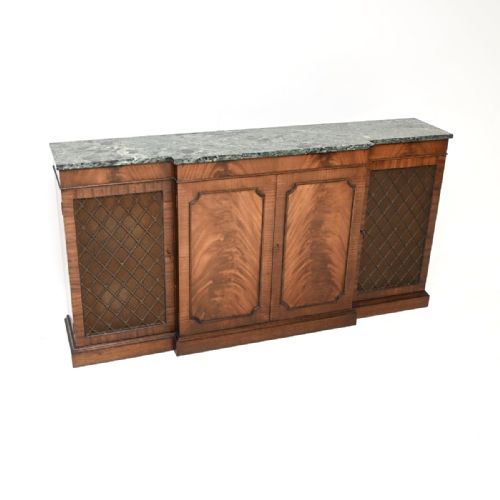
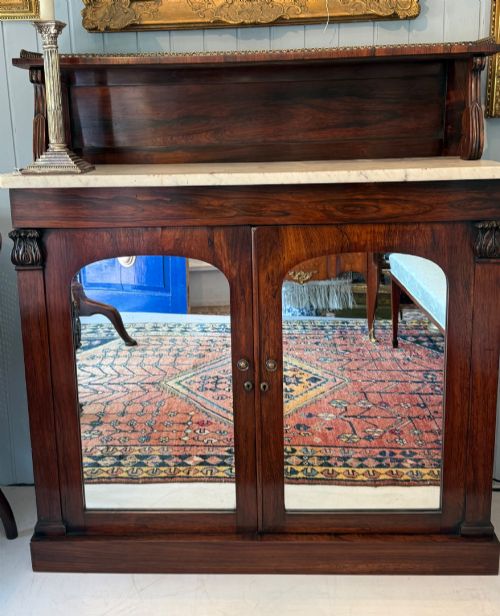
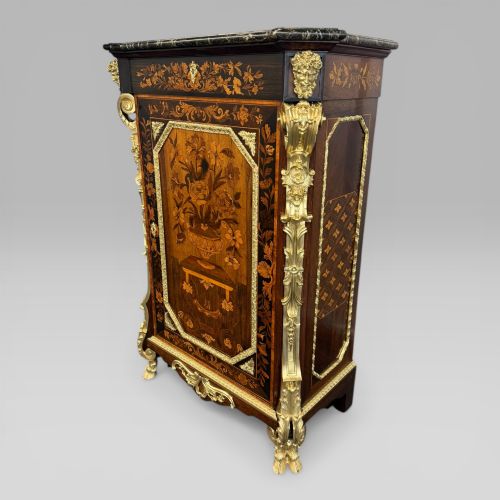
When you search for a victorian marble top credenza, you are looking at low nineteenth-century side cabinets designed for principal reception rooms. These pieces typically combine substantial timber carcases with fitted stone surfaces, frequently accompanied by mirrored backs or intricate marquetry.
The versions you meet most often on this page date from the middle decades of the nineteenth century and utilise burr walnut or rosewood. They often present curved serpentine fronts and delicate brass or ormolu mounts reflecting French revival tastes.
How they were made
Cabinet makers constructed these pieces using dense carcases of mahogany, pine or oak overlaid with highly figured veneers like burr walnut, rosewood and kingwood. Marquetry panels incorporated contrasting satinwood and exotic timbers, cut precisely and laid by hand.
Slabs of polished marble were shaped to follow the serpentine or straight contours of the cabinet tops and secured as heavy working surfaces. Metalwork details included cast brass and ormolu mounts, alongside gilt bronze bezels and glazed door framing.
Victorian Marble Top Credenza Retail Price Guide 2026
Typical asking prices for victorian marble top credenza among the pieces listed under this phrase on Sellingantiques today, from the lower quarter to the upper quarter. They describe what is for sale here now, not the wider market.
Listings feature nineteenth-century forms in burr walnut, rosewood, mahogany and kingwood, paired with marble and ormolu.
What varies in quality
The distinction between ordinary and exceptional examples rests upon the selection of timber and the ambition of the marquetry. Superior pieces display symmetrical burr walnut figures and intricate floral or geometric inlays that flow evenly across curved door panels.
Construction depth also separates the grades, visible in heavy carcases, thick serpentine marble slabs with precise bevels, and finely chased ormolu mounts rather than plain cast brass fittings.
Edward Holmes Baldock·Gillows
The Victorian Marble Top Credenza Glossary
- Burr Walnut
- A timber harvested from the gnarled growth of a walnut tree, prized for its swirling, highly figured grain patterns. Cabinet makers sliced this wood into thin veneers for statement furniture.
- Marquetry
- The art of applying decorative pieces of veneer to a structure to form intricate pictorial or geometric designs. Craftsmen utilised contrasting woods, metals and tortoiseshell.
- Ormolu
- Gilded bronze ornamentation applied to the mounts, feet and galleries of nineteenth-century furniture. The technique involves coating cast bronze with a mercury and gold amalgam.
- Serpentine
- A furniture front or marble top that curves outward in the centre and inward at the sides in a gentle wave shape. This contour requires skilled carpentry and stonemasonry.
Victorian Marble Top Credenza: Frequently Asked Questions
What is a victorian marble top credenza used for?
These cabinets served as principal display furniture in nineteenth-century drawing rooms and dining rooms. Homeowners placed decorative porcelain, silver and ornaments upon the stone tops and stored glassware or linens inside.
The sturdy marble surface provided a practical, spill-resistant area for serving drinks or displaying heavy bronze sculptures during social gatherings, combining utility with formal reception room display.
How do I style a credenza in a modern room?
A credenza anchors a dining room or living space when positioned against a principal wall. Its low profile makes it an ideal surface for large mirrors, lamps or curated collections of ceramics.
Allow the figured timber and stone top to remain the focal point by keeping surrounding wall colours neutral. The interior shelves offer practical storage for tableware or books while maintaining a formal aesthetic.
How do I distinguish walnut from rosewood credenzas?
Walnut surfaces display lighter brown tones with characteristic dark swirls and the distinctive mottled grain of burr figures. Rosewood presents a much darker, reddish-brown palette with dense, straight black grain lines.
Examining the underlying timber figure under good natural light reveals these natural colour differences, as rosewood generally feels heavier and exhibits a deeper, more uniform dark polish than walnut.
Why did makers use marble on wooden cabinets?
Marble tops provided a durable, cool surface that resisted staining and moisture from flower vases and serving vessels. This practical addition protected the vulnerable timber underneath from water damage.
The inclusion of heavy stone also added visual weight and stability to elaborate French revival designs, contrasting the polished coldness of the mineral with warm, figured wood veneers.