



Victorian Marble Nightstand
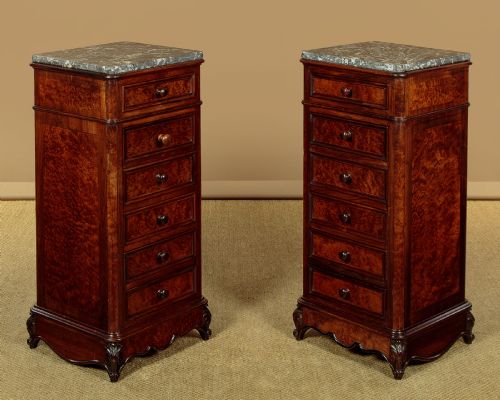
A victorian marble nightstand provides a stable stone surface alongside the bed while concealing chamberware in timber cabinetry.
Victorian Marble Nightstand
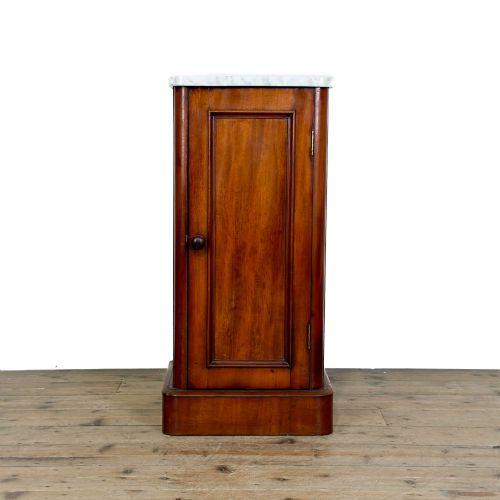
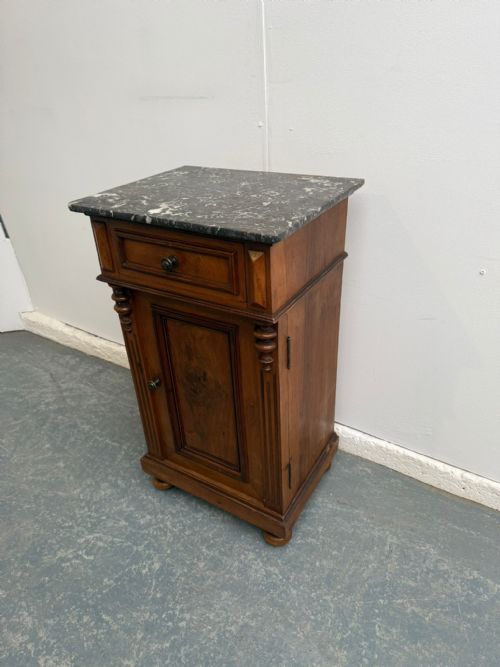
A victorian marble nightstand typically takes the form of a bedside cabinet, pot cupboard, or cylindrical pedestal cabinet dating through the nineteenth century. These pieces serve the bedroom by combining an inset stone top with enclosed storage accessed via a single door or drawer.
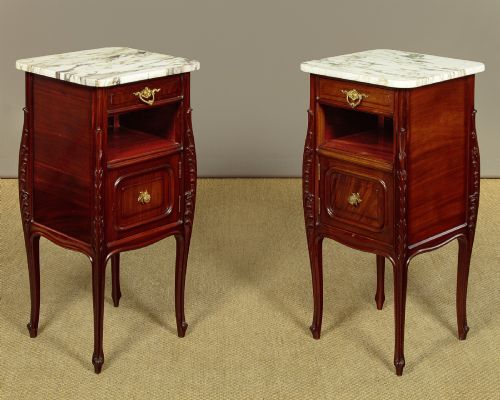
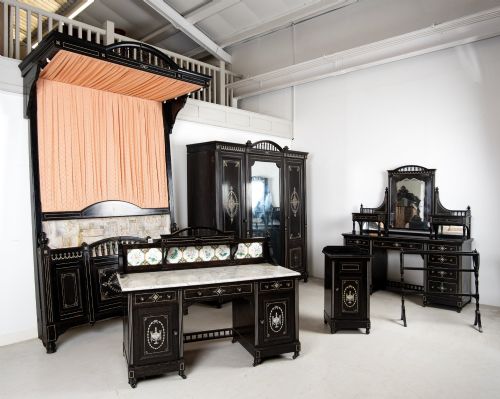
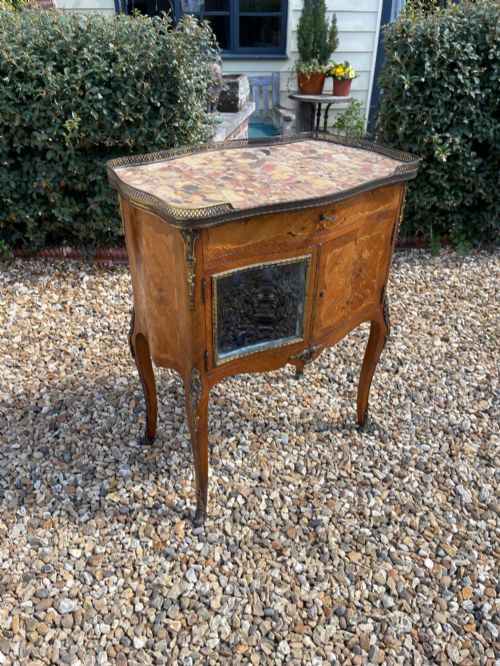
The versions most commonly met on this page span from early Victorian mahogany drums to late nineteenth-century walnut and amboyna cabinets. Makers of the period also produced revival styles, including Louis XV and French Rococo forms, alongside simpler pine and ebonised carcases.
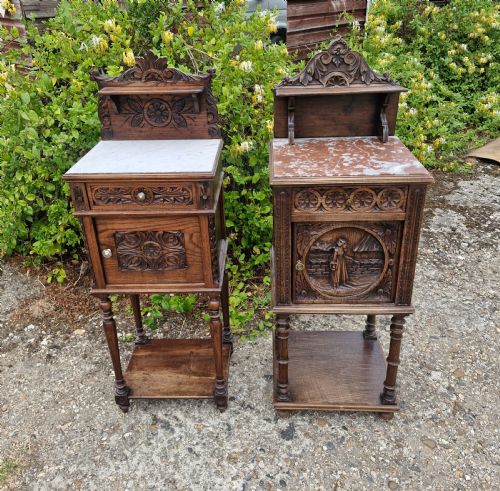
Beyond standard square or rectangular bedside cupboards, the evidence records cylindrical forms and paired pedestals designed to flank larger beds. Alongside dedicated bedside cabinets, the category includes related washstands and side cabinets sharing the signature stone top.
Materials and Construction
Carcase construction relies upon dense timbers such as mahogany, walnut, kingwood, and rosewood, often complemented by secondary woods like pine. Cabinetmakers utilised veneers of amboyna and flame mahogany over solid cores, occasionally adding marquetry inlay, ebonisation, or painted finishes to mimic bamboo and faux marble.
The defining feature is the heavy marble slab fitted to the upper surface to provide a durable, water-resistant counter for jugs and wash vessels. Interior spaces frequently incorporate shelves or storage for chamber pots, while structural hardware employs brass fittings and ceramic elements.
The inventory spans the Victorian, Edwardian, and nineteenth-century periods, incorporating Louis XV and French Rococo revival styles.
Craftsmanship and Proportion
The distinction between tiers rests upon the selection of timber veneers and the precision of the cabinet joinery. Pieces featuring figured flame mahogany, matched amboyna, or intricate marquetry inlay demonstrate greater workshop skill than plain painted pine carcases.
Proportion and the integration of the marble top also dictate quality. Superior examples maintain clean lines in cylindrical drums or carved revival panels, where the stone sits flush within a moulded wooden rim rather than resting as a simple slab.
Edwards & Roberts
The Victorian Marble Nightstand Glossary
- Pot cupboard
- A small bedside cabinet originally constructed with an internal compartment to house a chamber pot. These pieces usually feature a single door above a plinth base.
- Cylindrical
- A circular drum-shaped carcase design popular for nineteenth-century bedside cabinets. This form conceals the internal storage behind a curved door that follows the round profile.
- Amboyna
- A highly prized exotic wood displaying a dense, mottled grain pattern utilised for decorative veneers. Cabinetmakers applied it selectively to drawer fronts and top panels on high-end pieces.
- Ebonised
- Timber treated with a dark stain or finish to imitate expensive ebony. This technique appeared frequently on nineteenth-century bedroom furniture seeking a disciplined, contrasting aesthetic.
- Marquetry
- The art of applying decorative veneer pieces to a structural surface to create pictorial or geometric patterns. Makers utilised contrasting timbers to form floral or linear motifs on cabinet doors.
Victorian Marble Nightstand: Frequently Asked Questions
What is inside a victorian marble nightstand?
Most pieces contain a single shelf behind an enclosed door, originally intended to store a chamber pot or bedroom essentials. Some cylindrical or square variants incorporate a small upper drawer above the main cupboard space.
The interior layout matches the exterior timber, with secondary woods like pine or mahogany visible on partition panels and shelf surfaces.
How do I clean the marble top?
The stone surface requires only warm water and a soft cloth to remove dust and everyday marks. Avoid acidic cleaners or abrasive scouring powders, which dull the polished finish over time.
Dry the stone thoroughly after wiping to prevent water spotting on older marble slabs.
Are these pieces freestanding?
Every piece in this category is designed as an independent item of furniture rather than fitted cabinetry. They sit comfortably beside a bed or against a wall without requiring structural wall fixings.
Freestanding versions include both single pedestals and symmetrical pairs intended to flank larger bed frames.
How do I date a bedside cabinet?
Dating relies upon observing the combination of timber choices, construction joints, and stylistic revival influences. Earlier nineteenth-century examples often employ solid flame mahogany or simple pine carcases, while later Victorian and Edwardian pieces frequently showcase intricate amboyna veneers or ebonised details.
The presence of specific revival motifs, such as Louis XV curves or Aesthetic Movement lines, further narrows the production window.