

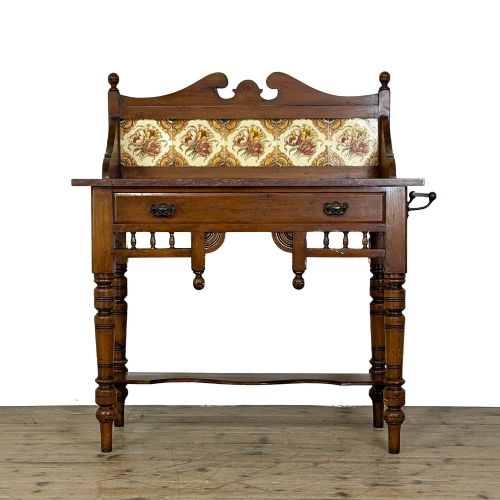
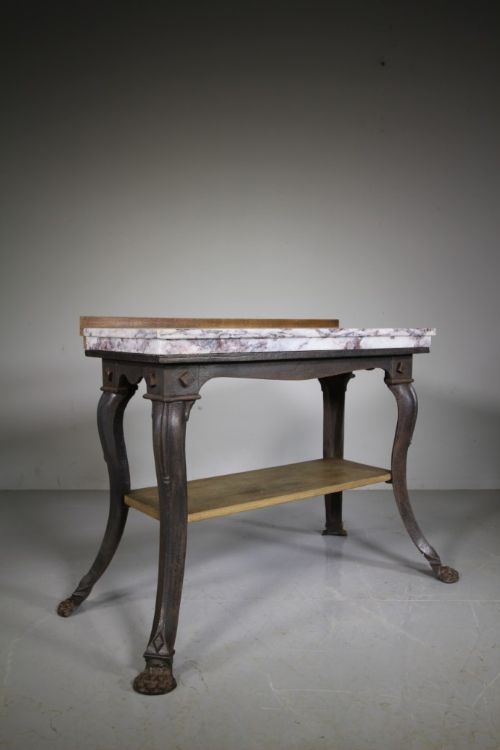


Victorian Marble Hall Stand
These victorian marble hall stand pieces combine sturdy timber frames with cool stone surfaces, offering an impressive and practical entrance piece.
Victorian Marble Hall Stand
When you search for a victorian marble hall stand, you encounter substantial entrance furniture designed to hold coats, hats, sticks, and umbrellas. The pieces available here span the nineteenth century, including specific dates such as eighteen seventy and eighteen ninety.
Most examples combine timber structures in oak or mahogany with fitted marble shelves or surfaces. Alongside standard hall stands, related forms such as washstands, console tables, and umbrella stands appear across the nineteenth century periods.
The regional origins and workshop styles range from plain English country house designs to ornate Gothic Revival or Neoclassical Revival interpretations. Buyers often find variations incorporating mirrors alongside the characteristic marble elements.
Materials and construction
The primary structural framework relies on heavy hardwoods, predominantly oak and mahogany, though pine and metal also feature in the construction. These timbers provide the necessary weight and stability to support hanging garments and heavy umbrellas.
Marble slabs form the central shelves or tops, paired frequently with cast iron, brass, and glass details for coat hooks and stick retainers. The integration of stone requires precise joinery to ensure the timber frame bears the heavy load safely.
Victorian Marble Hall Stand Retail Price Guide 2026
Typical asking prices for victorian marble hall stand among the pieces listed under this phrase on Sellingantiques today, from the lower quarter to the upper quarter. They describe what is for sale here now, not the wider market.
Many a Victorian caller was left staring into the hall stand mirror while nervously waiting to see if the lady of the house was home.
Assessing quality and finish
The distinction between standard examples and finer items lies in the choice of timber and the complexity of the carving. Superior pieces utilise dense mahogany or figured oak with integrated mirrors and cast iron framework from notable foundries.
The quality of the marble insert and the retention of original brass or cast iron hardware significantly affect the overall integrity. Better examples maintain cohesive proportions and original surface finishes rather than replacement elements.
Coalbrookdale
The Victorian Marble Hall Stand Glossary
- Hallstand
- A piece of entrance furniture designed for hanging coats and storing umbrellas. These often incorporate mirrors and marble shelves.
- Console table
- A table fixed against a wall, sometimes featuring a marble top. They appear in nineteenth century interiors as serving or display surfaces.
- Washstand
- A bedroom or dressing table with a marble or painted top to resist water. They share material characteristics with marble-topped hall furniture.
- Gothic Revival
- A nineteenth century design style drawing on medieval architecture. It influences the structural ornamentation of certain hall stands.
- Neoclassical Revival
- A style inspired by classical Greece and Rome. It appears in the symmetrical details and geometric forms of the period.
Victorian Marble Hall Stand: Frequently Asked Questions
What is a victorian marble hall stand?
A victorian marble hall stand is a tall entrance hall furniture piece combining timber framework, coat hooks, umbrella wells, and a marble shelf or console section.
These pieces served a practical function in nineteenth century homes, keeping outerwear organised near the front door while providing a durable surface for calling cards.
How do I care for marble tops?
Marble surfaces require gentle cleaning with mild, non-acidic soap and water to preserve the stone polish. Avoid placing acidic liquids directly on the marble to prevent etching.
Regular dusting and occasional waxing of the surrounding oak or mahogany frame keep the timber and stone components in stable condition.
Where were these stands placed?
These furniture items stood directly in the entrance hall or vestibule of nineteenth century houses. Their primary position near the front door allowed household members and visitors to deposit wet umbrellas and heavy coats immediately upon entry.
The inclusion of a mirror and a marble shelf also provided a final checkpoint for checking appearance before leaving the house.
How do I identify a nineteenth century piece?
Nineteenth century identification relies on examining the timber construction methods, screw types, and joinery style. Oak and mahogany frames from this era show traditional hand-cut joints and dense grain patterns.
Matching the design characteristics to periods like the eighteen seventies or eighteen eighties helps narrow down the manufacturing era alongside recorded material usage.