
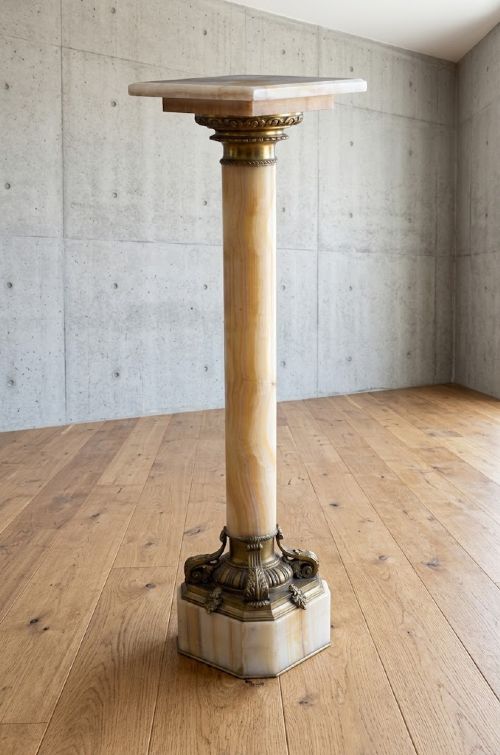
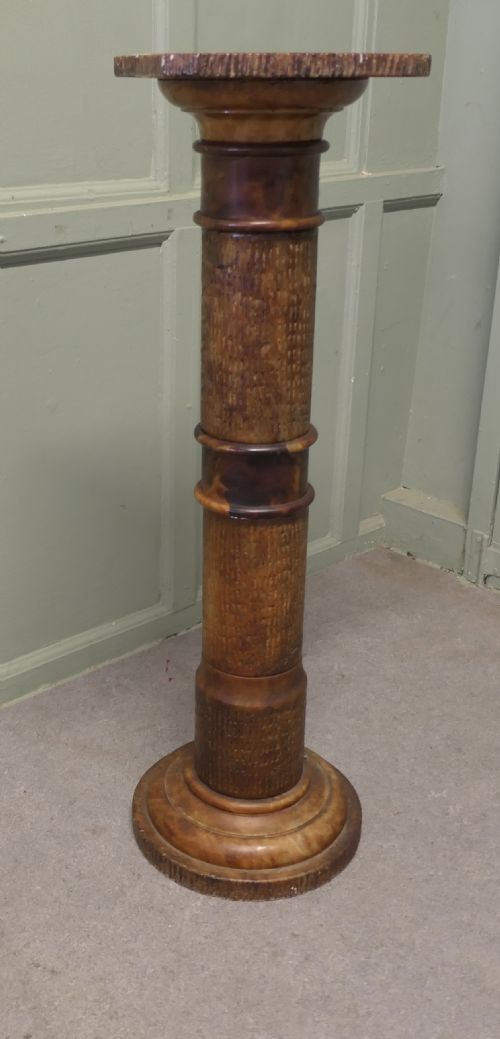
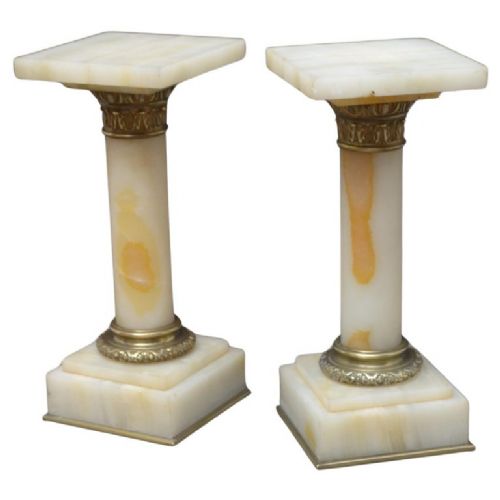


Victorian Marble Display Pedestal
A victorian marble display pedestal elevates a sculpture or plant, bringing height and classical proportion to a room.
Victorian Marble Display Pedestal
A victorian marble display pedestal functions primarily as a support for sculpture, urns, or plants, elevating decorative objects to eye level within a room. These pieces take the form of columns, torcheres, and plinths, designed with sturdy bases and capitals to distribute weight evenly.
The versions met most frequently on this page originate from the nineteenth century, spanning periods from Regency revivals to the later decades of the nineteenth century. Makers constructed these stands to serve functional display roles in conservatories, drawing rooms, and halls, often utilising classical architectural orders.
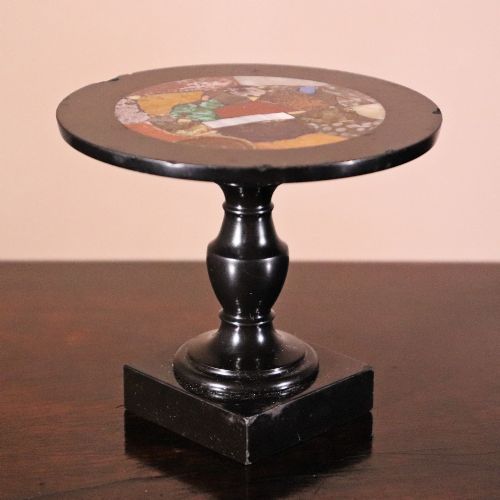
Forms vary from straightforward cylindrical columns to multi-tiered plant stands and low pedestal bases. Alongside solid stone, one encounters pieces utilising painted faux finishes and timber frames inset with marble tops, reflecting diverse domestic budgets and decorative tastes of the era.
Materials and construction methods
Craftsmen shaped solid blocks of marble, onyx, alabaster, and serpentine into cylindrical columns and square plinths using lathes and hand-chiselling techniques. Natural stone varieties such as Verde Antico and honey-coloured marble provided distinct veining patterns that appealed to nineteenth-century buyers.
Secondary structural elements incorporated hardwoods such as mahogany, padouk, and satinwood, frequently paired with inset marble or tile tops for plant and jardiniere stands. Workshops also employed scagliola and painted wooden surfaces to simulate costly stones like verde antico at a lower production cost.
Metal components added structural support and decorative contrast, utilising cast or gilded bronze, ormolu collars, and brass fittings. These metal mounts secured column sections together and ornamented the capitals and bases of torcheres and plant stands.
Materials documented across the available pieces include solid marble, onyx, alabaster, serpentine, mahogany, satinwood, padouk, and cast metals.
Distinctions in quality and execution
Carving depth and sharpness in the capitals and bases separate standard utility stands from masterworks of the period. Hand-carved hardwood stands with intricate oriental motifs or crisply articulated neoclassical acanthus leaves display superior craftsmanship compared to mass-produced turnery.
The integrity of the structural assembly dictates longevity, where well-balanced plinths and tightly fitted metal collars ensure stability under heavy stone tazzas or large bronze urns. Superior proportioning prevents top-heavy tipping and maintains the architectural harmony intended by the maker.
The Victorian Marble Display Pedestal Glossary
- Torchere
- A tall, slender stand designed to support a light or a decorative object. These pieces frequently feature slender columns suited for corners or tight spaces.
- Scagliola
- A composite material made from selenite, glue, and pigments, embedded in plaster and veined to imitate natural marble. Artisans polished this mixture to achieve a convincing stone-like finish.
- Verde Antico
- A dark green serpentine breccia marble prized for its mottled appearance and historical association with classical architecture. Italian quarries supplied much of this material for nineteenth-century decorative columns.
- Tazza
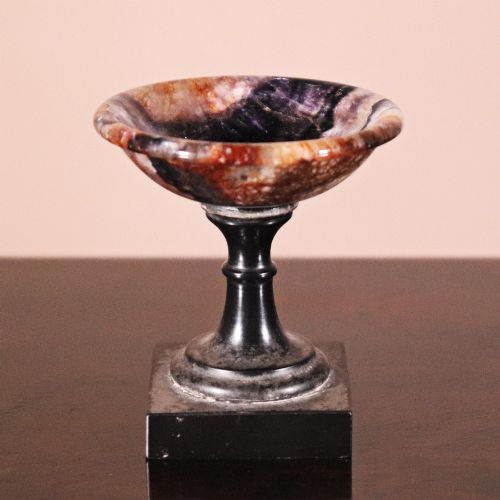
- A shallow saucer-like vessel mounted on a stem and foot, used for display. These decorative objects often sit atop pedestals as centrepieces.
- Plinth
- The heavy slab or block acting as the base of a column, statue, or pedestal. It provides a stable foundation and distributes the weight of the piece across the floor.
Victorian Marble Display Pedestal: Frequently Asked Questions
What were pedestals used for?
Nineteenth-century households utilised these stands primarily to elevate plants, jardiniere bowls, bronze figures, and marble tazzas within reception rooms and conservatories. By lifting objects off the floor, they drew the eye upwards and highlighted prized decorative items.
They also served an architectural role in interior design, introducing classical proportions and symmetry to domestic spaces. Paired columns frequently framed doorways or terminated long hallways.
How do I live with a pedestal?
Placing a heavy stone column requires a level floor and a stable corner or perimeter wall location to prevent accidental tipping. Pairing the stand with an appropriately sized urn, plant, or bronze sculpture balances the composition.
Regular dusting with a dry cloth protects stone surfaces and wood finishes from abrasive grit. Avoid placing damp plant pots directly onto unsealed stone or wood to prevent water rings.
How can I tell solid marble from faux marble?
Examining the underside, seams, or areas of wear often reveals the underlying material beneath the surface finish. Solid stone feels cold to the touch and shows continuous veining that penetrates deep into the mass.
Painted wooden columns and scagliola display lighter weights and repeating brush marks or plaster cores upon close inspection. Faux finishes were common nineteenth-century alternatives used to achieve decorative effects economically.
What is the difference between a pedestal and a plant stand?
Pedestals generally feature heavier stone or architectural columns intended to display sculpture, urns, or architectural models with formal dignity. Their proportions focus on stability and classical revival aesthetics.
Plant stands and jardiniere tables often incorporate lighter wood frames, brass liners, or multi-tiered surfaces designed to accommodate botanical displays and watering trays. These pieces typically reflect domestic utility rather than monumental sculpture support.