



Victorian Mantel Clock Set
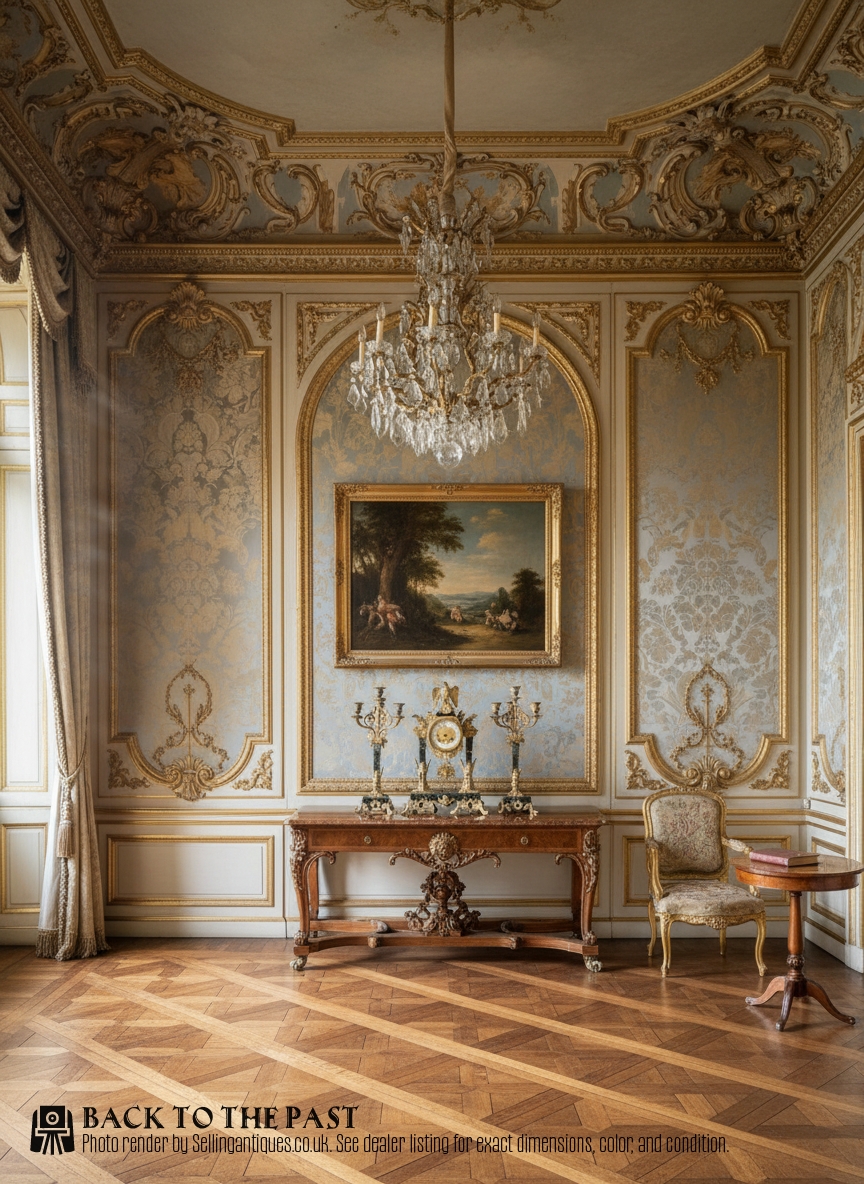
A victorian mantel clock set brings imposing symmetry and architectural weight to a room, anchoring a mantelpiece with a matched clock and side garnitures.

Understanding the victorian mantel clock set
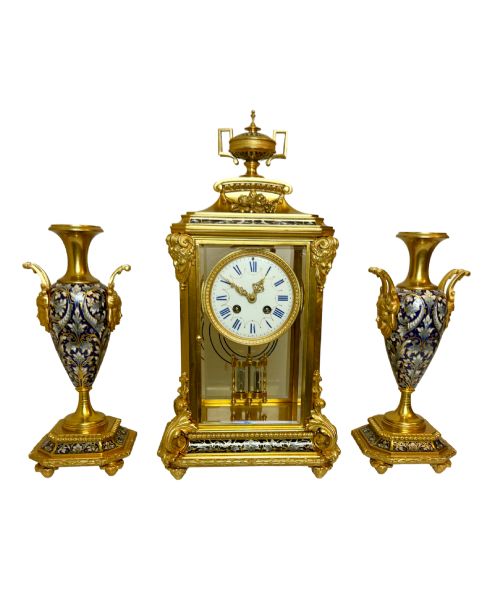
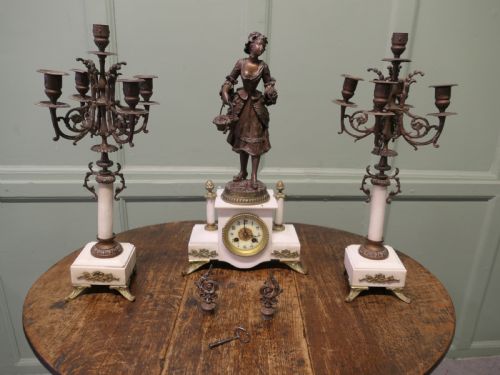
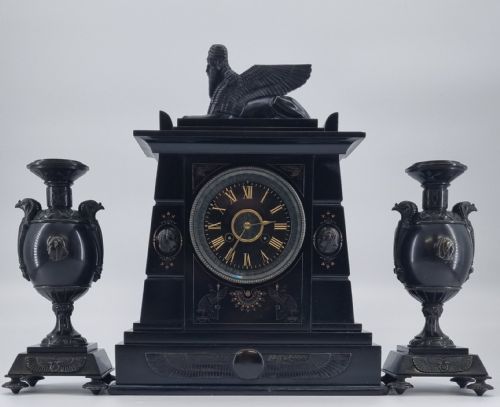
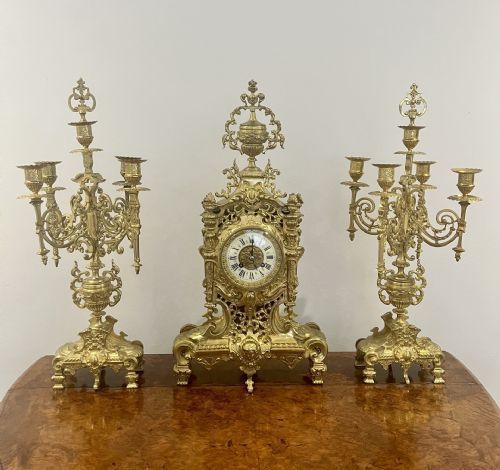
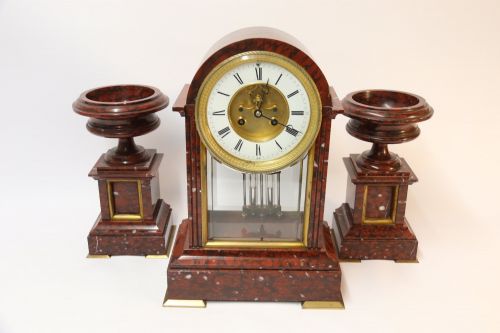
A victorian mantel clock set comprises a central timepiece accompanied by matching side ornaments, typically urns or candelabra, forming a unified three-piece arrangement. These ensembles originate predominantly from the nineteenth century, spanning periods from the eighteen-sixties through to nineteen hundred, and heavily reflect French aesthetic influences such as Napoleon III, Empire, and Neo-Classical styles.
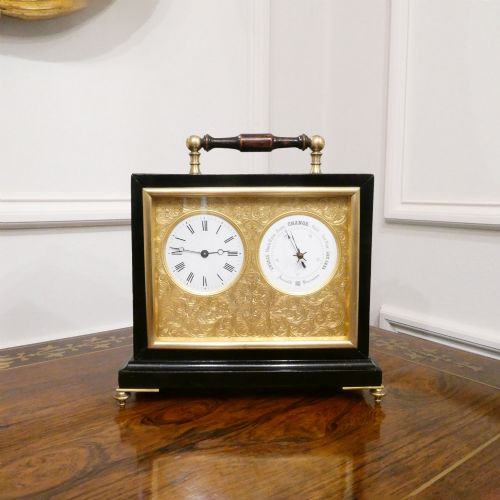
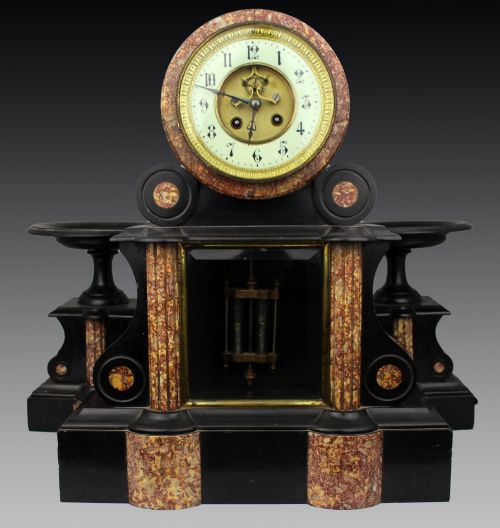
The pieces appearing on this page present substantial decorative presence through architectural stone bodies, metallic mounts, and visible enamel dials. While simpler single clocks occur, the garniture set remains the dominant form represented in the evidence.
Makers working within Connecticut, USA, also contributed distinct regional interpretations to the broader Victorian mantel clock tradition, alongside the extensive output of European workshops.
Materials and construction methods
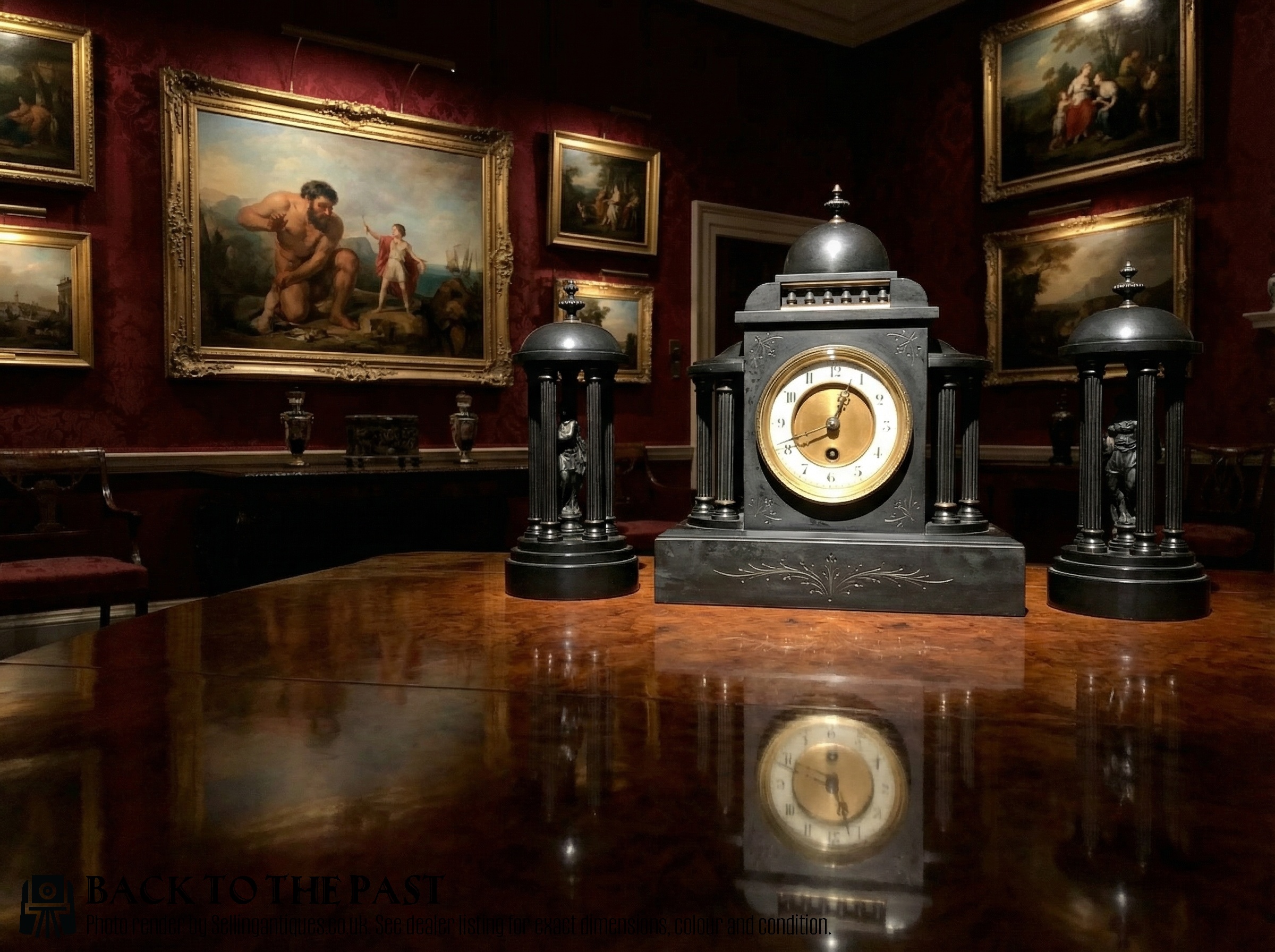
These sets utilise robust mineral foundations such as green onyx, standard onyx, and marble to create heavy, stable chassis for the clock movements and side pieces. Metalwork components involve gilt bronze, standard brass, and spelter, providing the structural frames and decorative mounts that define the ornate styles.
Dials frequently incorporate white enamel with painted numerals, protected behind glass bezels, while porcelain elements add contrasting colour and surface detail to the gilt metal chassis. Movements rely on mechanical eight-day mechanisms requiring manual winding.
Retail Price Guide 2026
Typical UK retail prices for victorian mantel clock set, calculated from the Sellingantiques database of over a million retail prices indexed since 2003. This retail price guide relies exclusively on Sellingantiques data; no external sources or auction records are used, so the figures do not describe the wider market.
Every time you wind the eight-day movement, you participate in a tactile domestic ritual unchanged since the nineteenth century.
Distinguishing quality across the range
Quality in a victorian mantel clock set rests primarily upon the crispness of the cast metal mounts and the selection of the stone body. Heavier applications of gilt bronze and finely chased details separate superior French garnitures from simpler metal or spelter alternatives.
The harmony and completeness of the three-piece ensemble dictate desirability, as matched garnitures that retain their original proportions and undamaged enamel dials represent the upper tier of surviving examples.
Seth Thomas
The Victorian Mantel Clock Set Glossary
- Clock garniture
- A set comprising a central clock flanked by two matching ornamental pieces designed to sit together on a mantelpiece.
- Gilt bronze
- Metal cast and coated in a layer of gold, providing a bright, durable finish frequently utilised in French nineteenth-century decorative arts.
- Spelter
- A zinc alloy commonly utilised as a less expensive alternative to bronze for figural and decorative mounts on Victorian clock sets.
- Enamel dial
- A metal dial face fused with powdered glass powder fired at high temperature, creating a smooth, glossy surface for painted numerals.
- Napoleon III style
- An eclectic nineteenth-century French design movement drawing heavily on historical precedents, particularly Louis XIV, Renaissance, and Empire styles.
Frequently Asked Questions
What is included in a clock garniture?
A clock garniture consists of a main mantel clock accompanied by two matching side pieces, such as decorative urns or candelabra. These companion pieces mirror the materials and style of the central clock to create a balanced display.
Historically, makers designed these three components to be displayed together on a mantelpiece or sideboard, utilising the matching side pieces to frame the central timepiece symmetrically.
How do I wind an eight-day clock?
An eight-day clock movement requires winding approximately once a week using a matching key inserted into the winding holes on the dial face. Care must be taken not to over-wind the internal springs.
These mechanical movements track time through a spring-driven or weight-driven gear train, operating independently of electricity and relying on periodic manual winding to maintain function.
Where were these clock sets made?
Many surviving sets originate from nineteenth-century French workshops and embrace styles such as Napoleon III, Empire, and Neo-Classical Revival. These French pieces often feature elaborate gilt bronze mounts and stone bodies.
Other examples originate from American makers such as Seth Thomas in Connecticut, reflecting regional material choices and domestic Victorian taste while maintaining the functional requirements of a mantel timepiece.
How do I style a clock set?
Place the central clock in the visual centre of a mantelpiece, shelf, or large sideboard, with the matching side pieces arranged symmetrically on either side. Ensure the supporting surface is sturdy enough to hold the heavy stone and metal weight.
Allow adequate clearance around the pieces so the gilt mounts and stone bodies remain visible, and keep the set away from direct heat sources and damp environments to protect the internal metal and enamel dials.