



Victorian Mahogany Vanity Glass
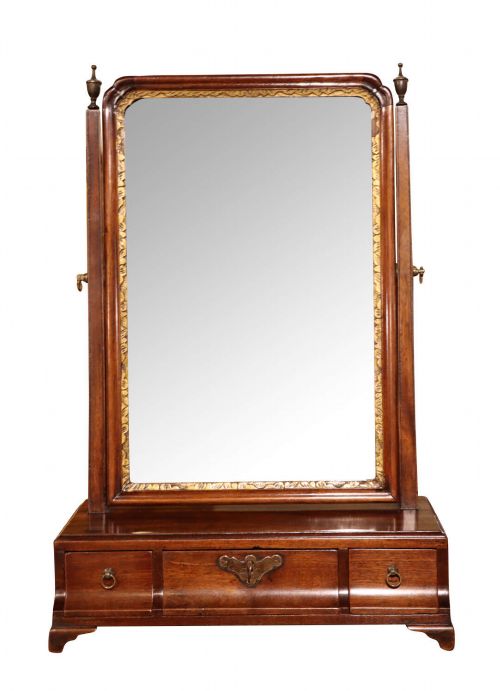
These Victorian mahogany vanity glass pieces are adjustable desktop and dressing table mirrors that offer a warm timber frame for your daily grooming.
Victorian Mahogany Vanity Glass
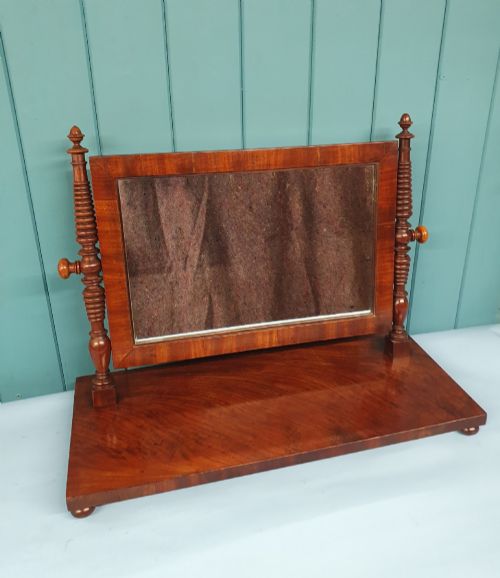
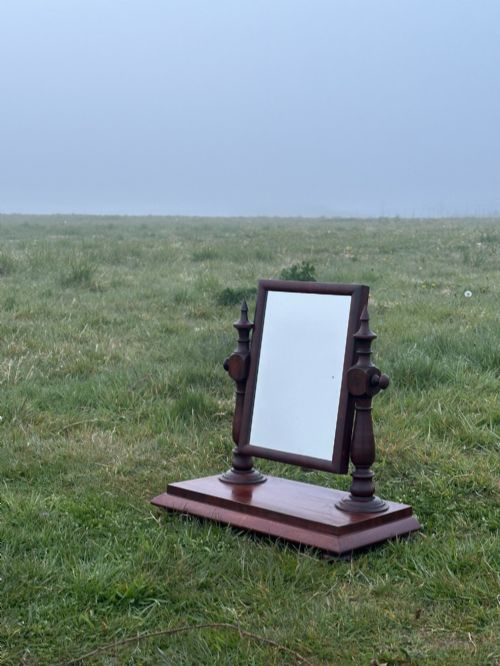
When you search for Victorian mahogany vanity glass, you encounter desktop and tabletop dressing mirrors designed to tilt upon upright supports. These pieces mostly date across the nineteenth century, encompassing Georgian, Regency, and Victorian periods.
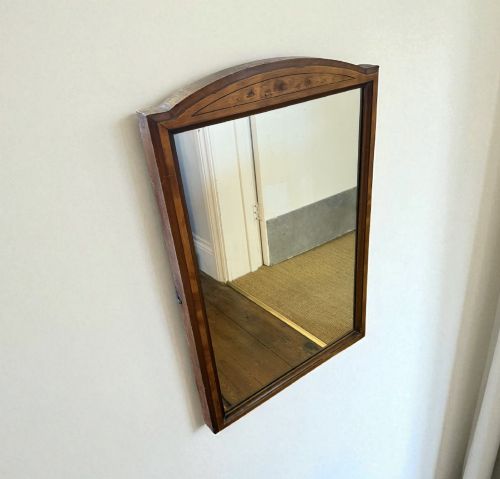
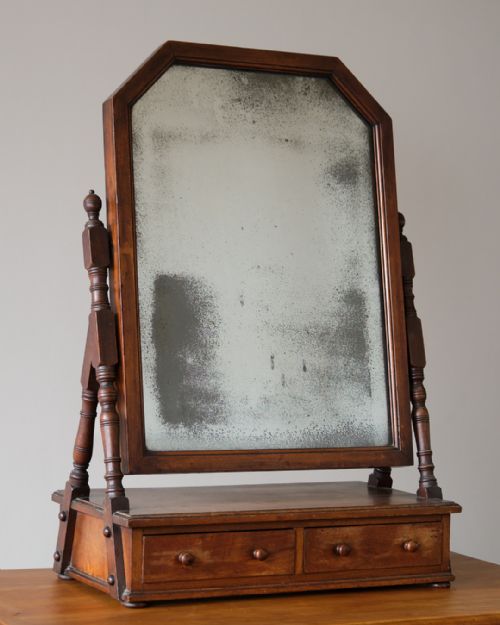
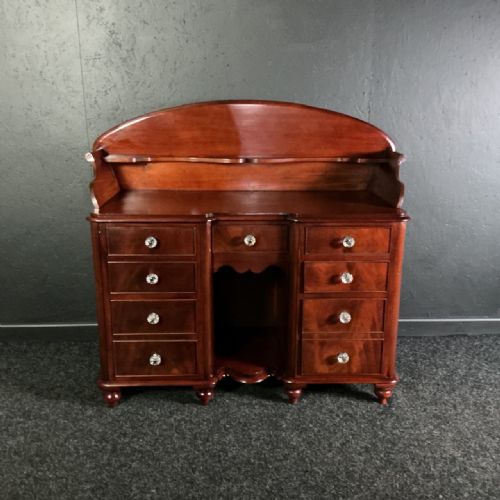
The most common form on this page is the swing mirror mounted above a small base fitted with drawers. You also find larger cheval mirrors, wall-hanging options, and full dressing tables incorporating mirror glass.
Origins stretch from English workshops to Scottish makers, occasionally extending to French or continental designs. The timber ranges from plain mahogany to rich flame mahogany veneer.
Materials and Construction
Construction relies heavily on solid mahogany and flame mahogany veneer, chosen for deep grain patterns and resilience. Secondary woods support internal drawer boxes and backing panels.
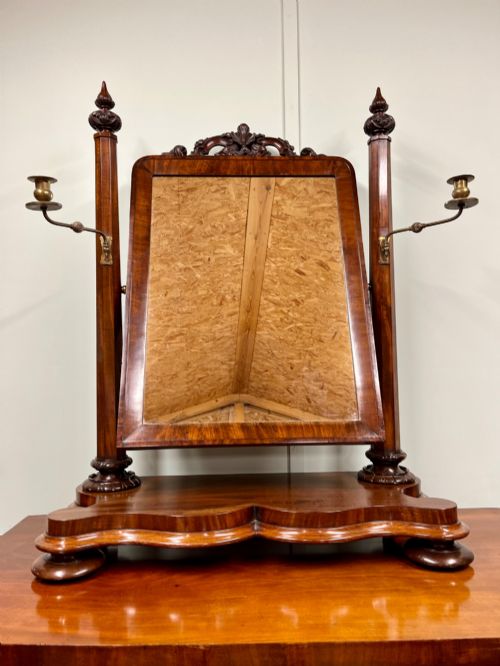
Mirror glass sits within pivoting frames secured by brass mounting hardware, allowing the glass to tilt at various angles. Bone escutcheons and small turning knobs accent the drawer fronts.
Victorian Mahogany Vanity Glass Retail Price Guide 2026
Typical asking prices for victorian mahogany vanity glass among the pieces listed under this phrase on Sellingantiques today, from the lower quarter to the upper quarter. They describe what is for sale here now, not the wider market.
Travelling toilet swing mirrors let nineteenth-century travellers check their cravats on the move.
Judging Quality and Craftsmanship
Quality separates in the crispness of the timber mouldings, the selection of figured flame mahogany veneer, and the structural joinery of the base drawers. Finer examples display hand-cut dovetails and well-proportioned upright supports.
The integrity of the mirror glass and the matching quality of the original brass swivels dictate the piece's preservation level. Superior items retain their original mirror plates and smooth tilting action without sagging.
Heal and Sons·Thomas Rubergall·Gillows
The Victorian Mahogany Vanity Glass Glossary
- Swing mirror
- A mirror plate mounted on pivots between two upright arms, allowing it to tilt back and forth. This form sits upon a box base or dressing table.
- Cheval mirror
- A full-length swing mirror supported in a freestanding frame with four legs. The name derives from the French word for horse.
- Flame mahogany veneer
- A thin slice of mahogany timber cut from the fork of the tree where branches join the trunk. It creates a distinctive, fiery feather pattern across the surface.
- Toilet mirror
- A smaller tabletop mirror historically placed on a dressing chest or table for personal grooming. These often include small trinket drawers in the base.
- Serpentine front
- A furniture front curving outward in the centre and inward at the sides in a continuous wave shape. This contour requires skilled woodworking.
Victorian Mahogany Vanity Glass: Frequently Asked Questions
What is a Victorian mahogany vanity glass?
It is a portable dressing mirror mounted on a wooden frame, designed to sit on a table or chest of drawers.
These pieces allow the user to adjust the angle of the reflection using side pivots.
How were these mirrors used?
People placed them in bedrooms and dressing rooms to assist with shaving, hairstyling, and adjusting garments.
The small drawers in the base held jewellery, pins, and small cosmetic items.
How do I date a mahogany mirror?
Dating relies on stylistic clues like serpentine fronts, brass hardware shapes, and the construction methods used on the drawers.
Georgian and Regency examples show different proportions and moulding profiles compared to later Victorian pieces.
Can I replace the mirror glass?
Original mirror glass often displays foxing and age spots, which many collectors prefer to keep as proof of age.
Replacing the glass is possible if the original plate is broken, though surviving period glass maintains more character.