
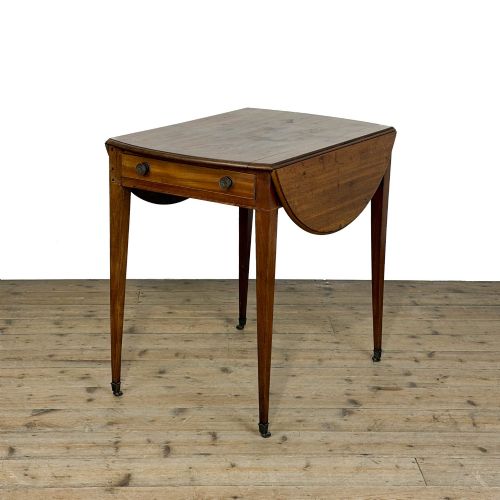
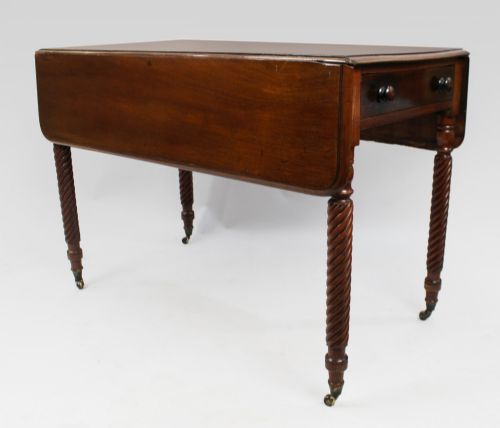
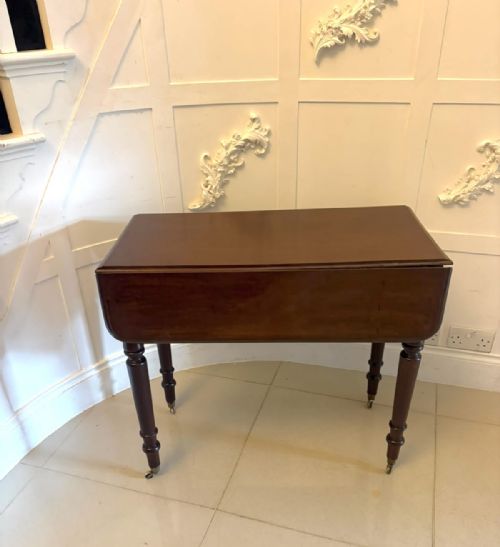
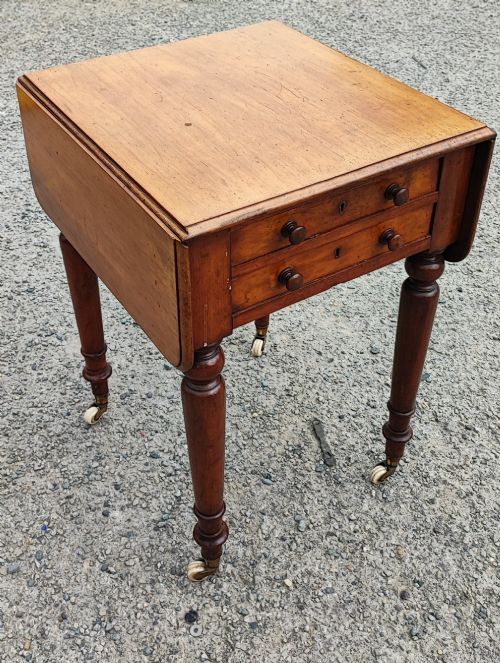

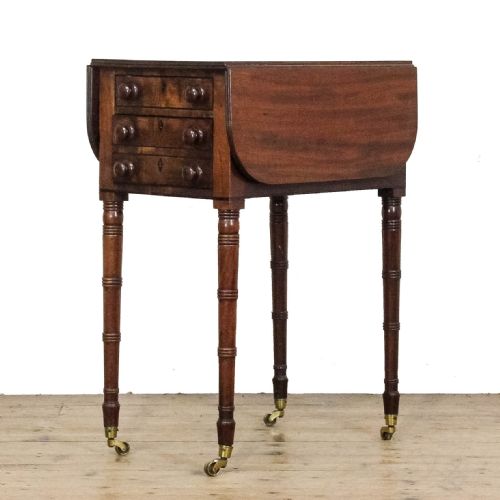


Victorian Mahogany Pembroke Table
These mahogany pieces offer folding leaves and practical drawers, making a victorian mahogany pembroke table a versatile choice for compact living spaces.
Victorian Mahogany Pembroke Table
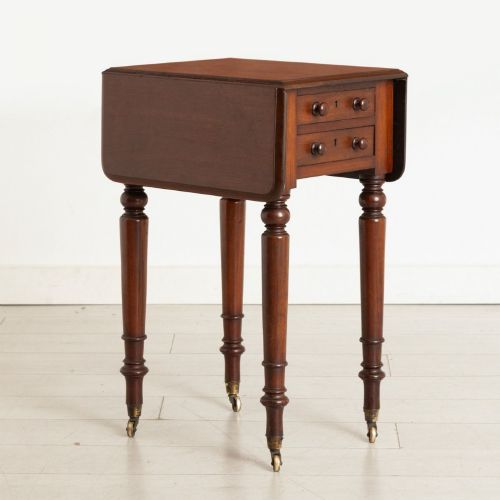
A victorian mahogany pembroke table is a compact, drop-leaf design created to expand when extra surface area is required and fold away neatly against a wall when not in use. The examples seen here span periods from the mid-nineteenth century through to the Edwardian era, incorporating regional British craftsmanship and vernacular English country house styles.
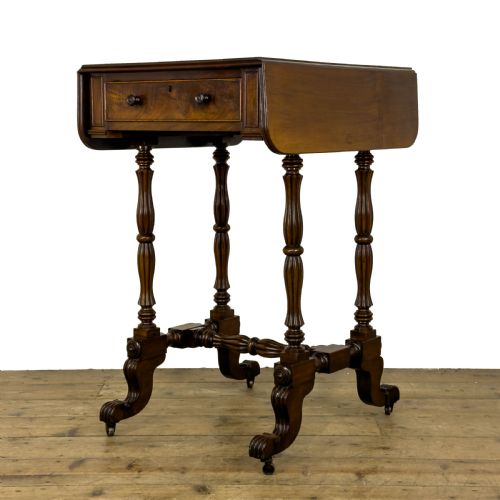
Most pieces encountered on this page function as side tables, occasional tables, or dedicated work and sewing tables featuring integrated drawers. Alongside standard dining variants, smaller formats such as baby pembroke tables and occasional drop-leaf designs appear regularly across the inventory.
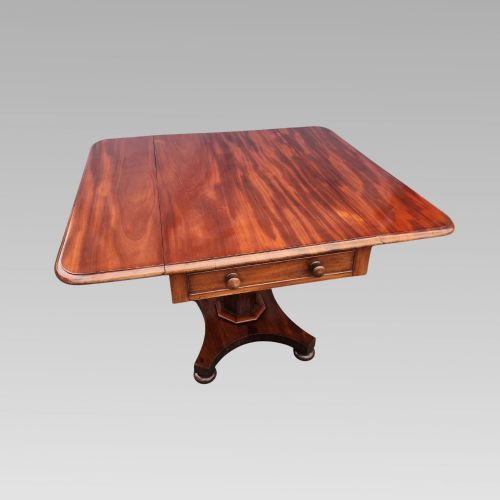
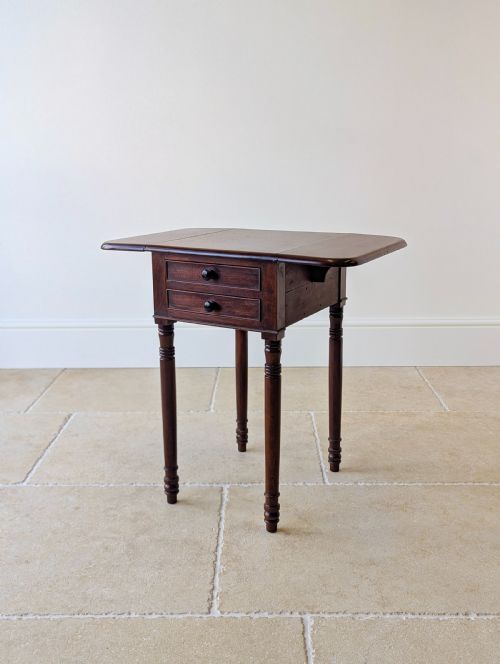
Makers of these tables utilised timber framed constructions, often pairing solid mahogany with flame mahogany veneers or combining oak and mahogany elements. Variations in structural support include traditional four-leg frames, pedestal bases, and distinctive bobbin-turned legs.
How They Were Made
Cabinet makers constructed these pieces primarily from mahogany, occasionally utilising Cuban mahogany or incorporating secondary timbers like oak within the internal framework. Surfaces frequently display flame mahogany veneers carefully matched across the folding leaves and drawer fronts.
Hardware components commonly involve brass castors fitted to the table legs for mobility, alongside brass drawer pulls or ceramic knobs. Structural stability depends on hinged rule joints that support the drop leaves when raised.
Finishes range from traditional polished wood to scrubbed tops and painted surfaces, with some examples subject to later restoration work or bleaching of the timber.
Several tables arrive with bobbin legs, offering a cheerful, spool-turned charm beneath the folding leaves.
What Varies in Quality
The refinement of the timber selection dictates much of the visual appeal, with richly figured flame mahogany sitting at the upper end compared to plain straight-grained boards. Craftsmanship shows in the precision of the rule joints connecting the drop leaves to the main top and the seamless alignment of the frieze drawers.
Proportion and scale also separate standard utility items from more ambitious pieces, particularly where turned pedestal bases or intricate bobbin legs replace simple straight supports. The integrity of the original brass castors and the retention of working drawer mechanisms further distinguish superior examples.
The Victorian Mahogany Pembroke Table Glossary
- Pembroke table
- A small occasional table featuring two hinged drop leaves on opposing sides, traditionally equipped with one or two drawers.
- Rule joint
- A rounded moulding joint connecting a drop leaf to the table top, designed to hide the hinge mechanism when the leaf is raised.
- Drop leaf
- A hinged flap of wood attached to a table top that can be folded down to save space or lifted up to extend the surface area.
- Flame mahogany
- A highly figured veneer cut from the branch junction of a mahogany tree, displaying a distinctive feather-like flame pattern.
- Frieze drawer
- A drawer built into the upper framework or skirt of a table directly beneath the main top.
Victorian Mahogany Pembroke Table: Frequently Asked Questions
How do I use a pembroke table daily?
These tables adapt easily to modern rooms by folding down to a narrow profile against a wall or opening up for serving food and writing.
Raising one or both leaves transforms the footprint to suit the immediate requirement of the space.
Were all pembroke tables used for dining?
While larger versions serve adequately as small dining tables for four people, many variants functioned as work, sewing, or occasional side tables.
Interior compartments and fitted drawers typically indicate a domestic workspace rather than a dining purpose.
How do I distinguish early Victorian from later pieces?
Early Victorian examples often display heavier solid mahogany construction and richer timber figures, sometimes referencing late Georgian or William IV design traits.
Later Victorian and Edwardian iterations tend toward lighter proportions, occasional painted finishes, or Sheraton Revival stylistic influences.
What is a disguised end drawer?
Certain designs incorporate dummy drawer fronts or drawers accessed from unconventional angles to maintain the visual symmetry of the table skirt.
This concealed compartment provides secure storage without interrupting the clean lines of the drop-leaf framing.