

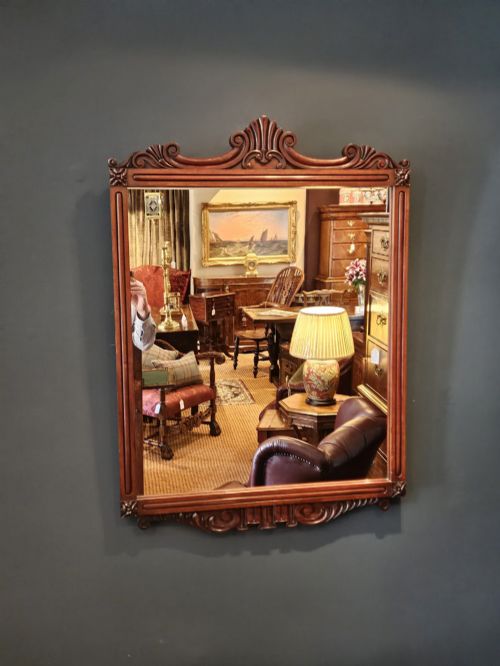
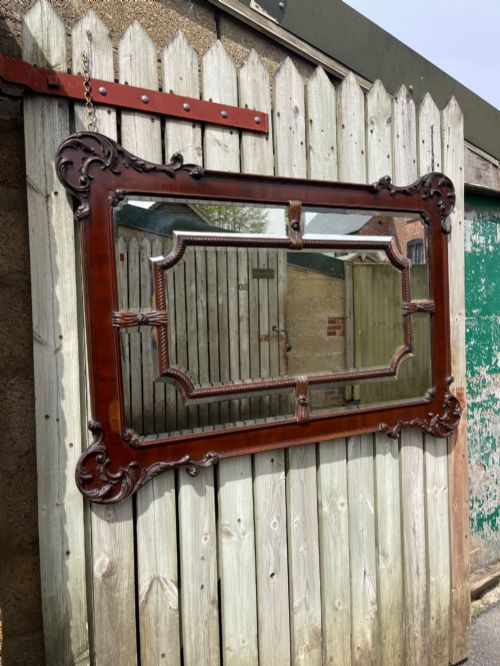


Victorian Mahogany Overmantel
A victorian mahogany overmantel brings architectural presence to a room, framing the hearth with deep timber and reflective glass.
Victorian Mahogany Overmantel
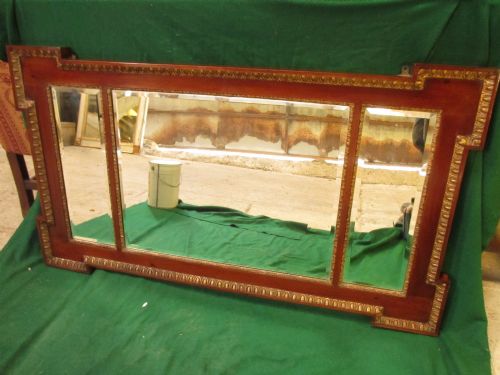
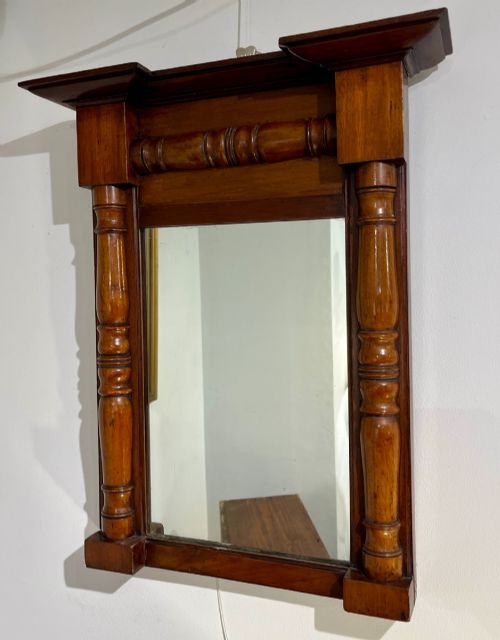
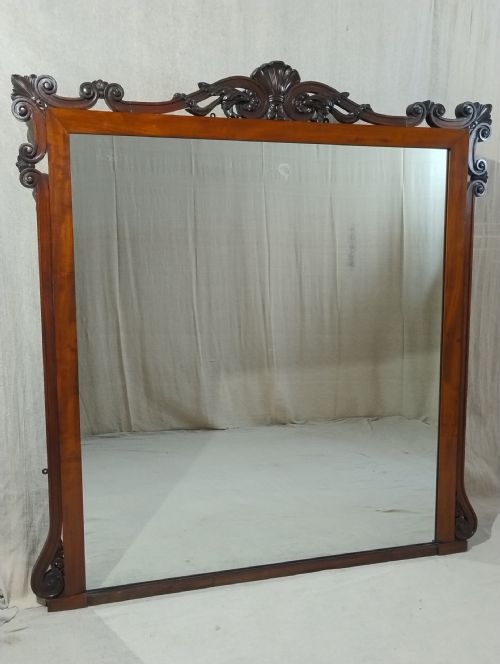
A victorian mahogany overmantel sits above the fireplace, designed to anchor the room's central hearth and reflect light across the space. These pieces range from simple rectangular frames to elaborate triptychs and multi-section arrangements.
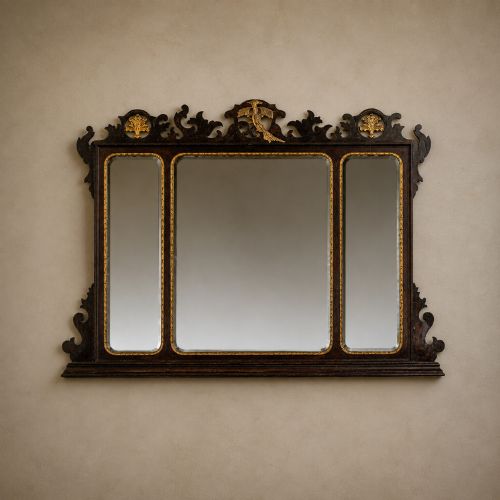
The most common examples encountered on this page feature rich mahogany grain, often accented with gilt details, fretwork, or carved crestings such as the distinctive Ho-Ho bird.
Origins span the nineteenth century, encompassing early Victorian interpretations through to later revival styles like Chippendale Revival and Aesthetic Movement influences.
Materials and construction
Makers utilised solid mahogany and mahogany veneers over secondary timbers, shaping the wood through hand carving, fretwork piercing, and ebonising. Frames frequently incorporate parcel gilt highlights or complete gold leaf application to catch the firelight.
Mirrors utilise original silvered plate or mirror glass, sometimes divided into triple plates or multi-section configurations that require precise joinery to maintain structural integrity within the heavy wooden surrounds.
Several pieces feature carved Ho-Ho birds perched proudly upon the cresting, watching over the room with mythical Chinese-inspired charm.
Evaluating quality and execution
The distinction between standard production and superior pieces lies in the depth of the carving and the crispness of the fretwork details. Hand-carved crestings, such as birds or scrolling foliage, demonstrate a sculptor's hand rather than mass-produced uniformity.
The quality of the mahogany timber itself, the retention of original mirror glass, and the sophistication of the gilt or ebonised highlights determine the visual weight and historical integrity of the overmantel.
The Victorian Mahogany Overmantel Glossary
- Overmantel
- A mirror or decorative piece designed specifically to hang on the wall directly above a mantelpiece. It often echoes the architectural lines of the fireplace surround below.
- Triptych
- A mirror divided into three distinct panels or sections, typically featuring a larger central glass flanked by two narrower side plates.
- Fretwork
- Ornamental woodwork perforated with patterns, commonly seen in the pierced scrolls and openwork borders characteristic of Chippendale revival styles.
- Parcel Gilt
- A decorative technique where only specific portions of a wooden object are covered with gold leaf, leaving the surrounding mahogany grain visible.
- Ebonisation
- A chemical treatment or staining process applied to timber to imitate the dense, dark appearance of ebony wood.
Victorian Mahogany Overmantel: Frequently Asked Questions
How do I hang a heavy overmantel?
These large mirrors carry substantial weight from the timber frame and glass plates, requiring secure anchorage directly into masonry or heavy wall studs using appropriate steel brackets.
Professional installation is strongly advised to distribute the load safely and protect both the wall and the antique frame from accidental strain.
Are the mirror plates usually original?
Many pieces retain their original silvered glass, which often exhibits gentle foxing, light oxidation, and minor speckling developed over more than a century.
Replacement glass does occur during restoration, so examining the backboards and silvering helps determine whether the reflective surface dates to the original construction period.
How do I tell Chippendale Revival from original pieces?
Chippendale Revival pieces dating to the late nineteenth century employ machine-assisted precision alongside hand finishing, showing mechanical saw marks or modern brass screws upon close inspection.
Eighteenth-century originals display entirely hand-wrought joinery, older pegging methods, and distinct patina differences compared to their Victorian reinterpretations.
Can I place an overmantel on a blank wall?
While originally conceived for the space above a fireplace, these large mirrors function effectively as standalone wall decor above sideboards or low seating.
The horizontal proportions and architectural framing create a strong focal point in a dining room or hallway even without a physical hearth beneath.