


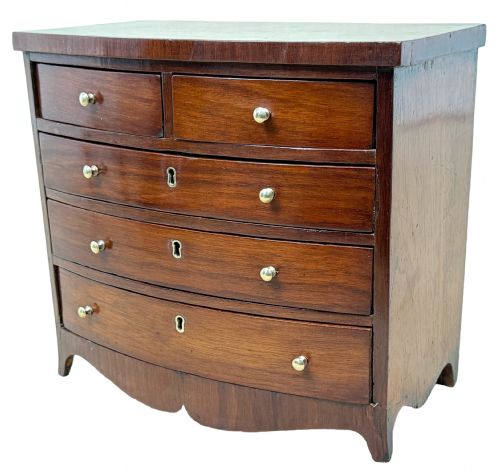

Victorian Mahogany Miniature Chest
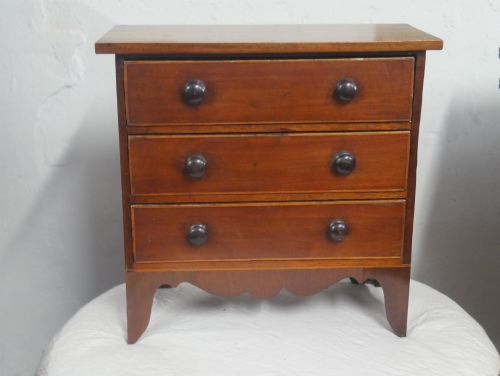
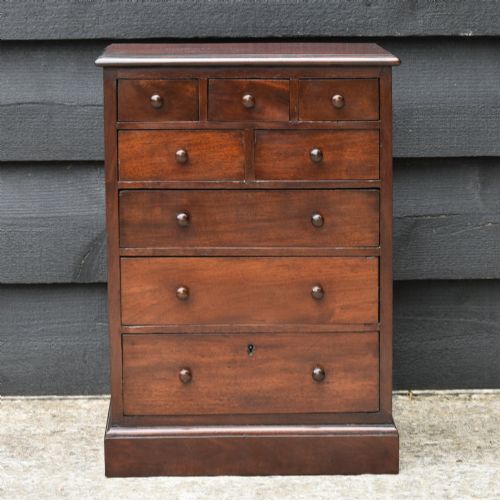
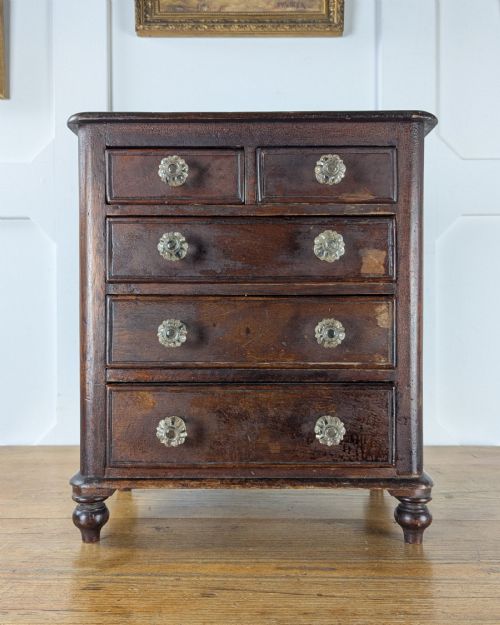
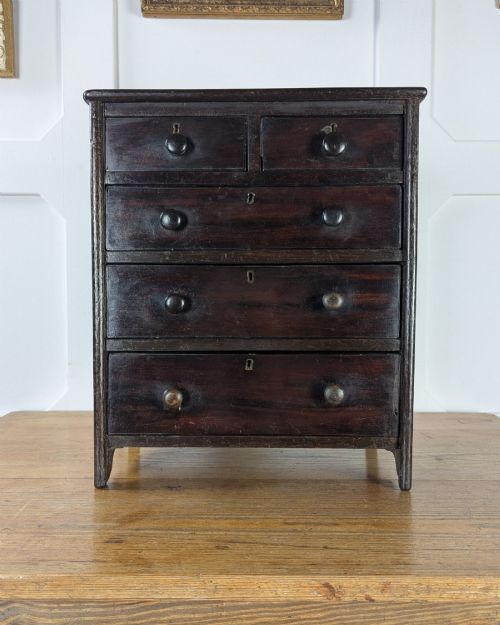
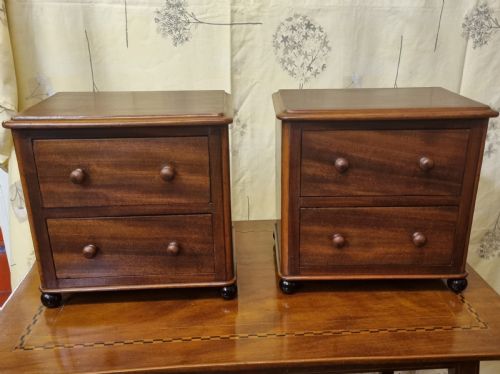
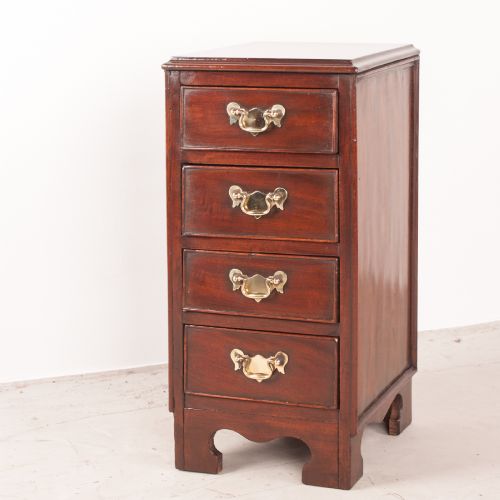
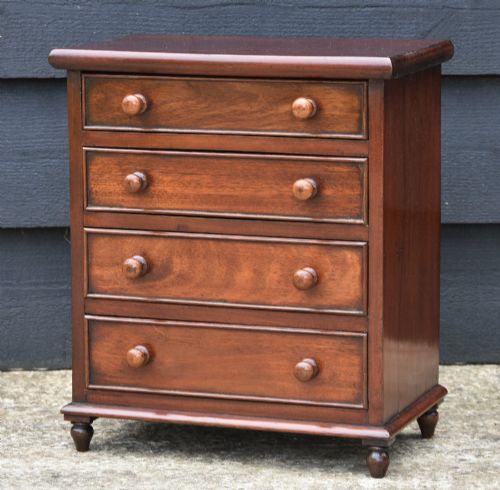
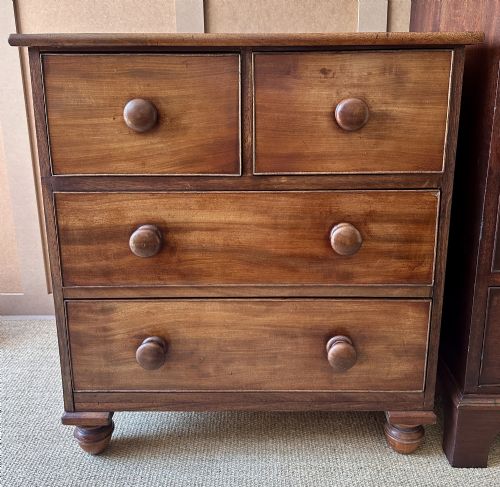
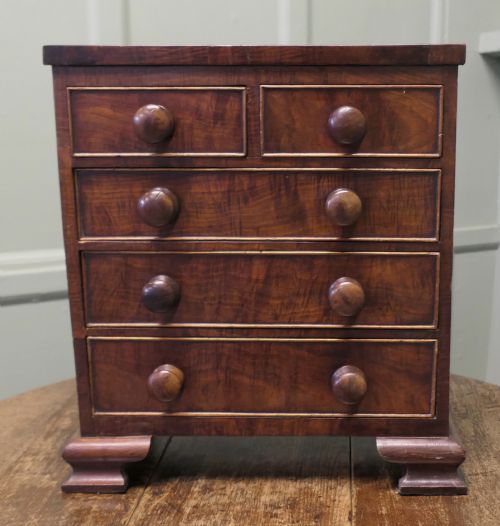
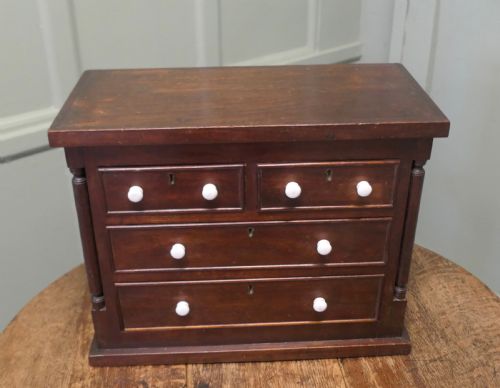
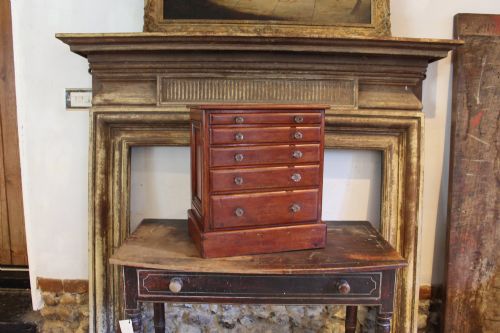
These victorian mahogany miniature chest pieces are small scale scale models or salesman samples that catch the eye and fit easily on a tabletop.
Victorian Mahogany Miniature Chest
A victorian mahogany miniature chest takes the form of full scale domestic furniture, built down to desktop proportions. Most examples originate from the nineteenth century, spanning various decades of the Victorian era alongside Georgian and early Victorian periods.
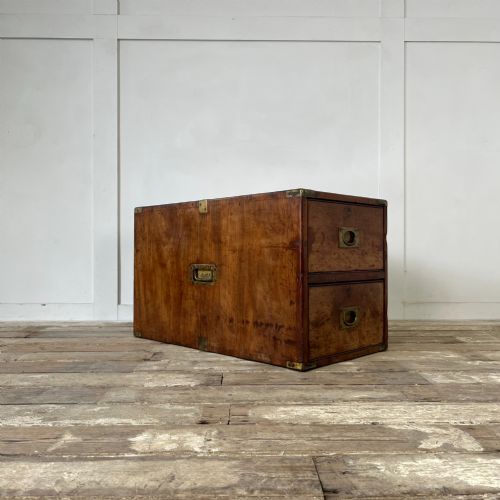
The common iterations on this page include apprentice pieces, salesman samples, and tabletop collectors cabinets. They arrive in formats such as standard chest of drawers, bowfront designs, Wellington chests, and campaign styles.
Makers produced these smaller items for portfolio display, journeyman demonstration, or precise domestic storage like jewellery and tea. Scottish and Anglo Indian regional variants also appear among the standard English forms.
How They Were Made
Makers relied primarily on mahogany as the principal timber, pairing it with secondary woods like pine or oak for drawer linings and carcases. Boxwood and bone or mother of pearl often supplied the inlay work and escutcheons.
Construction required precise miniature joinery, matching the dovetail joints and turned feet of large furniture down to a fraction of the scale. Brass hardware, handles, and campaign mounts were cast and fitted to match standard proportions.
The selection spans the Georgian period through the Victorian era, including Scottish and Anglo-Indian regional variants.
What Varies in Quality
The distinction between ordinary and superior pieces rests on the fidelity of the proportions and the crispness of the miniature dovetails. Cabinets with secondary timbers matched to the primary grain show a higher level of workshop care.
Surface finish and original patina dictate the visual weight of the piece, where untreated dry timber sits apart from polished surfaces with depth. The inclusion of working locks, original brasses, and intact bone or boxwood stringing elevates the standard.
The Victorian Mahogany Miniature Chest Glossary
- Apprentice Piece
- A scaled item created by a young woodworker to demonstrate mastery of joinery before entering a trade guild. These display the same dovetailing and turning found in full scale furniture.
- Bowfront
- A curved front facade that swells outward in the centre. This design requires careful shaping of drawer fronts and carcase frames.
- Wellington Chest
- A tall, narrow chest of drawers secured by a locking hinged side pilaster. The original full scale designs were named after the Duke.
- Campaign Chest
- Portable furniture built in sections with recessed brass handles and corner brackets for travel. Miniature versions adapt these military specifications for desktop use.
- Ogee
- A moulding with an S shaped profile combining a concave and convex curve. It appears frequently on cornices and plinths.
Victorian Mahogany Miniature Chest: Frequently Asked Questions
What is a miniature chest used for?
These small chests served multiple purposes in past centuries, ranging from journeyman tests to desktop storage. Owners utilised them to hold trinkets, jewellery, tea, or collection specimens.
Today they function primarily as decorative objects for tabletops and shelves. Their compact footprint allows them to sit comfortably in rooms where full scale furniture cannot fit.
How do I tell an apprentice piece from a modern copy?
Look closely at the construction methods and the ageing of the timber. Genuine nineteenth century pieces show hand cut dovetails, appropriate tool marks on secondary woods like pine, and natural shrinkage in the grain.
Examine the finish and hardware for consistency with the period. Old repairs, genuine patination, and period specific brass fittings help confirm age.
How should I care for mahogany miniature furniture?
Keep wooden pieces away from direct sunlight and heat sources to prevent the mahogany from splitting or warping. Maintain a stable room humidity to protect old glue and secondary timbers.
Clean the surface gently with a soft cloth and apply a quality wax polish sparingly when the wood appears dry. Avoid modern liquid cleaners that can strip the historic patina.