





Victorian Mahogany Longcase Clock
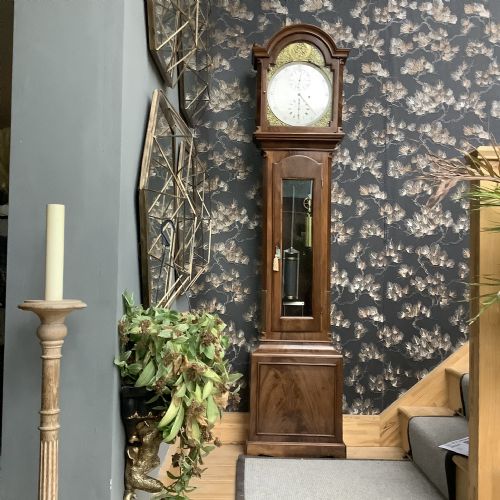
A victorian mahogany longcase clock brings architectural presence and mechanical precision into a room through tall timber cases and brass movements.

Victorian Mahogany Longcase Clock
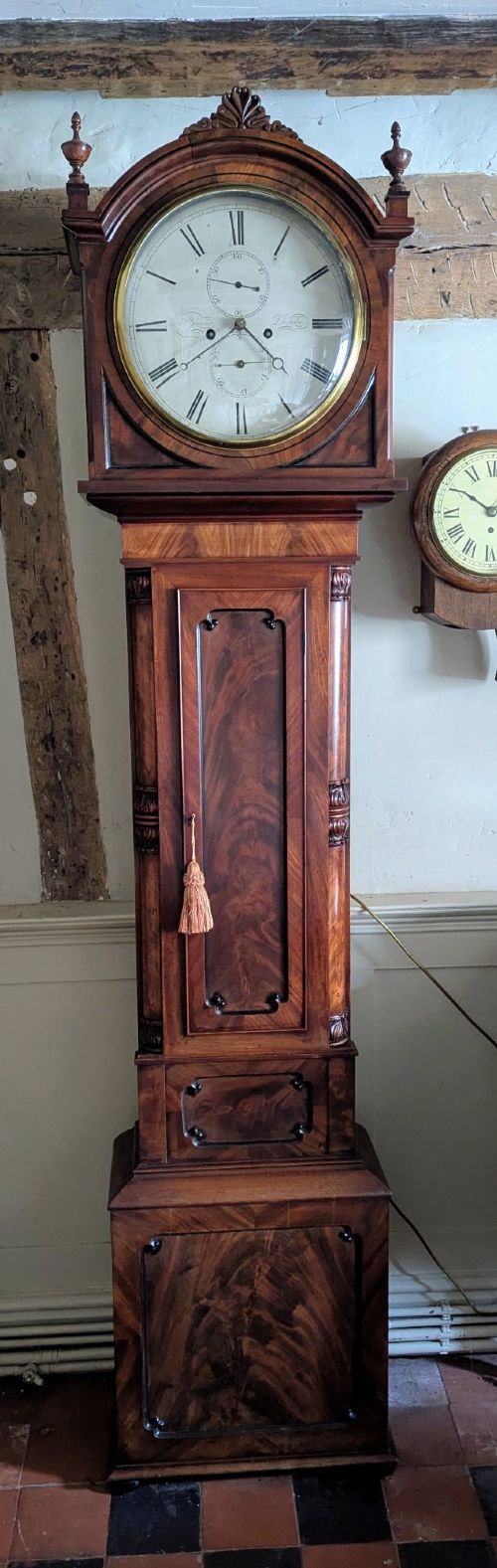
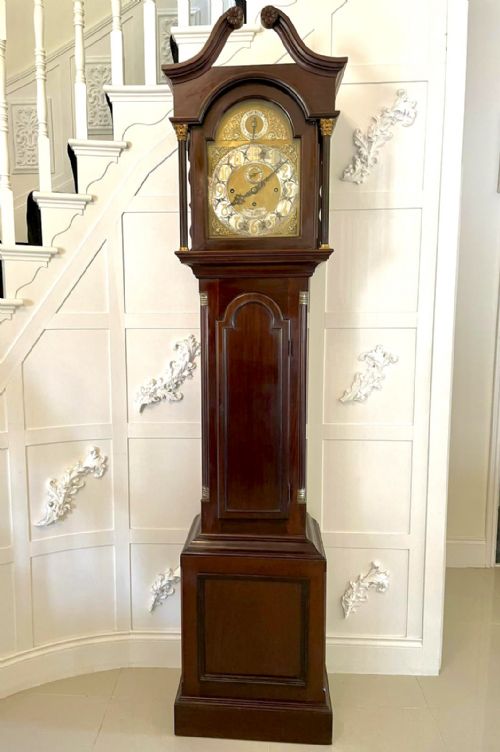
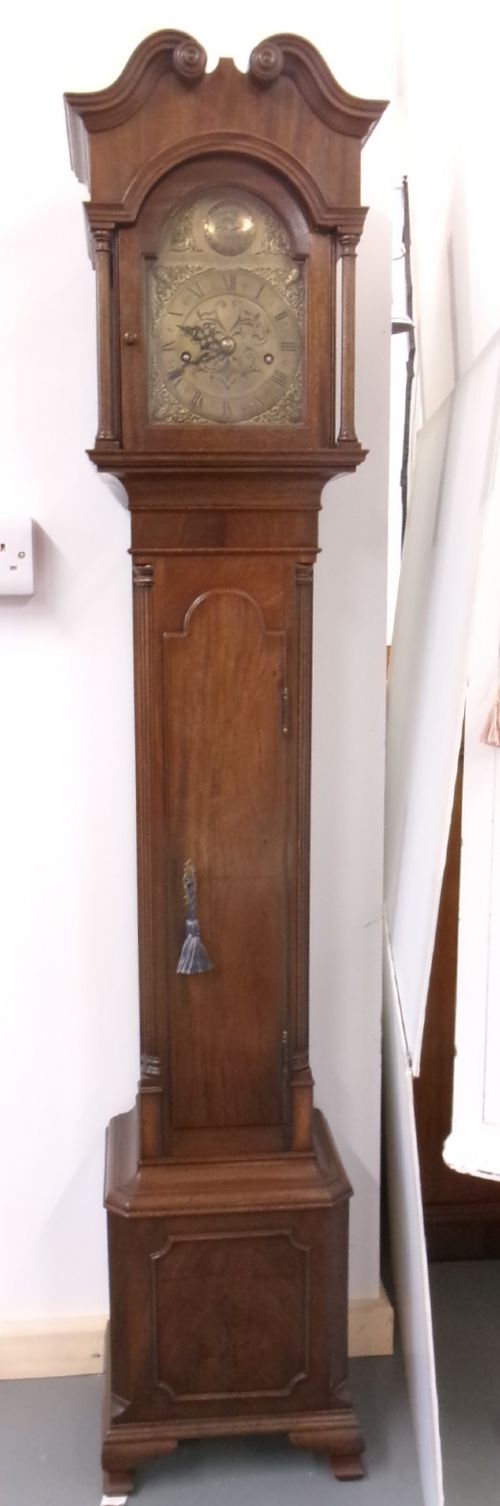
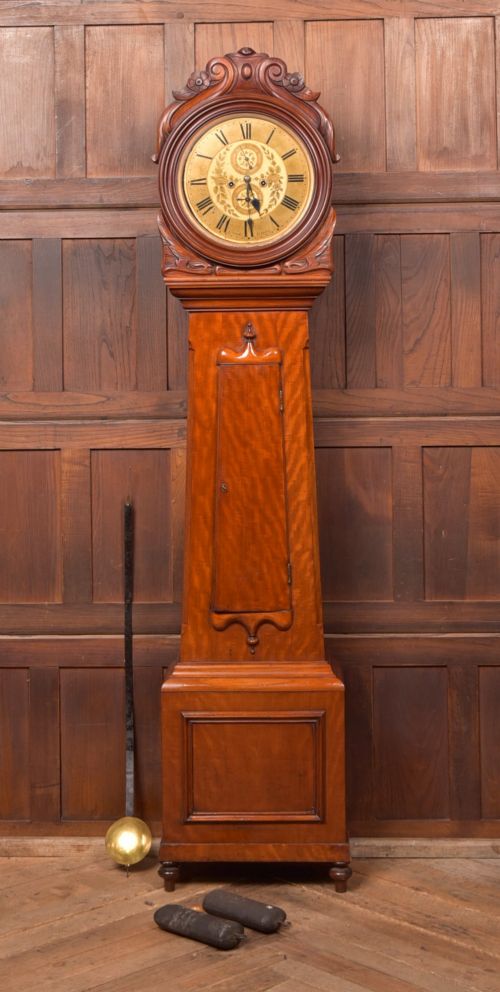
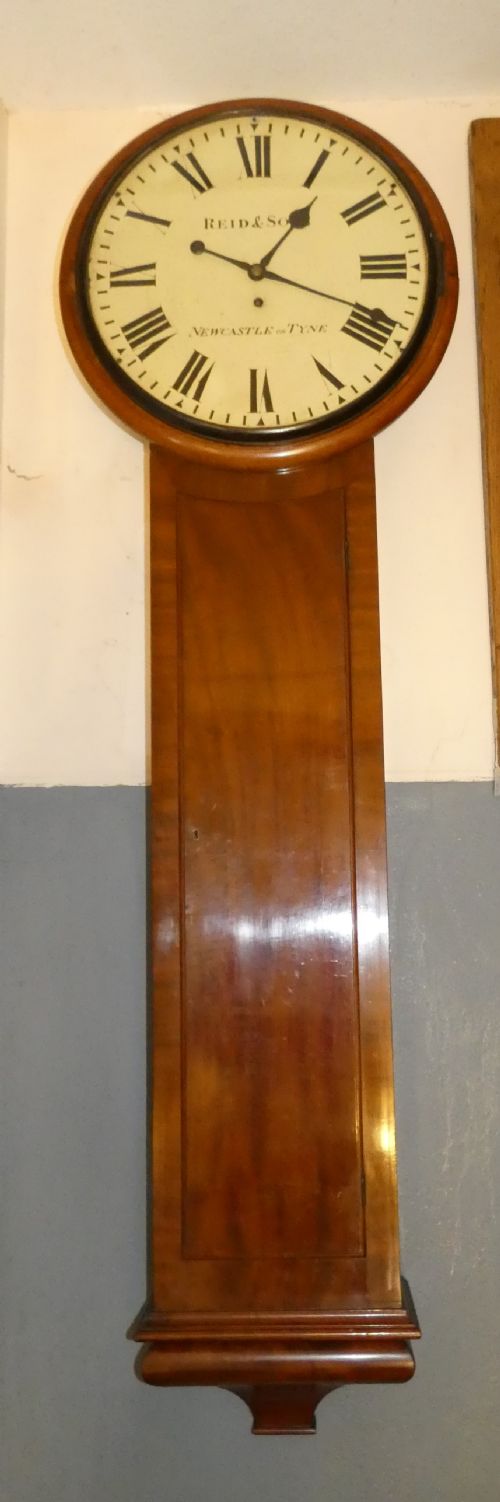
A victorian mahogany longcase clock stands as a tall floor-standing timepiece, appearing in standard grandfathers, smaller grandmothers, and specialised drumhead or regulator formats. The listings show substantial nineteenth-century examples alongside regional Scottish variations featuring arched dials or drum heads.
Makers from various towns and cities constructed these tall cases, incorporating painted iron faces, silvered metal dials, and moon rollers. The selection ranges from domestic eight-day pieces to complex musical and chiming movements housed in flame mahogany or inlaid timber.
Materials and Construction
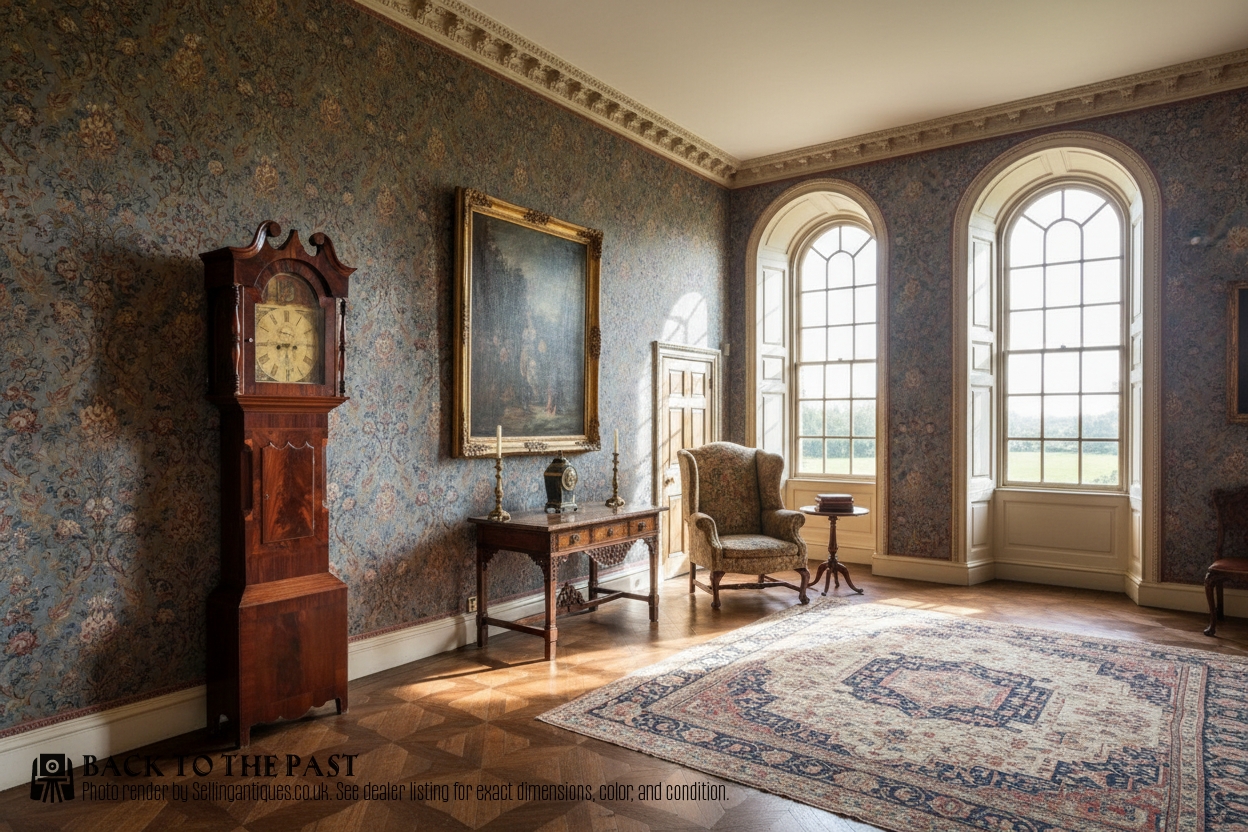
Cabinetmakers utilised solid mahogany and flame mahogany veneers for the tall cases, often pairing timber bodies with glass hood doors to protect the dial. Brass and steel form the intricate gear trains and weights inside, while enamel, silvered metal, and painted iron make up the clock faces.
Movements span standard eight-day weights, domestic regulators, and multi-train musical mechanisms that play chimes on bells or tubes. Cases display traditional joinery, sometimes accented with carved details, marquetry, or brass dial furniture.
Victorian Mahogany Longcase Clock Retail Price Guide 2026
Typical asking prices for victorian mahogany longcase clock among the pieces listed under this phrase on Sellingantiques today, from the lower quarter to the upper quarter. They describe what is for sale here now, not the wider market.
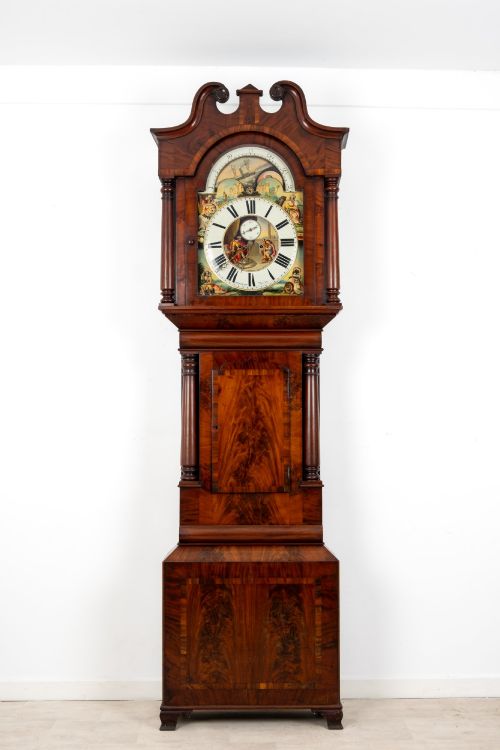
One exceptional nineteenth-century dial includes an unusual painted fishing scene to distract the viewer from mere hours.
Judging Quality
Quality rests in the harmony between the cabinetmaker's timber selection and the horological ambition of the movement. Figured flame mahogany, crisp dial painting, and complex mechanisms such as moon phases or quarter-chiming tubes mark the upper tier.
Simpler thirty-hour movements in plain cases occupy the domestic base of the range, whereas exhibition-grade pieces demonstrate superior architectural proportions, specialised regulation, and signed dials from recognised provincial makers.
Winsor Bishop Norwich·Parkinson Bros Batley·Andrew Thom·James Wood·William Chisholm Of Aberdeen·Richardson Of Manchester·David Griffith Carnarvon·Pearce And Sons Leicester·Aitchison Of Glasgow·Frederick Rowe·Geo Tarratt Of Leicester·Richard Rowell Oxford·John McNeish Falkirk·Alex Low·Peter Whytock·J Purdy·W C Shaw·Ketterer Co·Alfred Heald
The Victorian Mahogany Longcase Clock Glossary
- Drumhead
- A clock style featuring a circular dial housing mounted at the top of the trunk, particularly common in Scottish examples.
- Regulator
- A precision timekeeper designed for high accuracy, often featuring a simplified dial layout with a sweep second hand and heavy seconds pendulum.
- Moon Phase
- A dial mechanism tracking the lunar cycle through a rotating disk that displays the phases of the moon behind an arched aperture.
- Grandfather Clock
- A tall floor-standing pendulum clock, generally exceeding six feet in height, enclosing weights and a swinging pendulum within its trunk.
- Fusee
- A conical pulley mechanism that equalises the declining power of a mainspring as it unwinds, ensuring steady force delivered to the gear train.
Victorian Mahogany Longcase Clock: Frequently Asked Questions
How do regulators differ from standard clocks?
Regulators prioritize timekeeping precision over domestic convenience, utilising refined deadbeat escapements and heavy pendulums. Their dials often separate the hours, minutes, and seconds for easier reading.
Clockmakers built these movements for observatories, railway stations, and homes where exact time mattered above musical chimes.
What does a moon phase dial show?
A moon phase mechanism tracks the twenty-nine-and-a-half-day lunar cycle using a painted double disk behind an arched window on the dial face. As the gear turns, it displays the waxing and waning of the moon.
This complication added expense and visual interest, appearing on better quality domestic and exhibition pieces.
How long do these clocks run between winds?
Most traditional examples utilise eight-day movements driven by hanging weights that require winding using a crank key once a week. Thirty-hour alternatives exist for simpler household budgets.
Musical and chiming versions require careful attention to multiple gear trains dedicated to the strike and melody barrels.