


Victorian Mahogany Lectern
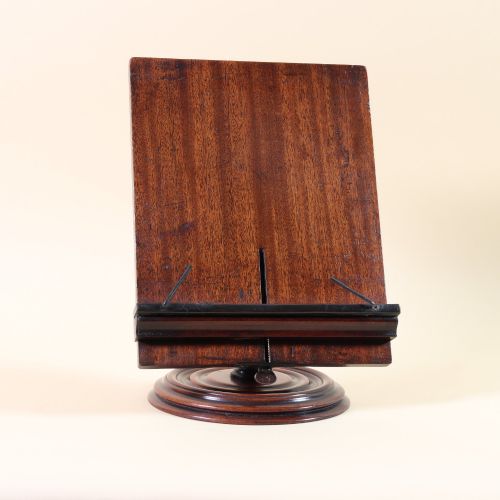
A victorian mahogany lectern provides a sturdy, adjustable resting place for books and music, combining rich timber with practical engineering.
Victorian Mahogany Lectern
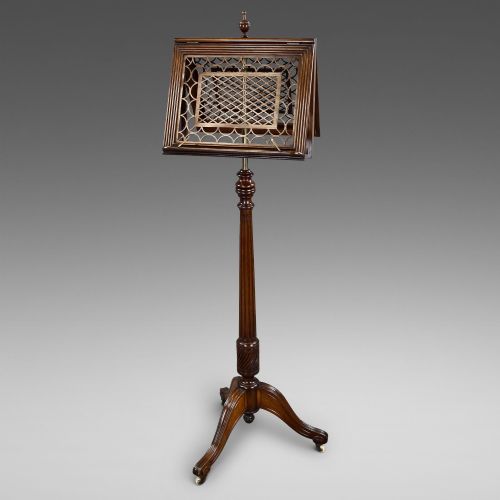
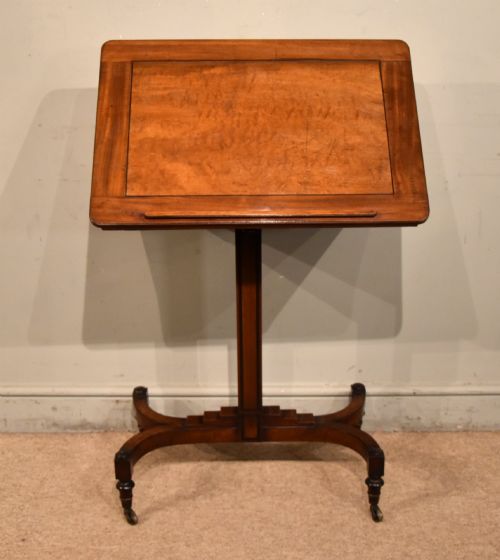
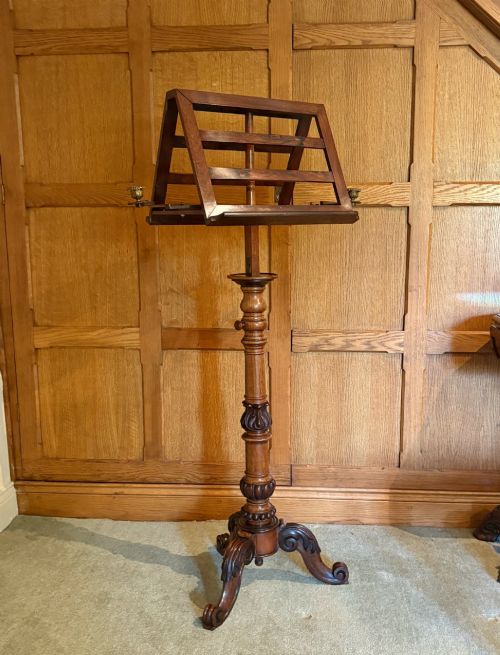
A victorian mahogany lectern encompasses reading stands, music stands, and adjustable reading tables designed for home libraries, drawing rooms, and studies. These pieces emerge primarily from the nineteenth century, including Victorian, Regency, and William IV periods, often featuring adjustable book rests.
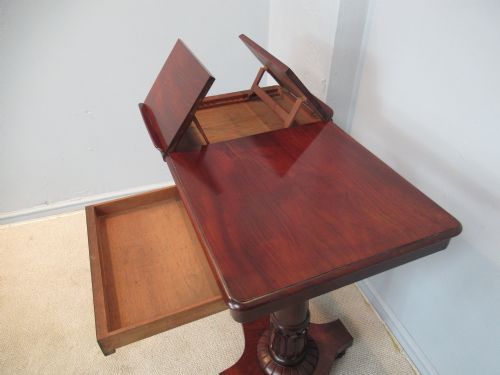
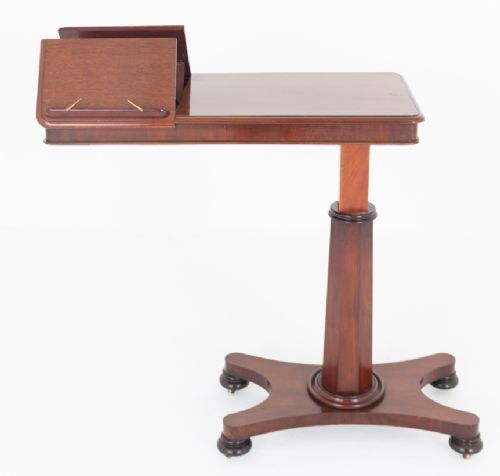
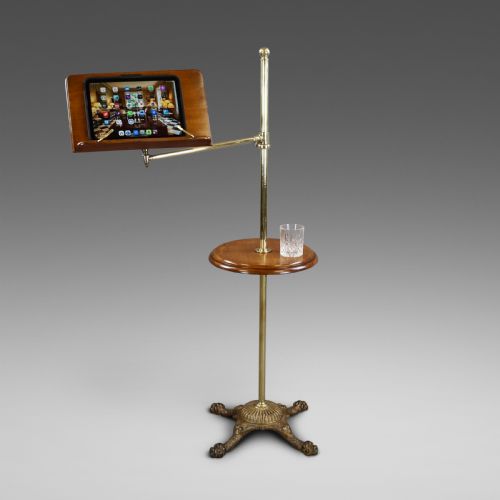
Buyers frequently encounter table-top book rests alongside floor-standing music stands and metamorphic reading tables equipped with brass fittings. The forms range from fretted duet stands and lyre-shaped music stands to campaign-style reading stands suited for travel.
The selection includes specialised items such as writing boxes and bed reading tables utilising patents by makers like Carter. Mahogany serves as the principal timber, occasionally paired with rosewood, satinwood inlay, and brass hardware.
How they were made
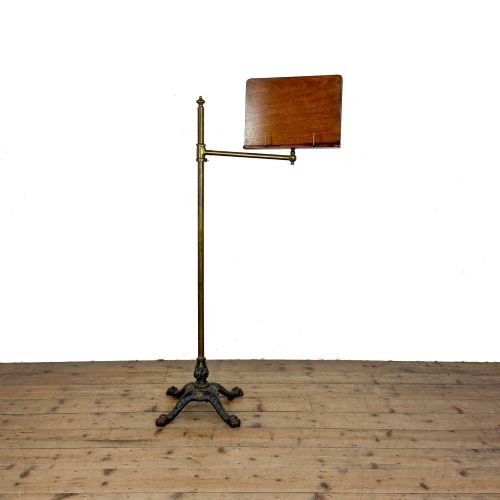
Makers utilised solid and veneered mahogany, frequently combining the timber with brass ratchets, stems, and cast-iron mechanisms to achieve height and angle adjustments. Satinwood inlay and rosewood appear as decorative elements on selected music and reading tables.
Structural engineering focused on mobility and mechanical function, employing brass binding, folding campaign designs, and lyre supports. Leather surfaces and metamorphic hinges integrate into the construction of reading tables and writing boxes.
Listings feature mahogany predominantly, frequently accompanied by brass, cast iron, and occasional satinwood inlay.
What varies in quality
The distinction between standard production and finer pieces rests in the sophistication of the mechanical adjustments and the quality of the timber selection. Superior items feature robust brass mechanisms that operate smoothly and retain their position securely.
Craftsmanship in the joinery, intricate fretted carving, and the presence of documented patents elevate certain reading stands above simpler utilitarian examples. The integration of secondary woods and decorative inlay further defines the tier of the piece.
John Carter
The Victorian Mahogany Lectern Glossary
- Lectern
- A stand with a sloping top used to hold a book or music for a reader standing or sitting. These pieces often feature adjustable heights and angles.
- Campaign
- Furniture constructed to be easily dismantled and transported for military or travel use. These items typically incorporate brass corners and recessed handles.
- Metamorphic
- Furniture designed to transform from one form or function into another, such as a table converting into a reading stand. This engineering allows multiple uses within a single piece.
- Fretted
- Wood cut into openwork patterns, often seen on the galleries or music racks of duet stands. This decorative technique lightens the visual weight of the mahogany.
- Lyre
- A symmetrical ornament shaped like an ancient stringed instrument, frequently utilised as the central support column for music stands.
Victorian Mahogany Lectern: Frequently Asked Questions
How do I adjust the height?
Most adjustable stands utilise a brass screw mechanism, sliding stem, or ratchet support positioned beneath the book rest. Turning or releasing this hardware allows the lectern to be raised or angled to the desired position.
Care should be taken to support the weight of the reading rest while operating vintage mechanisms to protect the nineteenth-century brass components from undue strain.
Were these used for music or reading?
These pieces served multiple functions in nineteenth-century interiors, acting as music stands for scores, book rests for study, and surfaces for writing. Double-sided duet stands specifically accommodated two musicians reading simultaneously.
Table-top versions placed heavy volumes at a comfortable reading angle, while floor-standing tables allowed users to read while seated in armchairs or at desks.
How do I distinguish Regency from Victorian pieces?
Regency stands often display cleaner classical lines, brass inlay, and lyre supports influenced by ancient Greek and Roman designs. Victorian pieces tend toward heavier proportions, more elaborate fretted carving, and complex mechanical patents.
Examination of the timber grain, secondary woods, and hardware style helps clarify the manufacturing period within the nineteenth century.
Can I use a campaign stand for travel?
Campaign reading stands were originally engineered for portability, featuring folding legs, knock-down frames, and protective brass binding. While structurally capable of folding, modern owners generally treat them as stationary decorative furniture.
Frequent movement of antique brass hinges and nineteenth-century mahogany joints can cause wear, so careful handling is recommended.