

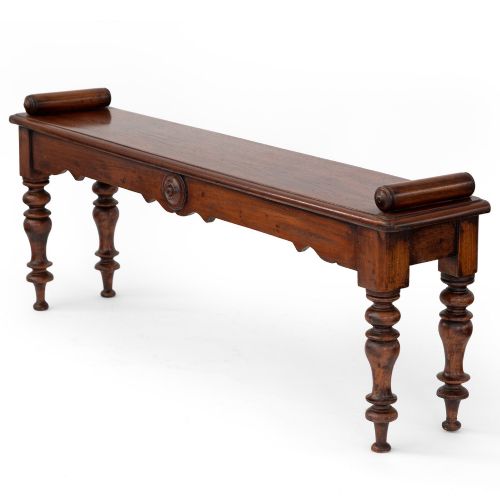
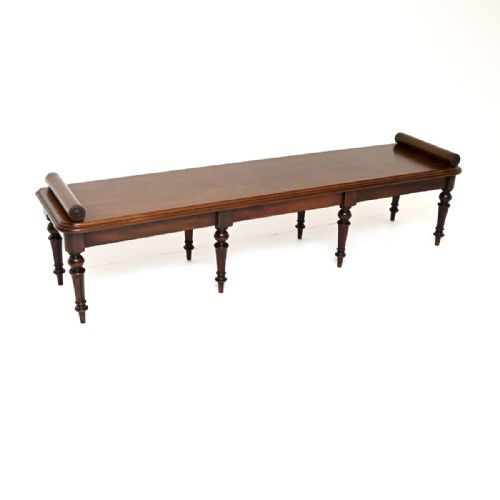
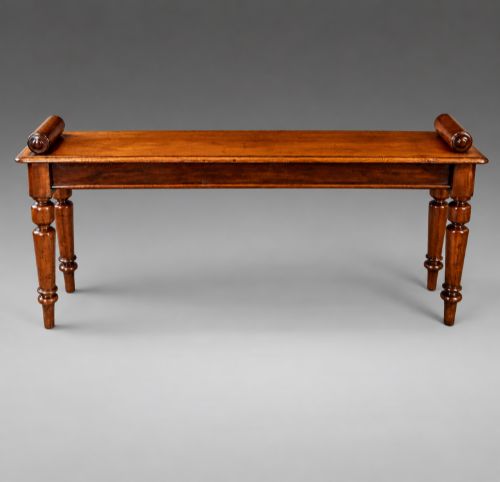
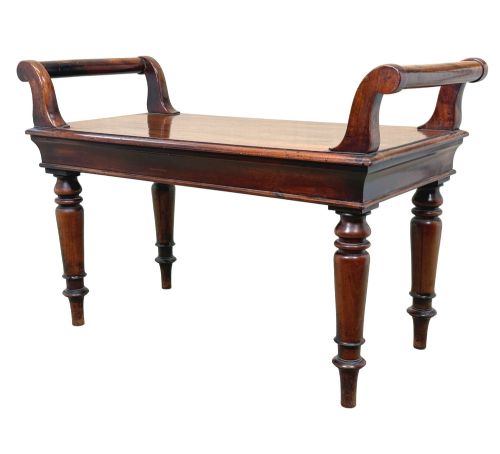
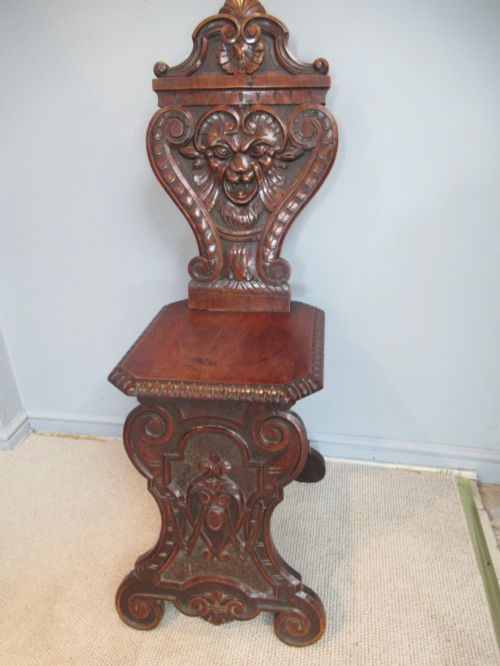
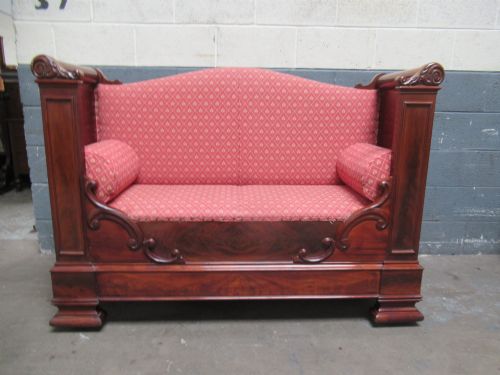
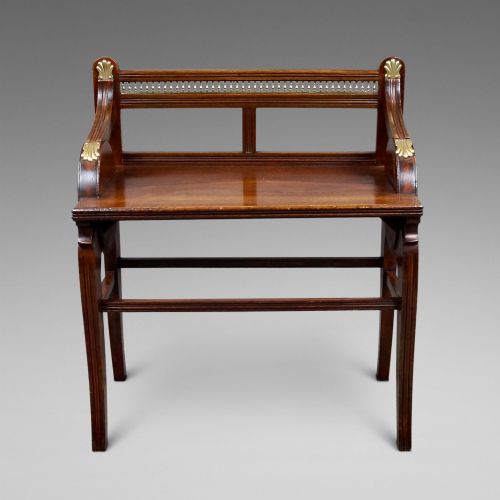


Victorian Mahogany Hall Bench
A victorian mahogany hall bench brings solid timber architecture to an entranceway, offering robust seating designed for waiting guests.
Victorian Mahogany Hall Bench
A victorian mahogany hall bench combines practical seating with the formal presence expected in nineteenth-century entrance halls. These pieces appear frequently as long benches, window seats, and roll-end designs spanning the early, mid, and late Victorian periods.
Makers often adapted forms into versatile hall stands, settle benches, and centre stools constructed from heavy timber. Buyers encounter variants featuring carved panels, cabriole legs, or integrated mirror and marble umbrella stands.
How they were made
Joiners relied primarily on solid mahogany and flame mahogany veneer, augmented by secondary elements of satinwood, brass fittings, and carved wooden panels. Upholstered variants incorporated traditional fabric or damask coverings over internal padding.
Construction techniques balanced structural rigidity with decorative carving, particularly on scroll ends, box settles, and inlaid frames. Artisans shaped dense timber into durable forms designed to withstand heavy daily traffic near doorways.
Victorian Mahogany Hall Bench Retail Price Guide 2026
Typical asking prices for victorian mahogany hall bench among the pieces listed under this phrase on Sellingantiques today, from the lower quarter to the upper quarter. They describe what is for sale here now, not the wider market.
What varies in quality
Distinction across the range rests on the depth of timber carving, the selection of figured mahogany veneer, and the structural integrity of joints. Superior examples exhibit refined proportions, crisp scroll ends, and harmonious inlay work rather than plain, utilitarian construction.
The integration of secondary materials such as marble, mirrors, or specific ceramic tiles elevates certain hall stands and benches above standard seating forms. Original upholstery fabrics or intact box settle mechanisms also separate standard items from superior pieces.
Jas Shoolbred·Richard Bridgens·Ellen E. Houghton
The Victorian Mahogany Hall Bench Glossary
- Mahogany
- A durable tropical hardwood known for its deep reddish-brown tone and stable grain. It serves as the primary structural material for nineteenth-century seating.
- Scroll end
- A rolled or curved wooden armrest found at one or both ends of a bench. This shape defines specific Victorian seating variants.
- Box settle
- A wooden bench featuring a high back and a concealed storage compartment beneath the hinged seat. This form provides both seating and enclosed volume.
- Window seat
- A long, narrow bench designed to fit within a window recess. These pieces share similar proportions and frames with traditional hall seating.
- Flame mahogany veneer
- A thin slice of wood cut from the fork of a mahogany tree to display a distinctive flickering flame pattern. Cabinet makers applied this to prominent exterior surfaces.
Victorian Mahogany Hall Bench: Frequently Asked Questions
Where were hall benches placed?
These benches stood in entrance halls, corridors, and vestibules to provide a firm seat for visitors removing outdoor garments.
Their narrow profiles allowed them to sit flat against walls without obstructing thoroughfares in busy households.
How do I identify a Victorian bench?
Look for dense mahogany construction combined with typical nineteenth-century design motifs such as scroll ends, turned legs, or carved panels.
Dates are often indicated by the specific proportions, upholstery styles, and integration with hall stands or umbrella holders.
Are window seats the same as hall benches?
Window seats share identical long, narrow timber frames and upholstery styles with hall benches.
While built for similar dimensions, window seats were originally intended for alcoves rather than entranceways.