




Victorian Mahogany Dumb Waiter
When you search for a victorian mahogany dumb waiter, you are tracking down a tier-laden servant of the dining room designed to hold dishes, wine or books with practical grace.
Victorian Mahogany Dumb Waiter
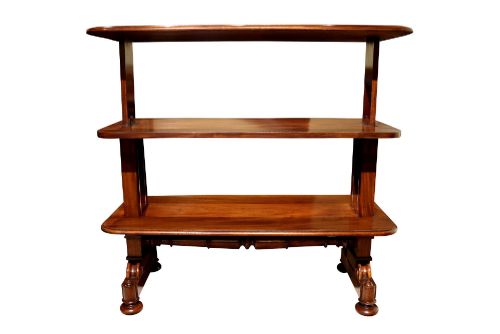
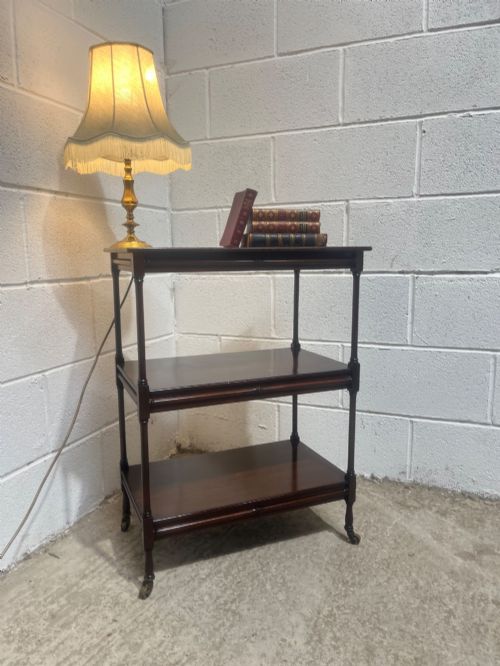
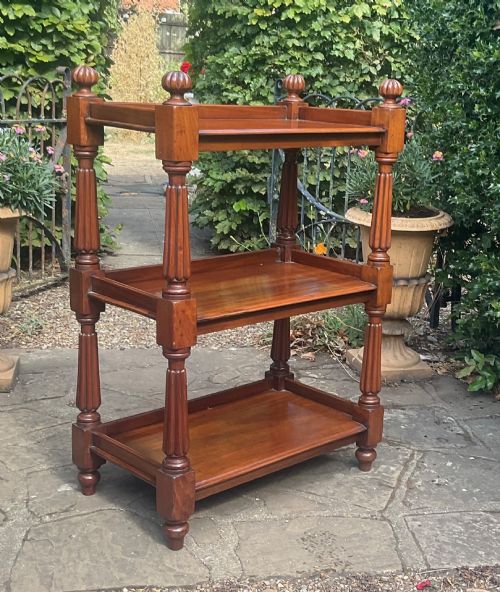
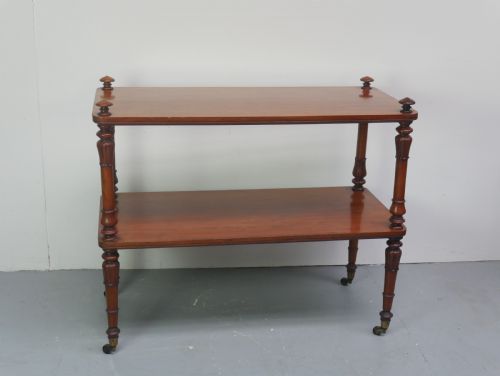
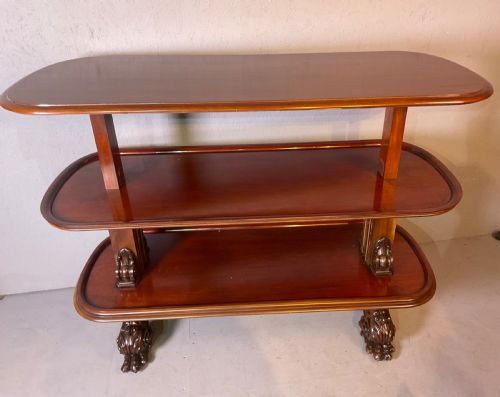
A victorian mahogany dumb waiter typically manifests as a multi-tiered stand, with three-tier buffets and revolving tables dominating the pieces encountered on this page.
Originating largely within the nineteenth century, these versatile items stretch from Georgian roots through William IV, Victorian, and Edwardian periods into the early twentieth century.
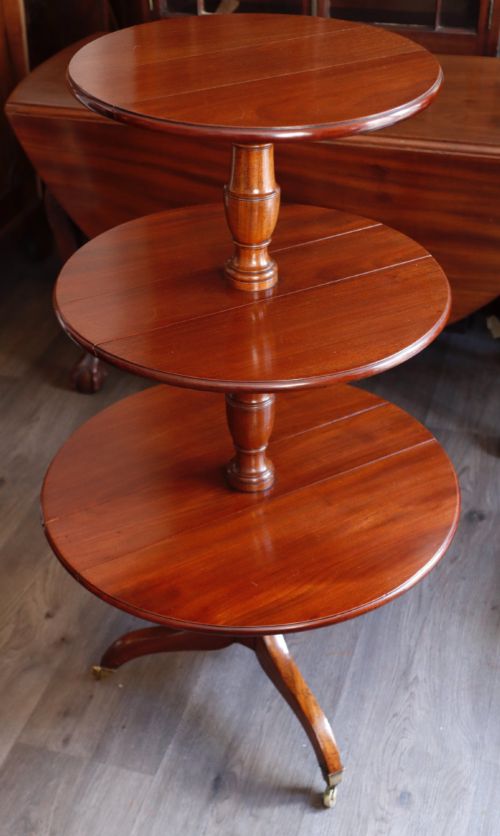
Makers utilised these serving pieces as etageres, trolleys, and occasional tables, often featuring revolving tops, drop leaves, or rising mechanisms to assist during large meals.
Materials and Construction
The primary timber is rich mahogany, frequently complemented by secondary touches of brass for castors, galleries, and hinges, alongside ceramic components and felt surfaces.
Joinery involved turned and block supports, tripod bases, and tiered shelving arrangements secured with finials, sometimes incorporating folding or metamorphic mechanics for adjustable height.
Victorian Mahogany Dumb Waiter Retail Price Guide 2026
Typical asking prices for victorian mahogany dumb waiter among the pieces listed under this phrase on Sellingantiques today, from the lower quarter to the upper quarter. They describe what is for sale here now, not the wider market.
Forms range from simple revolving breakfast trays and etageres to large metamorphic buffets and serving tables.
Standards of Craftsmanship
Quality rests heavily on the depth and figure of the mahogany timber, the stability of the tiered structure, and the presence of original brass castors and turning work.
The sophistication of the movement distinguishes standard items from superior pieces, particularly in smoothly revolving lazy Susans, rise-and-fall mechanisms, or complex metamorphic designs.
Gillows of Lancaster and London·Maple & Co·Oetzmann & Co
The Victorian Mahogany Dumb Waiter Glossary
- Dumb waiter
- A multi-tiered piece of dining furniture used for holding food, glassware, or tableware without the need for a human servant. These objects evolved from revolving tripod tables into large architectural buffets.
- Etagere
- A set of open shelves for displaying small objects or serving food. These pieces provide multiple tiers supported by slender columns.
- Lazy Susan
- A revolving tray or tabletop placed on a pivot to allow easy access to dishes. Versions in these records often rotate on a central spindle.
- Metamorphic
- Furniture engineered to transform from one form or height into another through clever hinges or ratchets. Such designs offer dual purposes such as a table converting to a tiered stand.
- Castor
- A small wheel mounted on a swivel assembly attached to the base of furniture. Original brass versions allow heavy serving stands to glide across carpets.
Victorian Mahogany Dumb Waiter: Frequently Asked Questions
What is a dumb waiter?
A dumb waiter is a multi-tiered wooden stand designed to hold food, drinks, and tableware in the dining room. They allowed diners to help themselves without servants present during the meal.
Most examples found here feature two or three shelves or revolving trays made of rich timber. They served as practical mobile storage close to the main dining table.
How do revolving dumb waiters work?
Revolving dumb waiters incorporate a central pivot mechanism that allows the upper tiers or trays to spin independently. This design gave every guest seated around a table access to shared dishes or condiments.
The rotating top, often termed a lazy Susan in later periods, sits securely upon a sturdy pillar or tripod base for balance during movement.
Where were these pieces used?
These serving pieces belonged primarily in nineteenth-century dining rooms, drawing rooms, and libraries. Their tiered structure held heavy ceramic plates, silver service, or collections of books.
Today, buyers place them in modern dining spaces, hallways, or living rooms as display surfaces for plants, lamps, and decorative accessories.
How do I date a mahogany dumb waiter?
Dating relies on observing structural characteristics, timber grain, and hardware such as brass castors or turned finials. Pieces displaying tripod bases and simple revolving trays often point to earlier nineteenth-century Georgian or Regency origins.
Later Victorian and Edwardian examples frequently take the form of heavy three-tier buffets, cabinets, or folding cake stands with more elaborate carved decoration.