


Victorian Mahogany Compactum
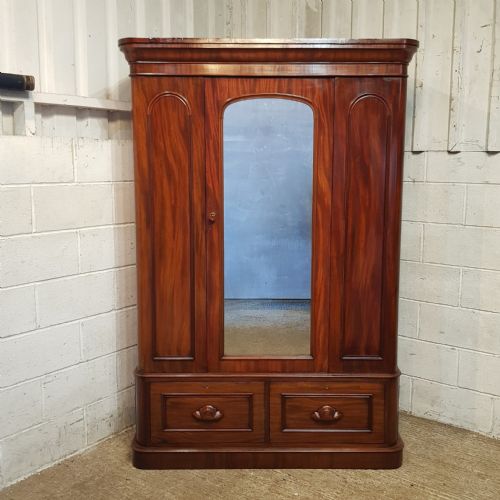
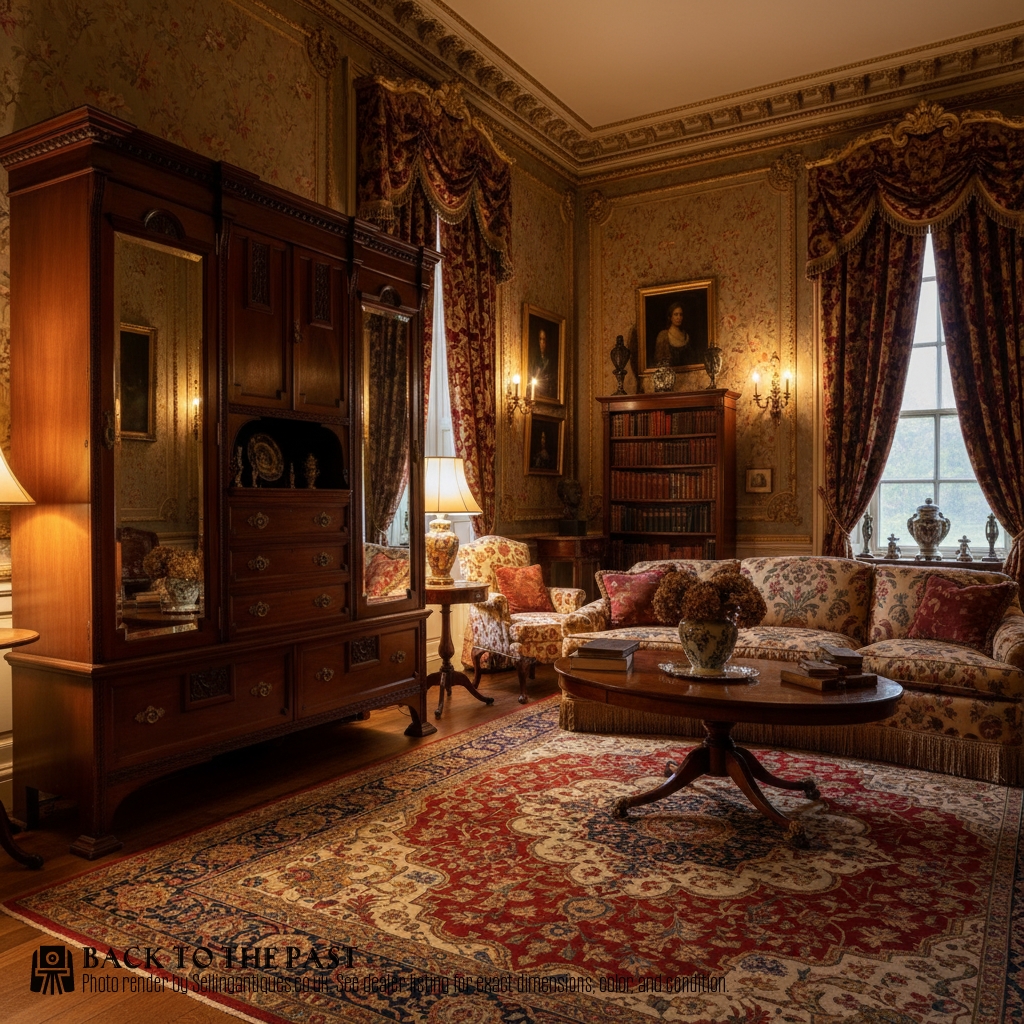
A victorian mahogany compactum combines wardrobe, drawer and cupboard storage into a single substantial piece of furniture.
Victorian Mahogany Compactum
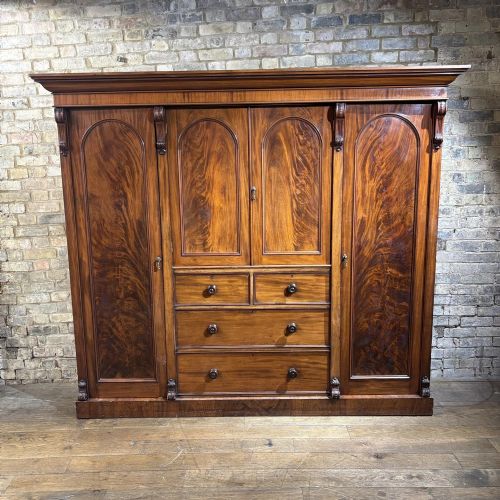
A victorian mahogany compactum is a large multi-functional bedroom storage unit designed to house hanging garments, folded clothes and linen within one combined carcass.
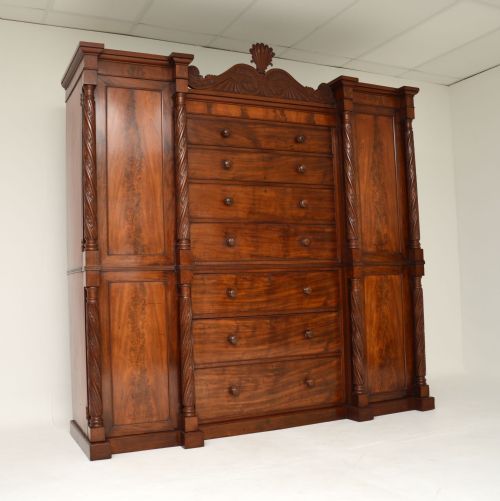
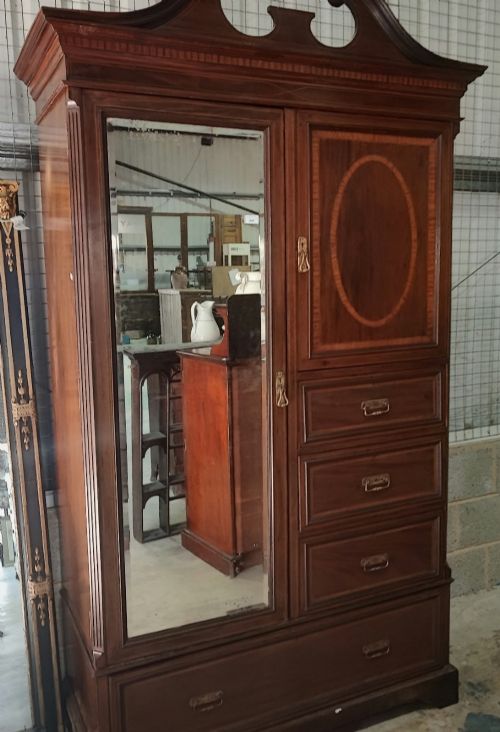
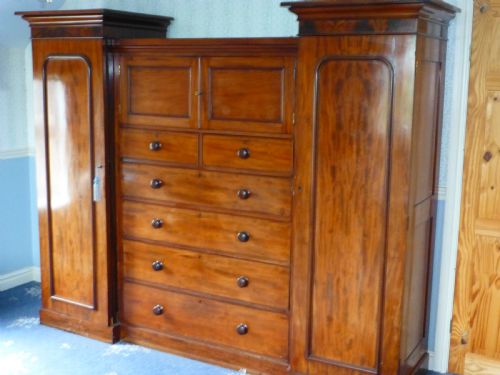
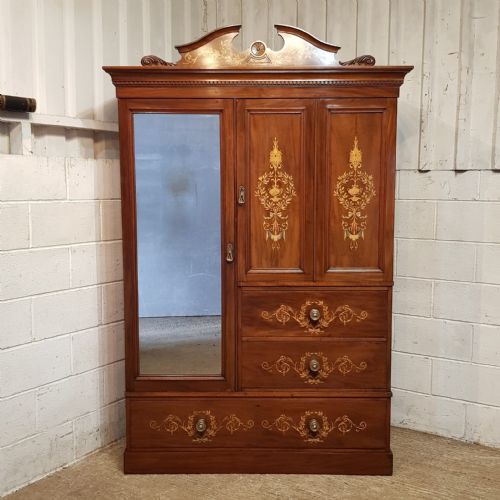
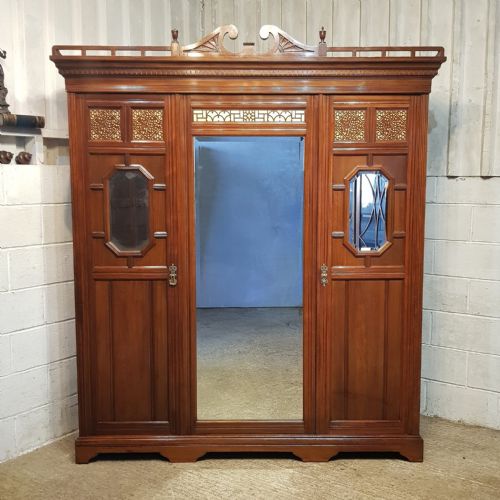
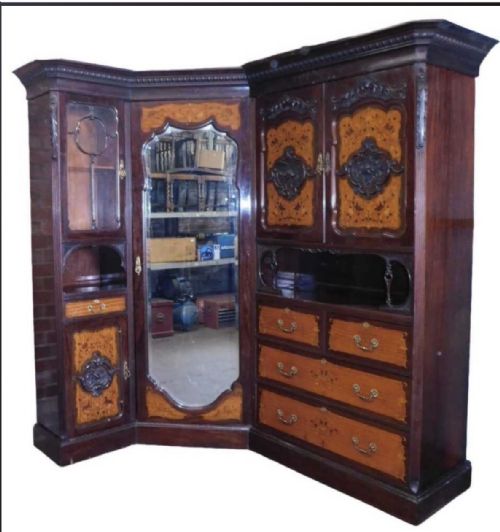
The pieces appearing on this page span the Victorian and Edwardian periods, including earlier William IV examples, taking forms such as triple wardrobes, breakfront configurations and linen presses.
Makers integrated hanging space alongside internal drawers and sliding trays, creating a comprehensive wardrobe system for nineteenth-century domestic use.
Materials and Construction
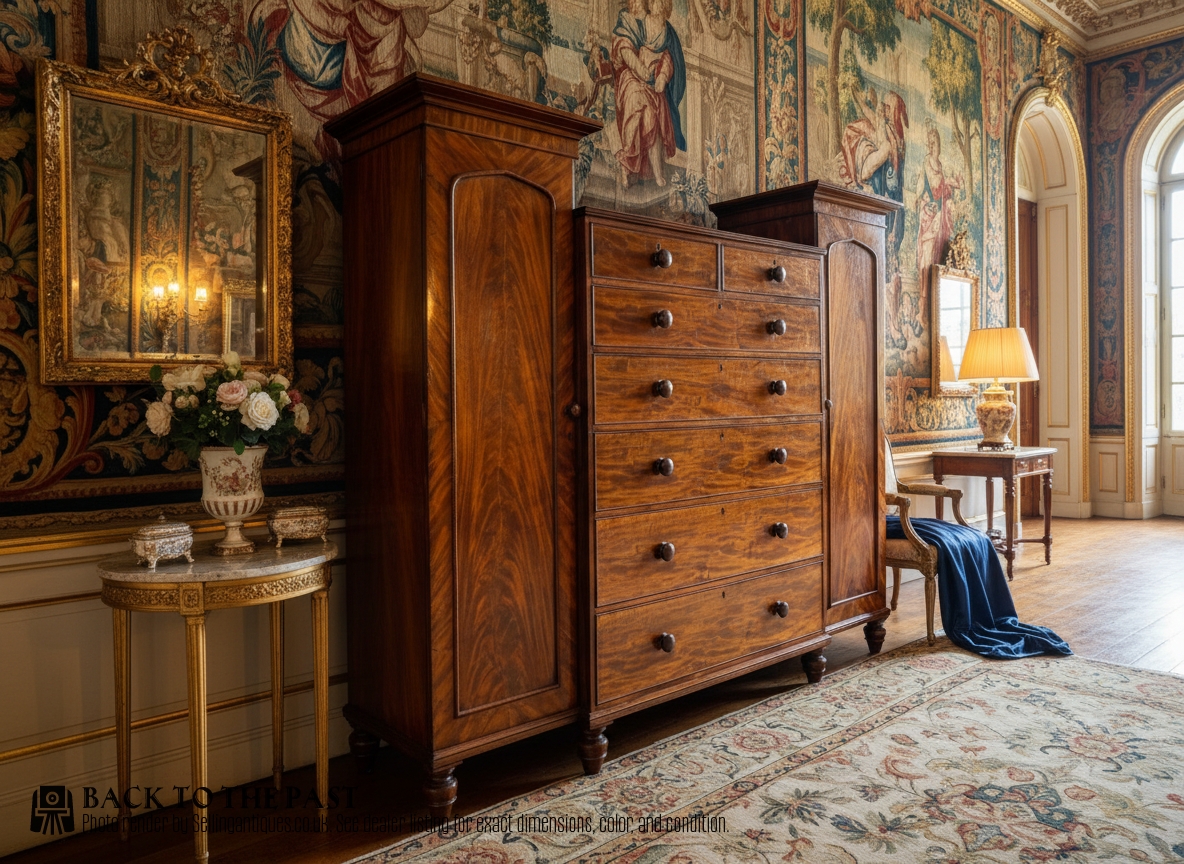
Solid mahogany and mahogany veneer provide the primary exterior structure, often selected for dramatic flame figures and complemented by secondary timbers such as pine.
Workshops utilised satinwood for interior details and inlay work, while structural and functional hardware relied on brass fixtures and glass mirror doors.
Cabinetmakers constructed these large wardrobes in modular sections to facilitate transport and assembly within the large bedrooms of the period.
Listings feature mahogany, satinwood, and brass across Victorian, Edwardian, and William IV periods.
Assessing Quality
The grade of timber selection distinguishes standard production from superior pieces, with figured flame mahogany veneers and crisp satinwood inlay indicating higher workshop status.
Internal configuration and joinery execution determine utility and craftsmanship, where fitted linen slides, mahogany-lined drawer boxes and original brass hardware reflect superior manufacture.
Edwards and Roberts·Gillows·Maple and Co·Heal and Son
The Victorian Mahogany Compactum Glossary
- Compactum
- A multi-functional wardrobe combining hanging space, drawers and shelving in a single unit. This design maximised bedroom storage efficiency during the nineteenth century.
- Breakfront
- A cabinet design where the central section projects forward from the flanking wings. This architectural arrangement creates depth and visual interest on large wardrobes.
- Flame Mahogany
- A wood veneer cut from the fork of the mahogany tree to produce a rippled, flame-like grain pattern. Cabinetmakers reserved this decorative timber for principal door panels.
- Linen Press
- A piece of furniture featuring upper sliding trays for textiles above a chest of drawers. These units frequently form part of larger combination wardrobes.
Victorian Mahogany Compactum: Frequently Asked Questions
What is a compactum wardrobe?
A compactum is a comprehensive bedroom storage unit that combines hanging wardrobes with drawers, shelves, and linen compartments within one coordinated piece.
These combination cupboards offered nineteenth-century households a complete clothing storage solution in a single footprint.
How do I fit a large wardrobe in a modern home?
Most antique compactums were built in modular sections consisting of a central tower, side wardrobes, cornices, and plinths to allow assembly on site.
Checking ceiling height and ensuring clearance for the breakfront projection is essential before installation.
How do I identify a William IV compactum?
William IV pieces date from the early nineteenth century and typically display robust classical proportions with bold mahogany veneers and architectural mouldings.
They precede standard high Victorian production and often feature distinctive scrollwork or plain pillar supports.
What is the difference between a wardrobe and a compactum?
Standard wardrobes provide primarily hanging space behind doors, whereas a compactum integrates internal chest drawers and linen slides alongside the hanging sections.
This multi-purpose internal division defines the compactum type across Victorian and Edwardian examples.