

Victorian Mahogany Centre Table
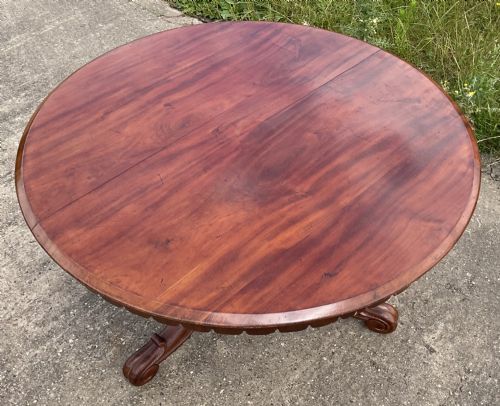
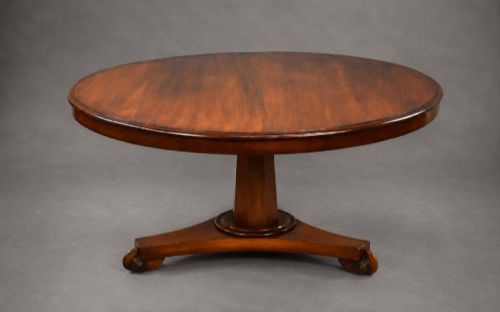
A victorian mahogany centre table brings architectural presence to a room, functioning as a freestanding centrepiece designed to be admired from every angle.
Victorian Mahogany Centre Table
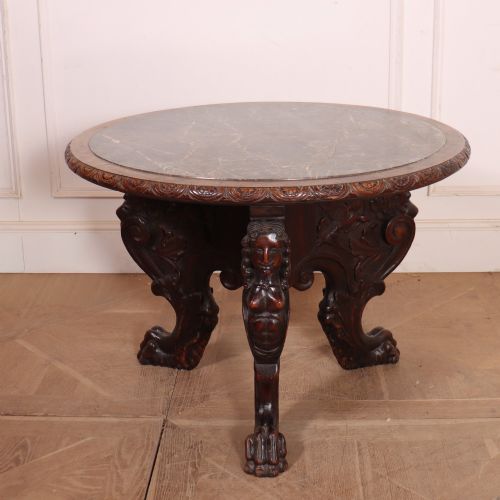
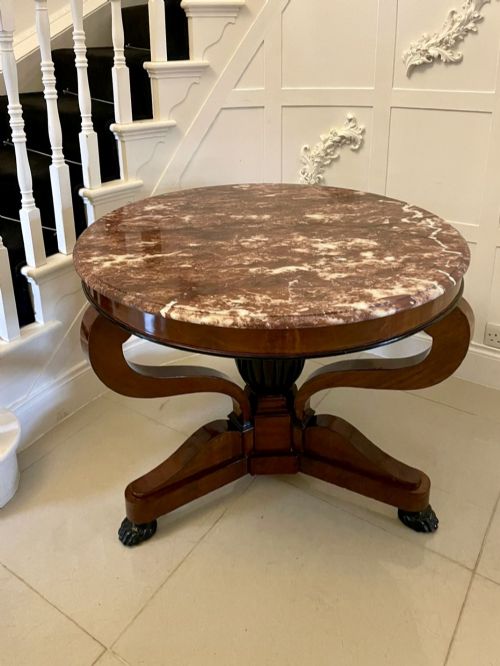
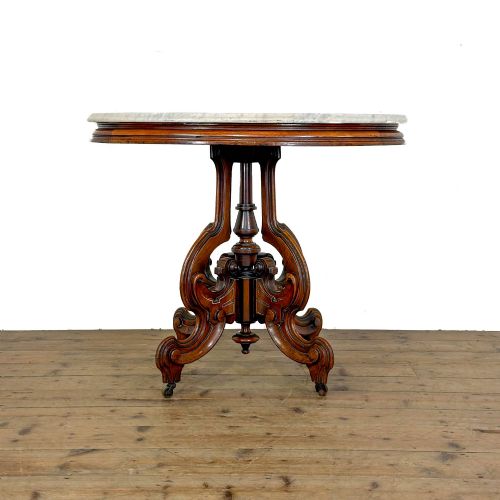
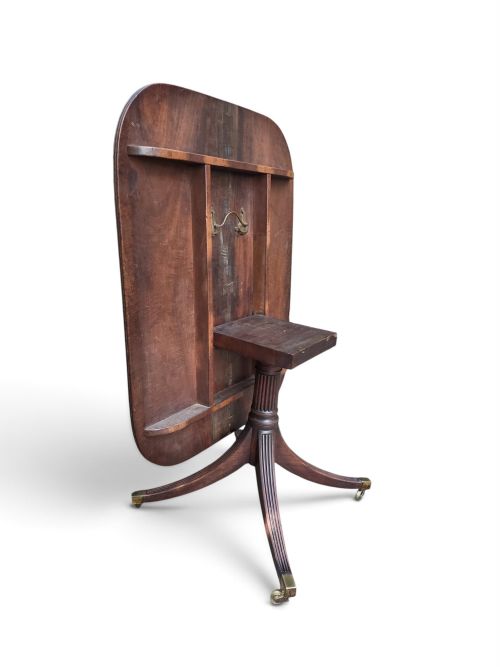
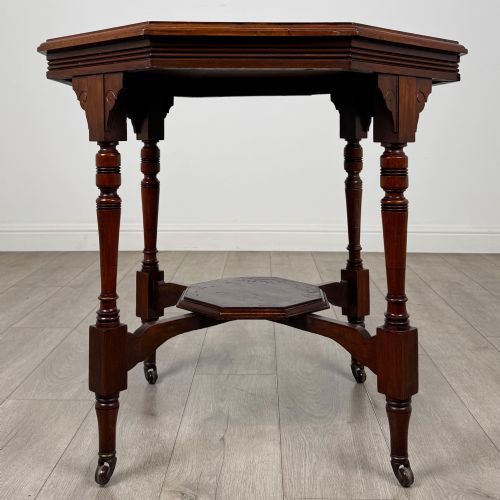
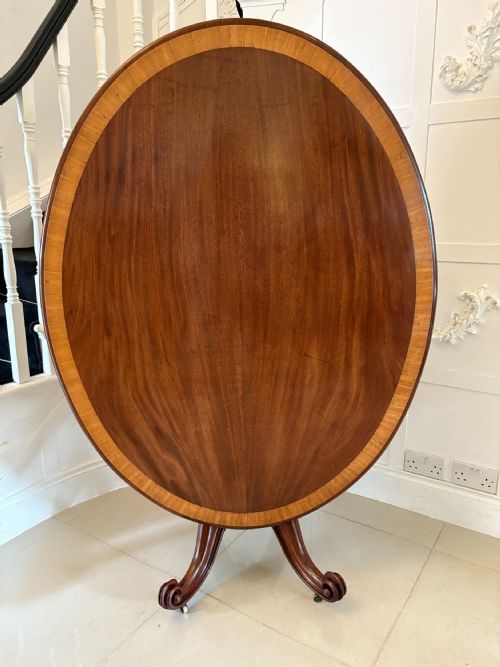
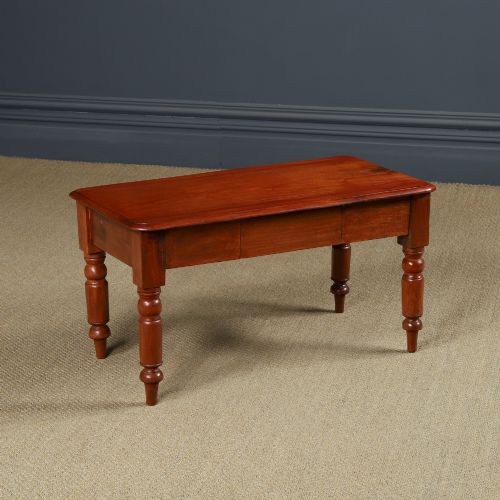
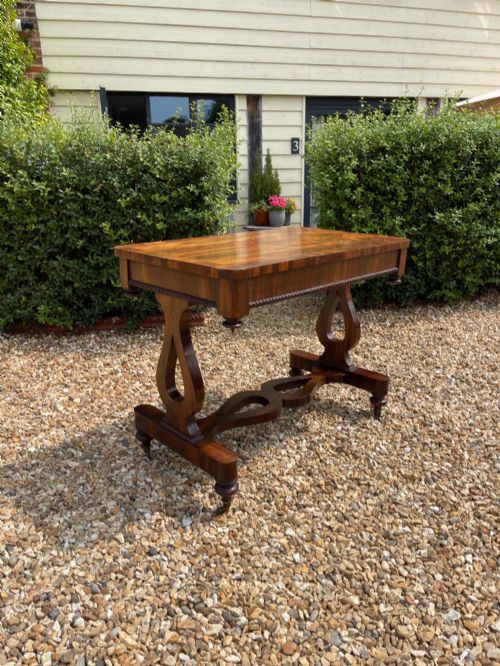
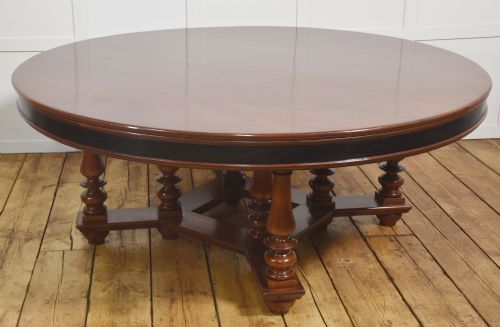
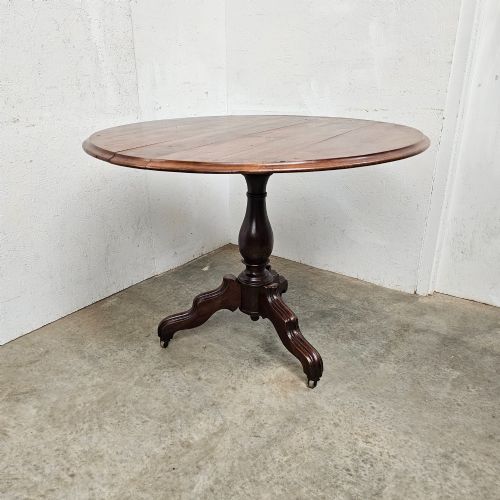
A victorian mahogany centre table is primarily defined by its freestanding nature, built to occupy the middle of a room rather than sit against a wall. The examples found here span circular, oval, and octagonal forms, often featuring tilt-top mechanisms or sturdy pedestals supported by tripod or carved bases.
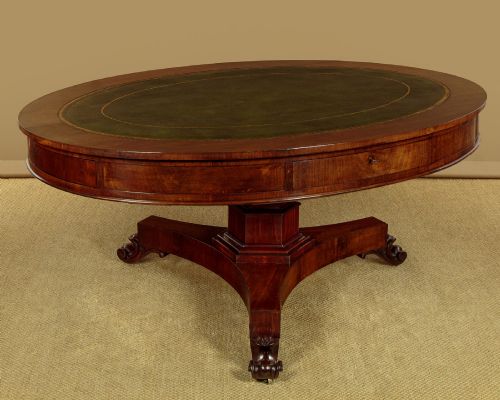
Most pieces date from the nineteenth century, drawing heavily on Victorian production methods alongside occasional stylistic nods to Regency and William IV periods. Alongside standard timber designs, variants emerge with inset marble tops, leather surfaces, or marquetry detailing that expand their utility into libraries and drawing rooms.
Materials and construction
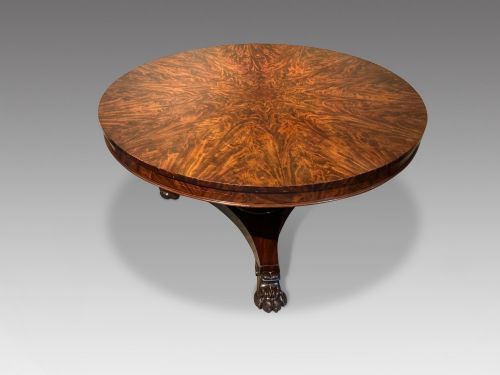
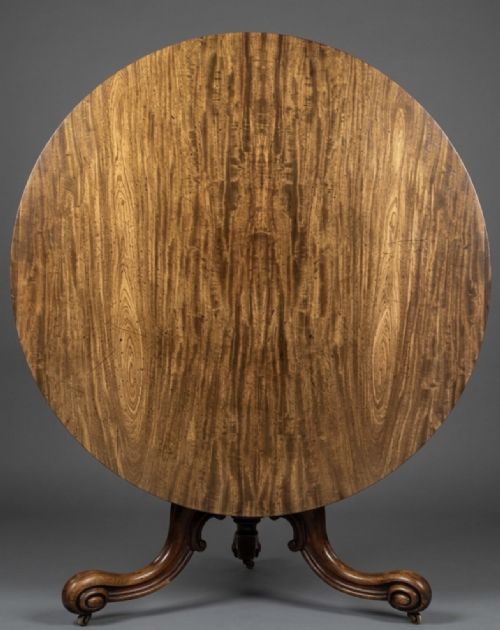
Makers relied on solid mahogany and rich flame mahogany veneers applied over stable secondary timbers to achieve deep grain patterns and warm colouration. Advanced cabinet-making techniques allowed for curved serpentine edges, segmented veneer tops, and complex pedestal turnings.
Selected pieces incorporate contrasting materials such as Italian marble inserts, brass mounts, and satinwood or rosewood inlay. Structural integrity was maintained through heavy central pillars, tripod legs, or platform bases designed to support the weight of stone tops and heavy timber.
Miniature centre tables appear among the stock, proving that nineteenth-century cabinet makers loved showing off by scaling down their grandest designs.
Distinctions in craftsmanship
Quality rests in the selection of the timber, particularly where figured mahogany or flame veneers exhibit deliberate grain matching across circular and oval tops. Superior examples display crisp, hand-carved details on pedestals and friezes rather than soft, moulded resin or mass-produced pressings.
Construction methods also dictate grade, with robust internal framing and precise tilt-top mechanisms separating utilitarian tables from exhibition-grade specimens. The inclusion of genuine specimen marble inserts or intricate marquetry elevates certain pieces into higher tiers of craftsmanship.
The Victorian Mahogany Centre Table Glossary
- Flame mahogany
- A veneer figure resembling flickering flames, achieved by cutting diagonally across the branch-wood bough of the tree.
- Tilt-top
- A mechanism allowing the tabletop to pivot to a vertical position when not in use, originally designed to save floor space.
- Pedestal table
- A table supported by a single central column rising from a weighted base or footed tripod.
- Gueridon
- A small decorative French table or stand, often featuring a circular marble top supported by a single pillar.
- Marquetry
- Decorative patterns formed by inserting thin pieces of wood, ivory, or shell into a veneered surface.
Victorian Mahogany Centre Table: Frequently Asked Questions
Where should I place a centre table?
These tables are built to stand in the middle of a room, allowing 360-degree access and visibility of the timber grain.
They work particularly well in large hallways, libraries, or drawing rooms where traditional furniture layout permits a freestanding focal point.
Can I use a centre table for dining?
Larger circular and oval examples from the Victorian period were frequently designed to accommodate multiple diners.
Tilt-top variants and smaller lamp tables are better suited for occasional use or display rather than permanent dining.
How do I identify a Victorian piece?
Look for dense mahogany timbers, heavy pedestal bases, and distinct nineteenth-century construction hallmarks such as hand-cut dovetails in drawers.
Stylistic influences often blend Victorian proportions with earlier Regency revival motifs or Gothic revival carvings.
How do I care for a mahogany surface?
Protect the timber from direct sunlight and excessive heat fluctuations to prevent the flame veneer from drying out or splitting.
Regular dusting with a dry lint-free cloth preserves the natural lustre of the polished wood without building up heavy wax residues.