





Victorian Mahogany Caddy
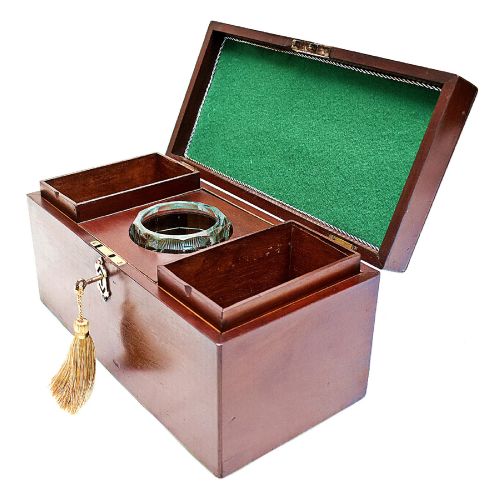
A victorian mahogany caddy brings domestic order through timber compartments designed to hold precious dry leaf.
Victorian Mahogany Caddy
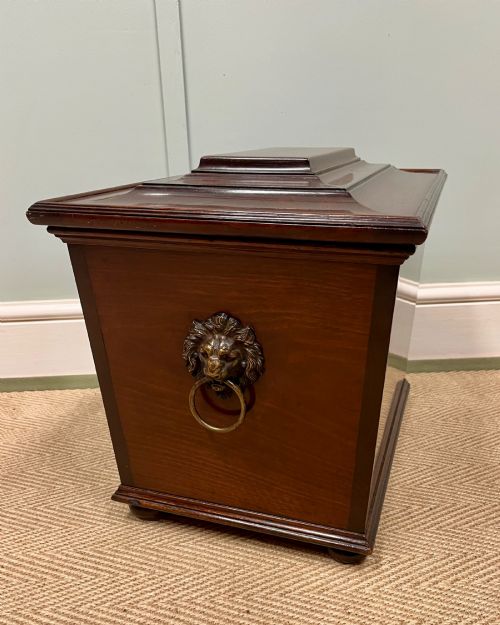
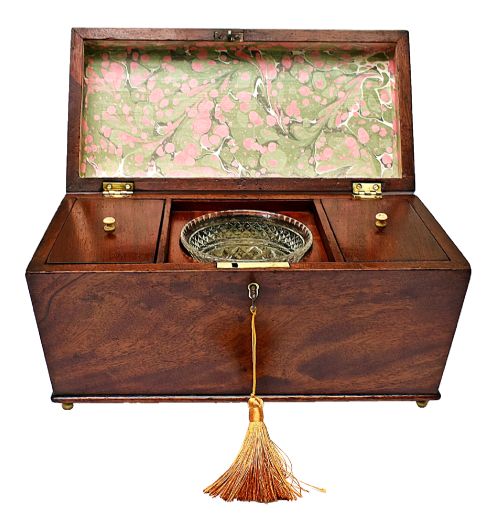
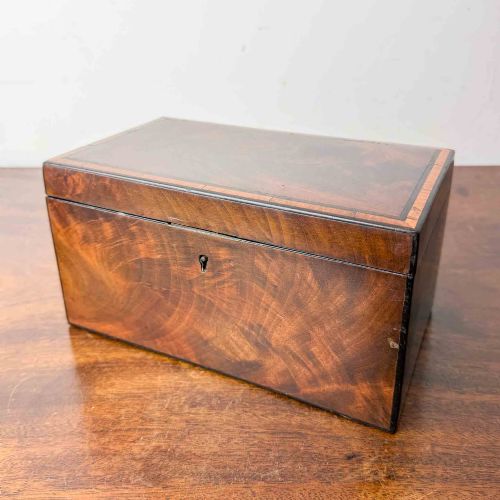
A victorian mahogany caddy is primarily a tea caddy, taking rectangular, sarcophagus, dome, or miniature forms alongside double compartments and chest of drawers designs. The evidence shows these pieces span the nineteenth century, including early and mid-Victorian periods, alongside Georgian and Edwardian examples.
Beyond tea storage, the selections include related mahogany boxes and cellarettes, reflecting domestic storage habits of the period. Buyers most frequently meet sarcophagus and rectangular tea caddies fitted with mixing bowls and keys.
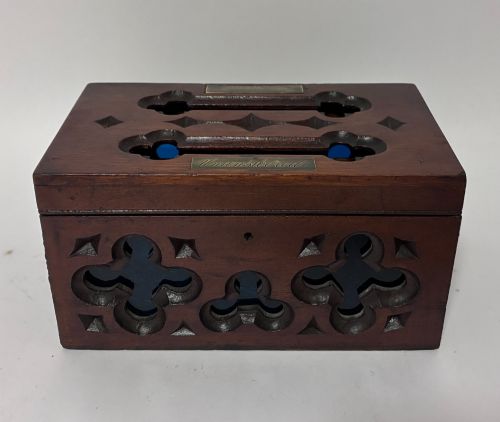
The style vocabulary encompasses Victorian, Gothic Revival, and Sheraton Revival, linking practical household containers to the prevailing decorative movements of the era.
Materials and Technique
Makers utilised mahogany as the primary structural timber, often selecting flame mahogany or burr maple veneers to create figured surfaces on lids and panels. Solid wood construction forms the core of these containers, joined with traditional cabinetmaking methods.
Brass fittings, including hinges, escutcheons, and carrying handles, provide functional hardware and contrast with the dark timber. Glass mixing bowls and key mechanisms frequently complete the interior layout of the containers.
Victorian Mahogany Caddy Retail Price Guide 2026
Typical asking prices for victorian mahogany caddy among the pieces listed under this phrase on Sellingantiques today, from the lower quarter to the upper quarter. They describe what is for sale here now, not the wider market.
Craftsmanship and Proportion
Quality rests in the selection of the timber grain, where matched flame mahogany veneers demonstrate superior cabinet work compared to plain planks. The crispness of carved details and the precise fit of lids and internal compartments mark the distinction between standard production and finer pieces.
Hardware integration also plays a role, with flush-fitting brasses and original locking mechanisms indicating careful execution by the maker.
Freemans of Norwich·Gillows
The Victorian Mahogany Caddy Glossary
- Sarcophagus form
- A box design featuring a steep-sided, domed lid tapering upward, echoing ancient monumental tombs. This shape gained popularity in the nineteenth century for larger tea caddies and cellarettes.
- Flame mahogany
- A distinct wood figure produced by cutting across the branch junctions of the mahogany tree, creating flamelike patterns. Cabinetmakers prized this grain for principal display surfaces.
- Mixing bowl
- A glass vessel housed centrally inside a tea caddy, used for blending different teas or holding sugar. These bowls are frequently removable.
Victorian Mahogany Caddy: Frequently Asked Questions
What is inside a tea caddy?
Tea caddies generally contain lidded compartments intended to separate different varieties of tea leaf safely.
Many examples also incorporate a central glass mixing bowl alongside space for a key and storage sections.
How do I date a caddy?
Dating relies on observing structural forms, such as the sarcophagus shape popular in the early nineteenth century, and timber choices like flame mahogany veneers.
Hardware styles and the presence of specific interior fittings further help narrow the period of manufacture.
Were these caddies locked?
Tea was an expensive commodity in the nineteenth century, making security essential for domestic households.
Consequently, most caddies were fitted with functional brass locks and supplied with keys to restrict access.
How do I care for mahogany?
Mahogany surfaces require stable environmental conditions away from direct heat sources and strong sunlight to prevent timber movement.
Periodic dusting with a soft cloth maintains the polished finish without damaging the antique wood.