
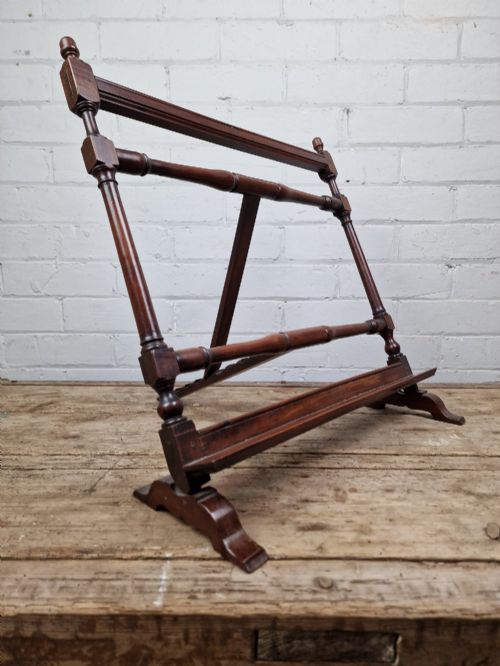

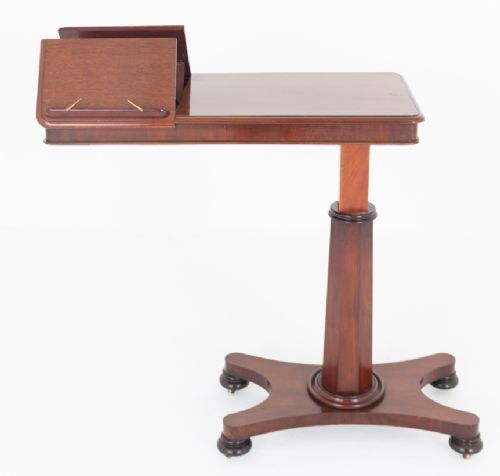

Victorian Mahogany Book Table
When you search for a victorian mahogany book table, you enter a world of practical nineteenth-century reading stands, revolving bookcases, and multi-functional study pieces built to organise volumes close at hand.
Victorian Mahogany Book Table
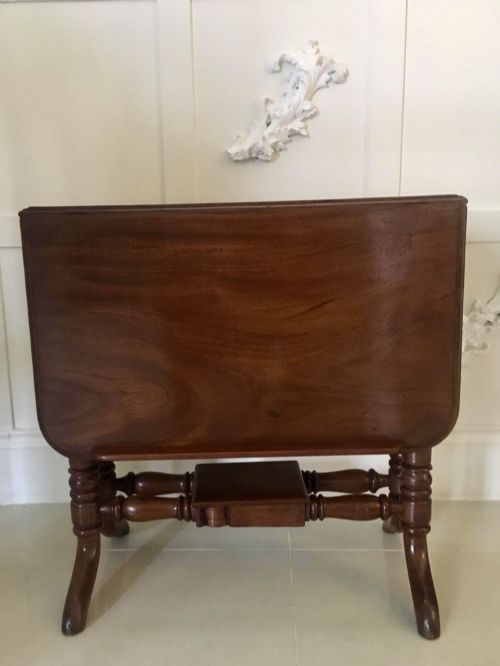
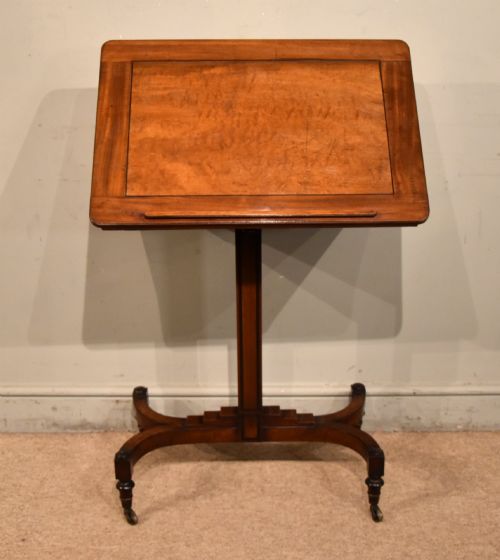
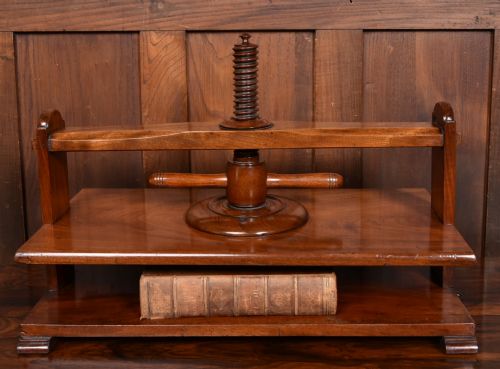
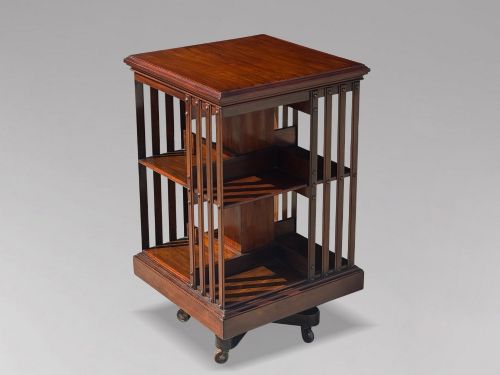
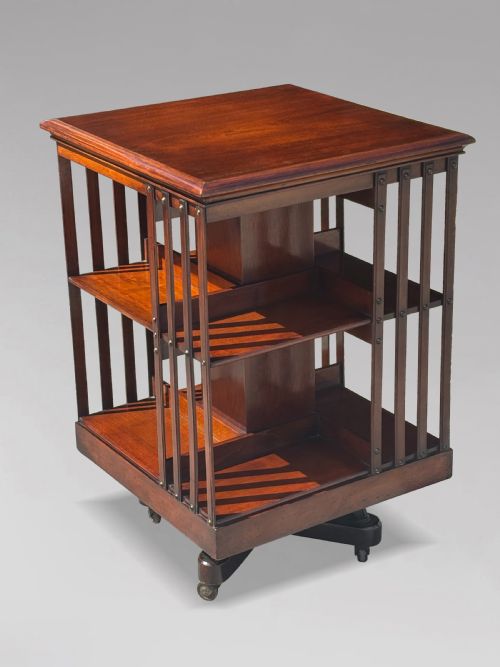
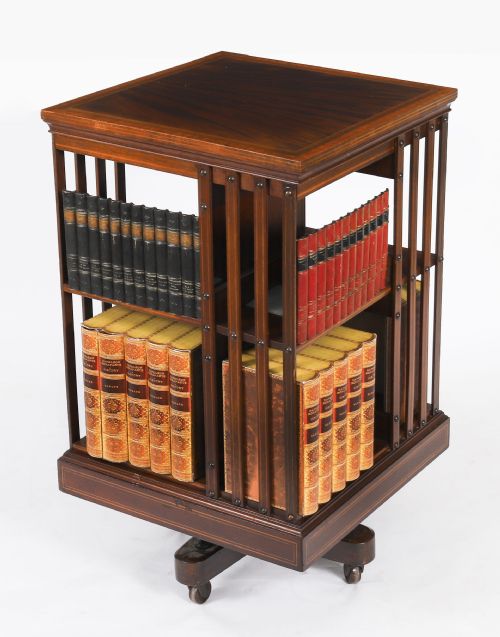
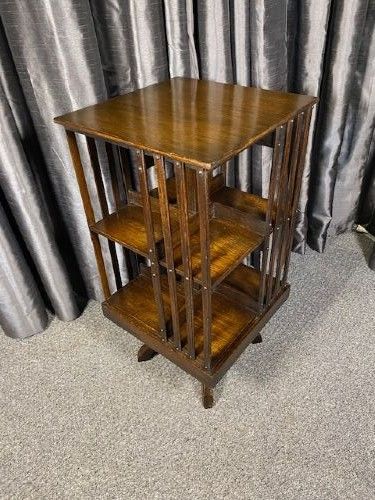
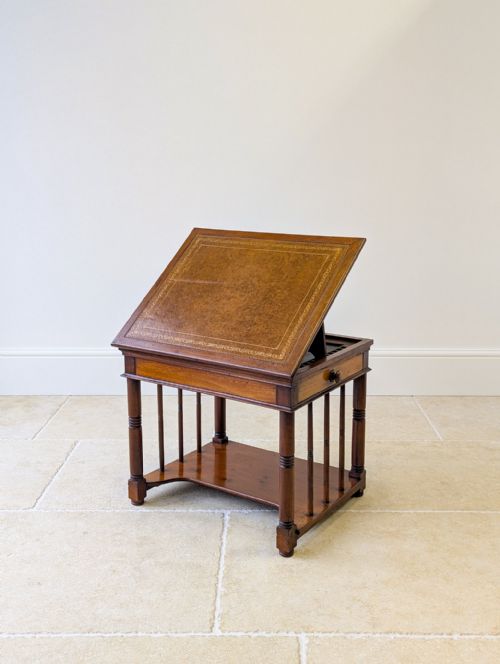
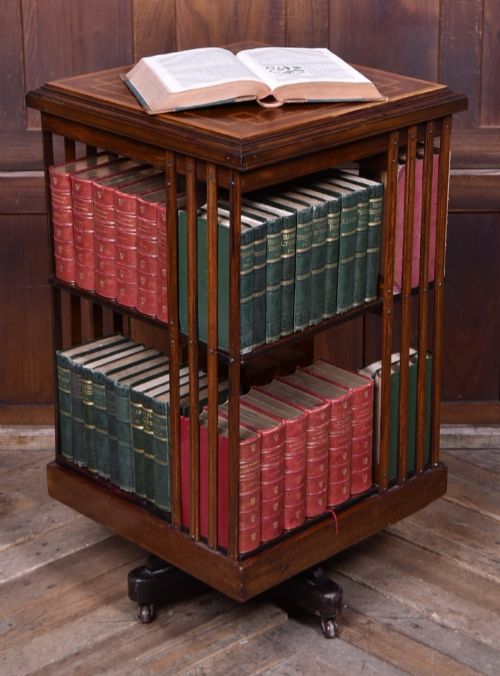
A victorian mahogany book table encompasses several functional forms designed for domestic study, libraries, and sitting rooms during the nineteenth century. Buyers searching this phrase commonly encounter revolving bookcases, table-top book rests, and chairside reading tables that combine surface space with compartments for volumes.
The pieces appearing on this page span the Victorian and Edwardian eras, with notable examples stretching back to Regency and William IV periods through to the early twentieth century. Makers and manufacturers adapted these designs into compact table-top units, multi-tiered revolving stands, and adjustable reading tables suited to the Victorian parlour.
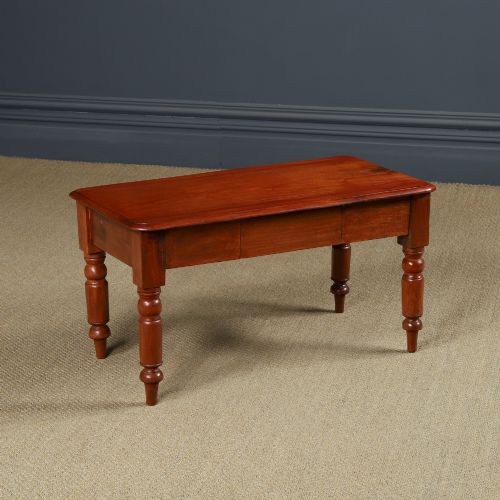
Originating primarily from English workshops, these items reflect the era's demand for adaptable furniture that accommodated heavy ledgers, music scores, and bound novels. Whether configured as a low occasional table with a book trough or a towering revolving tier, each variation serves the dual purpose of display and storage.
Materials and construction
Makers relied heavily on dense mahogany timbers, often enhanced by flame mahogany veneers or subtle satinwood inlay to create rich grain patterns across tabletops and shelves. Structural elements frequently incorporated secondary timbers such as oak, while brass fittings, cast iron ratchets, and leather inserts added mechanical utility and tactile contrast.
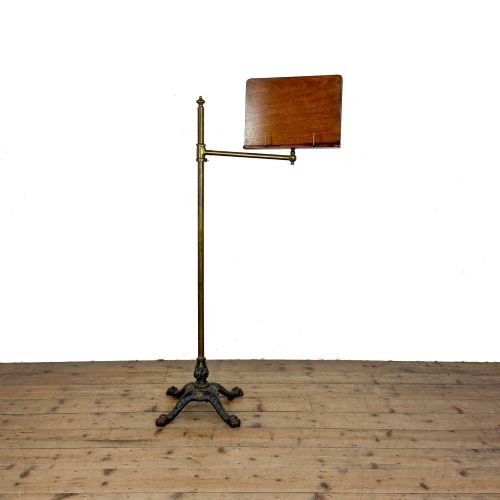
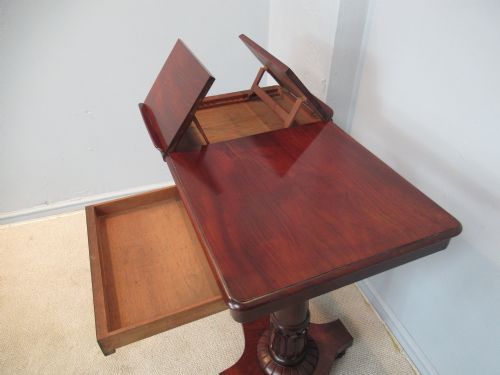
Joinery techniques prioritised durability to support the considerable weight of bound books, utilising solid framing for revolving mechanisms and adjustable reading ratchets. Metal components such as brass brackets and patent mechanisms by makers like Carter allowed reading slopes and book rests to tilt and lock securely at various angles.
Listings feature mahogany, brass, cast iron, and satinwood across Victorian, Edwardian, and Regency styles.
Assessing craftsmanship and execution
Quality in these pieces rests upon the precision of the mechanics, particularly in adjustable reading stands and revolving book tables that rely on smooth, reliable movement. Superior examples feature robust internal pivots and finely cast brass components that operate without slack.
The selection of timber significantly distinguishes tiers of quality, with choice cuts of flame mahogany and precise inlay work elevating a standard utility piece into a refined piece of library furniture. Fine cabinet-making is further evidenced by tight joinery, unwarped revolving tiers, and well-preserved original finishes.
Maple & Co·Swann & Millican·Morris and Co
The Victorian Mahogany Book Table Glossary
- Revolving bookcase
- A freestanding tiered bookcase mounted on a low cruciform base with a hidden ball-bearing or spindle pivot, allowing it to spin smoothly.
- Reading table
- A specialised occasional table featuring an adjustable or tilting top designed to support books, folios, or music sheets at a comfortable viewing angle.
- Campaign table
- Portable furniture designed for easy dismantling or folding, featuring brass corners and carrying handles suited for travel.
- Whatnot
- An open-shelving piece of furniture comprising multiple tiers supported by slender columns or uprights, used for displaying books and ornaments.
- Satinwood
- A pale, hard exotic timber native to India and Ceylon, frequently utilised for contrasting stringing, banding, and inlay work on darker mahogany surfaces.
Victorian Mahogany Book Table: Frequently Asked Questions
How do revolving book tables work?
These tables utilise a concealed central pivot mechanism fitted with ball bearings or wooden spindles beneath the lower tier. This engineering allows several tiers of books to spin freely within a compact footprint.
Cabinet-makers balanced the weight distribution carefully so the entire structure remained stable even when fully loaded with heavy volumes on one side.
Were these tables used in offices or homes?
They served primarily in domestic settings such as libraries, studies, and drawing rooms where books and periodicals were read daily. Gentlemen and scholars placed chairside reading tables next to armchairs for convenient access to reference materials.
Later Victorian models also appeared in music rooms to hold scores alongside instruments.
How do I adjust the reading slope?
Adjustable stands typically incorporate a brass ratchet or folding strut underneath the book rest. Lifting the surface engages the support arm into successive notches to secure the desired angle.
Patented designs by makers such as Carter introduced mechanical levers to simplify height and tilt adjustments.
How do I tell a Victorian table from an Edwardian one?
Victorian pieces generally date from the mid-to-late nineteenth century and lean towards heavier timber scantlings and rich, dark mahogany finishes. Edwardian examples, appearing around nineteen hundred, often showcase lighter framing, brighter satinwood inlay, and sometimes simpler geometric lines.
Patent stamps and construction methods inside the revolving mechanisms also help narrow down the production decade.