




Victorian Lectern Table
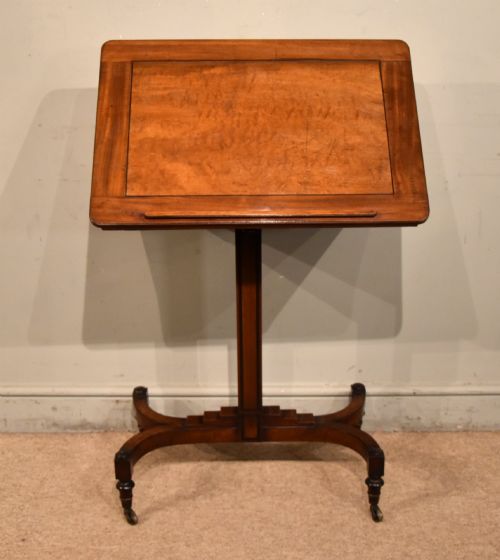
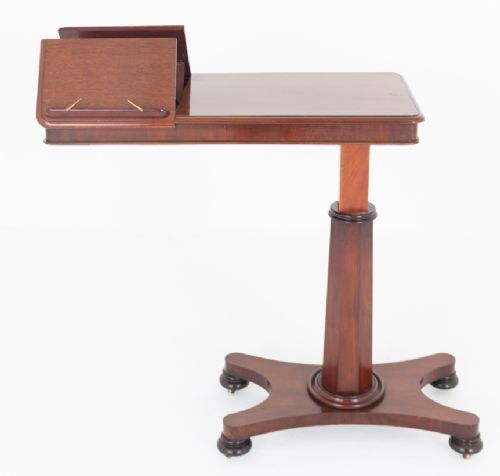
A victorian lectern table offers adjustable height and a tilting book rest, designed for reading, writing, and holding sheet music.
Victorian Lectern Table
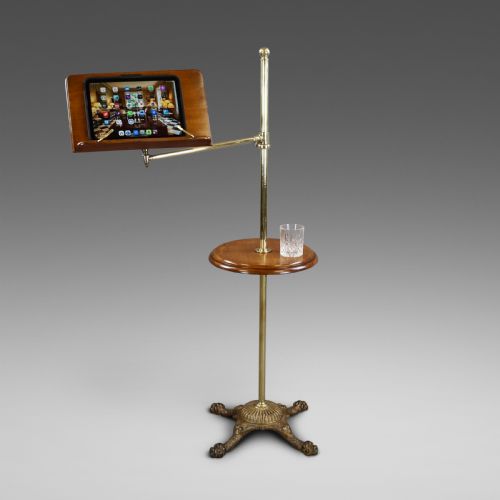
A victorian lectern table combines a portable book rest with a sturdy support, appearing in forms such as reading stands, music stands, and occasional tables. These pieces serve domestic studies, libraries, and music rooms by positioning texts at comfortable angles.
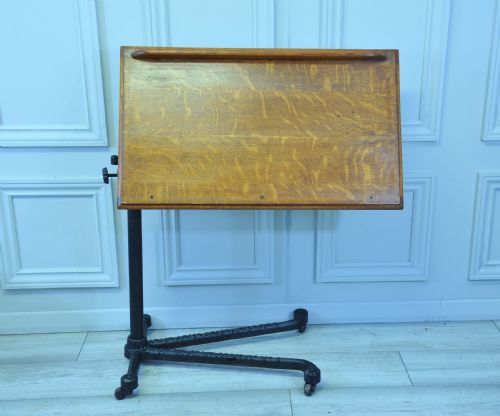
Mahogany and oak dominate the selection, often featuring adjustable mechanisms for height and slope. Pieces frequently cross over into campaign, Gothic, and industrial styles, reflecting the diverse utility required by nineteenth-century households.
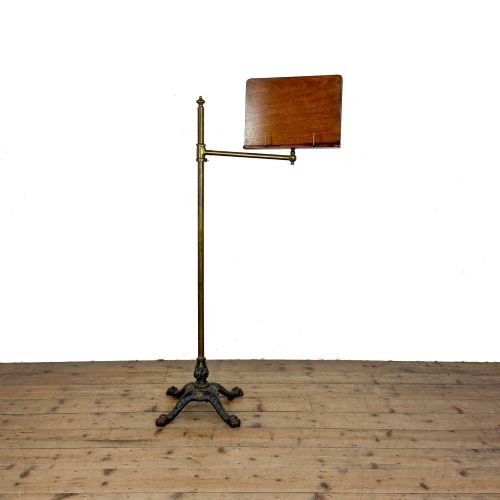
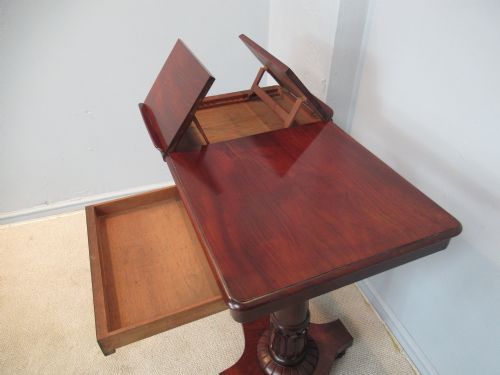
Buyers will encounter standard floor-standing reading tables alongside metamorphic designs and specialised bed tables. The selection ranges from simple walnut and whitewood book stands to heavy cast iron and brass institutional lecterns.
Materials and construction
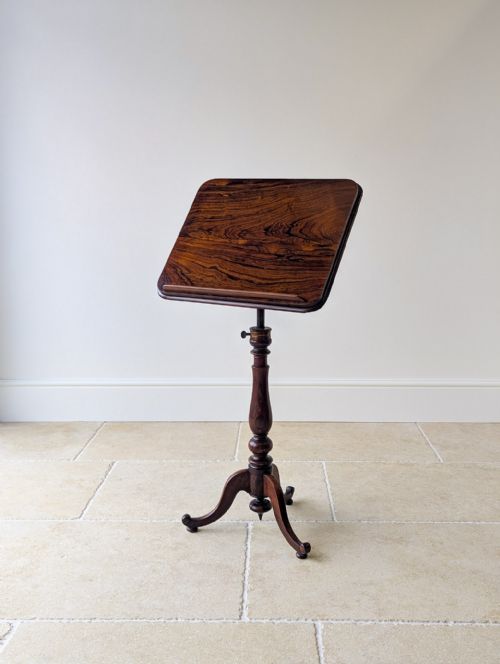
Cabinetmakers utilised dense hardwoods like mahogany, rosewood, and oak to build the frames and adjustable surfaces of a victorian lectern table. Inlay, brass fittings, and carved details accent the primary timber structures.
Metal components, including cast iron and brass, provide the mechanical strength needed for adjustable reading stands and pivoting book rests. Patent mechanisms allow users to alter the height and tilt of the table top smoothly.
Listings feature mahogany, rosewood, oak, teak, brass, and cast iron across Victorian, Regency, and Edwardian periods.
Quality variations
The sophistication of the adjustable mechanism distinguishes standard models from superior examples by makers like John Carter or Leveson and Sons. Smooth movement in the brass screws, ratchets, and iron risers indicates high standards of period engineering.
The choice of timber and the execution of carved or inlaid details separate basic utility items from fine drawing-room furniture. Dense, well-figured mahogany and rosewood with tight joinery represent the upper tier of surviving pieces.
Carters Of London·John Carter·Leveson And Sons
The Victorian Lectern Table Glossary
- Lectern
- A reading desk with a sloped top designed to hold a book or sheet music at a readable height. These often feature adjustable ratchets to alter the angle of the surface.
- Metamorphic
- Furniture designed to transform from one form or function into another, such as a side table that converts into a reading stand. This ingenious construction characterises many nineteenth-century pieces.
- Campaign
- Portable furniture built for travel, typically featuring brass corners, recessed handles, and folding legs. These pieces were constructed for mobility during the nineteenth century.
- Mauchline Ware
- Souvenir items made from whitewood and decorated with photographic transfers or tartan designs. These small pieces often include book stands and reading accessories.
- Ratchets
- Toothed metal mechanisms used to adjust and secure the angle of a book rest or table top. They allow the user to select multiple reading positions.
Victorian Lectern Table: Frequently Asked Questions
How do I adjust the height?
Most pieces utilise a central metal column with a screw mechanism or a notched ratchet system beneath the reading surface. Turning the key or loosening the collar allows the top to rise or lower to the desired position.
Users should support the weight of the table top while operating the adjustment mechanism to prevent sudden drops. Tightening the screw securely locks the height in place for reading or writing.
Were these used for music?
Many examples function as combined music stands and reading tables, holding sheet music alongside books and writing materials. The adjustable tilt accommodates scores for musicians and vocalists.
Dedicated music stands often include ledges or page holders to keep open sheets secure. These versatile tables served multiple domestic purposes in the Victorian parlour.
How do I clean the wood?
Maintain timber surfaces by applying a traditional beeswax polish with a soft cloth and buffing gently. Avoid modern silicone sprays or excessive moisture, which can damage nineteenth-century polishes.
Regular dusting prevents particle accumulation in carved details and mechanical joints. Periodic waxing preserves the natural lustre of mahogany, rosewood, and oak.
Can I use it as a desk?
Certain forms are built as writing tables with flat sections alongside the adjustable lectern top. These provide adequate space for notebooks and writing implements.
When using the tilting section for writing, ensure the ratchet is fully locked into position. The flat margins accommodate inkwells and stationery while the slope holds the reading material.