







Pedestal Lectern Stand
These pedestal lectern stand pieces are practical reading and music supports designed for studies and libraries.
Pedestal Lectern Stand
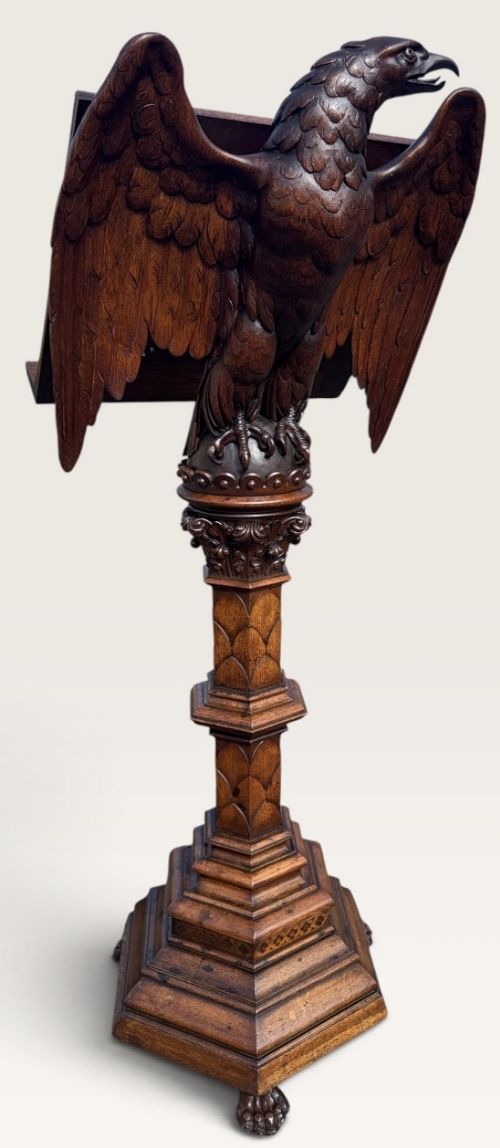
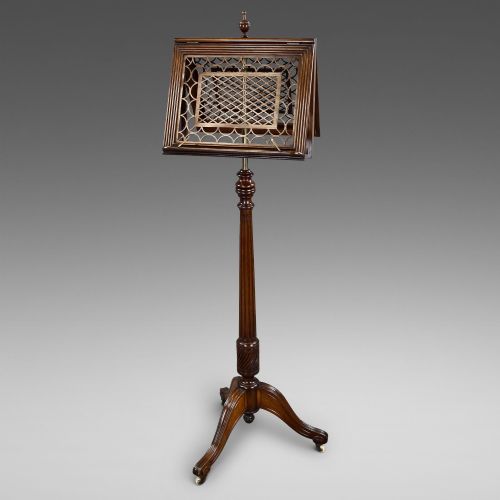
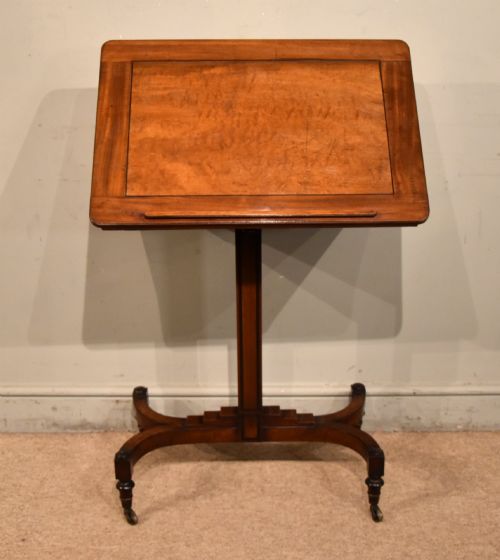
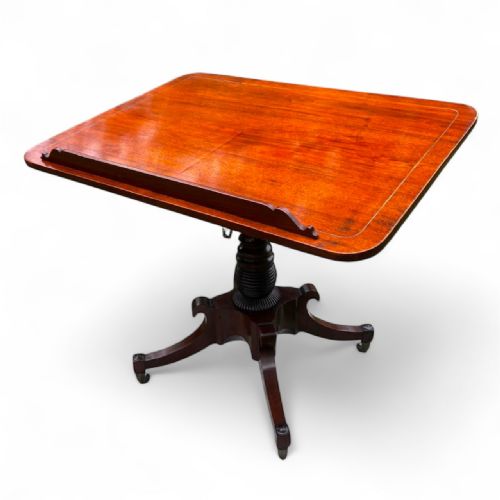
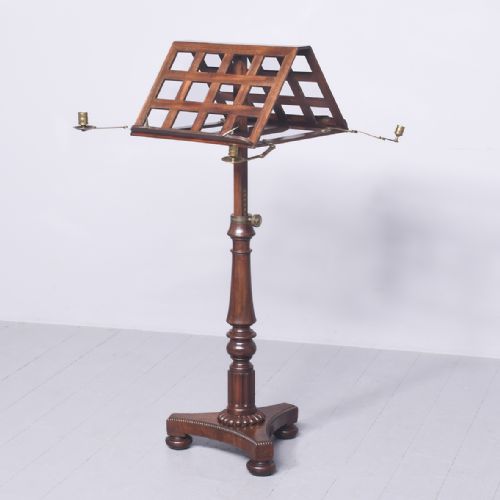
When you search for pedestal lectern stand, you encounter reading furniture designed to hold books, sheets of music, and papers at a convenient angle for study or performance. These pieces range from compact music stands and duet stands to adjustable reading tables and occasional tables with book rests.
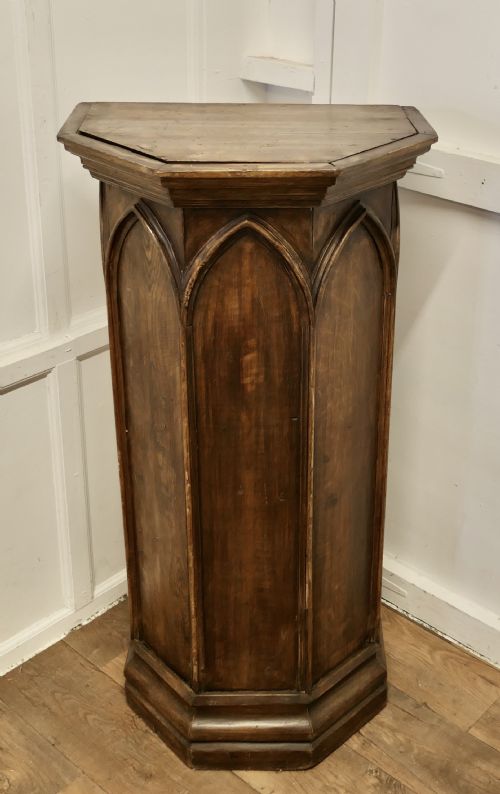
The selections available span periods from the George III and Regency eras through the Victorian, Edwardian, and early twentieth-century decades. Mahogany and rosewood appear frequently alongside oak, teak, pine, and ebonised wood, reflecting diverse craftsmanship from classical designs to Gothic Revival and Oriental influences.
How They Were Made
Cabinetmakers constructed these supports primarily from hardwoods such as mahogany and rosewood, frequently incorporating brass fittings for adjustable mechanisms, hinges, and reading ledges. Selected examples feature intricate carving, fretwork, and inlay work to enhance their appearance in a room.
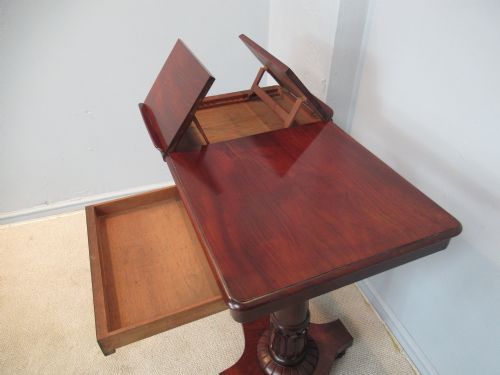
Structural engineering focused on mobility and adjustment, employing central columns or pedestals supported by stable bases, sometimes with folding frames or metamorphic actions that transform a flat table into an inclined reading surface.
Listings feature woods such as mahogany, rosewood, teak, and oak across Victorian, Regency, and Edwardian periods.
What Varies in Quality
The distinction between standard utility items and finer examples lies in the selection of timber, the crispness of carved or fretted details, and the sophistication of the mechanical adjustment mechanisms. Superior pieces utilise dense, well-figured mahogany or rosewood with robust brass hardware that operates smoothly.
Proportion and stability also separate grades of manufacture, as better-designed stands balance heavy books securely at various heights and angles without wobble or strain on the central pedestal joint.
The Pedestal Lectern Stand Glossary
- Pedestal
- A central vertical support column carrying a table top, desk, or reading slope. It typically stands on a tripod or platform base.
- Lectern
- A reading desk with a slanted top, designed to support a book or manuscript at a comfortable height for a standing or seated reader.
- Duet Stand
- A music or reading stand wide enough to accommodate two people reading simultaneously from the same open score or book.
- Metamorphic
- Describing furniture designed to transform from one form or function, such as a table, into another, such as a reading desk.
Pedestal Lectern Stand: Frequently Asked Questions
What is a pedestal lectern stand used for?
These pieces serve primarily as adjustable supports for reading books, consulting manuscripts, or holding sheet music during practice and performance.
Their adjustable heights and sloped surfaces allow users to read comfortably while seated or standing in libraries, studies, and music rooms.
How do I identify a Regency period stand?
Regency stands typically feature classical proportions, dark mahogany timbers, brass inlay work, and robust pedestal bases with splayed legs.
They often incorporate adjustable reading slopes or brass ratchets characteristic of furniture production from the early nineteenth century.
Are these stands suitable for modern daily use?
Many of these pieces remain fully functional for holding heavy books, tablets, or sheet music in contemporary homes and studies.
Their mechanical adjustments continue to operate, though care should be taken with older brass ratchets and folding mechanisms.
What materials are common in these stands?
Mahogany and rosewood dominate the selection, often accompanied by brass fittings, cast iron components, and occasional oak or pine structures.
Some examples also feature ebonised wood surfaces or intricate carved details reflecting Victorian and Gothic Revival tastes.