

Victorian Mahogany Bedside Cabinet
When you search for a victorian mahogany bedside cabinet, you are looking at practical nineteenth-century bedroom storage built in rich timber.
Victorian Mahogany Bedside Cabinet
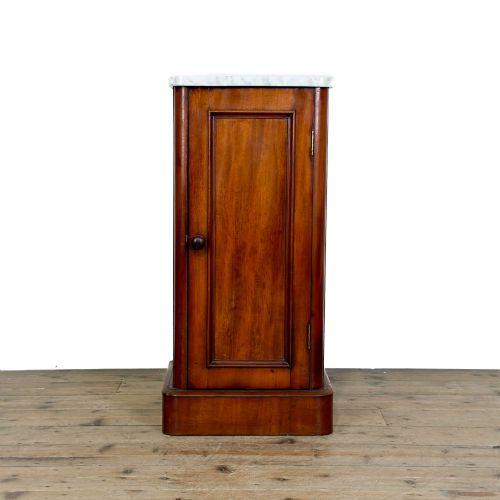
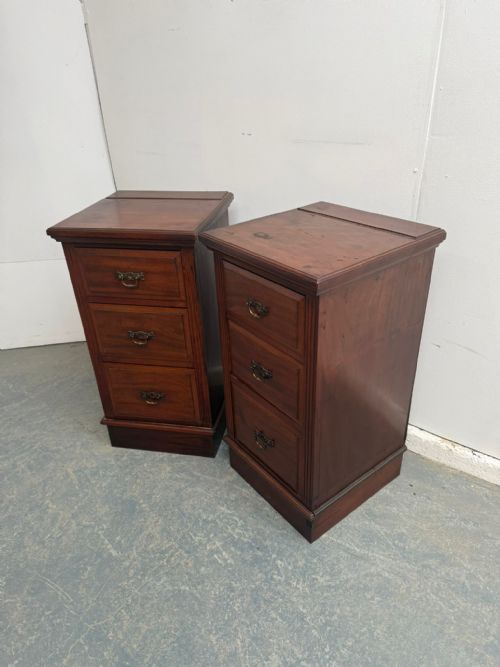
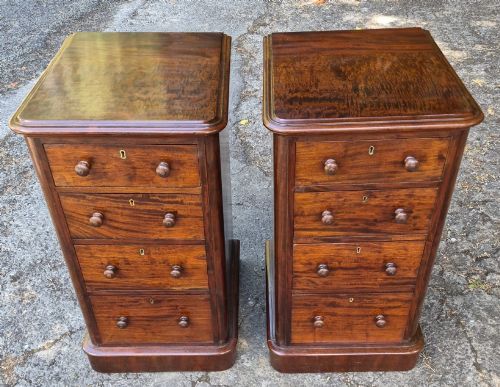
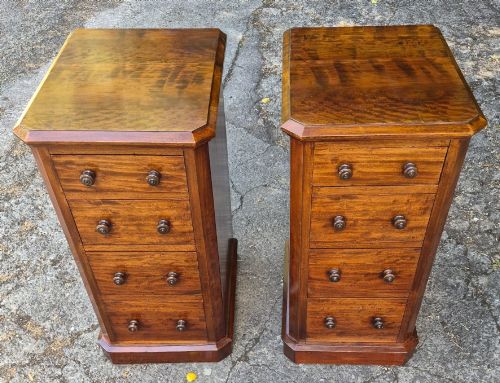
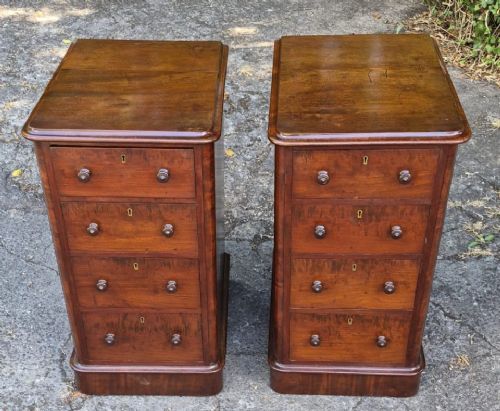
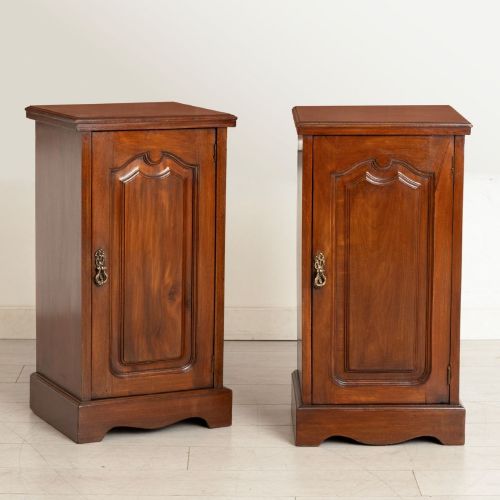
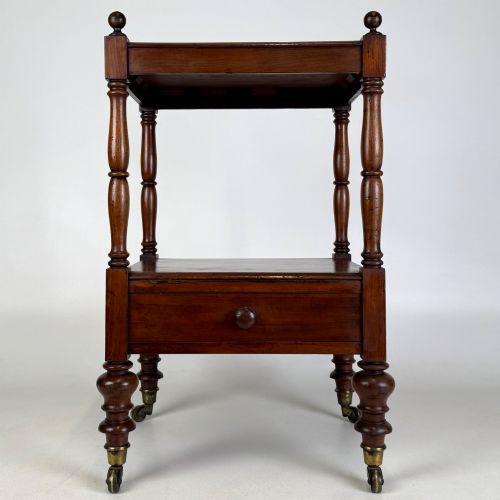
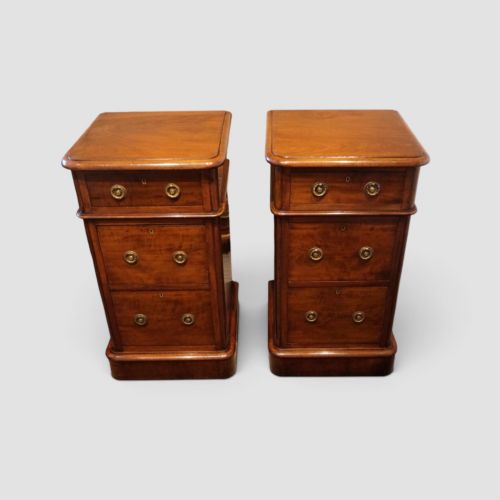
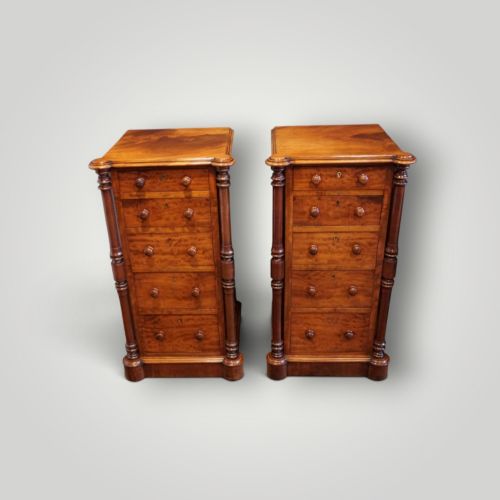
A victorian mahogany bedside cabinet encompasses various practical nineteenth-century forms designed to sit beside a bed. The selection includes traditional pot cupboards, small bedside chests of drawers, and open nightstands originating primarily from the Victorian period alongside broader nineteenth-century dates.
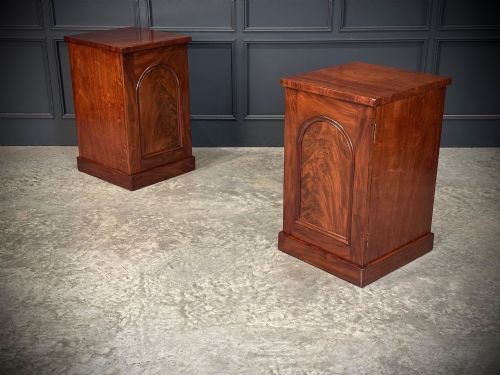
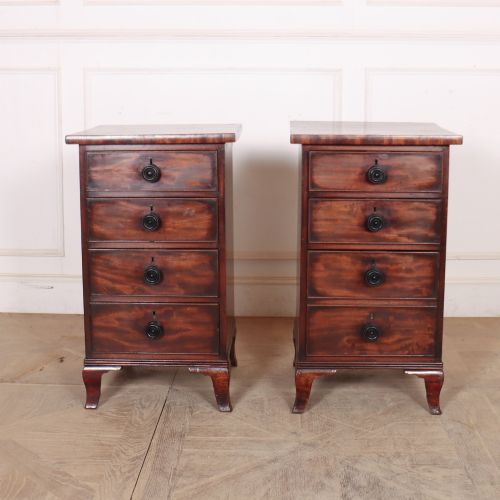
Buyers frequently encounter pairs of matching cabinets alongside single examples. The common configurations range from simple single-door cupboards to three-drawer chests and circular designs reflecting periods like the Georgian revival and late Victorian eras.
How they were made
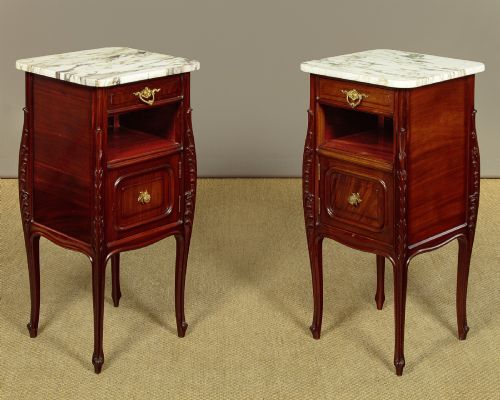
The pieces utilise solid mahogany and flame mahogany veneer applied to sturdy carcases. Workshops frequently incorporated contrasting materials, mounting marble tops on stone-inset surfaces and adding brass handles or hinges to doors and drawers.
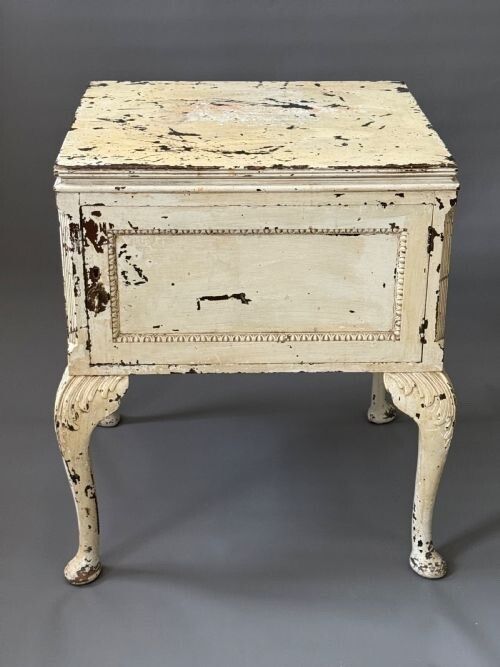
Decorative elements involve painted finishes, glass panels, leather inserts, and marquetry inlay work. Cabinetmakers shaped the timber into rectangular, bow fronted, and serpentine profiles.
Listings feature mahogany, brass, marble, flame mahogany veneer, and leather across pieces dated from the eighteen-fifties to nineteen-hundred.
What varies in quality
Selection of timber grain dictates much of the visual hierarchy, with figured flame mahogany veneer commanding higher regard than plain stock. The crispness of carved details, precise dovetailing on drawer joints, and the integration of marquetry inlay distinguish superior examples.
Fittings such as original marble slabs, brass hardware, and intact panelled doors elevate the status of a piece. The presence of maker stamps or labels from established firms also influences distinction.
Warings Liverpool·Howard And Sons·Shoolbred And Co
The Victorian Mahogany Bedside Cabinet Glossary
- Pot cupboard
- A small enclosed bedside cabinet originally designed to house a chamber pot. These practical units feature a single door opening to a shelved interior.
- Flame mahogany
- A veneer cut from the fork of the mahogany tree where the branch meets the trunk. This method produces a distinctive swirling, flame-like grain pattern highly prized by nineteenth-century cabinetmakers.
- Wellington chest
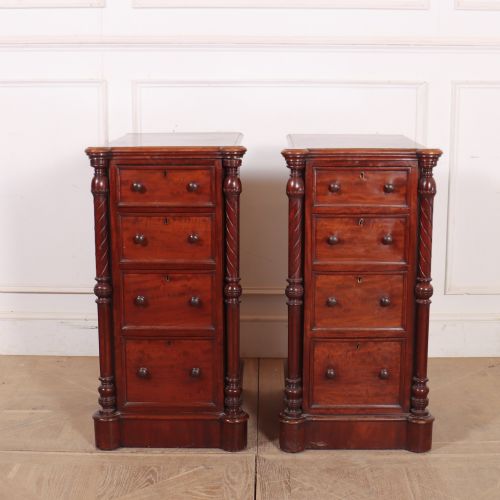
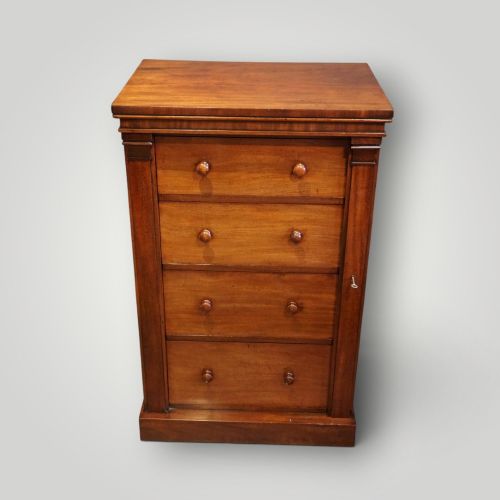
- A tall, narrow chest of drawers secured by a hinged locking stile on one side. Named after the Duke of Wellington, these vertical units appear occasionally as bedside pieces.
- Marquetry
- The art of applying small pieces of veneer to a structure to form decorative patterns. Craftsmen utilised various exotic hardwoods to create floral or geometric motifs on cabinet doors.
- Serpentine
- A furniture front curved with a convex centre flanked by concave ends. This undulating shape requires advanced woodworking skill.
Victorian Mahogany Bedside Cabinet: Frequently Asked Questions
What is a pot cupboard?
A pot cupboard is a compact nineteenth-century bedside cabinet built with a single door enclosing a small shelf space. These pieces were originally designed to hold a chamber pot before modern plumbing became standard.
Today, buyers utilise these enclosed cabinets as convenient lamp tables or general bedside storage units that hide clutter out of sight.
Are bedside cabinets usually found in pairs?
Many nineteenth-century bedside cabinets survive as matched pairs intended to flank a larger double bed. Finding matching pairs requires careful alignment of timber grain, height, and hardware style.
Single pieces also appear frequently in listings, serving well beside single beds or as standalone accent tables in smaller rooms.
What is flame mahogany?
Flame mahogany is a decorative veneer sliced from the junction where a tree branch joins the main trunk. This specific cut yields a dramatic, rippling flame pattern across the timber surface.
Cabinetmakers reserved this striking grain for the primary visual areas of the cabinet, such as drawer fronts and door panels.
How do I care for a mahogany cabinet?
Mahogany furniture benefits from simple dusting with a dry cloth and occasional application of traditional wax polish to nourish the wood. Keeping the timber away from direct heat sources prevents the mahogany and its veneers from drying out.
Marble tops require prompt wiping of spills to protect the stone surface from staining over time.