


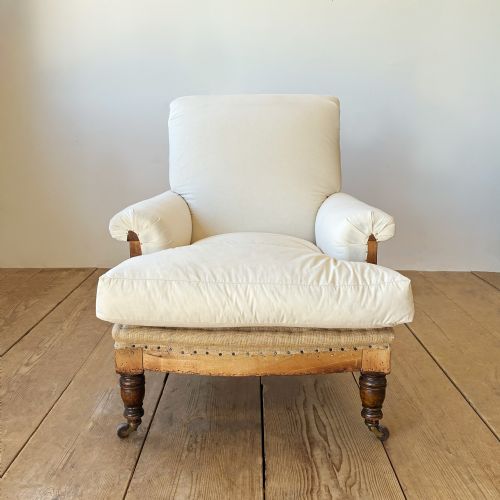

Victorian Low Lounge Seat
A victorian low lounge seat offers deep, relaxed seating rooted in nineteenth-century comfort.
Victorian Low Lounge Seat
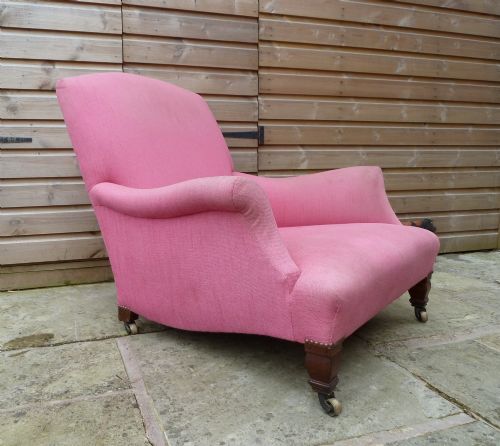
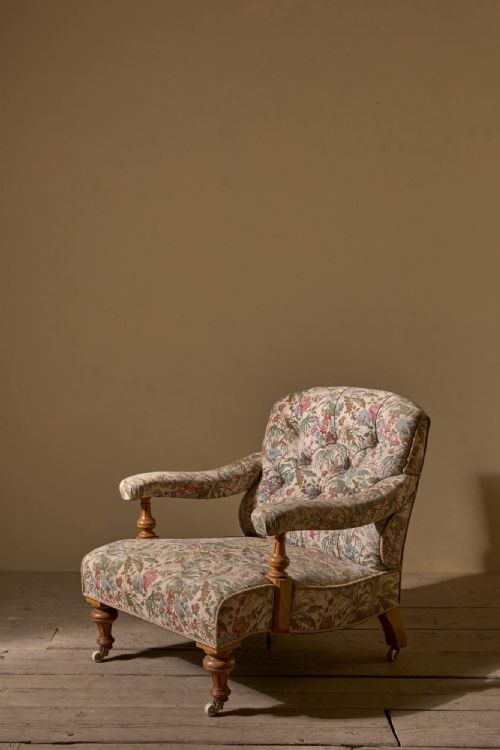
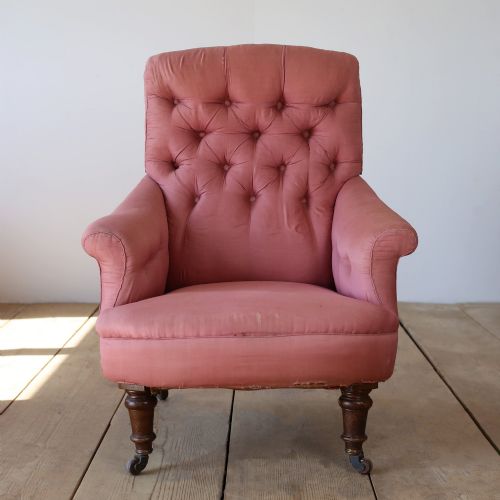
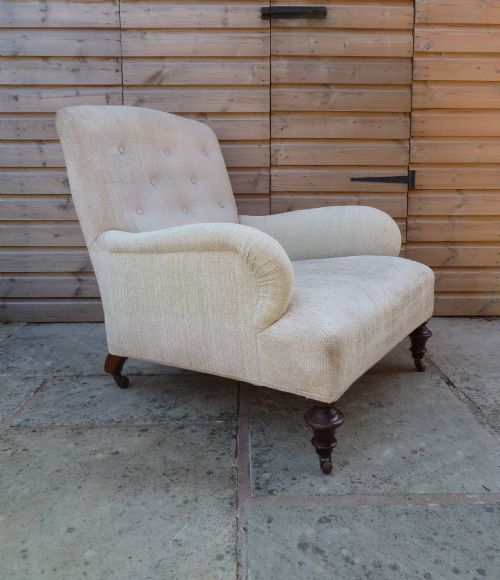
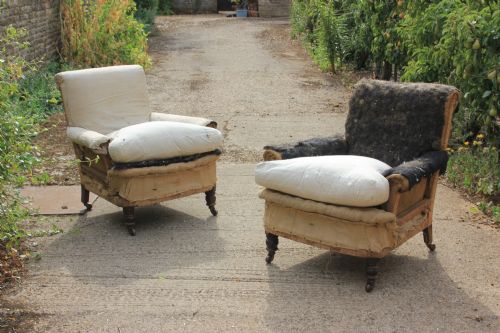
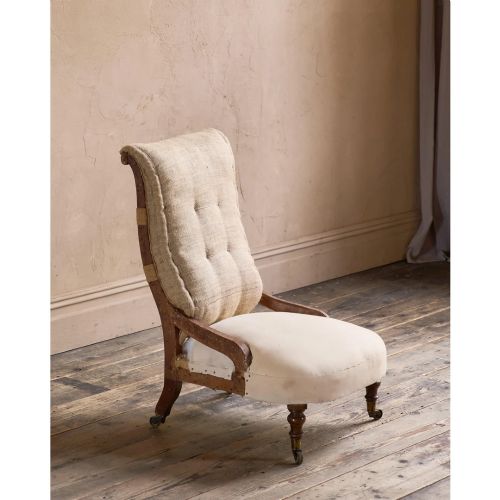
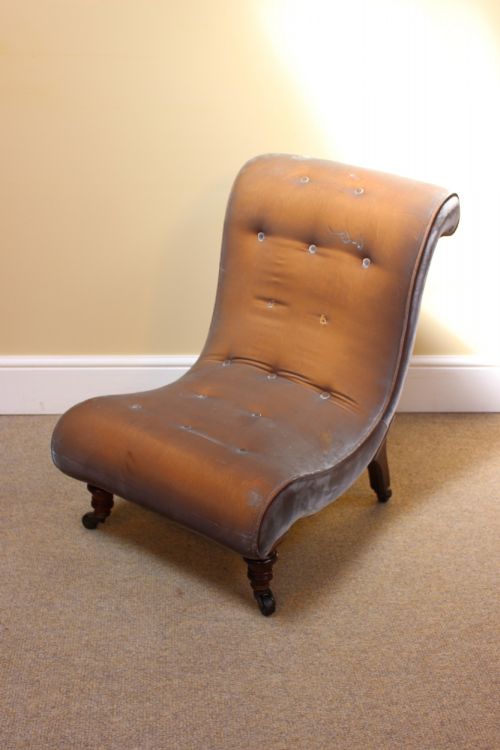
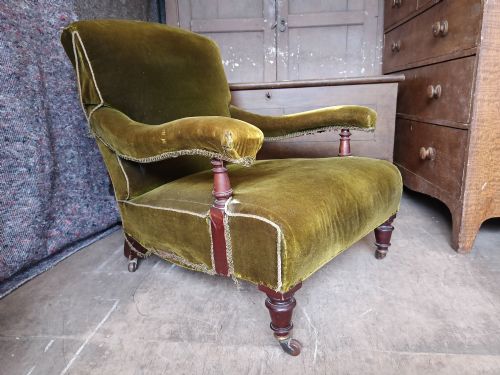
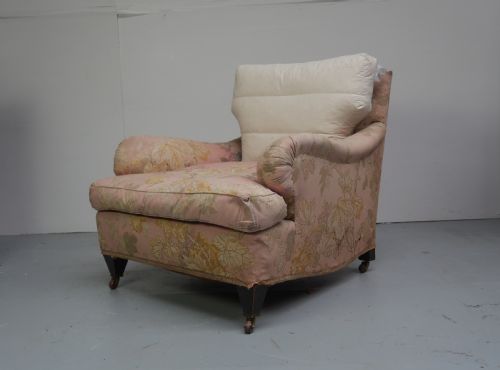
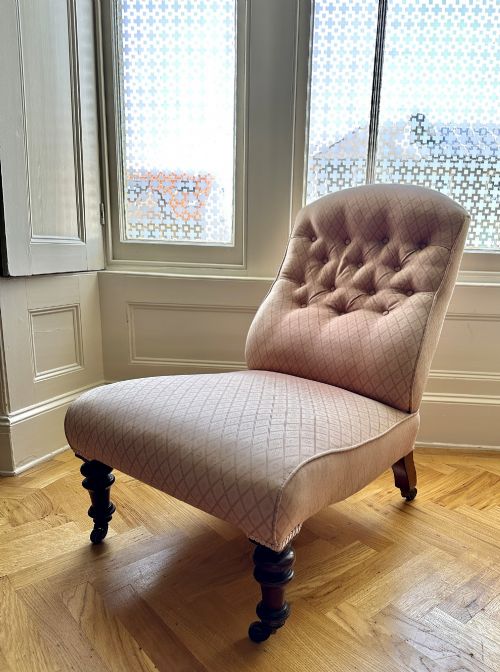
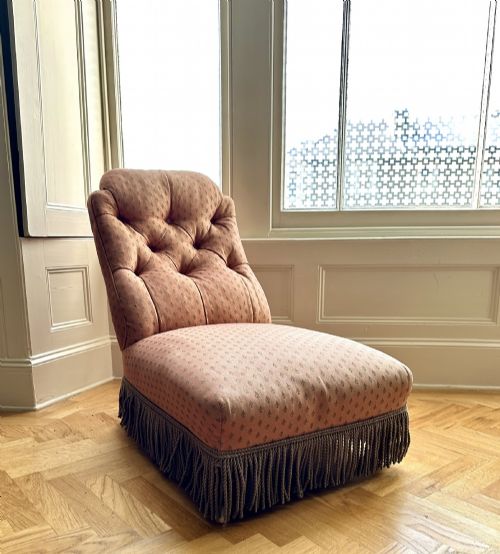
A victorian low lounge seat encompasses low-slung armchairs, button-back nursing chairs, and upholstered bedroom pieces designed for nineteenth-century parlours and chambers. These forms sit close to the floor, prioritising a relaxed posture over formal upright seating.
The selections available here span standard nineteenth-century periods, Victorian years, and Edwardian dates, alongside specific workshop influences such as Howard and Sons style or English Country House aesthetics.
Makers and makers' styles range from plain button-back slipper chairs in calico to deep-seated club armchairs upholstered in velvet or ticking. Walnut, mahogany, and rosewood frames often appear beneath traditional upholstery.
Materials and construction
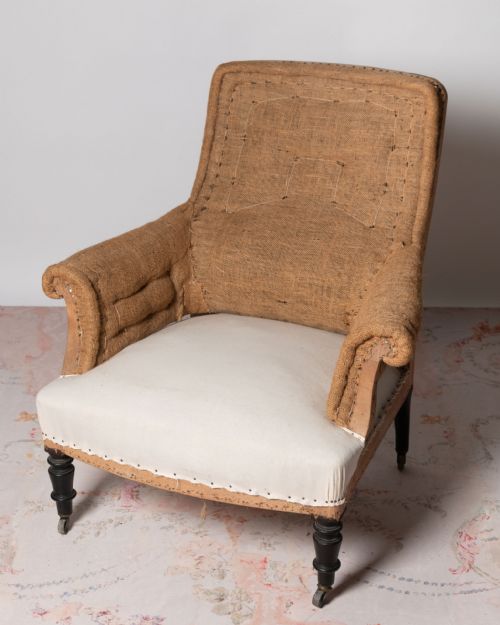
Carpenters built the structural frames using hardwoods like mahogany, walnut, and rosewood, frequently incorporating carved wooden details or exposed turned legs fitted with castors.
Upholsterers built up the deep seats and backs using traditional springs, stuffing, and horsehair, before finishing the pieces in velvet, leather, calico, fabric, or ticking.
Listings feature pieces spanning the 1850s to the Edwardian era, constructed from walnut, mahogany, and rosewood with fabric, velvet, and calico upholstery.
Assessing quality in upholstery and frames
Quality rests in the integrity of the underlying hardwood frame and the depth of the traditional upholstery. Firmer, more resilient springing and sturdy joinery separate superior examples from standard ones.
The refinement of carved wooden elements and the quality of the covering fabric, whether simple calico or fine velvet, mark the distinction between everyday chamber furniture and high-end country house seating.
Howard and Sons·Hampton and Sons
The Victorian Low Lounge Seat Glossary
- Slipper chair
- A low-seated upholstered chair traditionally used in bedrooms for dressing. These pieces sit close to the floor without arms.
- Nursing chair
- A low nineteenth-century chair designed with a supportive button back for comfort during infant care. They share the low profile of slipper chairs.
- Button back
- An upholstery technique where buttons are pulled deep into the padding to create a patterned tufted surface. This provides both decoration and structural tension.
- Calico
- A plain-woven cotton fabric used as a primary upholstery cover or as an under-layer before a final textile. It often appears on unrestored or loose-covered pieces.
- Castor
- A small wheel attached to the base of furniture legs for ease of movement. They are commonly found on nineteenth-century armchairs and low seats.
Victorian Low Lounge Seat: Frequently Asked Questions
What is a victorian low lounge seat used for?
These pieces were designed for relaxed sitting in nineteenth-century bedrooms, dressing rooms, and informal drawing rooms. Their low proportions allowed for a more casual posture compared to stiff dining or parlour chairs.
Today, they serve as comfortable low seating in modern living spaces, working well in bedrooms or reading corners where standard-height armchairs might overwhelm the room.
How do I identify a Victorian lounge seat?
Look for characteristic nineteenth-century proportions, including low seats, turned wooden legs, and traditional upholstery techniques like button tufting. Materials such as walnut, mahogany, and rosewood point directly to the period.
Many examples reflect specific styles like the deep-seated country house armchairs associated with Howard and Sons, or simpler slipper and nursing chair forms.
Where should I place a low lounge seat?
Because of their modest height and compact footprints, these seats fit naturally into bedrooms, dressing areas, and smaller sitting rooms. They pair well with low tables and reading lamps.
Avoid placing them alongside very tall, formal furniture, as the low profile works best when given breathing room to stand out as an accent piece.
How do I care for antique upholstery?
Protect the fabric by keeping the seat away from direct sunlight, which can fade delicate velvets, ticking, and cotton covers. Regular gentle vacuuming removes dust from button tufts and crevices.
Wooden frames benefit from occasional dusting with a dry cloth, avoiding harsh modern polishes that might damage nineteenth-century finishes.