

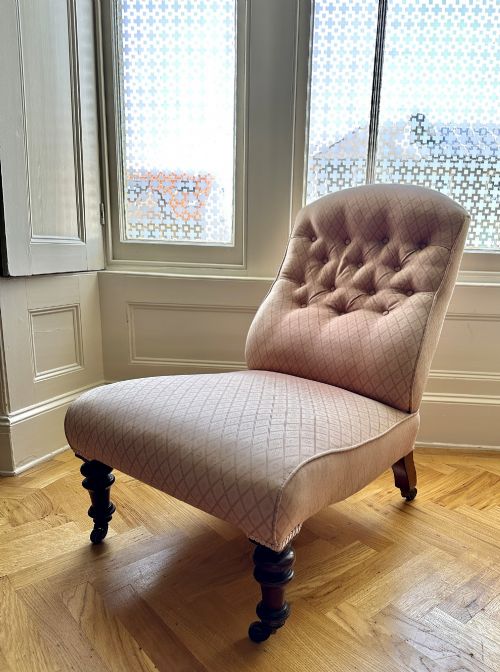

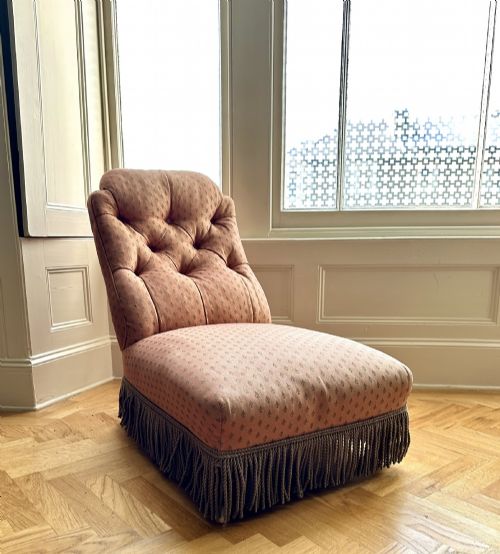
Victorian Low Lounge Chair
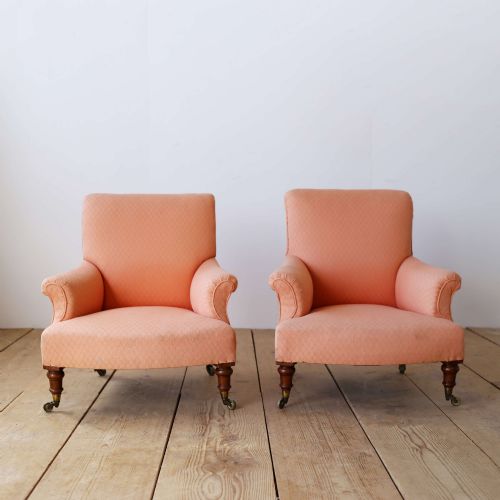
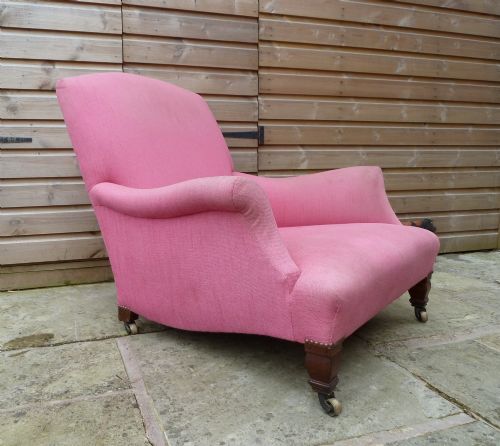
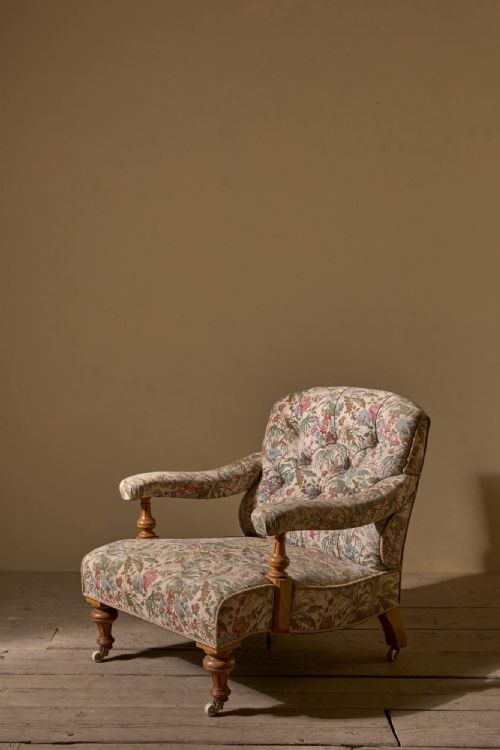
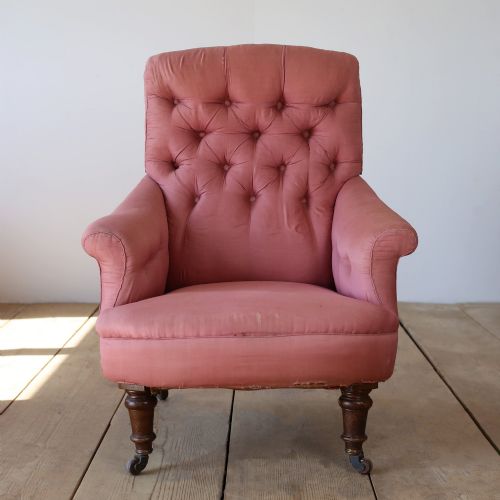
A victorian low lounge chair offers a deep, relaxed seat designed for comfort and ease.
Victorian Low Lounge Chair
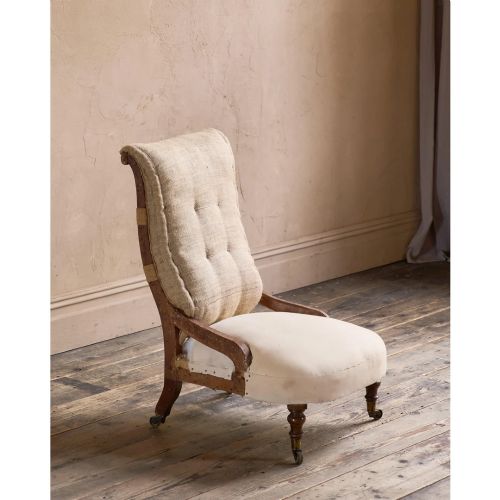
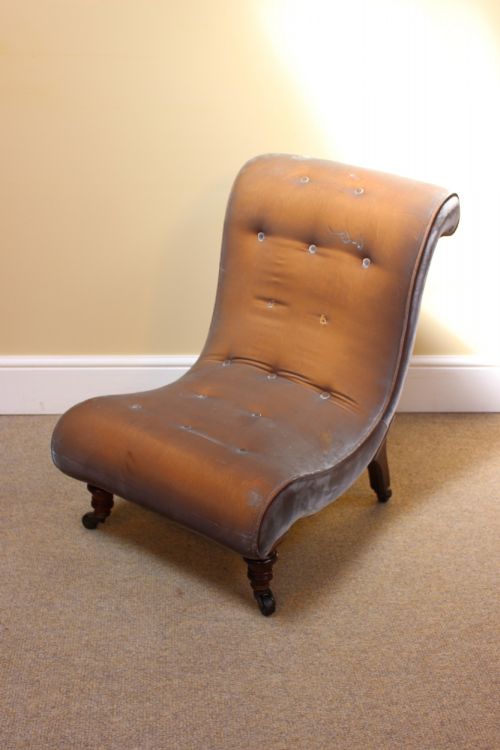
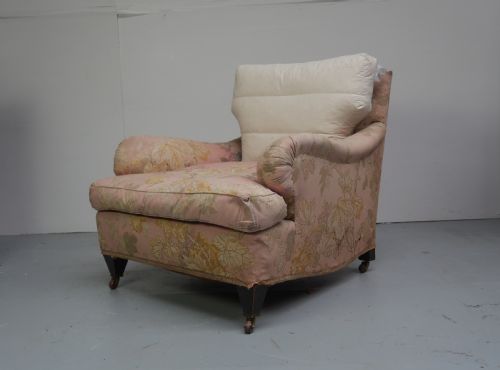
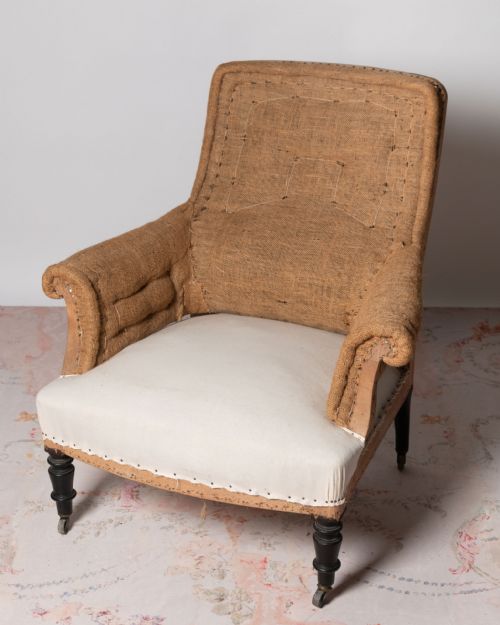
When you search for a victorian low lounge chair, you find a variety of nineteenth century seating designed for deep comfort and lower stature. The selections here span bedroom chairs, slipper chairs, nursing chairs, and robust club armchairs.
The English country house tradition heavily influences these forms, alongside distinct styles such as the Aesthetic Movement and Napoleon III. Many examples reflect the generous proportions and low-slung profiles associated with workshops like Howard and Sons.
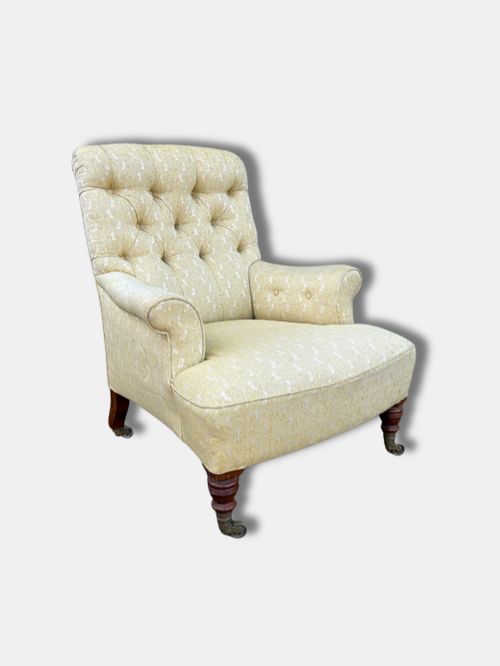
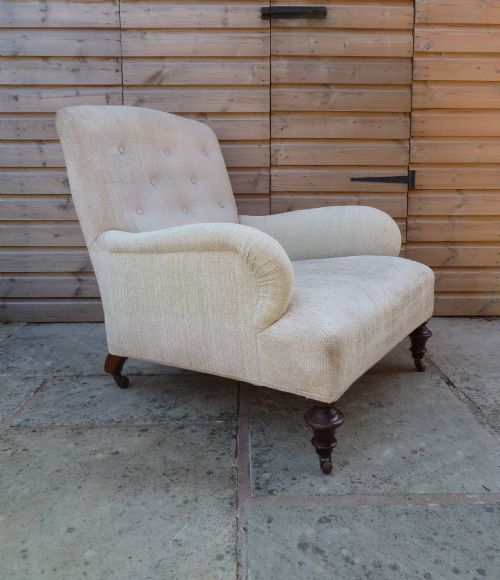
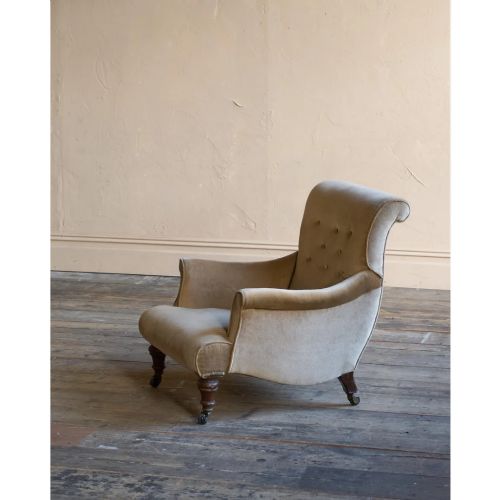
You are most likely to meet upholstered pieces featuring button backs, scrolled woodwork, or low seats covered in velvet, calico, or ticking. They range from compact occasional chairs to wide, deep-seated easy armchairs.
How They Were Made
Frames rely on solid timbers such as walnut, mahogany, rosewood, and general hardwood, often shaped with carved details or left with simple, clean lines. Brass components occasionally appear on castors or structural accents.
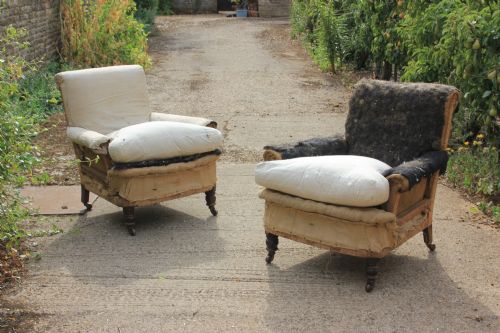
Upholstery techniques involve traditional stuffing layered beneath practical outer coverings like cotton calico, heavy velvet, patterned fabric, and ticking. Button-backed upholstery requires careful tensioning to create the characteristic tufted surface.
The listings feature nineteenth-century seating constructed from walnut, mahogany, and hardwood, upholstered in velvet, calico, and ticking.
What Varies in Quality
The integrity of the underlying hardwood frame and the depth of the seating build dictate the structural caliber of each piece. Superior examples maintain firm internal webbing and springs that support relaxed, low-slung postures without sagging.
Finishing details separate standard production from finer workshop output, particularly in the hand-carving of walnut or mahogany frames and the precision of button-back tufting. The choice of original or sympathetic upholstery materials also influences the overall character.
Howard and Sons·Hampton and Sons
The Victorian Low Lounge Chair Glossary
- Slipper chair
- A low-seated upholstered chair traditionally used in bedrooms for dressing comfortably. These pieces sit close to the floor and usually lack arms.
- Nursing chair
- A low-slung Victorian chair designed with an upright or supportive back for feeding children. They often feature walnut or rosewood frames.
- Button back
- An upholstery method where deep buttons are pulled through the padding at regular intervals to create a tufted pattern. This technique secures the stuffing and adds visual texture.
- Ticking
- A tightly woven, durable cotton fabric traditionally used to cover mattress springs and heavy upholstery. It frequently appears on country house lounge seating.
- Club armchair
- A deep, heavily upholstered easy chair built for maximum comfort. These items often feature low profiles and generous proportions.
Victorian Low Lounge Chair: Frequently Asked Questions
What is a low lounge chair?
A low lounge chair is a nineteenth-century seat built with a reduced height from the floor to encourage a relaxed posture. These pieces include slipper, nursing, and club chair formats designed for comfort.
They often feature deep springing and upholstered surfaces covered in velvet, calico, or heavy fabric.
Where were these chairs used?
These seats typically populated bedrooms, dressing rooms, and informal country house drawing rooms. Their low stature made them suitable for private quarters and relaxed domestic spaces.
Today, they function well as accent seating in living rooms or studies.
How do I identify a Victorian piece?
Victorian seating often exhibits specific stylistic cues such as button-backed upholstery, turned walnut or mahogany legs, and low-slung frames. Makers and styles of the period favoured generous padding and heavy fabric covers.
Construction methods typically involve traditional hardwood framing and hand-tacked textiles.
What is a slipper chair?
A slipper chair is an armless, low-seated chair historically kept in bedrooms for ease of dressing. Their compact footprints and low profiles distinguish them from standard armchairs.
Many examples from the nineteenth century feature decorative fringe or button-tufted upholstery.