



Antique Bedroom Lounge Chair
An antique bedroom lounge chair offers deep, private comfort, bringing nineteenth-century upholstery and carved timber forms straight into the modern home.
Antique Bedroom Lounge Chair
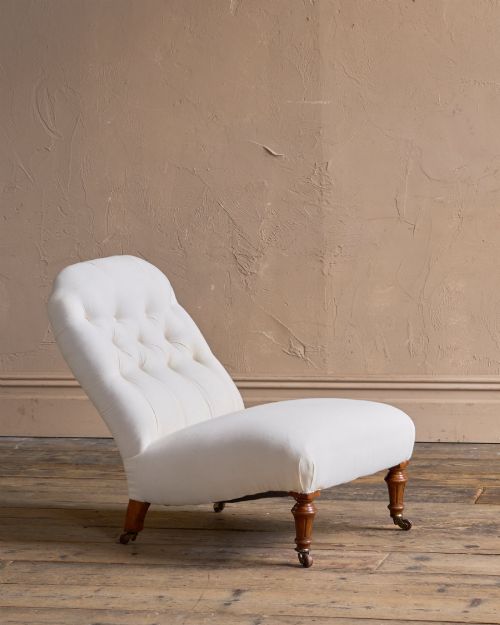
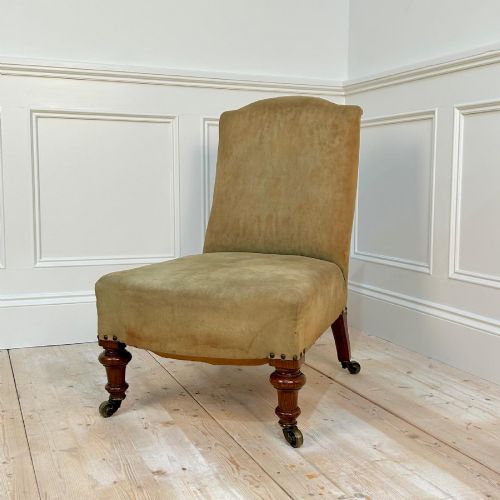
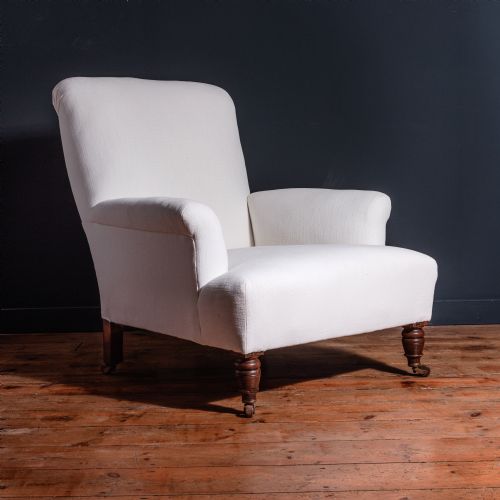
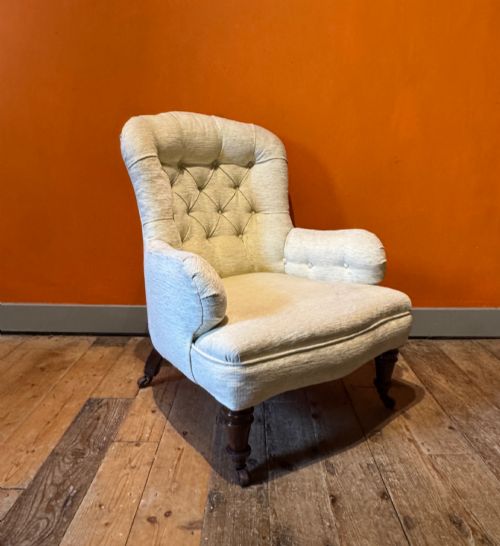
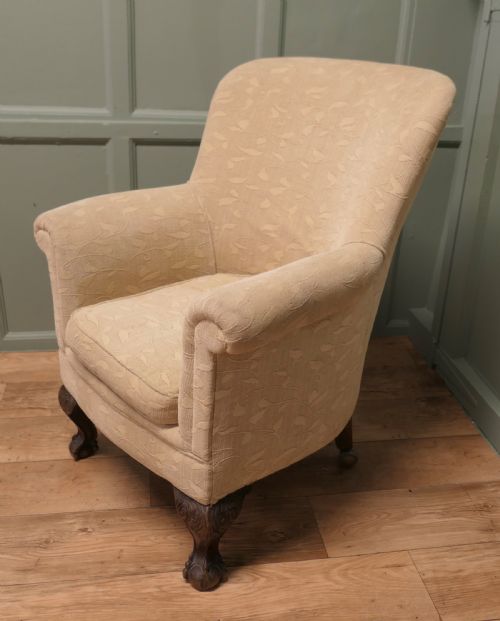
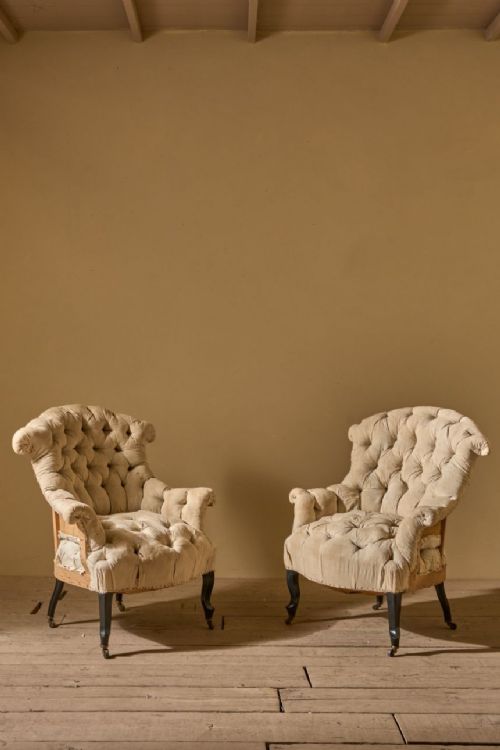
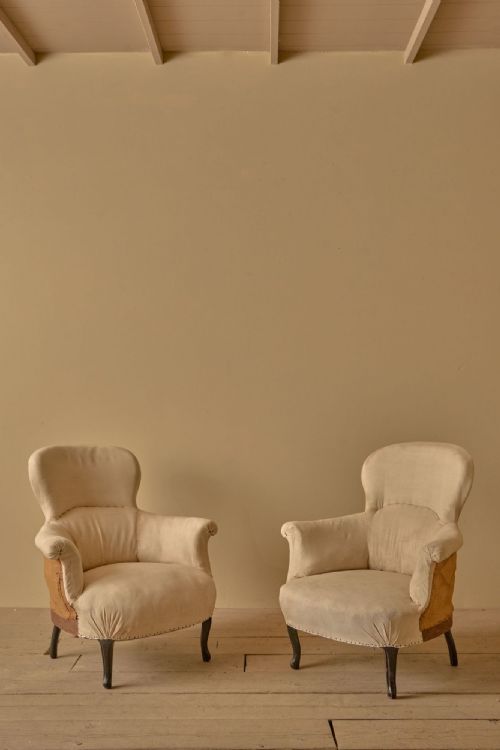
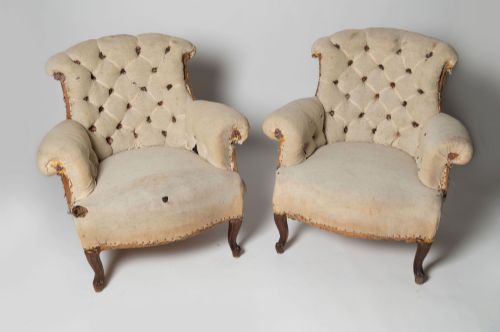
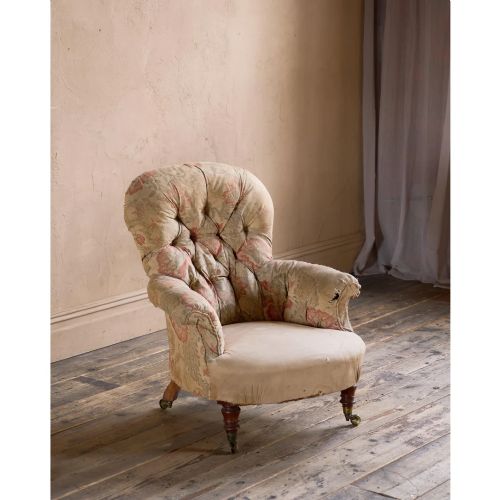
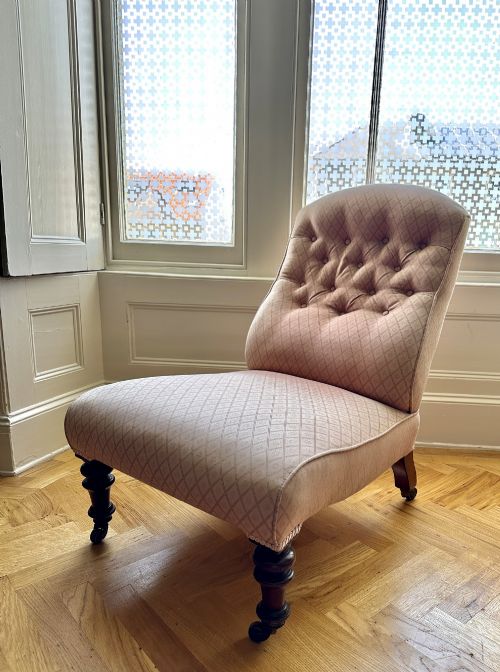
When you search for an antique bedroom lounge chair, you encounter a variety of low-slung seating designed historically for private chambers rather than formal entertaining. The selection spans compact slipper chairs, low nursing chairs, and generous button-backed armchairs that sit lower to the floor than standard parlour seating.
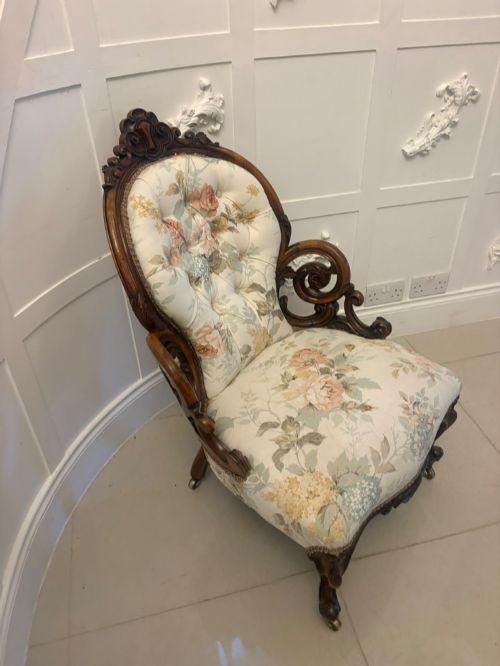
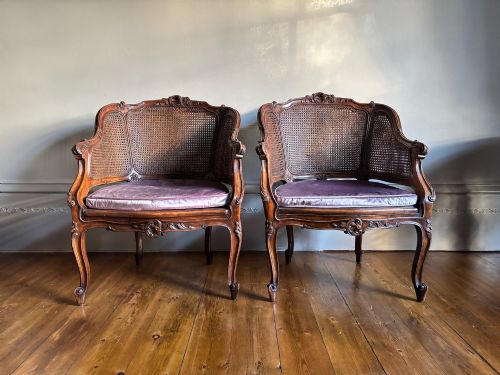
The pieces appearing on this page originate predominantly from the nineteenth century and the Victorian era, alongside early twentieth-century revivals. French Napoleon III and Louis XV style pieces sit alongside English walnut and rosewood frames.
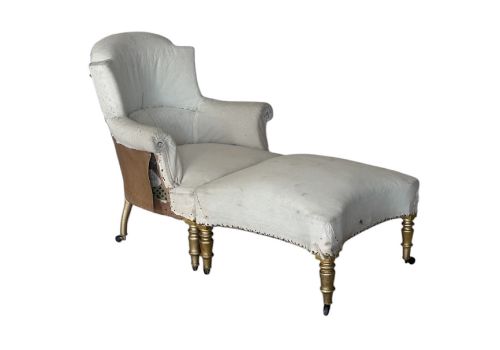
Forms vary from curvaceous slipper chairs and occasional tub chairs to chaise longues and duchesse brisées. Many feature low profiles intended to accommodate nineteenth-century clothing styles and dressing rituals.
How they were made
Frames are constructed from solid hardwoods such as walnut, mahogany, rosewood, beech, and satinwood, frequently shaped with cabriole legs or decorative giltwood. Joinery and carving rely on traditional hand-working methods appropriate to the period.
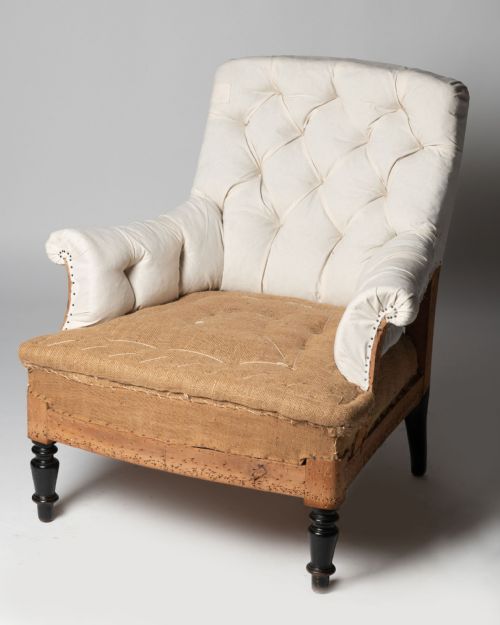
Upholstery techniques involve deep buttoning, sprung seats, and traditional stuffing materials finished in velvet, fabric, calico, or leather. Detail work includes decorative fringe, brass accents, and original paint or polished wood finishes.
Antique Bedroom Lounge Chair Retail Price Guide 2026
Typical asking prices for bedroom lounge chair among the pieces listed under this phrase on Sellingantiques today, from the lower quarter to the upper quarter. They describe what is for sale here now, not the wider market.
Listings feature nineteenth-century and Victorian pieces constructed from walnut, rosewood, mahogany, and beech, upholstered in velvet, calico, and leather.
What varies in quality
The standard of a piece rests in the crispness of the timber carving and the architectural balance of the frame. Heavy Victorian rosewood and walnut frames with substantial cabriole legs represent a heavier grade of craftsmanship than simpler occasional pieces.
Upholstery execution dictates the success of the silhouette, particularly in button-backed and sprung designs where symmetry and profile integrity matter. The presence of original paint, untouched giltwood, or period-appropriate textiles elevates the standing of an individual chair.
Holland and Sons
The Antique Bedroom Lounge Chair Glossary
- Slipper chair
- A low-seated upholstered chair originally designed for a lady's bedroom for dressing. These pieces lack arms to accommodate bulky historical garments.
- Nursing chair
- A low armchair traditionally used for feeding infants, featuring a compact frame and supportive back. They share the low profile characteristic of bedroom seating.
- Duchesse brisée
- A two or three-part chaise longue consisting of an armchair accompanied by an extension stool or matching footstool. This form emerged in France for reclining in private apartments.
- Bergere
- An enclosed upholstered armchair with wooden framing around the sides and back. Many examples incorporate cane work or fully padded upholstery.
- Napoleon III
- A nineteenth-century French design style characterised by eclectic revivalism, ebonised finishes, and lavish button-tufted upholstery. It draws heavily on earlier rococo and neoclassical motifs.
Antique Bedroom Lounge Chair: Frequently Asked Questions
What distinguishes a nursing chair?
A nursing chair sits noticeably lower to the ground than a standard armchair, designed originally to give mothers a stable, comfortable seat while attending to young children. Their compact proportions made them ideal for placing beside a bedroom fireplace.
These chairs frequently feature a high, supportive back and an absence of cumbersome wooden arms, which allowed heavy nineteenth-century skirts to drape freely around the seat.
How do I identify a Napoleon III chair?
Napoleon III pieces, dating from the mid-to-late nineteenth century in France, often display exuberant button-tufted upholstery and fluid, curvaceous frames. They frequently utilise giltwood, ebonised timber, or walnut.
Look for plush velvet coverings, elaborate fringe, and fishtail or serpentine silhouettes that prioritise deep, padded comfort over rigid structural woodwork.
Where were slipper chairs used?
Slipper chairs were kept primarily in nineteenth-century bedrooms and dressing rooms. Their low stature allowed women to sit comfortably while putting on stockings and footwear.
Today, their compact footprint makes them versatile accent pieces that fit easily into modern bedrooms, reading corners, or narrow hallways without overwhelming the floor space.
What is a duchesse brisee?
A duchesse brisee is an elongated lounging chair split into sections, typically combining an armchair with a matching footstool or ottoman to form a continuous day bed. The term translates from French as broken duchess.
Originating in eighteenth-century France and revived during later periods, these large statement pieces were built for relaxed reclining in private boudoirs.