


Linen Button Back Chair
A linen button back chair brings texture and deep upholstery to a room, offering comfortable seating shaped by nineteenth-century craft.
Linen Button Back Chair
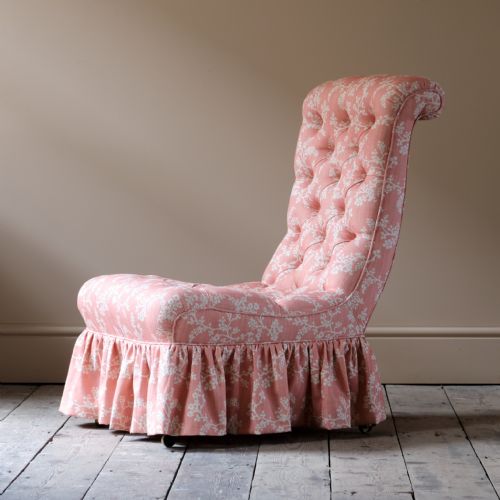
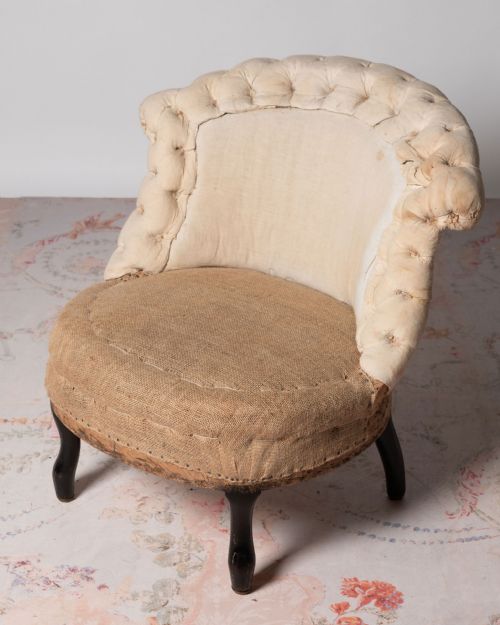
When you search for a linen button back chair, you are looking at nineteenth-century seating, including Victorian and Edwardian examples. The form encompasses armchairs, slipper chairs, and side chairs designed for parlour and bedroom use.
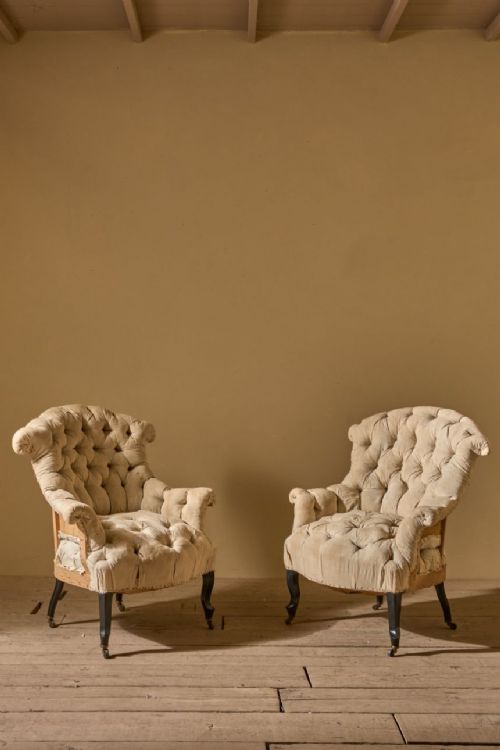
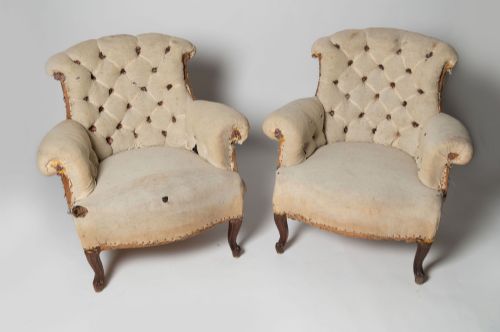
You are most likely to meet French Napoleon III pieces and English Victorian models on this page. These vary from petite open armchairs to deep-buttoned wing armchairs covered in vintage linen or calico fabric.
How these chairs were made
Frames are constructed from timber, beech, walnut, and rosewood, providing a sturdy architectural skeleton for the upholstery. Wood turnings and carved details often define the legs and arm supports.
Upholsters built the characteristic deep buttoned back using traditional stuffing techniques secured with linen fabrics and sometimes finished with brass tacks.
Listings feature nineteenth-century pieces spanning the Victorian and Edwardian eras, incorporating timber frames of walnut, beech, and rosewood.
What varies in quality
Quality rests upon the integrity of the underlying timber frame and the precision of the joinery. A well-proportioned silhouette and responsive original structure separate finer pieces from simpler utilitarian seating.
The choice and execution of the textile cover significantly alter the character of the piece. Premium examples feature high-grade vintage linen or mulberry fabric that respects the period aesthetic without masking the underlying form.
Gillows·Howard and Son
The Linen Button Back Chair Glossary
- Button back
- Upholstery style where buttons are pulled deep into the padding to create a geometric pattern of folds and secure the internal stuffing. This technique provides both structural support and distinctive texture.
- Slipper chair
- Low-seated bedroom chair traditionally built without arms to allow a lady to sit comfortably while dressing. These pieces often feature compact proportions and upholstered frames.
- Wing armchair
- Seating form featuring protective side panels attached to the back to block draughts near a fireplace. Edwardian and Victorian iterations frequently incorporate deep buttoning.
- Napoleon III
- French design period spanning the mid-to-late nineteenth century characterised by eclectic revivals and luxurious upholstery. Pieces from this era often display refined woodwork and fluid shapes.
- Calico fabric
- Plain-woven plain cotton textile frequently used as the foundational inner upholstery layer beneath top covers. It provides a stable base for traditional stuffing.
Linen Button Back Chair: Frequently Asked Questions
Were these chairs used in bedrooms?
Many slipper chairs and smaller open armchairs were specifically placed in bedrooms and dressing rooms during the Victorian and Edwardian eras. Their lower profiles and comfortable padding suited private domestic spaces.
Larger wing armchairs and reception chairs were typically stationed in drawing rooms and libraries. Today, buyers place them across living areas and hallways depending on the scale of the room.
How do I identify a Victorian piece?
Victorian seating often displays darker hardwoods such as walnut and rosewood alongside robust proportions and elaborate carved details. Stylistic markers include Rococo Revival curves and deep buttoned upholstery.
Examining the underside and framing construction reveals period-appropriate hand tools and joinery methods. Comparing these details against known nineteenth-century typologies helps confirm the age.
Can I use these chairs daily?
These nineteenth-century chairs are structurally robust enough for regular daily use provided the frame and internal webbing remain sound. Many pieces have been restored and prepared specifically to support modern seating habits.
If a chair exhibits fragile antique textiles, consider placing it in a low-traffic corner or having it recovered in durable vintage linen. Proper care ensures the longevity of both frame and fabric.